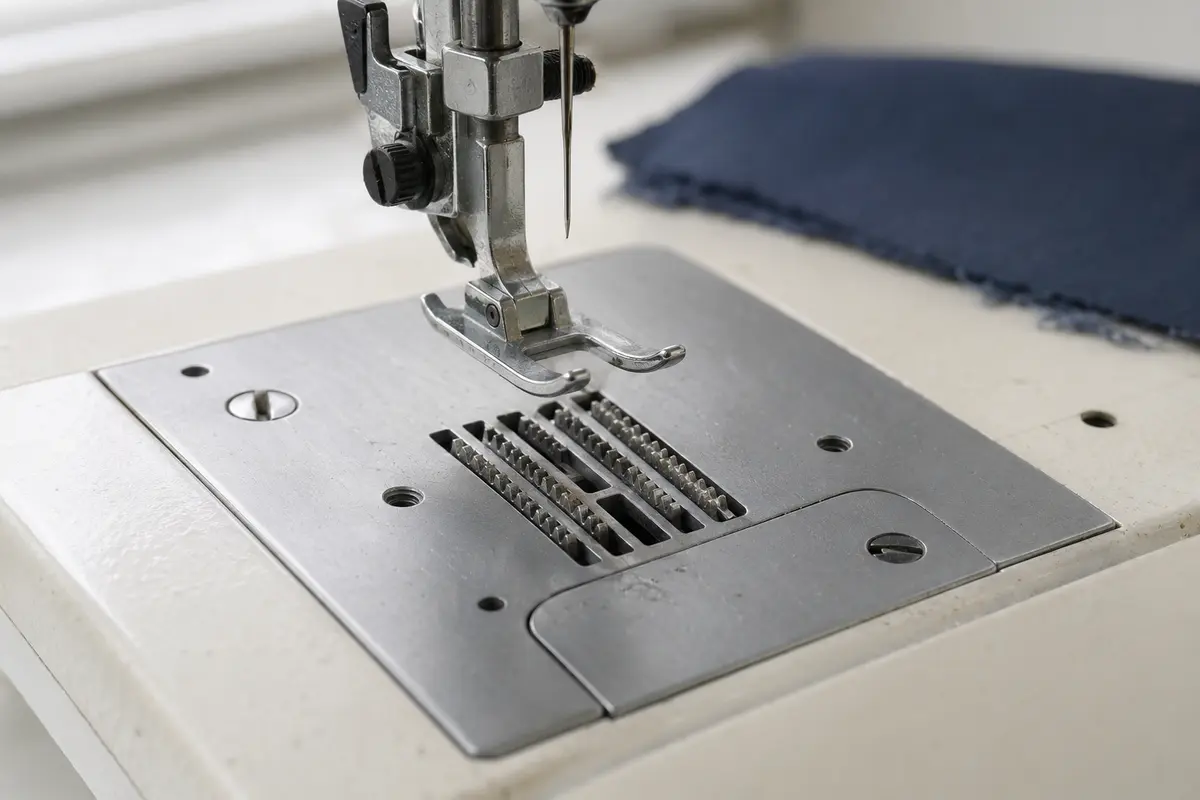
The rows of metal teeth below the presser foot that rise, move back, drop, and return to advance fabric one stitch at a time.
RiseGripMoveRelease
Sewing machine feed dogs beneath the presser foot. The toothed rows rise through the needle plate to grip and advance fabric during each stitch cycle. Their number, shape, and arrangement vary between machines.
The four-part motion
Feed dogs do not simply slide backward. Their elliptical motion brings the teeth above the needle plate, grips the underside of the fabric, moves it by the selected stitch length, then drops below the plate before returning.
Let the machine move the fabric. Pulling from behind can bend the needle, distort stitches, and fight the feed system.
When should feed dogs be lowered?
Lower or cover them for free-motion quilting, darning, and a few specialty techniques where you control fabric direction and stitch length manually. Raise them again for normal sewing.
Fabric not moving?
Check the lever
Confirm the feed dogs are raised. Some machines require one handwheel turn before they re-engage.
Check stitch length
A setting near zero creates little or no forward movement.
Check presser pressure
Too little pressure may prevent the fabric from contacting the teeth.
Clean the teeth
Packed lint can reduce grip, especially around the needle plate openings.
Different fabrics, different behavior
Slippery layers may shift even when the feed dogs work correctly. A walking foot helps feed the top layer, while stabilizer or a straight-stitch plate can help delicate fabrics start cleanly.
Setup decisions
Match the feed setup to the operation
Fine or soft fabric
Begin slightly in from a raw edge and support the fabric so it stays flat over the plate opening. A suitable fine needle, stable starting scrap, and lighter adjustable foot pressure can prevent the edge from being pushed downward.
Thick seam crossings
Level the presser foot as it climbs a bulky junction and slow down. Feed dogs lose effective contact when the foot tilts sharply. A height-compensation tool helps maintain pressure without pulling the work from behind.
Free-motion work
Lower or cover the teeth only when the technique requires manual fabric movement. Fit the correct foot, control speed carefully, and remember that your hand movement now determines stitch length. Re-engage normal feeding before the next ordinary seam.
Troubleshooting answers
Feed dog FAQs
Why are my feed dogs not coming back up?
After moving the drop-feed lever, many machines need one full handwheel rotation before the teeth rise again. Check the lever position, turn the handwheel toward you, and test without fabric.
Can worn feed dogs be replaced?
Yes, but poor feeding is more commonly caused by lint, a zero stitch-length setting, low presser-foot pressure, or lowered feed dogs. Rule those out before replacing parts.
Should I pull fabric while sewing?
No. Guide it lightly from the sides and let the feed system set the pace. Pulling can bend the needle and create uneven stitches.
Do feed dogs damage delicate fabric?
They can leave marks when pressure is excessive or the fabric is very fine. Reduce adjustable presser-foot pressure, use tissue or stabilizer, and test on a scrap first.