
Affiliate disclosure: We may earn from qualifying Amazon purchases at no extra cost to you. Products are selected for utility and reader fit, not ratings or commission.
The best sewing machine for a beginner is not necessarily the model with the fewest stitches or the lowest price. A first machine should let a new sewist control speed, load the bobbin correctly, understand the selected stitch, recover from threading mistakes, and complete the projects that motivated the purchase. It also needs enough capability to remain useful after the first few practice seams.
That creates three sensible routes. A simple mechanical machine keeps the controls visible and teaches the relationship between stitch length, stitch width, tension, needle, thread, and fabric. A computerized machine can reduce early coordination demands through a speed-control slider, start and stop button, recommended presser-foot display, and automatic stitch settings. A stronger, faster domestic machine can suit a confident learner who already knows that denim, canvas, or layered utility projects will be common, but it is not automatically the easiest first machine.
This guide recommends eight products from the site's approved master shortlist. Each earns a distinct beginner role. The Brother GX37 is the clearest full-size mechanical choice for an absolute beginner. The Janome 2212 suits a learner who values basic technique and direct adjustment. The Janome MOD-19 adds a top-loading bobbin and needle threader to a focused mechanical platform. The Brother CS7000X is the best-balanced computerized first machine and the strongest overall recommendation for most adults. The Singer C7290Q fits beginners who want controlled computerized sewing for garments, crafts, and introductory quilting, with eight one-step buttonholes and a wider work surface. The Singer Heavy Duty 4423 is reserved for confident beginners expecting thicker domestic projects. The Brother HC1850 supports a learner whose project path is specifically moving towards quilting. The Brother XR9550 is the broadest long-term option for an ambitious beginner who will actually use its garment, decorative, quilting, and lettering capability.
This is not a children's-machine guide, a quilting-machine ranking, a mechanical-versus-computerized contest, or a heavy-duty roundup. Those narrower decisions have their own pages. Here, every feature is judged by one question: does it make a first adult machine easier to learn, safer to control, or less likely to be outgrown for the reader's expected projects?
Quick choice guide
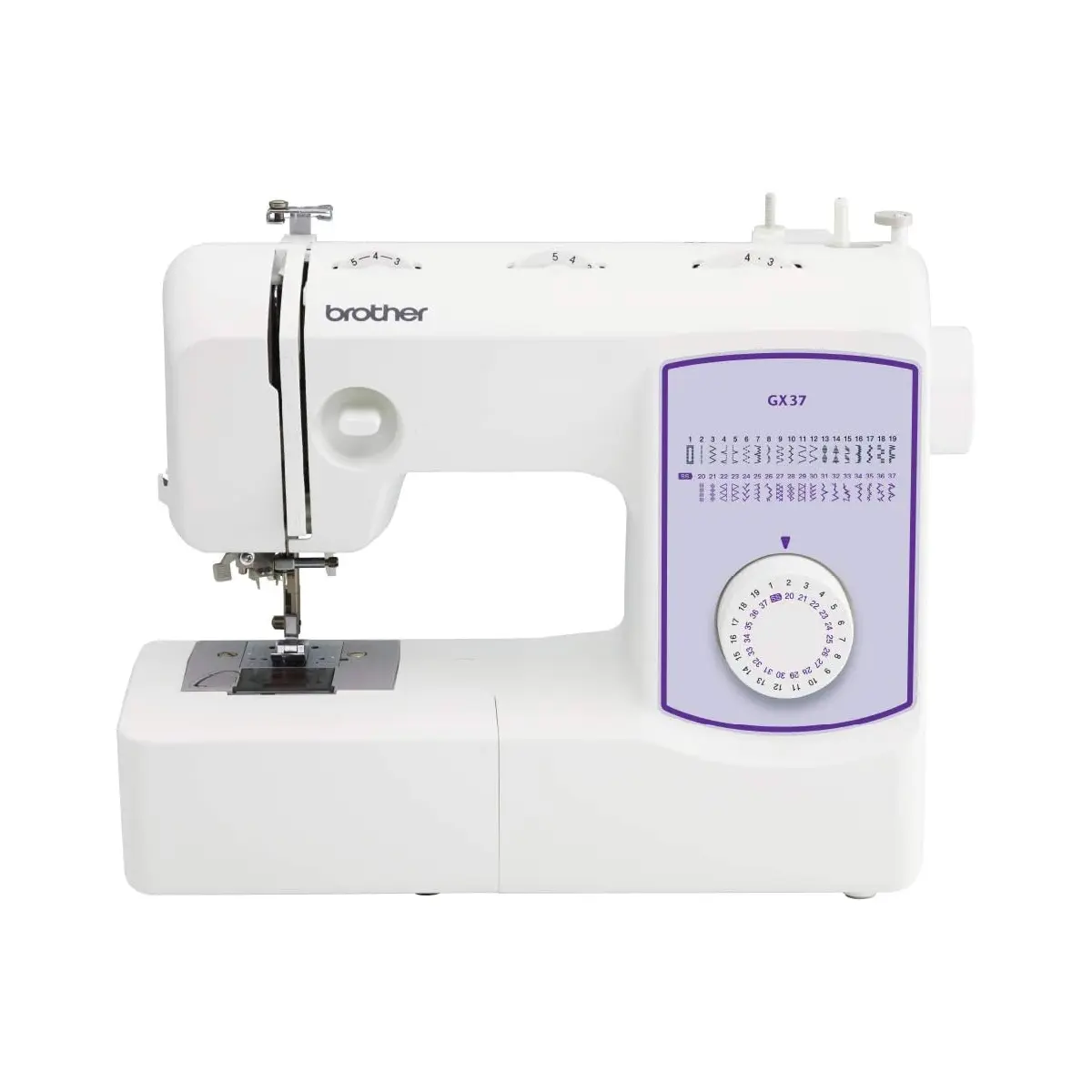
Choose the Brother GX37 when you want a reasonably priced, full-size mechanical machine with a top-loading bobbin, automatic needle threader, one-step buttonhole, free arm, and a dial that keeps stitch selection visible. It lacks a speed limiter, so the learner must develop foot-pedal control.
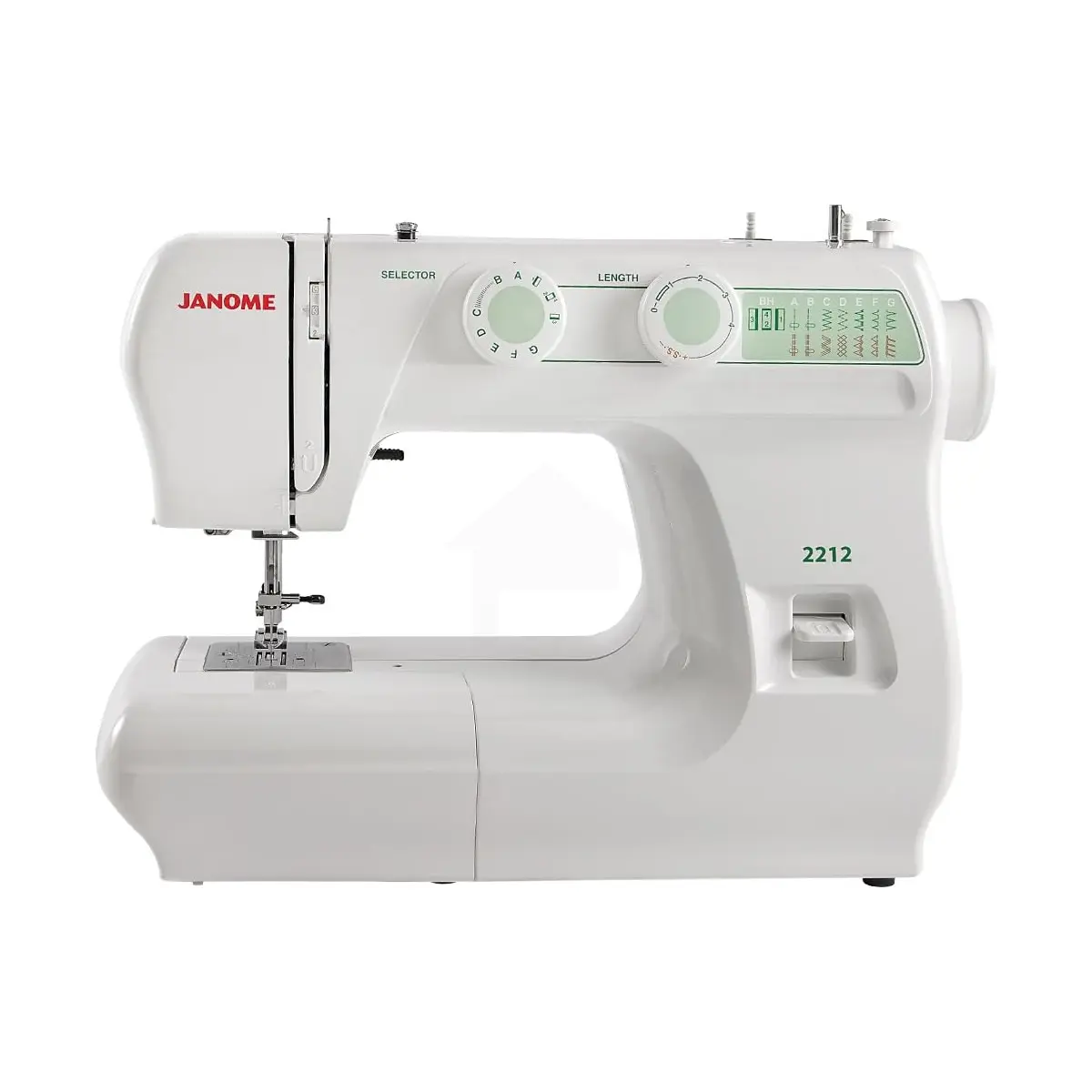
Choose the Janome 2212 when a simple, durable-feeling mechanical layout and direct stitch adjustment matter more than convenience. Its 12 stitches are enough for core techniques, and drop feed creates room for darning or guided free-motion practice. The front-loading bobbin and four-step buttonhole require more learning than the Brother GX37.
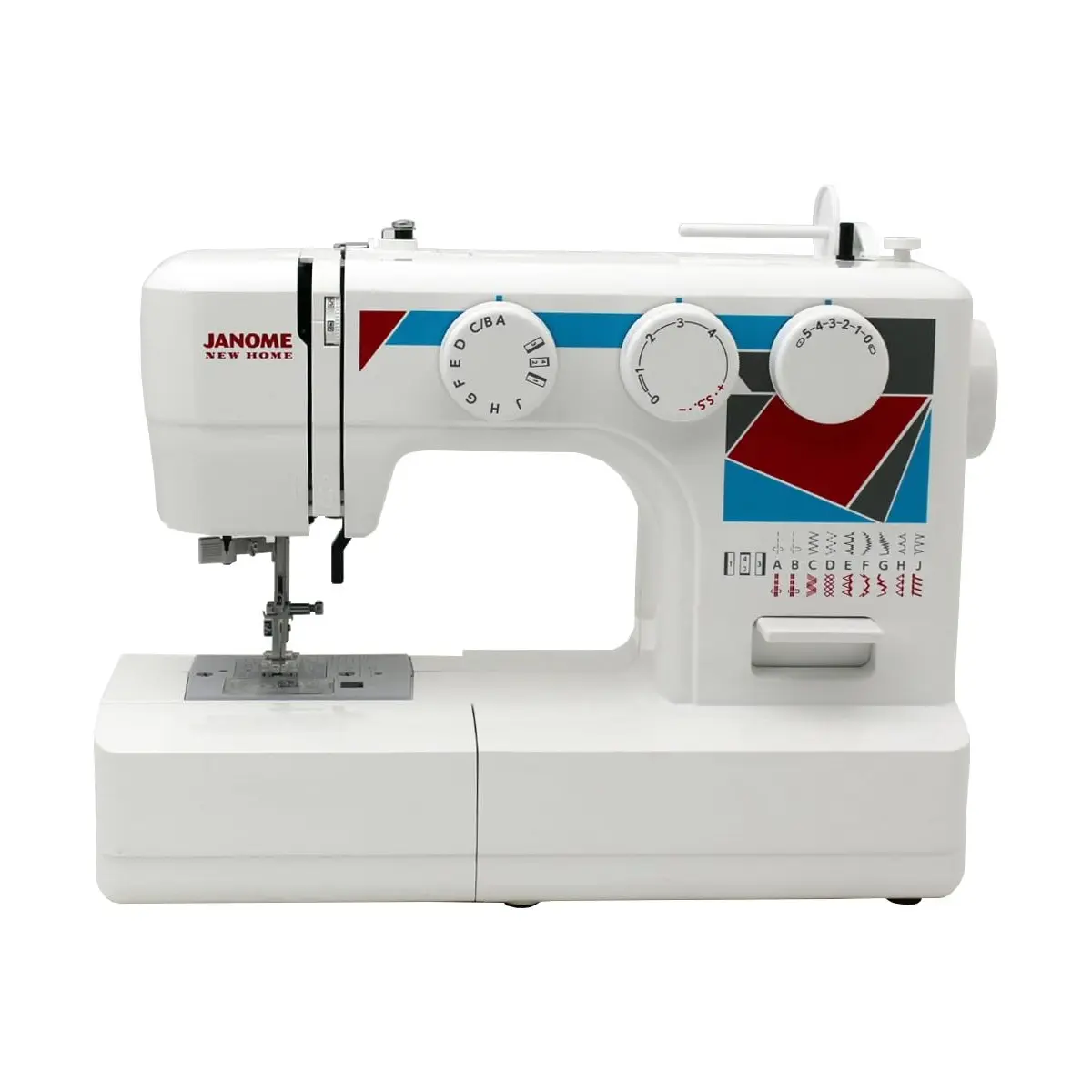
Choose the Janome MOD-19 when you want a focused mechanical machine with a top-loading bobbin, built-in needle threader, adjustable stitch length and width, drop feed, and 19 practical stitches. It is a thoughtful middle ground for garments and simple home décor, but it still has no speed-control slider and uses a four-step buttonhole.
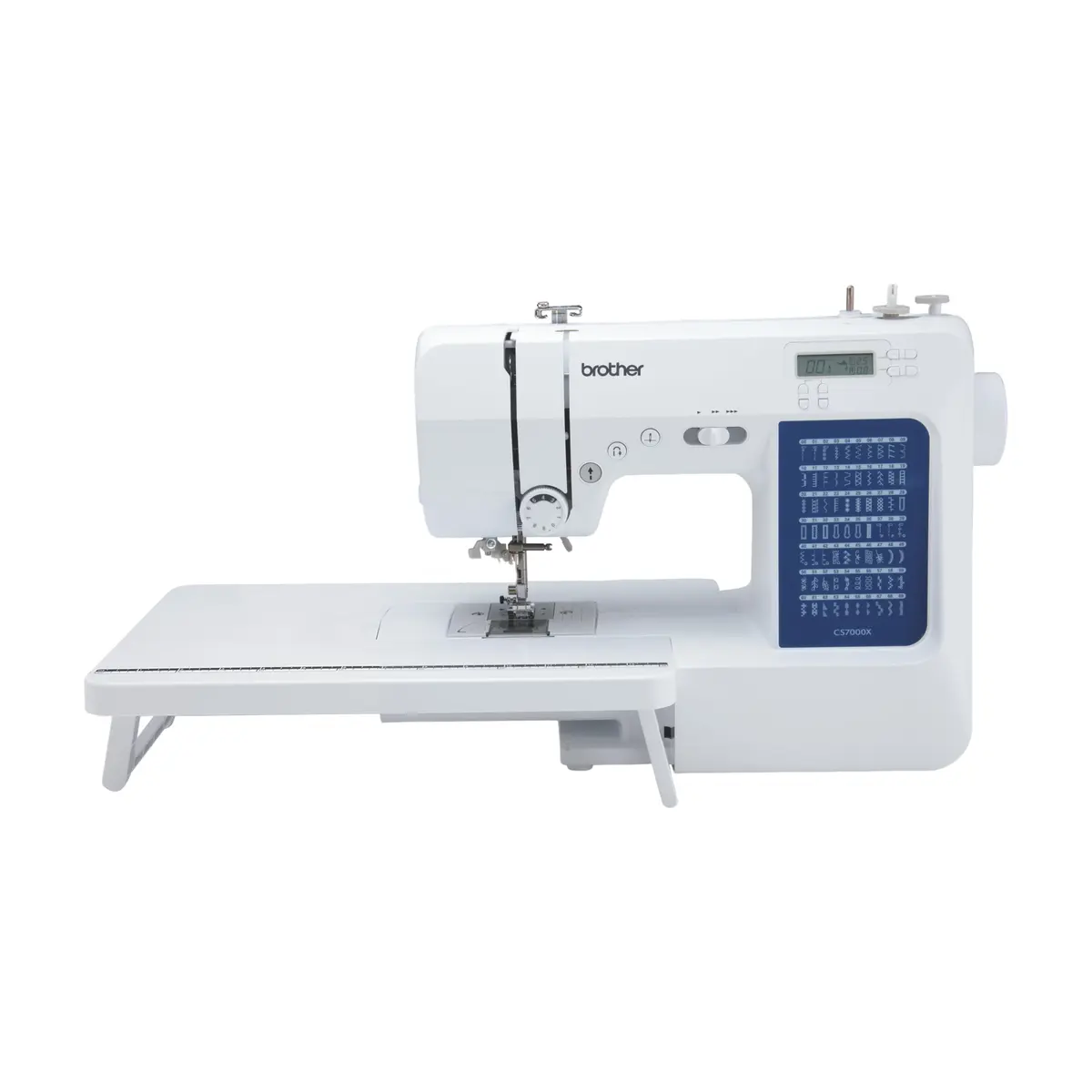
Choose the Brother CS7000X when low-speed control and room to grow are more important than mechanical simplicity. Its speed slider, start and stop button, needle-position control, top-loading bobbin, LCD guidance, wide table, and ten included feet reduce several early frustrations. Seventy stitches and computerized controls are more than a mending-only user needs.
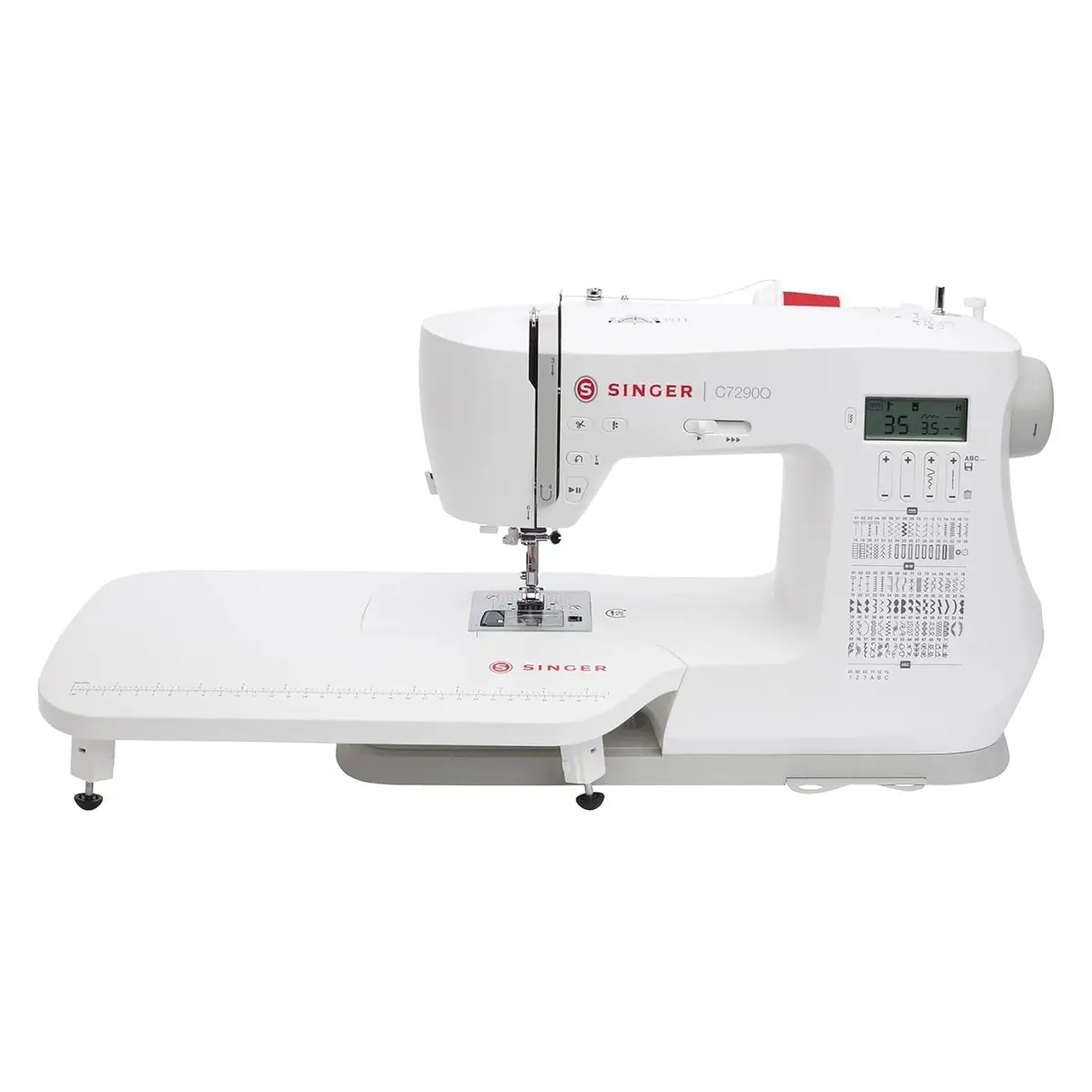
Choose the Singer C7290Q when you want adjustable speed, start and stop sewing, eight one-step buttonholes, lettering, and room to move from garments into crafts or quilting. Its top drop-in bobbin, LCD, built-in needle threader, thread cutter, extension table, and 12 included presser feet reduce setup friction and broaden the project range. The 417 stitch applications and accessory package are more than a repair-only beginner needs.
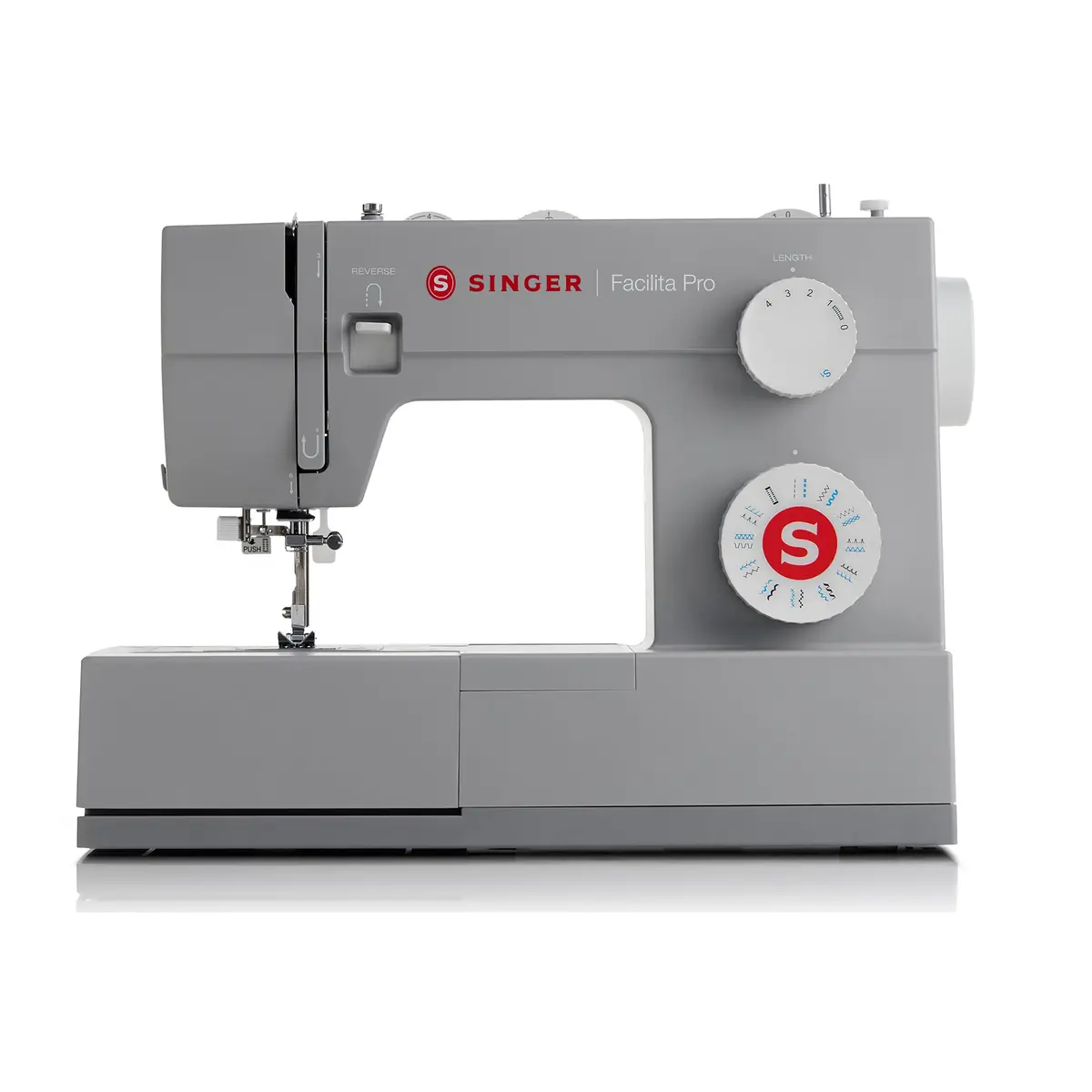
Choose the Singer Heavy Duty 4423 only when the beginner is confident with a fast foot controller and already expects denim hems, canvas, bags, repairs, or layered home projects. Adjustable presser-foot pressure is useful, but the machine's high rated speed can be abrupt for a nervous learner. Heavy Duty is a domestic product-family name, not an industrial classification.
Choose the Brother HC1850 when quilting is the learner's declared direction, not a vague future possibility. Its speed control, wide table, drop feed, quilting accessories, and large stitch library can support piecing and early free-motion work. It is unnecessarily complex for basic alterations and repairs.
Choose the Brother XR9550 when the beginner wants one general-purpose machine to explore garments, crafts, quilting, decorative work, and basic lettering over several years. Its speed slider, LCD, start and stop button, wide table, eight feet, and hard cover support growth. Its 165 built-in stitches include 55 alphanumeric stitches, so the headline number should not be mistaken for 165 essential sewing functions.
For a child, use the best sewing machine for kids guide because age, supervision, finger safety, and frustration tolerance change the recommendation. Readers who already know which control system they want can continue to the computerized sewing machine guide or the mechanical sewing machine guide. Quilting-first and thicker-material decisions should move to the general quilting machine guide or general heavy-duty sewing machine guide rather than using this beginner list as a substitute.
Quick comparison
Showing three products at a time. Scroll vertically to see the remaining models.
| Product image | Title and best fit | Type | Current price |
|---|---|---|---|
 | Brother GX37 Absolute beginner wanting a straightforward full-size machine | Mechanical | Check price |
 | Janome 2212 Learner prioritising direct controls and basic technique | Mechanical | Check price |
 | Janome MOD-19 Beginner making garments and simple home décor | Mechanical | Check price |
 | Brother CS7000X Most adult beginners wanting control and growth | Computerized | Check price |
 | Singer C7290Q Beginner wanting controlled garment sewing with quilting room to grow | Computerized | Check price |
 | Singer Heavy Duty 4423 Confident beginner expecting thicker domestic projects | Mechanical | Check price |
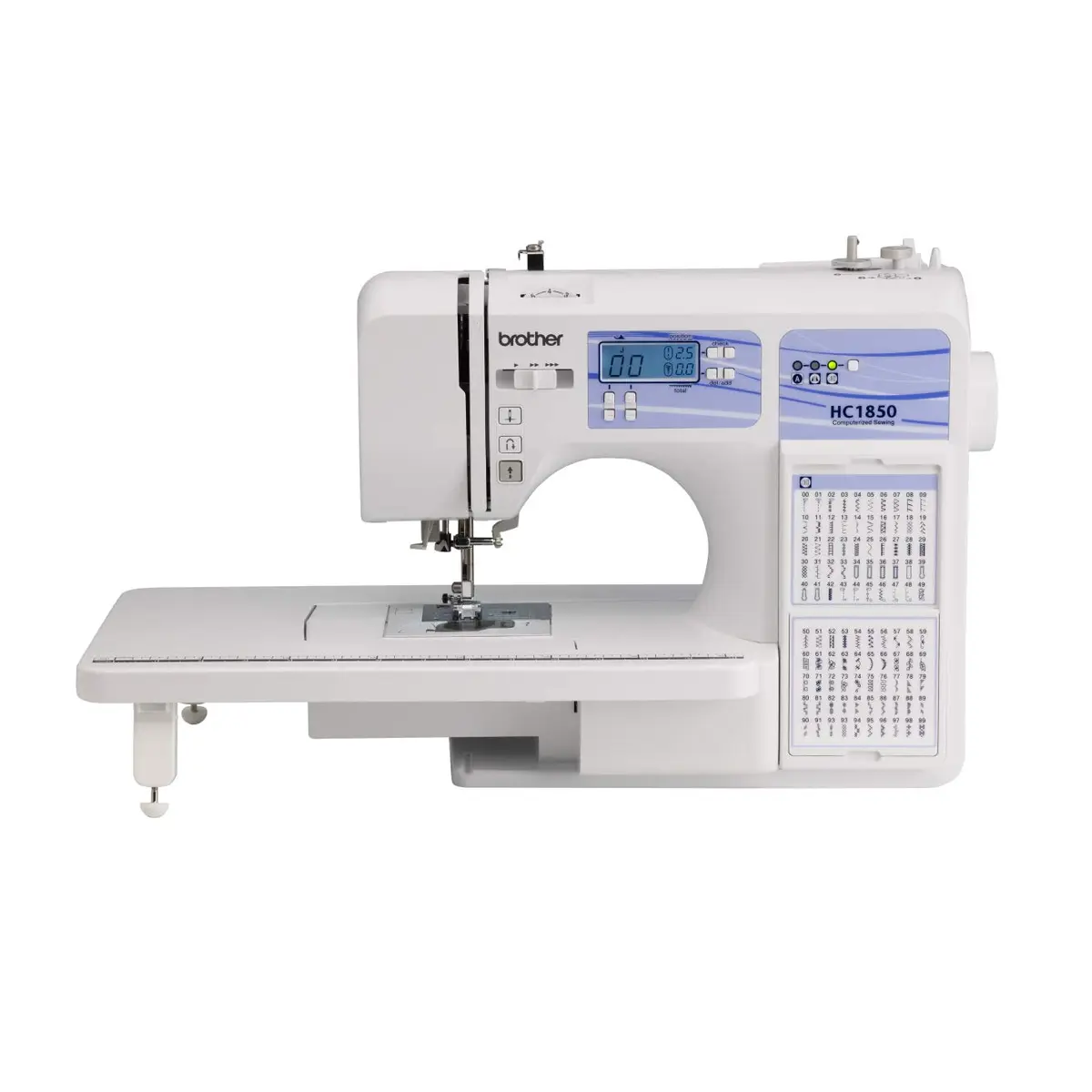 | Brother HC1850 Beginner committed to learning quilting | Computerized | Check price |
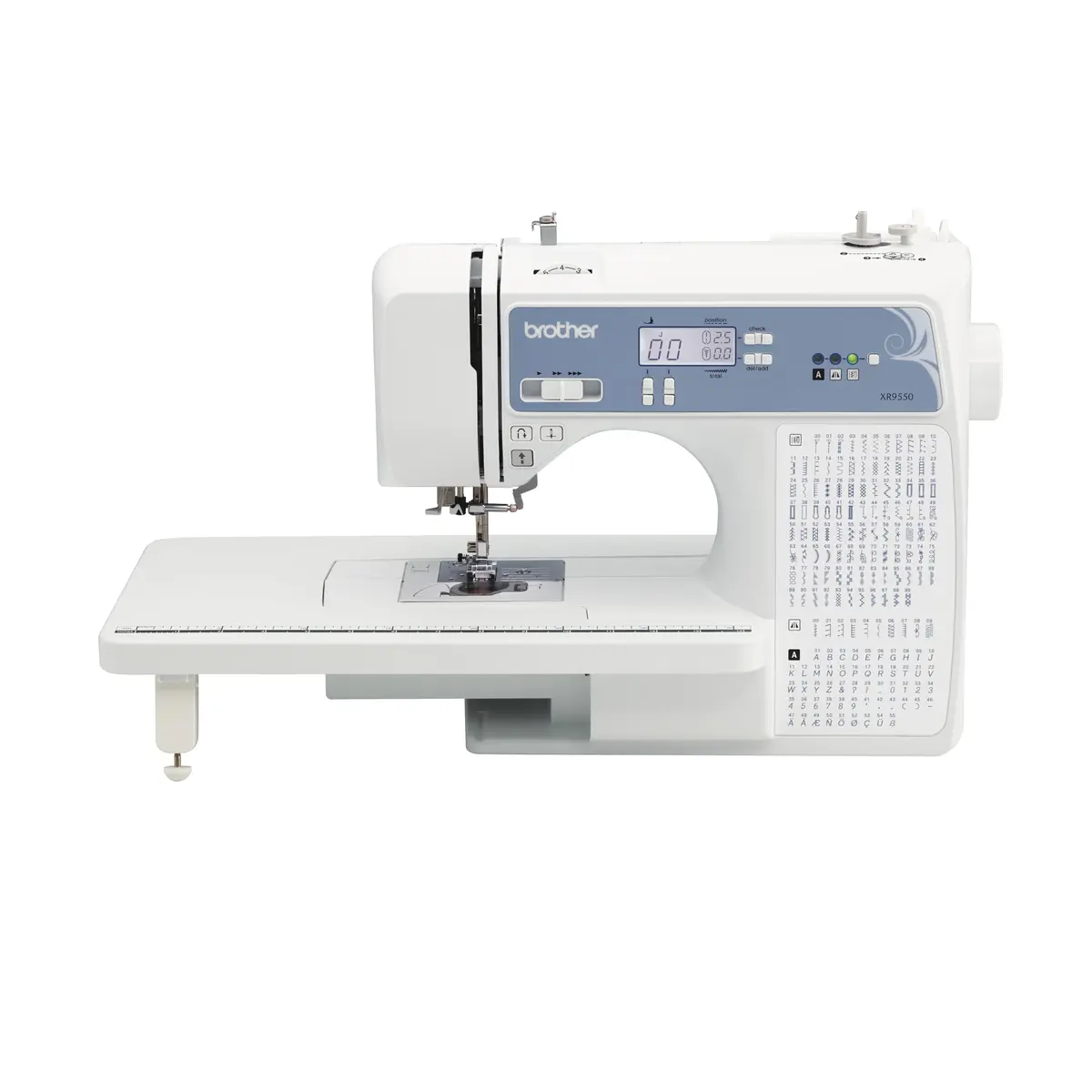 | Brother XR9550 Ambitious beginner wanting broad long-term capability | Computerized | Check price |
Detailed recommendations
Brother GX37
Best straightforward mechanical machine for an absolute beginner
The Brother GX37 is the clearest first choice for an adult who wants a full-size mechanical machine without starting on a front-loading bobbin or a four-step buttonhole. Brother specifies 37 built-in stitches, a one-step buttonhole, an automatic needle-threading system, and six included feet. The stitch dial and printed chart keep the main controls visible.
Why it works for a first learner
The top-loading bobbin reduces the number of hidden steps during setup. The learner can follow the printed bobbin path, place the bobbin under the clear cover, and inspect thread supply without removing a separate case. The built-in threader handles the final eye of the needle when used at the correct needle height.
Thirty-seven stitches are more than a beginner needs, but the range is still navigated with a physical dial rather than nested menus. The machine includes common utility and decorative choices and a one-step automatic-size buttonhole. A free arm becomes available for cuffs, sleeves, and trouser hems.
This is a better fit than a miniature or toy-like machine because it teaches a normal domestic workflow and accepts real garment and craft projects. It is also light enough to move for a class or store when not in use.
The important compromise
There is no speed-control slider. The beginner must learn to modulate the foot pedal, stop before corners, lower the needle when pivoting, and keep fingers away from the needle area. A nervous user should practise on two layers of stable cotton with a contrasting thread before approaching slippery, stretchy, bulky, or expensive fabric.
The 37-stitch label also says nothing about heavy-material capacity. The GX37 is a normal domestic machine. It can cross appropriately prepared garment seams with the correct needle and technique, but it should not be selected for regular upholstery, dense leather, or production work.
Best for: An absolute beginner wanting a clear, full-size mechanical machine with convenient threading and bobbin access.
Skip it if: A speed limiter is essential, the learner has very limited pedal control, or thick utility materials will dominate the workload.
Janome 2212
Best for learning core mechanical technique
The Janome 2212 is the deliberately simple choice. Janome's current information sheet specifies 12 stitches, a four-step buttonhole, manual thread tension, adjustable stitch length and width, a five-piece feed dog, free-arm capability, drop feed, and an extra-high presser-foot lift. The bobbin system is a front-loading vertical oscillating hook.
Why it belongs in a beginner guide
The limited stitch range helps the learner focus on the settings that matter most. Straight stitch, zigzag, stitch length, stitch width, tension, reverse, needle, thread, presser foot, and fabric handling are visible decisions. The machine does not hide every choice behind automatic defaults.
Drop feed gives the 2212 more growth than its sparse control panel suggests. It can support darning, button sewing with the appropriate setup, and carefully guided free-motion practice. The free arm handles tubular garment areas, and the extra-high foot lift helps position a thicker seam under the foot, although lift is not the same as sewing capacity.
The 2212 can suit someone taking a structured class because the interface encourages the teacher and student to discuss why a setting changes rather than simply accepting a screen recommendation.
The important compromise
The front-loading bobbin has a steeper first-day learning curve. The bobbin case must be threaded and seated correctly. The four-step buttonhole requires the user to select and complete each side and bartack rather than asking the machine to complete the full sequence in one automatic cycle.
Those are learnable skills, not reasons to reject the machine. They do make the 2212 less convenient than the GX37 or MOD-19 for a learner who becomes frustrated by setup. It also lacks a needle threader and speed limiter.
Best for: A patient beginner who wants direct controls and a focused platform for learning core technique.
Skip it if: A top-loading bobbin, automatic needle threader, one-step buttonhole, or capped speed is important.
Janome MOD-19
Best focused mechanical machine for garments and home décor
The Janome MOD-19 fills the gap between bare mechanical simplicity and a feature-heavy computerized machine. Janome lists 19 built-in stitches, a four-step buttonhole, top-loading bobbin, built-in needle threader, adjustable stitch length and width, a five-piece feed system, drop feed, free arm, and snap-on feet.
Why it may be easier than the Janome 2212
The top-loading bobbin and needle threader reduce two setup steps that often frustrate beginners. A clear bobbin cover lets the user inspect thread supply. The five-piece feed system supports common woven fabrics, and the controls remain physical and easy to see.
Nineteen stitches are enough for seams, zigzag finishing, stretch-oriented options, blind hems, simple decorative work, and a buttonhole. The machine stays focused on clothing, repairs, crafts, and basic home décor rather than making a learner navigate a large library.
Drop feed provides a path into darning and carefully controlled free-motion work. That does not make the MOD-19 a quilting specialist, but it reduces the chance that an ordinary beginner will outgrow it immediately.
The important compromise
The MOD-19 remains pedal controlled and does not cap maximum speed. Its four-step buttonhole is less automatic than the one-step systems on the GX37 and computerized models. Janome positions it for children's clothing and basic household items, which is a useful indicator of intended domestic scope rather than a promise of heavy-duty capacity.
An independent owner discussion also illustrates why a machine can be reliable yet too limited for a particular user. Treat such reports as individual experience, not proof of a universal problem. The practical conclusion is to match the MOD-19 to ordinary garments and home sewing rather than expecting it to solve demanding precision or thick-material work.
Best for: A beginner making garments and basic home décor who wants a top-loading mechanical machine with an automatic needle threader.
Skip it if: Speed limiting, an automatic buttonhole, computerized guidance, or frequent thick-material work is required.
Brother CS7000X
Best sewing machine for most adult beginners
The Brother CS7000X is the strongest overall recommendation because it addresses the beginner's control problem while leaving room for garments, crafts, alterations, and introductory quilting. Brother specifies 70 built-in stitches, ten included feet, a wide table, free arm, improved needle threader, top-loading bobbin, fixed needle bar, LCD controls, start and stop sewing, variable speed control, and seven one-step buttonhole styles.
Why speed control changes the learning experience
The speed slider limits how quickly the machine can sew even when the pedal or start button is fully activated. A beginner can set a low cap for straight seams, corners, curves, elastic, and unfamiliar fabric, then increase it as coordination improves. This is often more reassuring than trying to hold a sensitive pedal at the first millimetre of travel.
Needle-position control helps pivot at corners and maintain control when stopping. The LCD identifies the selected stitch and settings, and Brother's product material says the display shows the correct foot for the stitch. These prompts do not replace the manual, but they reduce avoidable setup errors.
The top-loading bobbin, needle threader, free arm, and automatic buttonholes address practical early tasks. The wide table and quilting feet provide a low-commitment route into piecing and small quilt projects without forcing the beginner to buy a quilting-first machine immediately.
Where the CS7000X can still frustrate
Seventy stitches are unnecessary for most learners. The screen is small, and independent testing has criticised the unlit display and buttonhole results. That does not invalidate the machine, but it means the learner should practise buttonholes on interfaced scraps and should not assume that computerized selection guarantees perfect fabric feeding or tension.
The lightweight body helps with classes and storage, but it is not a substitute for industrial mass or feeding. Brother states that the product is intended for sale in the United States at 120 volts, and other use or sale may affect warranty. Confirm voltage and support when purchasing outside the intended market.
Best for: Most adult beginners wanting low-speed control, easy setup, useful guidance, and room to explore garments, crafts, and quilting.
Skip it if: You dislike computerized controls, need a large bright display, or want a particularly substantial machine for repeated thick-material work.
Singer C7290Q
Best for controlled computerized sewing with room to grow
The Singer C7290Q is a current computerized sewing and quilting machine that combines garment-friendly controls with a wider work surface and a complete sewing-and-quilting accessory set. Singer specifies 417 stitch applications, one lettering font, eight one-step buttonholes, a top drop-in bobbin, built-in thread cutter, start and stop sewing, an LCD, free-arm access, drop feed, a removable extension table, a metal interior frame, and 12 included presser feet. The tracked Amazon ASIN, B0D71JRJQ6, resolves to the exact C7290Q machine.
Why it works for a beginner
The adjustable speed control lets a learner cap the sewing pace for curves, corners, topstitching, buttonholes, and unfamiliar fabric. The start and stop button also allows pedal-free sewing when used according to the manual. A top drop-in bobbin keeps thread supply visible, while the built-in needle threader and one-touch thread cutter reduce repetitive setup steps.
For garments, eight one-step buttonhole styles provide more flexibility than a single basic buttonhole. The free arm helps with cuffs, sleeves, and trouser hems, and the included zipper, buttonhole, blind-hem, button-sewing, cording, open-toe, and satin-stitch feet cover common construction and finishing tasks.
The extension table, walking foot, quarter-inch piecing foot, free-motion darning foot, drop feed, and adjustable speed also create a practical route into piecing and introductory quilting. That makes the C7290Q useful for a beginner whose interests are broader than alterations and simple repairs.
The important trade-off
Singer uses “417 stitch applications” to describe the techniques available from the machine's stitch set; it should not be read as 417 separate built-in stitches. A beginner still needs only a small group of utility, stretch, finishing, and buttonhole stitches for most early projects. The lettering font and large accessory package add choices that a minimalist user may never use.
The 6.4-inch needle-to-tower space and extension table help support fabric, but they do not make this a longarm or industrial machine. Its 14-pound domestic platform is designed for home sewing and quilting, so repeated upholstery, dense leather, heavy webbing, or production workloads require a different machine class.
Best for: A beginner who wants adjustable speed, reliable one-step buttonhole options, garment capability, and enough accessories to explore quilting without an immediate upgrade.
Skip it if: You want the simplest possible controls, need only basic mending, or would rather put the budget towards instruction and essential supplies.
Singer Heavy Duty 4423
Best for a confident beginner expecting thicker domestic projects
The Singer 4423 is included for a narrow beginner situation. Singer describes a domestic mechanical machine with a metal frame, adjustable presser-foot pressure, top-loading bobbin, one-step buttonhole, and sewing speed up to 1,100 stitches per minute. It can give a new sewist more useful control over changing fabric weights than a very light entry model.
Why it can fit the right beginner
A learner planning denim hems, canvas tote bags, utility repairs, layered home décor, costumes, and medium-weight woven fabrics may outgrow a minimal machine quickly. Adjustable presser-foot pressure helps the user balance how firmly the foot holds different materials against the feed dogs. The top-loading bobbin keeps setup visible, and the one-step buttonhole supports garments.
The mechanical dials are direct and the stitch range remains manageable. A confident user who has access to instruction and practises pedal response may appreciate the machine's speed on long seams.
Why it is not the default beginner winner
Maximum speed is not the same as low-speed control. A new sewist who is anxious around the needle or struggles with foot coordination may find the 4423 too eager. There is no maximum-speed slider to create a hard cap.
Heavy Duty is not an industrial class. Sewing a prepared denim hem with a suitable needle does not prove capacity for repeated thick leather, upholstery stacks, webbing assemblies, or production shifts. Presser-foot lift, needle system, thread range, feed geometry, motor behaviour, seam bulk, and duty cycle all matter.
The guide therefore ranks the 4423 below calmer first-machine options. It belongs only when the project list and learner temperament justify it.
Best for: A confident beginner who already expects denim, canvas, bags, repairs, or layered domestic projects.
Skip it if: Slow pedal response and reassurance matter more than speed, or the actual workload is industrial leather or upholstery.
Brother HC1850
Best for a beginner committed to quilting
The Brother HC1850 belongs here as a bridge for the learner who already knows that quilting will be a central skill. Brother specifies 185 unique stitches, including 55 alphanumeric stitches for basic monogramming, a wide table, eight included feet, speed control, LCD selection, and quilting capability.
Why it suits a quilting path
Quilting beginners need ordinary straight sewing before they need free motion. The HC1850 supports piecing, quarter-inch work with the appropriate foot, walking-foot style layer control where the compatible foot is used, and a wider work surface for small quilt sections. Drop feed opens a route into free-motion practice, while the speed slider helps cap needle speed as hand coordination develops.
The start and stop button can support pedal-free practice, and the free arm preserves ordinary garment and alteration capability. The alphanumeric stitches add basic labels or monograms, though they are not embroidery.
Why it should not absorb the quilting guide
The HC1850 is not recommended here because it outranks every quilting machine. It appears because it allows a first-time sewist to learn normal sewing and then explore quilting without an immediate replacement. Throat space, table support, free-motion control, feed behaviour, and quilt size require a separate quilting comparison.
The 185-stitch number can overwhelm a beginner and includes 55 alphanumeric stitches. A casual user repairing hems and making occasional cushions gains little from that library. The machine should be selected because the wide table, speed control, drop feed, and quilting accessories match an actual plan.
Best for: A first-time sewist specifically committed to piecing and learning quilting while retaining general sewing functions.
Skip it if: Quilting is only a remote possibility or the main work is simple alterations, repairs, and garments.
Brother XR9550
Best long-term general-purpose machine for an ambitious beginner
The Brother XR9550 is the broadest exploration machine in the shortlist. Brother specifies 165 built-in stitches, including 110 utility, decorative, and heirloom stitches, eight one-step buttonhole styles, and 55 alphanumeric stitches. It includes a large backlit LCD, top-loading bobbin, advanced needle threader, start and stop control, variable speed, wide table, hard cover, and eight quick-change feet.
Why it can prevent an early upgrade
A motivated beginner may not yet know whether garments, quilting, crafts, heirloom work, appliqué, or decorative sewing will become the main interest. The XR9550 supports experimentation across those areas without immediately forcing a second general-purpose machine.
The speed slider and start and stop button solve the same early control problem as the CS7000X. The larger stitch library, lettering, eight buttonhole styles, wide table, and hard cover expand the long-term toolkit. The LCD shows selections clearly, and the free arm supports cuffs and sleeves.
The included quilting and garment feet provide a starting set, but every foot should be identified in the manual before use. An overcasting foot does not turn the machine into a serger, and an alphanumeric stitch is not machine embroidery.
Why it ranks below the CS7000X for most beginners
More capability creates more choice. A first-time sewist may spend time browsing 165 options instead of mastering fabric preparation, seam allowance, needle selection, thread path, tension, pivoting, pressing, and finishing. The additional stitch library and lettering have value only when used.
The exact sheet ASIN resolves to the intended XR9550 machine. Similar Amazon bundle ASINs can include bobbins or other accessories and should not be silently substituted. Brother also states that the US product is intended for 120-volt use, so warranty and voltage must be checked for international purchase.
Best for: An ambitious beginner wanting one computerized machine for garments, crafts, quilting, decorative sewing, and basic lettering.
Skip it if: You want the simplest possible interface, will use only utility stitches, or can put the budget towards instruction and better supplies instead.
What beginners should look for in a sewing machine
The best sewing machine for a beginner is not necessarily the model with the fewest stitches or the lowest price. A first machine should let a new sewist control speed, load the bobbin correctly, understand the selected stitch, recover from threading mistakes, and complete the projects that motivated the purchase. It also needs enough capability to remain useful after the first few practice seams.
That creates three sensible routes. A simple mechanical machine keeps the controls visible and teaches the relationship between stitch length, stitch width, tension, needle, thread, and fabric. A computerized machine can reduce early coordination demands through a speed-control slider, start and stop button, recommended presser-foot display, and automatic stitch settings. A stronger, faster domestic machine can suit a confident learner who already knows that denim, canvas, or layered utility projects will be common, but it is not automatically the easiest first machine.
This guide recommends eight products from the site's approved master shortlist. Each earns a distinct beginner role. The Brother GX37 is the clearest full-size mechanical choice for an absolute beginner. The Janome 2212 suits a learner who values basic technique and direct adjustment. The Janome MOD-19 adds a top-loading bobbin and needle threader to a focused mechanical platform. The Brother CS7000X is the best-balanced computerized first machine and the strongest overall recommendation for most adults. The Singer C7290Q fits beginners who want controlled computerized sewing for garments, crafts, and introductory quilting, with eight one-step buttonholes and a wider work surface. The Singer Heavy Duty 4423 is reserved for confident beginners expecting thicker domestic projects. The Brother HC1850 supports a learner whose project path is specifically moving towards quilting. The Brother XR9550 is the broadest long-term option for an ambitious beginner who will actually use its garment, decorative, quilting, and lettering capability.
This is not a children's-machine guide, a quilting-machine ranking, a mechanical-versus-computerized contest, or a heavy-duty roundup. Those narrower decisions have their own pages. Here, every feature is judged by one question: does it make a first adult machine easier to learn, safer to control, or less likely to be outgrown for the reader's expected projects?
What actually makes a sewing machine beginner-friendly
Beginner-friendly should describe the learning experience, not the colour of the machine or a marketing badge. A model becomes approachable when the user can see what to do, control what happens next, and diagnose mistakes without fighting the interface.
Predictable low-speed control
The first challenge is usually coordinating fabric guidance with the foot pedal. A machine that jumps quickly from stopped to fast can make a new sewist pull the fabric, overshoot a corner, or fear the needle area. Computerized models with a speed slider let the user cap the maximum speed. This is different from merely pressing a pedal lightly. The CS7000X, Singer C7290Q, HC1850, and XR9550 are stronger choices when controlled slow sewing is a priority.
A start and stop button can remove the foot pedal from selected workflows, but it does not eliminate the need to guide fabric safely. The button may also operate differently when the pedal is connected. The manual, not assumption, should determine the correct mode.
Mechanical machines can still offer good pedal control, and many people prefer the direct response. The learner should test a machine on scrap if possible. A nervous beginner may find the Singer 4423's fast character harder than the calmer decision-making provided by a speed-limited computerized model.
Clear threading and bobbin access
Many apparent machine faults begin with threading. Thread can miss the take-up lever, remain outside a tension disc, pass through a guide in the wrong direction, or enter the needle from the wrong side. The bobbin can be wound loosely, inserted in the wrong direction, or paired with the wrong bobbin class.
A top-loading bobbin with a clear cover makes the thread path and remaining supply easier to inspect. That gives the GX37, MOD-19, CS7000X, Singer C7290Q, Singer 4423, HC1850, and XR9550 a convenience advantage. The Janome 2212 uses a front-loading bobbin case. That is not a defect, but it asks the learner to remove, hold, thread, and reinsert the case correctly.
An automatic needle threader can reduce frustration, especially for a user with limited close vision or hand steadiness. It is a small mechanism with a fine hook and usually requires the needle to be at a specified height. It should never be forced. A beginner still needs to understand the normal thread path because the threader only handles the final needle-eye step.
Controls that explain the selected stitch
Mechanical dials make stitch choice visible and teach cause and effect. Computerized controls can prevent some invalid combinations and may display a recommended presser foot. Neither system is inherently easier for everyone.
A learner who dislikes menus may progress faster on the GX37, Janome 2212, or MOD-19. A learner who values automatic stitch length and width, a speed cap, and a screen prompt may prefer the CS7000X. The HC1850 and XR9550 add more functions but also create more settings to interpret.
A useful path beyond the first project
A beginner does not need hundreds of stitches. Straight stitch, zigzag, a stretch-capable option, blind hem, overcasting support, and a workable buttonhole cover a large portion of early garment, alteration, craft, and home projects. Free-arm access helps with cuffs, sleeves, and trouser hems. Drop feed matters when darning or free-motion work is genuinely planned.
Growth should follow projects, not fear of outgrowing the machine. A learner making tote bags and simple skirts may never need lettering. A quilter may value a wide table and drop feed much sooner. A garment sewist may care more about buttonhole quality, adjustable needle position, zipper feet, overcasting, and speed control.
Support, manuals, and service
A clear manual, model-specific video support, available bobbins and feet, and an authorised service route can matter more than another row of decorative stitches. Before buying, download the manual and find the sections for threading, winding and inserting the bobbin, changing the needle, selecting a stitch, installing a foot, cleaning the bobbin area, and troubleshooting skipped stitches or thread nests.
Warranty length should not be read as complete coverage for the entire machine. Parts, labour, electronics, freight, proof of purchase, seller authorisation, country, voltage, and time periods can differ. Confirm current terms for the exact seller and model.
Mechanical or computerized for a first machine?
Choose mechanical when the learner wants physical dials, a small set of visible decisions, and direct control. The GX37 offers the easiest convenience package among the three mechanical learning machines here. The Janome 2212 teaches a more traditional bobbin and buttonhole workflow. The MOD-19 adds a needle threader, top-loading bobbin, and drop feed while keeping the interface focused.
Choose computerized when the learner benefits from capped speed, start and stop sewing, needle-position control, automatic baseline settings, and more growth features. The CS7000X is the best-balanced version of that idea. The Singer C7290Q combines garment-friendly buttonholes with a wider table and quilting accessories. The HC1850 and XR9550 make sense only when their quilting, lettering, or broader stitch capability matches a real plan.
Computerized does not mean the machine sews by itself, and mechanical does not automatically mean stronger or more repairable. Both need correct threading, needles, thread, presser feet, fabric guidance, cleaning, and realistic workload. The interface is only one part of the machine.
How we selected these eight beginner machines
The products and order come from the site's approved Sewing Machine for Beginners master-sheet tab. Exact product identities, official manufacturer information, available manuals, and tracked Amazon ASINs were checked for the original shortlist on July 22, 2026; the Singer C7290Q replacement was verified on August 2, 2026. Selection was based on low-speed control, threading and bobbin access, readable controls, machine weight and stability, useful growth, service, and a distinct beginner role.
Ratings, review counts, bestseller badges, and marketplace prominence did not determine inclusion. Repeated products were assessed again for beginner fit rather than copying verdicts from mechanical, quilting, or heavy-duty guides. The Janome 2212 appears here because it teaches core technique, not because it also ranks as a mechanical machine. The Singer 4423 appears only for a confident learner with thicker domestic projects, not as the universal beginner winner.
This is a research-based guide and does not claim personal hands-on testing. Manufacturer specifications establish permanent features. Retailer pages establish exact ASIN identity, listed bundles, and current offer details. Independent testing and owner discussions were used as signals for interface friction, pedal response, buttonhole experience, and where marketing claims need caution.
All eight tracked links use the site's sewingmach04a-20 Amazon tag. Price, stock, seller, condition, voltage, accessories, and bundle contents can change. The buyer should confirm that the listing still names the exact model before ordering.
When none of these machines is the right first purchase
A child should not receive an adult beginner recommendation without age, maturity, supervision, finger safety, and control being considered. Use the kids guide for that decision.
A learner with limited vision, hand strength, mobility, hearing, or pedal control may need a machine selected around accessibility rather than a generic beginner label. A large bright display, speed cap, start and stop button, knee lift, needle threader, clear markings, lighter machine, or local dealer instruction may change the shortlist.
A person sewing only leather, marine canvas, upholstery, webbing, or production garments should begin with the material, seam, thread, feed, needle system, and workload. A domestic beginner machine can teach basic control but may be the wrong equipment investment for the actual business.
Someone who only needs occasional emergency hems may not need a sewing machine immediately. A local alterations service, class machine, library makerspace, borrowed machine, or well-serviced used machine can be more economical while the user confirms whether sewing will continue.
First-machine buying checklist
Before ordering, the beginner should be able to answer these questions:
- What are the first three projects, and which fabrics and seam stacks will they use?
- Does the learner prefer physical dials or a speed-limited computerized interface?
- Can the learner control a foot pedal comfortably, or is start and stop sewing important?
- Is a top-loading bobbin strongly preferred, or is the user willing to learn a front-loading case?
- Are garments, quilting, thicker utility fabrics, decorative stitches, or basic mending the real priority?
- Which feet are included, and which required feet must be purchased separately?
- Can the manual be downloaded before purchase, and is model-specific support available?
- Is the seller authorised, is the machine new, and are condition, voltage, warranty, returns, and bundle contents clear?
- Is there a stable table with enough room behind and to the left of the machine for fabric?
- Is part of the budget reserved for quality thread, correct needles, bobbins, scissors, seam ripper, measuring tools, pressing, practice fabric, and instruction?
Do not buy a larger stitch library at the expense of a stable setup and a lesson. Correct threading, a fresh needle, suitable thread, pressing, seam preparation, and patient practice influence early results more than decorative features.
A practical learning plan after purchase
Read the safety and setup sections of the manual before plugging in the machine. Identify the power switch, foot controller, presser-foot lever, needle clamp, handwheel direction, bobbin winder, thread guides, take-up lever, tension control, reverse control, stitch selector, stitch-length and width controls, feed dogs, throat plate, and accessory storage.
Practise winding and inserting a bobbin, threading the upper path with the presser foot raised, changing a needle safely, attaching the all-purpose foot, and drawing up the bobbin thread if the model requires it. Then sew straight lines on two layers of stable cotton. Practise stopping with the needle down, pivoting at a marked corner, backstitching or locking the seam according to the manual, and maintaining a seam allowance without pulling the fabric.
Move next to zigzag, seam finishing, curves, a simple hem, a zipper sample, and a buttonhole on stabilised scrap. Change only one variable at a time when diagnosing a problem. Rethread both paths, replace a suspect needle, confirm the bobbin type and direction, clean lint as the manual permits, and return settings to a known baseline before adjusting tension aggressively.
The first finished project should be forgiving. A stable woven tote bag, envelope cushion, simple apron, or drawstring bag teaches straight seams, corners, pressing, and finishing without the fit complexity of clothing. Garments become easier after the learner can control seam allowance and understand how fabric behaves.
Frequently asked questions
What is the best sewing machine for most beginners?
The Brother CS7000X is the best-balanced choice for most adult beginners in this shortlist. Its speed slider, start and stop button, needle-position control, top-loading bobbin, LCD guidance, free arm, wide table, and useful feet reduce early friction while allowing growth. A learner who strongly prefers physical dials may be happier with the Brother GX37 or Janome MOD-19.
Is a mechanical or computerized sewing machine easier for a beginner?
Mechanical is easier for someone who wants visible dials and a small number of direct decisions. Computerized can be easier for someone who benefits from capped speed, automatic baseline settings, needle-position control, and screen prompts. Ease depends on the learner's coordination and preference, not the category name alone.
How many stitches does a beginner need?
A beginner needs reliable straight stitch, zigzag, useful length and width adjustment, reverse or locking, a stretch-capable option for suitable fabrics, and a workable buttonhole. Blind hem, overcasting support, and a few decorative stitches can help. Dozens of extra patterns are not a substitute for control, feed quality, support, or instruction.
Should a beginner buy a heavy-duty sewing machine?
Only when thicker domestic projects are already central and the learner can control the machine safely. The Singer 4423 may suit a confident beginner sewing denim hems, canvas, bags, and home projects, but its speed can be intimidating. Domestic heavy-duty branding does not make it an industrial leather or upholstery machine.
Can a beginner learn quilting on a normal sewing machine?
Yes. Piecing begins with accurate straight seams. A wide table, quarter-inch foot, walking foot, drop feed, quilting foot, and speed control can support later techniques. The HC1850 and XR9550 provide a beginner path into quilting, but quilt size and workspace may eventually justify a specialist machine.
Is a front-loading bobbin too difficult for a beginner?
No. It requires a few more deliberate steps, and the bobbin is less visible during sewing, but many learners use front-loading systems successfully. The Janome 2212 can be a good teaching machine for a patient learner. A top-loading bobbin is simply more convenient for someone who wants easier visual confirmation.
Is buying a used sewing machine better than buying new?
A serviced used machine can provide excellent construction and value, especially through a reputable dealer who demonstrates stitch formation and offers support. A private used purchase carries more uncertainty. Check the exact model, electrical safety, pedal, timing, feed, reverse, bobbin system, feet, manual, parts, service history, and a stitch sample across suitable fabrics.
What should a beginner buy with the machine?
Buy only the supplies needed for the first projects: correct needles for the fabric, good all-purpose thread, compatible bobbins, sharp fabric scissors or rotary equipment, pins or clips, seam ripper, measuring tools, marking tool, pressing equipment, and inexpensive practice fabric. Avoid a huge generic foot or thread bundle until compatibility and actual need are known.
Primary research sources
Core specifications were checked against the Brother GX37 product page and GX37 manuals, the Janome 2212 information sheet and 2212 instruction book, the Janome MOD-19 product page, the Brother CS7000X product page, Singer's manual and support library, the Singer C7290Q product page, the Singer Heavy Duty 4423 product page, the Brother HC1850 product page, and the Brother XR9550 product page.
Exact ASIN and retailer records were checked separately for the original shortlist on July 22, 2026, and the Singer C7290Q listing was rechecked on August 2, 2026. The Amazon links in this draft preserve the master sheet's verified product identifiers and affiliate tag. No marketplace price, sales count, star rating, or availability promise is treated as evergreen.