
Affiliate disclosure: We may earn from qualifying Amazon purchases at no extra cost to you. Exact industrial bundles, motors, tables and accessories can change, so confirm the complete listing before ordering.
The best industrial sewing machine is not the fastest head or the heaviest machine a budget can reach. It is the machine class that repeats one workshop's real seam with the least correction, operator strain, and downtime.
A clothing alteration shop, a canvas studio, and an upholstery workroom can all need an industrial straight stitch, yet they should not automatically buy the same one. Light-to-medium woven garments usually feed cleanly with a high-speed drop-feed lockstitch. Grippy vinyl and moderate canvas layers benefit from top-and-bottom feed. Upholstery stacks, bags, and medium leather are better candidates for compound or unison feed, where the needle and alternating feet help move the layers together.
This guide compares four approved machines by that class decision. The Juki DDL-8700 is the production lockstitch for apparel and alterations. The Juki DU-1181N is the bridge option for canvas, vinyl, and moderate layers that need more feeding help than a garment machine provides. The Consew 206RB-5 class is the established compound-feed choice for upholstery, marine canvas, bags, and medium leather, although the selected sheet ASIN has a current identity mismatch that blocks publication. The Juki DNU-1541S is the premium unison-feed option for professional shops that value strong layer control and a safety mechanism.
None is a universal sewing machine. All four are straight-stitch specialists. None supplies domestic zigzag, stretch stitches, buttonholes, free-arm access, or decorative programs. The right purchase begins with the seam and production workflow, not with the word “industrial.”
Quick machine-class selector
Choose the Juki DDL-8700 if most revenue comes from straight seams in shirts, dresses, trousers, uniforms, linings, alterations, and other light-to-medium woven work. It is the efficient choice when high throughput matters and the material does not need walking or needle feed.
Choose the Juki DU-1181N if the work includes canvas, vinyl, coated materials, piping, and moderate multi-layer assemblies that creep under ordinary drop feed. Its top-and-bottom feed improves control without moving all the way to the price and aggressive feeding of a compound-feed machine.
Choose the Consew 206RB-5 class if the workshop regularly builds upholstery, marine covers, bags, outdoor gear, and medium leather assemblies. Compound feed, a large bobbin, long stitch capability, and widely understood mechanical construction make it a practical production class. Do not use the sheet's current Amazon link as proof of an exact 206RB-5 purchase until the ASIN is corrected.
Choose the Juki DNU-1541S if consistent professional upholstery or leather production justifies a premium unison-feed head, double-capacity hook, long stitch, high foot lift, and a safety mechanism intended to protect the machine during certain hook-area problems.
If you need a domestic machine that can still zigzag and make buttonholes, use the general heavy-duty guide. If feed-system choice is the entire decision, see the walking-foot machine guide. Upholstery-only buyers should use the upholstery machine guide. Brand-focused shoppers can compare the wider range in the Best Consew machines guide. A mixed-product studio should also plan its complete workflow with the small-business sewing machine guide.
Quick comparison
Showing three products at a time. Scroll vertically to see the remaining models.
| Product image | Title and best fit | Type | Current price |
|---|---|---|---|
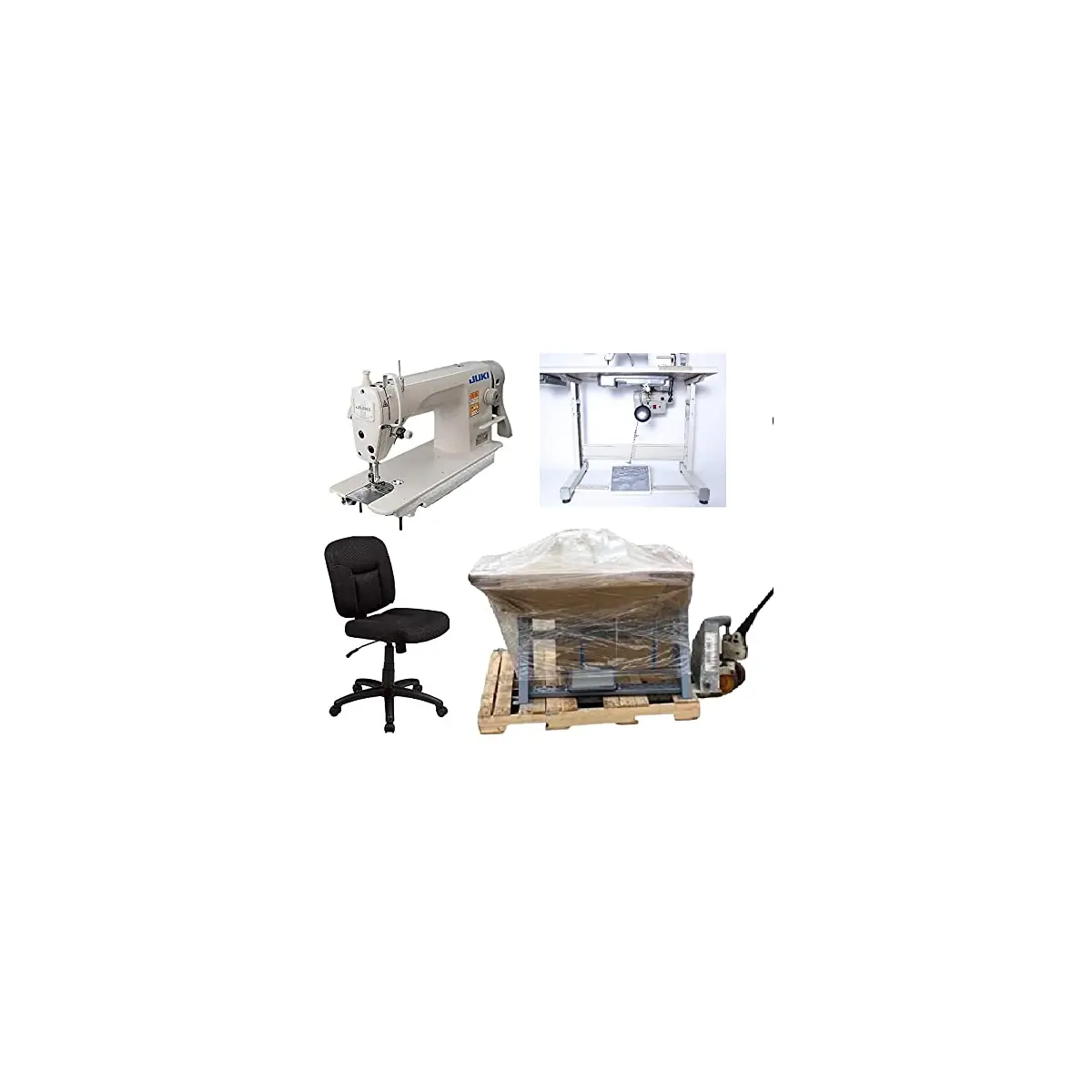 | Juki DDL-8700 High-volume apparel, alterations, uniforms, and light-to-medium woven production | Bottom feed, single-needle lockstitch | Check price |
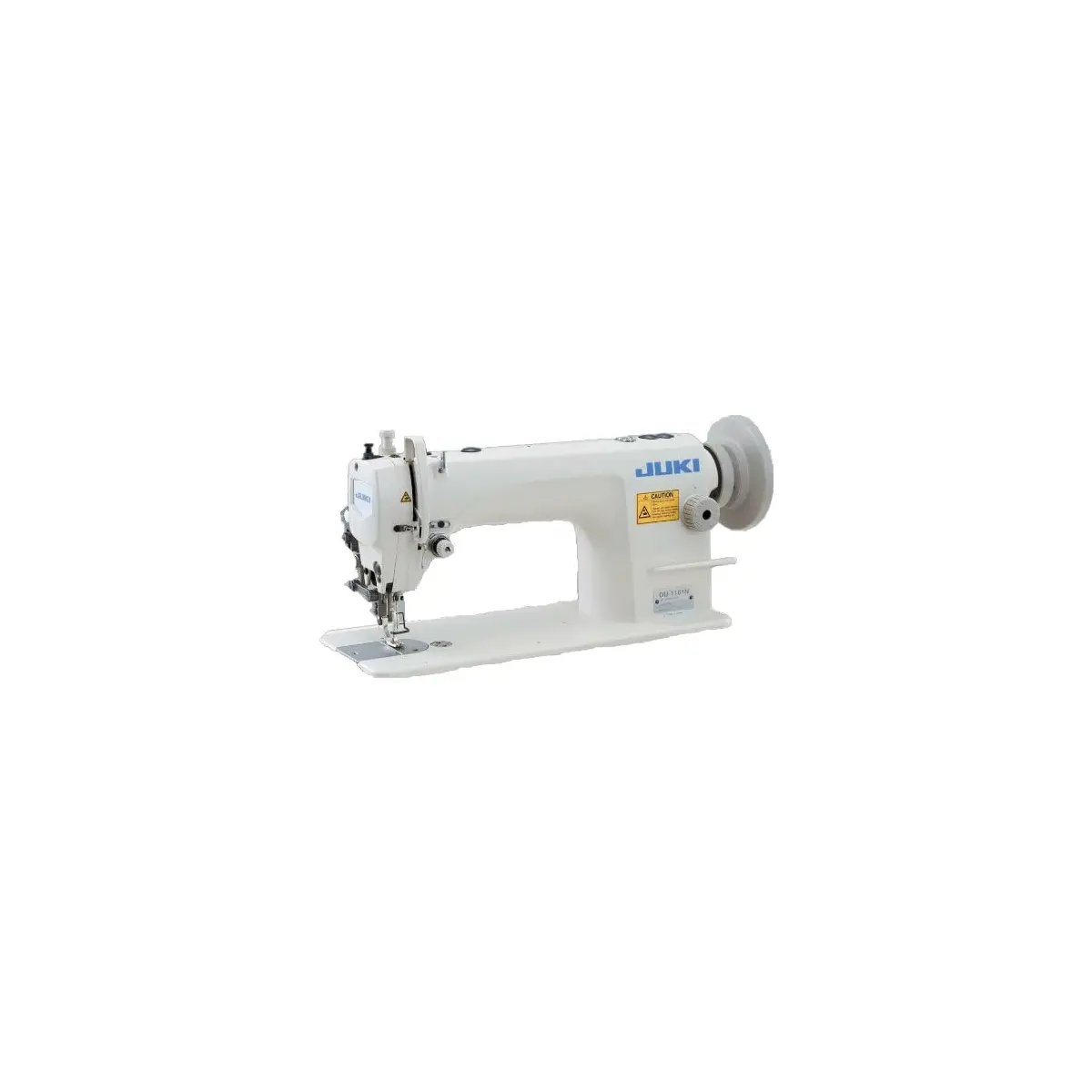 | Juki DU-1181N Canvas, vinyl, coated fabric, and moderate layered work | Top-and-bottom feed | Check price |
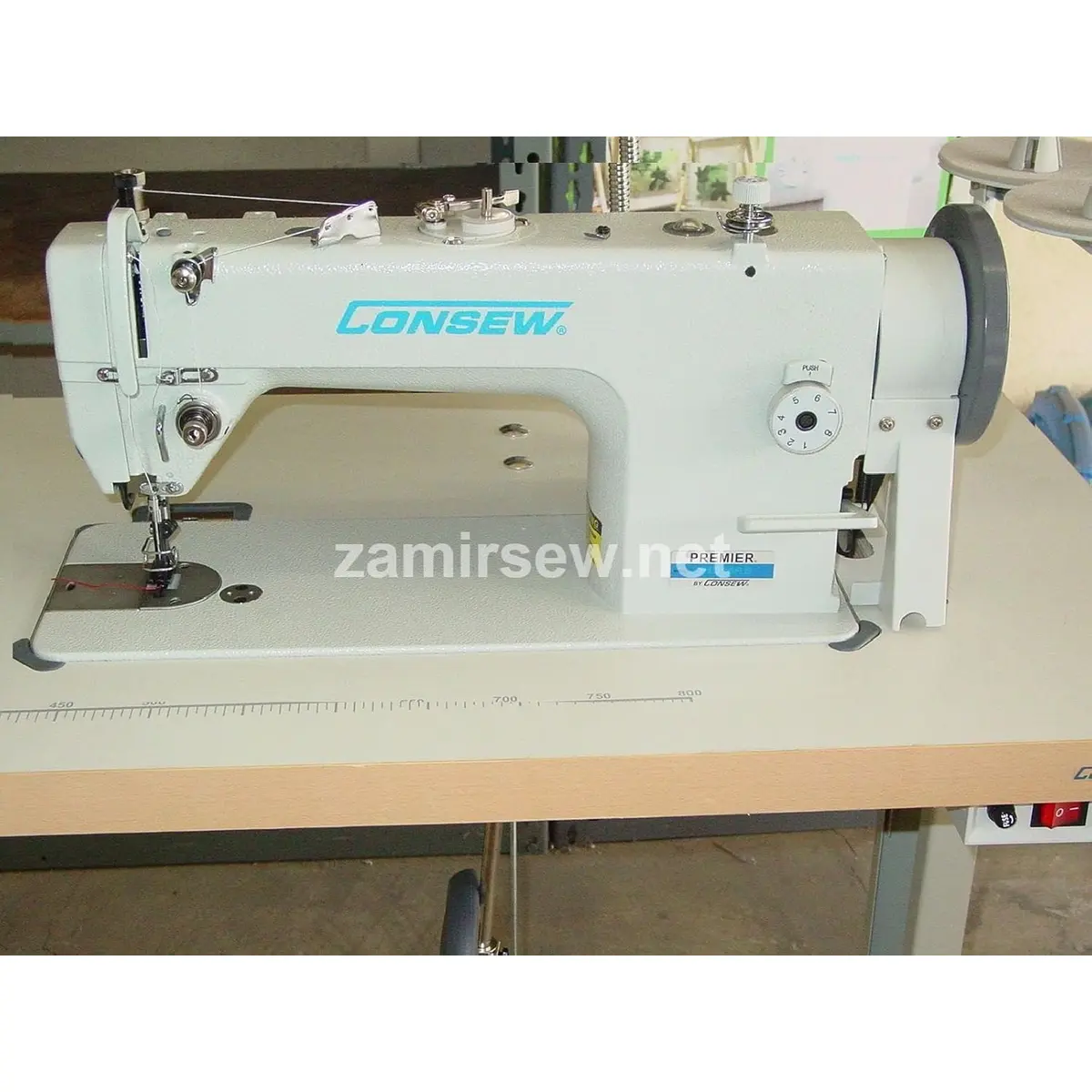 | Consew 206RB-5 Upholstery, marine canvas, bags, and medium leather | Compound feed with alternating feet and needle feed | Verify model |
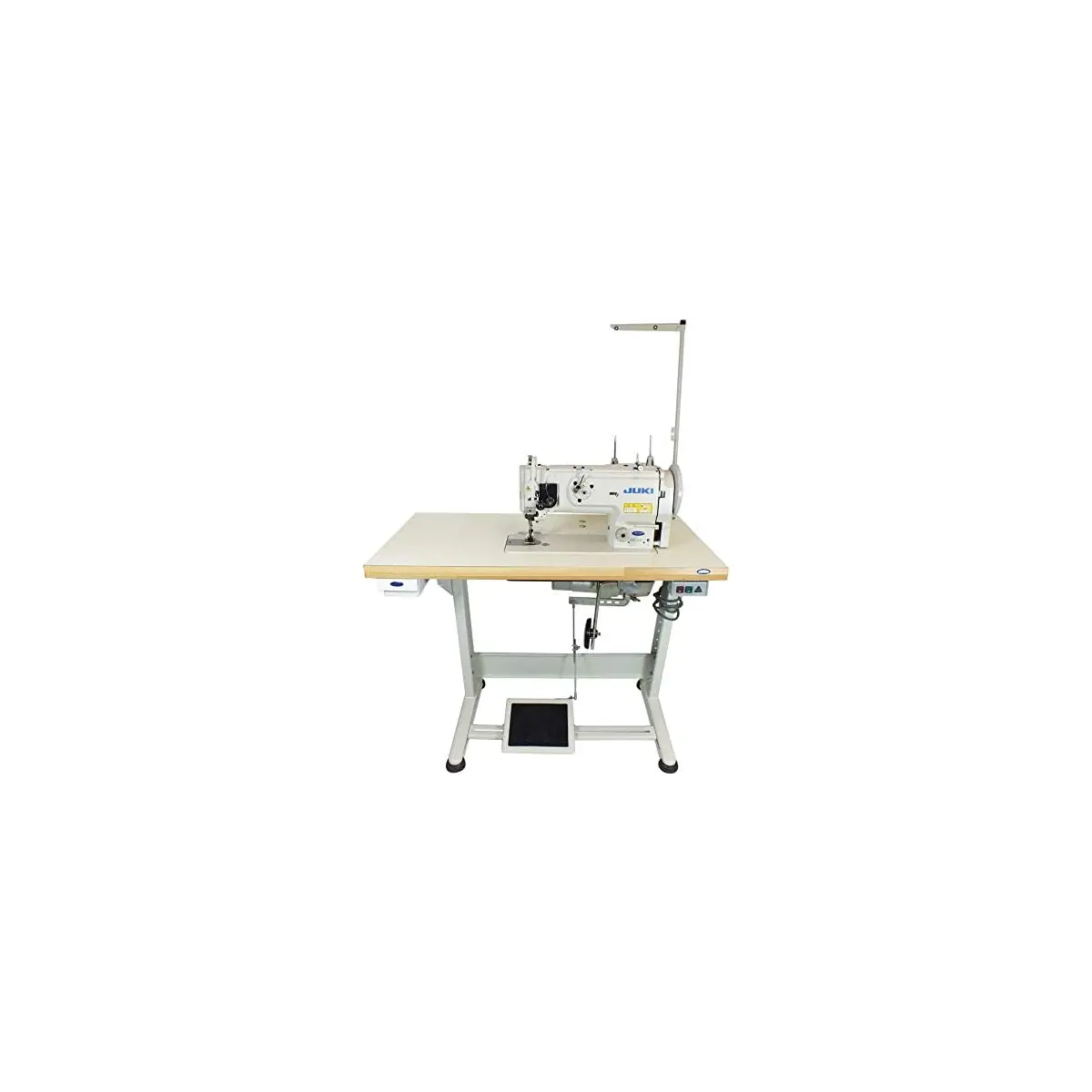 | Juki DNU-1541S Professional upholstery, automotive trim, bags, and medium-to-heavy leather | Unison feed | Check price |
Detailed recommendations
Juki DDL-8700
Best for high-volume apparel and alterations
The Juki DDL-8700 is the best fit here for a workshop whose daily work is dominated by long, straight seams in light-to-medium woven fabric. Juki identifies the standard DDL-8700 as a one-needle lockstitch for medium-weight material, with a maximum sewing speed of 5,500 stitches per minute, maximum stitch length of 5mm, and knee-operated presser-foot lift of 13mm.
Those numbers explain its production role, but speed alone is not the reason to buy it. The bigger advantage is a stable, repeatable garment workflow: the operator controls the material with both hands, lifts the foot with the knee, reverses to secure seams when appropriate, and uses a servo motor to set a manageable speed range.
Where it earns its place
The DDL-8700 suits alteration shops, sample rooms, uniform production, dressmaking studios, and small apparel factories sewing shirts, skirts, dresses, trousers, linings, light jackets, aprons, and similar woven products. It is also useful as the dedicated straight-stitch station beside an overlocker or coverstitch machine.
A servo motor is important for a smaller shop because it is quiet when idle and can provide more controllable starts than a traditional clutch motor. The selected Amazon bundle advertises a DDL-8700 head, table, power stand, and servo arrangement, but the visible listing has changed presentation over time and even mentions a chair. Treat every non-head component as seller-specific and obtain a written packing list.
Why 5,500 stitches per minute is not the buying target
Maximum rated head speed is not the appropriate operating speed for every fabric, seam, or operator. Detailed corners, short alteration seams, lightweight layers, and training all call for slower control. A servo's maximum-speed setting can tame the pedal, but pulley choice and motor programming also affect response.
Production should be timed across the full operation, including handling, alignment, backtacking, trimming, bobbin changes, pressing, and inspection. A head that can run very quickly does not save time if the operator spends each seam correcting layer creep.
Material limits
The DDL-8700 is not a walking-foot machine. Sticky vinyl, foam-backed fabric, heavy canvas stacks, webbing intersections, upholstery piping, and medium leather can shift or resist its bottom feed. The 13mm knee lift creates positioning space but does not mean the machine can reliably sew every stack that fits beneath the foot.
The standard machine also makes straight lockstitch only. It cannot replace a domestic zigzag machine, overlocker, coverstitch, buttonholer, or bartacker. A mixed studio may need it as one station, not its only machine.
Setup and oil considerations
The DDL-8700 is an oil-pan industrial. Follow Juki's manual for oil type, oil level, initial running, and daily checks. Protect pale fabric during commissioning and after extended idle periods. A dealer should set hook timing, feed timing, belt tension, motor rotation, knee lift, and thread stand, then test the delivered head on the intended material.
Best for: Apparel production, alterations, uniforms, samples, and sustained light-to-medium woven straight stitching.
Skip it if: The core product contains grippy upholstery, heavy canvas stacks, leather assemblies, or frequent layer changes that need coordinated feed.
Juki DU-1181N
Best bridge machine for canvas and vinyl
The Juki DU-1181N occupies a useful middle class. It is a one-needle top-and-bottom-feed lockstitch with a double-capacity hook. Juki specifies up to 2,000 stitches per minute, a 9mm maximum forward and reverse stitch, 36.5mm needle-bar stroke, 15mm knee lift, and 2 to 5mm alternating vertical movement.
It belongs in this shortlist because some workshops have outgrown garment drop feed but do not need the full needle-feed behaviour or cost of a compound-feed upholstery machine.
What top-and-bottom feed changes
As the lower feed dogs advance the work, the upper mechanism steps across the surface. This helps reduce slipping in difficult-to-feed material and multi-layer sections. Canvas bags, vinyl covers, light upholstery components, coated fabrics, piping, and moderate webbing assemblies are sensible candidates for testing.
The 9mm maximum stitch supports visible topstitching and longer construction stitches where the material and thread permit. The double-capacity hook reduces the frequency of bobbin changes compared with a standard small hook, which can matter in long seams.
What it does not change
The DU-1181N is not a true needle-feed compound-walking-foot machine. On a unison-feed machine, the needle travels with the material while the alternating feet work. The DU-1181N's top-and-bottom feed can be effective, but difficult upholstery stacks, dense bindings, foam-backed vinyl, and slippery multi-layer assemblies may still be better controlled by the 206RB-5 or DNU-1541S class.
Do not select it merely because its foot lift is high. Test whether the complete seam feeds evenly through flat sections, curves, junctions, and reverse transitions. Inspect whether the upper mechanism marks the face material and whether stitch length remains consistent when climbing a layer change.
The selected bundle
The current ASIN identifies a Juki DU-1181 industrial top-and-bottom-feed machine with a quiet 110V servo motor. The listing shows the correct 2,000-stitch-per-minute and 9mm figures, but its marketplace dimensions and weight metadata are not reliable enough for installation planning. Confirm table, stand, motor, voltage, assembly, oil, accessories, delivery, and warranty directly with the seller.
Who should buy it
Choose the DU-1181N when garment drop feed is visibly causing creep but the product range remains in moderate canvas, vinyl, coated material, and layered fabric. It can be a rational bridge for a bag or home-goods studio that does not routinely sew the densest upholstery stacks.
Who should step up or down
Step down to the DDL-8700 if stable apparel fabric is the main workload and throughput matters more than difficult-material feed. Step up to a compound-feed machine if the needle must help hold and transport multiple grippy layers, or if upholstery and medium leather dominate the order book.
Best for: Canvas, vinyl, coated fabrics, piping, and moderate layers that need more help than ordinary bottom feed.
Skip it if: The workload is mostly light apparel or regularly includes demanding upholstery stacks that justify true compound feed.
Consew 206RB-5
Best established compound-feed workshop class
The Consew 206RB-5 is an established reference point for medium-to-heavy flatbed work. Consew describes it as a single-needle lockstitch with drop feed, needle feed, compound feed, and alternating walking feet. The official machine includes a large horizontal-axis hook and bobbin, adjustable reverse, locking stitch regulator, centralised arm lubrication, reservoir-oiled hook, and safety clutch.
Official specifications list up to 3,300 stitches per minute, a 10mm maximum stitch, 14mm clearance beneath the presser foot, 258mm workspace, 135x17 needle system, and stitch type 301.
Why shops keep choosing this class
Compound feed helps move upholstery fabric, vinyl, canvas, coated materials, lining, foam, and medium leather together. A large bobbin supports long seams and heavier thread with fewer interruptions. Long stitch capability suits visible topstitching and materials that should not be perforated by unnecessarily short stitches.
The mechanical design is widely understood, and Consew publishes manuals, a parts book, and educational setup and adjustment videos. That does not remove the need for a local technician, but it improves the chances that a shop can obtain service information and routine parts.
The master sheet assigns ASIN B01BJFQKT4 to the 206RB-5. Current Amazon metadata does not safely support that identity. The title is generic, and the visible specification block lists 3,000 stitches per minute, 7mm stitch length, 16mm knee lift, and a 37mm needle-bar stroke. Those are not the official 206RB-5 figures.
This cannot be dismissed as a table or motor variation. The machine head specification itself differs. Before publication, the product record must be replaced with a currently verified 206RB-5 ASIN or formally changed to the actual model after separate research. Until then, the link below is retained only for master-sheet traceability in this noindex draft.
Where the 206RB-5 fits
The official model class suits furniture and automotive upholstery, marine covers, awnings, outdoor gear, tarpaulins, bags, luggage, medium leather, vinyl, and layered canvas. It is excessive for ordinary garment alterations and still not the right answer for every saddle, holster, dense belt, or extra-heavy harness seam.
A flatbed is also awkward inside narrow tubes and closed three-dimensional goods. Cylinder-arm or post-bed geometry may matter more than additional flatbed power for certain bags, footwear, and leather products.
Setup matters as much as the head
The 206RB-5 needs a correct table cutout, stand, motor, belt, pulley, oil pan, knee lift, bobbin winder, and thread stand. A servo motor improves controllability for small shops. Dense leather or slow detail work may benefit from a compatible speed reducer, but pulley and torque changes should be planned with the seller or technician.
Ask the dealer to sew the real stack with the intended thread. Confirm needle size, foot set, feed-dog and plate configuration, alternating-foot height, presser pressure, stitch balance, reverse length, safety-clutch operation, and hook lubrication before production.
Best for: Upholstery, marine canvas, bags, outdoor products, vinyl, and medium leather in a permanent workshop.
Skip it if: You need apparel versatility, zigzag, cylinder-arm access, or extra-heavy harness and saddle capacity.
Juki DNU-1541S
Best premium unison-feed option
The Juki DNU-1541S is the premium choice in this shortlist for a professional shop producing medium-to-heavy upholstery, leather, automotive trim, canvas, and bags. Juki specifies a one-needle unison-feed lockstitch with a double-capacity horizontal-axis hook.
The DNU-1541S is rated up to 2,500 stitches per minute, with a 9mm maximum forward and reverse stitch, 16mm knee lift, and alternating vertical movement from 2.5 to 6.5mm. The specified needle is 135x17, with Juki publishing supported size and thread ranges for the standard machine.
Why the feed is the central feature
The needle enters and travels with the material while the inner and outer feet alternate and the lower feed advances. That coordinated movement helps control stacked surfaces that might creep under bottom feed or top-and-bottom feed alone.
The adjustable alternating movement helps the feet step across changes in thickness. It should be set for the actual work, not simply maximised. Excessive foot movement can reduce smoothness or mark material, while too little can struggle over junctions.
What the “S” safety mechanism does
Juki states that the DNU-1541S safety mechanism operates when thread is caught in the hook or another sewing problem occurs, helping prevent machine damage. This is valuable protection, not permission to ignore jams. Stop immediately, switch off and unplug the machine, inspect the cause, clear the problem according to the manual, and re-engage the mechanism only as instructed.
The safety mechanism does not protect the operator from the needle, take-up lever, belt, handwheel, motor, or moving linkage. Guards, correct lighting, training, clothing control, and power isolation remain essential.
When the premium is justified
The DNU-1541S makes sense when the workshop's revenue depends on repeatable compound-feed seams, the material falls within its published range, and dealer support is available. It is easier to justify when downtime, seam correction, and inconsistent layer feeding cost more than the difference in purchase price.
The selected Amazon listing currently identifies the DNU-1541S and advertises a table, 550-watt servo motor, lamp, and assembly-required package. These are seller bundle claims, not permanent Juki head specifications. Confirm each component and the exact electrical configuration before ordering.
Where it stops fitting
The DNU-1541S is still straight stitch only and has a flat bed. It does not provide zigzag, buttonholes, free-arm access, or a narrow cylinder. It is not automatically suitable for very thick saddle leather, dense holsters, heavy belts, or thread beyond Juki's documented range.
For light garment fabric, its feet, feed action, needle and thread setup can be unnecessarily aggressive. A DDL-8700 is the cleaner production choice when apparel is the real job.
Best for: Professional upholstery, automotive trim, canvas, bags, and medium-to-heavy leather production that benefits from smooth unison feed.
Skip it if: Your work is primarily light apparel, requires cylinder access, or needs an extra-heavy leather stitcher rather than a medium-to-heavy flatbed.
How to choose an industrial sewing machine
The best industrial sewing machine is not the fastest head or the heaviest machine a budget can reach. It is the machine class that repeats one workshop's real seam with the least correction, operator strain, and downtime.
A clothing alteration shop, a canvas studio, and an upholstery workroom can all need an industrial straight stitch, yet they should not automatically buy the same one. Light-to-medium woven garments usually feed cleanly with a high-speed drop-feed lockstitch. Grippy vinyl and moderate canvas layers benefit from top-and-bottom feed. Upholstery stacks, bags, and medium leather are better candidates for compound or unison feed, where the needle and alternating feet help move the layers together.
This guide compares four approved machines by that class decision. The Juki DDL-8700 is the production lockstitch for apparel and alterations. The Juki DU-1181N is the bridge option for canvas, vinyl, and moderate layers that need more feeding help than a garment machine provides. The Consew 206RB-5 class is the established compound-feed choice for upholstery, marine canvas, bags, and medium leather, although the selected sheet ASIN has a current identity mismatch that blocks publication. The Juki DNU-1541S is the premium unison-feed option for professional shops that value strong layer control and a safety mechanism.
None is a universal sewing machine. All four are straight-stitch specialists. None supplies domestic zigzag, stretch stitches, buttonholes, free-arm access, or decorative programs. The right purchase begins with the seam and production workflow, not with the word “industrial.”
What “industrial” should mean before you buy
An industrial machine is normally designed around a narrow operation and sustained duty cycle. A domestic machine tries to cover many stitches in a portable body. A production lockstitch gives up that versatility to form one seam repeatedly, with a separate table, stand, motor, pedal, knee lift, thread stand, and lubrication system supporting the head.
That specialisation is why an industrial purchase can be transformative and why the wrong one can be an expensive obstruction. A DDL-8700 can produce beautiful garment seams all day but will not become an upholstery walking-foot machine because it has a metal head and a powerful motor. A DNU-1541S can control thick, grippy layers but may be unnecessarily aggressive, expensive, and cumbersome for light blouse fabric.
Stitch class comes first
All four shortlisted machines form a single-needle lockstitch, commonly identified as stitch type 301. That seam is familiar, clean, and appropriate for many construction and topstitching jobs. It uses an upper thread and bobbin thread, so bobbin changes remain part of production planning.
If the product needs seam overcasting, coverstitching, chainstitch flexibility, programmable pattern sewing, bar tacking, button sewing, blind hemming, or zigzag, buy the correct class for that operation. One fast lockstitch head cannot replace a production line of specialised operations.
Feed mechanism decides how layers travel
The DDL-8700 uses bottom feed. Feed dogs below the work advance the fabric while the presser foot holds it. This is efficient for stable garment fabrics, but the lower layer can move differently from the upper layer when surfaces are sticky, padded, or uneven.
The DU-1181N adds top feed to bottom feed. Its alternating top mechanism helps move difficult surfaces and step across moderate changes in thickness. This is useful for canvas, vinyl, and layered work, but the needle does not travel with the material in the same way it does in compound feed.
The 206RB-5 and DNU-1541S coordinate lower feed, needle feed, and alternating feet. This compound or unison action helps keep stacked materials aligned while the stitch is formed. It is especially valuable around upholstery, binding, foam-backed vinyl, webbing, coated canvas, and medium leather.
Feed does not eliminate preparation. Misaligned pattern pieces, inadequate basting, incorrect foot pressure, a blunt needle, poor thread path, or an unsuitable seam design can still cause bad results.
Duty cycle is more useful than occasional thickness
A machine that pierces a sample once has not proved it can produce that seam for eight hours. Sustained work creates heat, lint, vibration, oil demand, needle wear, bobbin changes, and operator fatigue. Ask how many units or seam metres the workshop expects per shift and how frequently the most difficult junction appears.
Industrial value comes from repeatability. Test at real production speed, then inspect stitch balance, feeding, surface marking, needle temperature, thread damage, and consistency after multiple samples. A slow demonstration through one thick stack is not a capacity test.
Pre-purchase requirements most listings do not explain well
Define the full seam stack
Bring the dealer the actual material, thread, adhesive, binding, piping, foam, lining, reinforcement, and folded junction. A flat panel may be easy while a corner contains six or ten effective layers. Test the hardest repeatable junction, not the simplest part of the product.
Write down the thread size, needle system and size, stitch length, foot type, presser-foot pressure, alternating-foot height, motor setting, and any speed reducer used during a successful trial. This becomes the starting setup for installation and later troubleshooting.
Confirm what the price includes
Marketplace offers often combine a machine head from one manufacturer with a third-party table, stand, servo motor, belt, oil pan, drawer, thread stand, lamp, and accessories. “Complete” does not always mean assembled, adjusted, tested, or ready for the local electrical supply.
Before payment, obtain a written list covering:
- Exact machine model and subclass
- Head only or complete workstation
- Table cutout and tabletop dimensions
- Stand type and whether its height is adjustable
- Motor brand, wattage or horsepower, voltage, phase, speed range, and warranty
- Pulley size and whether a speed reducer is included
- Belt, oil pan, knee lifter, bobbin winder, thread stand, lamp, needles, bobbins, oil, and tools
- Assembly, delivery, installation, test sewing, and operator training
- Freight damage procedure and return responsibility
Do not infer bundle contents from photographs. Industrial bundles change by seller, and heavy-item return shipping can erase an apparent saving.
Plan electrical supply and floor space
Verify voltage and phase before ordering. A machine packaged for 110V single-phase use is not interchangeable with a 220V or three-phase shop installation without correct equipment and professional advice. Never use an improvised adapter to solve a motor or grounding mismatch.
Measure the assembled table, operator chair clearance, pedal movement, material handling area, service access, doorway, stairs, lift capacity, and delivery route. Industrial heads are heavy, and complete tables are awkward. Use appropriate lifting help. Do not lift a head by the handwheel, tension assembly, thread guides, or other precision parts.
Choose service before maximum speed
Local access to a technician, parts, needles, hooks, bobbins, feet, feed dogs, plates, belts, motor components, and manuals is often worth more than a small difference in purchase price. Ask who performs warranty work, whether the seller test-sews the exact material, and how quickly routine parts can be supplied.
How we selected these machines
The four models and roles come from the site's approved Amazon product shortlist. Official manufacturer specifications, current marketplace identity, visible bundle claims, and safety-relevant setup details were checked on July 22, 2026. Selection was based on stitch class, feed, material range, duty cycle, speed control, package requirements, serviceability, and distinct buyer intent, not rating count or bestseller rank.
Each model has to own a separate decision. The DDL-8700 is the apparel production specialist. The DU-1181N is the top-and-bottom-feed bridge for moderate difficult materials. The 206RB-5 represents the familiar compound-feed workshop class. The DNU-1541S is the premium professional option with documented unison feed and safety mechanism.
This is a research-based guide and does not claim personal hands-on testing. Manufacturer specifications are treated as primary evidence. Marketplace bundle details are attributed to the listing and must be reconfirmed with the seller because motors, tables, assembly, inventory, and electrical configurations can change.
The research found one material identity problem. The master sheet pairs the Consew 206RB-5 with ASIN B01BJFQKT4, but the current Amazon page shows a generic Consew upholstery machine with a different specification set: 3,000 stitches per minute, 7mm stitch length, 16mm knee lift, and a 37mm needle-bar stroke. Those figures align with a P1206RB-type listing, not Consew's official 206RB-5 specification of 3,300 stitches per minute, 10mm stitch length, 14mm presser-foot clearance, and 33mm needle-bar stroke. The ASIN must be corrected or formally reverified before publication.
Installation and commissioning checklist
An industrial machine is not commissioned when the boxes arrive. It is commissioned when the complete workstation is safe, correctly adjusted, and successfully repeats the production seam.
- Verify the model plate, subclass, serial number, voltage, motor, and packing list before assembly.
- Inspect freight damage before discarding packaging and document concerns immediately.
- Use adequate lifting help and secure the table on a level floor.
- Install guards, belt cover, finger guard, thread stand, oil pan, knee lift, pedal linkage, bobbin winder, lamp, and grounding exactly as required.
- Have a qualified person resolve any electrical uncertainty. Do not improvise plugs, adapters, wiring, or motor direction.
- Add only the specified lubricant in the correct locations and quantity.
- Turn the handwheel manually with power disconnected to check free movement and correct needle installation.
- Thread the machine and wind the correct bobbin according to the manual.
- Start at a low motor limit using scrap material, then check stitch balance, feeding, reverse, lift, oil circulation, noise, vibration, and heat.
- Test the full production stack at a realistic sustained pace and record the working setup.
Keep hair, loose sleeves, jewellery, cords, and tools away from the belt, pulley, handwheel, take-up lever, needle bar, and foot linkage. Switch off and unplug before changing needles, feet, plates, feed dogs, belts, or making adjustments near moving parts. Use lockout procedures appropriate to the workplace during service.
Servo motor, pulley, and speed control
A servo motor is normally the better choice for a small workshop than an always-running clutch motor. It is quiet at idle, uses power on demand, and allows a maximum speed to be set. However, “servo” does not guarantee delicate control. Motor programming, pedal linkage, pulley size, torque curve, needle positioner, and operator technique all affect the first few stitches.
A smaller motor pulley or speed reducer can improve low-speed resolution and torque at the machine, but it also changes maximum speed and belt geometry. Confirm compatibility and guarding. Do not oversize the motor as a substitute for the correct machine class.
Set the maximum speed for the operation and operator, not for the highest number on the head's specification sheet. A controlled, repeatable seam is more productive than bursts of speed followed by correction.
Maintenance and technician support
Create a maintenance schedule from the manufacturer manual and the workshop's duty cycle. Typical work includes clearing lint and thread, checking oil level and flow, inspecting the needle, cleaning the hook area, monitoring belt condition, checking screws and guards, and replacing wear parts. The exact lubrication system differs by model, so do not apply one machine's routine to another.
Change a bent, blunt, burred, or overheated needle promptly. Needle damage can create skipped stitches, thread breaks, material damage, deflection toward the hook, or operator risk. Match needle system, point, and size to the machine, material, and thread.
Keep a production log for broken needles, jams, safety-clutch events, skipped stitches, thread breaks, unusual noise, oil leaks, and technician adjustments. Patterns reveal whether the cause is material variation, operator practice, consumables, setup, or mechanical wear.
Do not learn hook timing on a live customer order. Establish a relationship with a technician before the machine stops production, keep normal consumables in stock, and obtain the parts book and official manual for the exact subclass.
Frequently asked questions
Is an industrial sewing machine always stronger than a domestic heavy-duty machine?
Industrial machines are designed for specialised operations and sustained work, but “stronger” is too vague to choose one. A domestic heavy-duty machine may offer zigzag and buttonholes that none of these industrial lockstitches can perform. An industrial garment lockstitch can run rapidly all day yet feed upholstery poorly. Compare the actual stitch, feed, needle and thread range, seam stack, duty cycle, and bed geometry.
Which machine is best for a clothing alteration shop?
The Juki DDL-8700 is the strongest fit among these four when most work is straight stitching in light-to-medium woven garments. An alteration shop will still need other capabilities for overlocking, stretch fabrics, blind hems, buttonholes, and specialised finishes.
Do I need a walking foot for canvas?
Not for every canvas seam. Stable, moderate canvas may feed on a suitable drop-feed machine. Coated surfaces, multiple layers, binding, webbing, foam, and long matched seams benefit more from top feed or compound feed. Test the finished stack. The DU-1181N is the bridge choice; the 206RB-5 and DNU-1541S suit more demanding coordinated-feed work.
Can the DNU-1541S sew all leather?
No. It is a medium-to-heavy unison-feed flatbed with documented needle and thread limits. Garment leather may need a gentler setup, while dense saddlery, holsters, belts, and extra-heavy thread can require a different machine class. Three-dimensional goods may require a cylinder arm even when the flatbed has enough piercing power.
Is a higher maximum speed better?
Only when the operation and material can use it safely and consistently. The DDL-8700's high speed suits garment production. Upholstery and leather work often requires slower control, long stitches, careful cornering, and management of thick junctions. Throughput should be measured across the complete operation.
Should I buy the machine head only?
Buy head-only when you already have a compatible table, cutout, stand, motor, pulley, belt, oil pan, controls, and installation expertise. A first-time industrial buyer is usually better served by a complete, correctly specified package from a dealer who assembles, adjusts, test-sews, and supports it.
Why is the Consew link marked as blocked?
The approved sheet pairs the 206RB-5 with ASIN B01BJFQKT4, but the current Amazon specification set does not match Consew's official 206RB-5 data. Publishing it as an exact 206RB-5 offer would risk sending a reader to a different model. The record is retained in this noindex draft for traceability and must be corrected or reverified before launch.
Final verdict
For garment production and alterations, the Juki DDL-8700 is the right specialist because clean high-volume straight seams matter more than walking feed. For canvas, vinyl, and moderate difficult layers, the Juki DU-1181N adds useful top-and-bottom feed without pretending to be full compound feed.
For upholstery, marine canvas, bags, and medium leather, the Consew 206RB-5 class remains a defensible workshop choice, but the current sheet ASIN is not publication-safe. It must be corrected before the recommendation goes live. For professional buyers prioritising controlled unison feed and a documented safety mechanism, the Juki DNU-1541S is the premium pick.
The final purchase should be made only after the exact machine, subclass, table, stand, motor, voltage, assembly, warranty, technician support, needle and thread range, and hardest production seam have all been verified. Industrial buying is a machine-class decision first and a model decision second.
Research sources
- Juki official DDL-8700 product specifications
- Juki official DU-1181N product page and catalog
- Consew official 206RB-5 product page, manual, parts resources, and setup guidance
- Juki official DNU-1541S product page and non-apparel catalog
- Current Amazon pages for ASINs B07RHVNWSF, B005I5DXIS, B01BJFQKT4, and B07S2L6BBB, checked July 22, 2026
Prices, inventory, sellers, motor packages, tables, assembly terms, and marketplace titles can change. Verify the exact offer before purchase. This page contains affiliate links; the site may earn a commission from qualifying purchases at no additional cost to the buyer.