
Affiliate disclosure: We may earn from qualifying Amazon purchases at no extra cost to you. Products are selected for utility and reader fit, not ratings or commission.
The best sewing machine for free-motion quilting is not necessarily the machine with the most quilting stitches. During free-motion work, the feed dogs are lowered or covered and the quilter moves the quilt in every direction. Stitch length comes from the relationship between machine speed and hand movement. What matters is control, visibility, a smooth support surface, enough room to manage the quilt, and a machine that forms a stable straight stitch while the fabric is moving freely.
This guide recommends five machines for five different FMQ situations. The Juki TL-2010Q is the strongest overall choice for serious free-motion quilters who want a fast, rigid straight-stitch specialist. The Brother PQ1600S is the alternative for quilters who value its included wide table, four feed-dog height settings, and straight-stitch workspace. The Janome Memory Craft 6650 is the premium one-machine studio choice for FMQ, garment sewing, piecing, buttonholes, and decorative work. The Juki HZL-F600 is a capable crossover for garment makers adding smaller-scale FMQ. The Brother XR9550 provides the basic controls and accessories for a beginner learning on practice pieces and smaller quilts.
None of these machines turns free-motion quilting into an automatic process. None should be assumed to include true stitch regulation. A speed slider limits the machine's maximum speed, but the operator still coordinates foot control or start-stop operation with the movement of the quilt. That skill difference matters more than marketing labels.
Quick recommendations
Choose the Juki TL-2010Q if free-motion quilting and straight-stitch piecing are the core of your sewing. It gives you a rigid aluminium bed, adjustable maximum speed from 200 to 1,500 stitches per minute, drop feed, knee lift, needle up or down, and automatic thread trimming. Its focus is also its limit: it does straight stitch only.
Choose the Brother PQ1600S if you want a high-speed straight-stitch machine with an included 11.1 by 23.3-inch table and more control over how far the feed dogs rise. Its 5.7 by 8.7-inch needle-to-arm area is useful for domestic FMQ, but it is still far smaller than a true longarm workspace.
Choose the Janome Memory Craft 6650 if you want one substantial machine for quilting and general sewing. Its 10-inch-wide workspace, 4.7-inch height, drop feed, speed slider, adjustable foot pressure, included FMQ feet, and broad stitch library make it the best all-round studio option here.
Choose the Juki HZL-F600 if garment sewing remains the priority and FMQ is an added capability. Its drop feed, adjustable speed, box-feed system for normal sewing, wide table, buttonholes, and decorative stitches give it crossover value. The roughly 8-inch throat is less comfortable for bulky bed quilts.
Choose the Brother XR9550 if you are learning FMQ on sandwiches, wall hangings, placemats, runners, and smaller throws. It includes variable speed control, drop-feed capability, a spring-action quilting foot, and a wide table at a lower entry cost. Its light body and modest throat are not ideal for frequent queen-size projects.
Quick comparison
Showing three products at a time. Scroll vertically to see the remaining models.
| Product image | Title and best fit | Type | Current price |
|---|---|---|---|
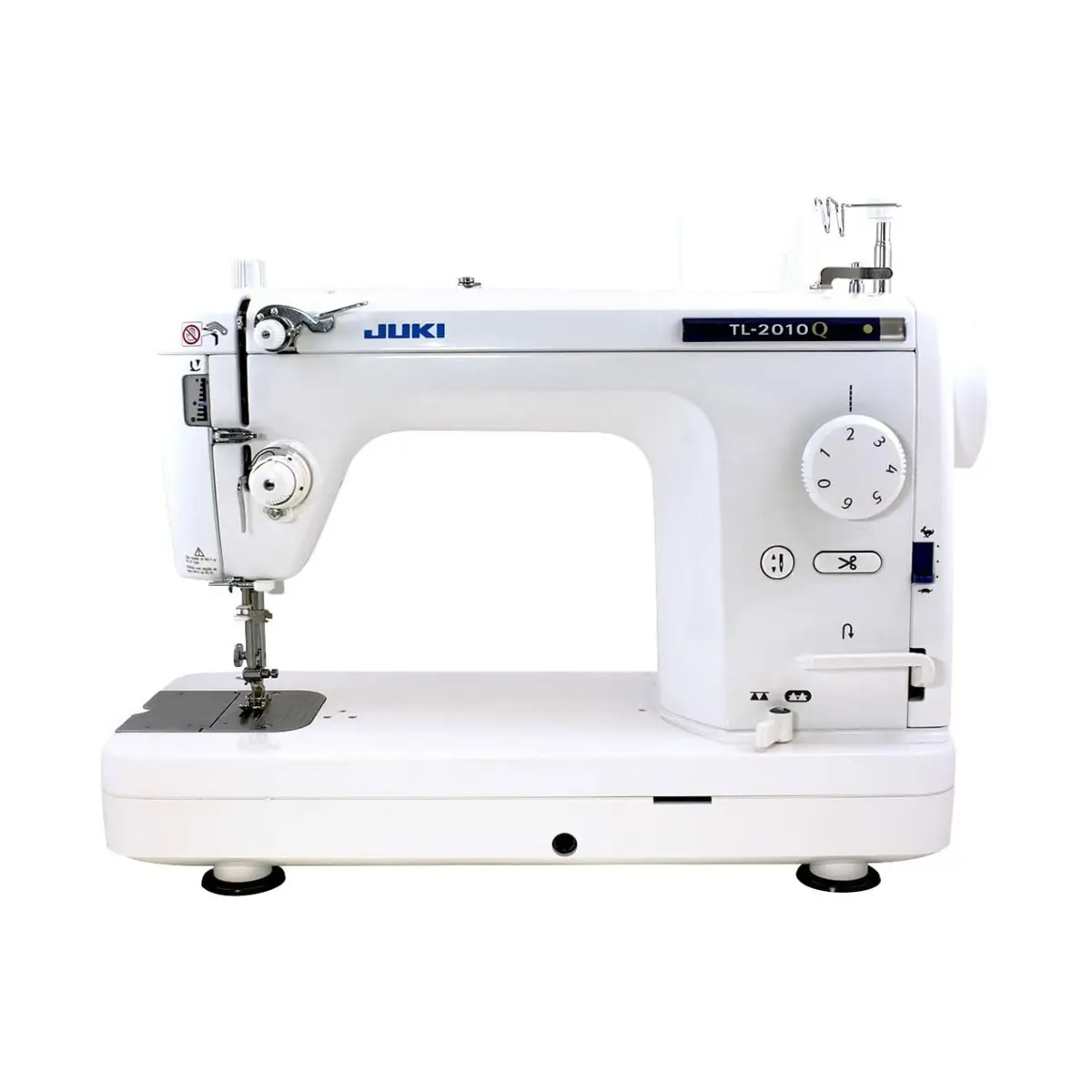 | Juki TL-2010Q Serious quilters wanting straight-stitch control | About 8.5 inches to the right of the needle plus extension table | Check price |
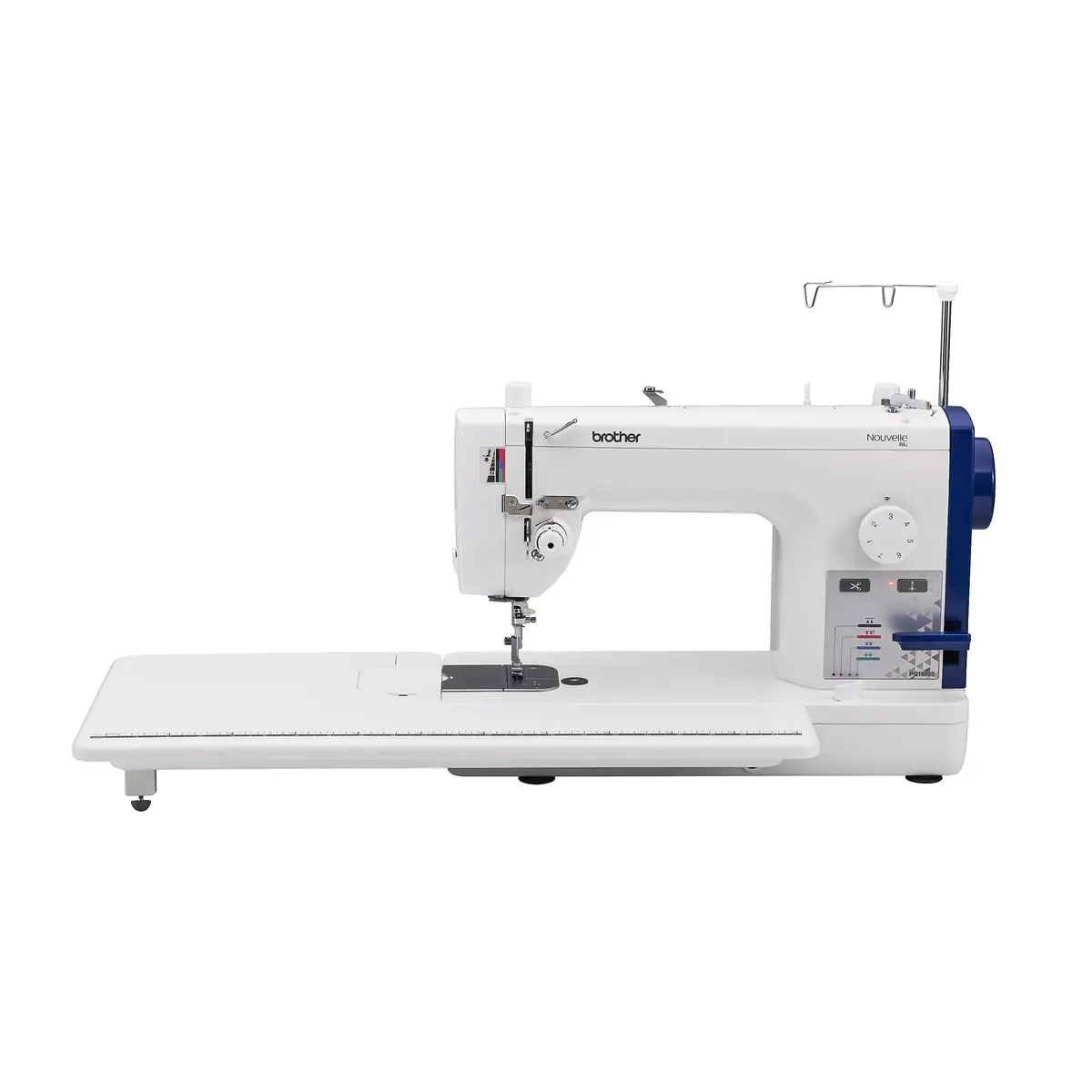 | Brother PQ1600S Quilters prioritising a large included table and feed adjustment | 5.7 x 8.7-inch needle-to-arm space; 11.1 x 23.3-inch table | Check price |
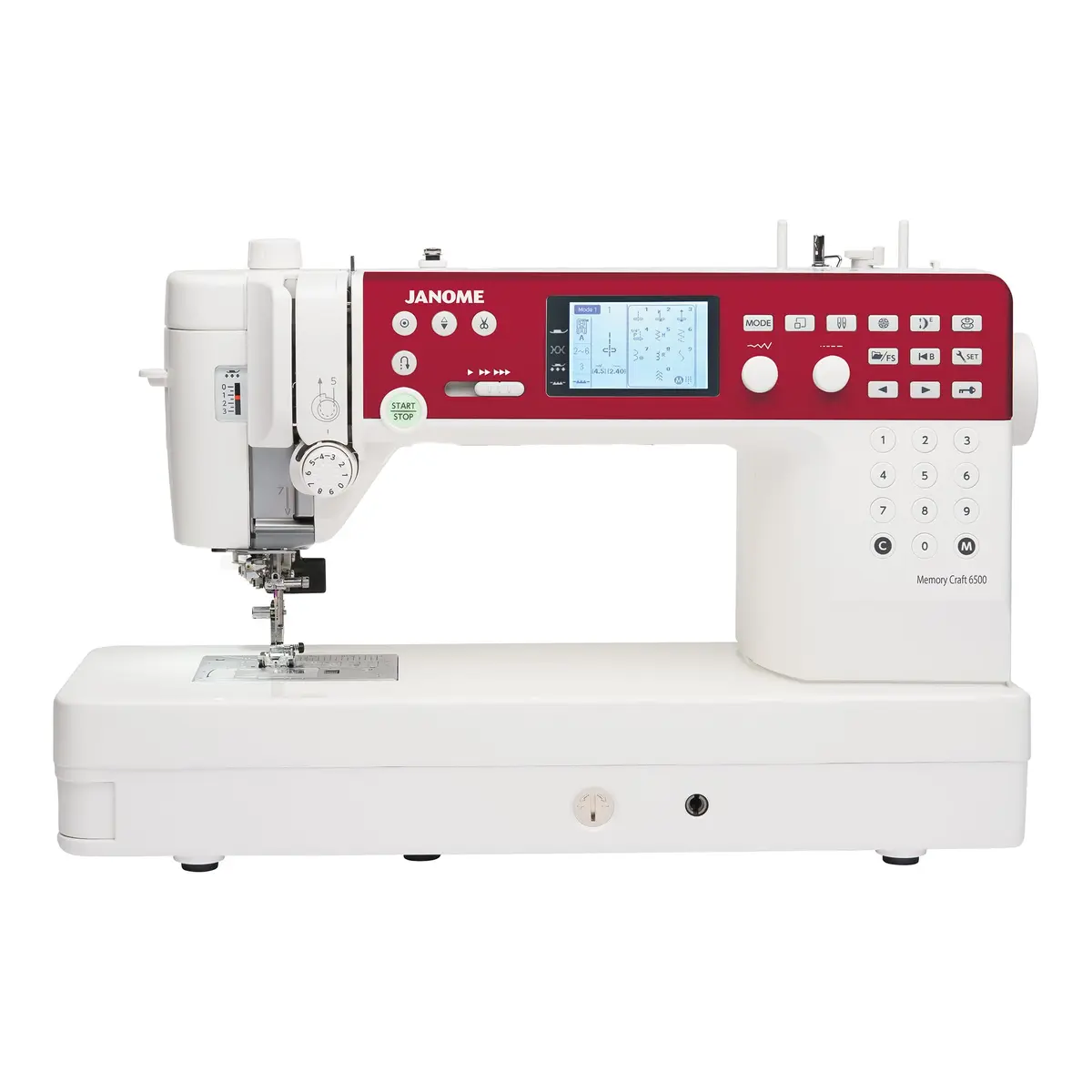 | Janome Memory Craft 6650 One premium machine for FMQ and full sewing | 10 x 4.7-inch workspace; metal seamless flatbed | Check price |
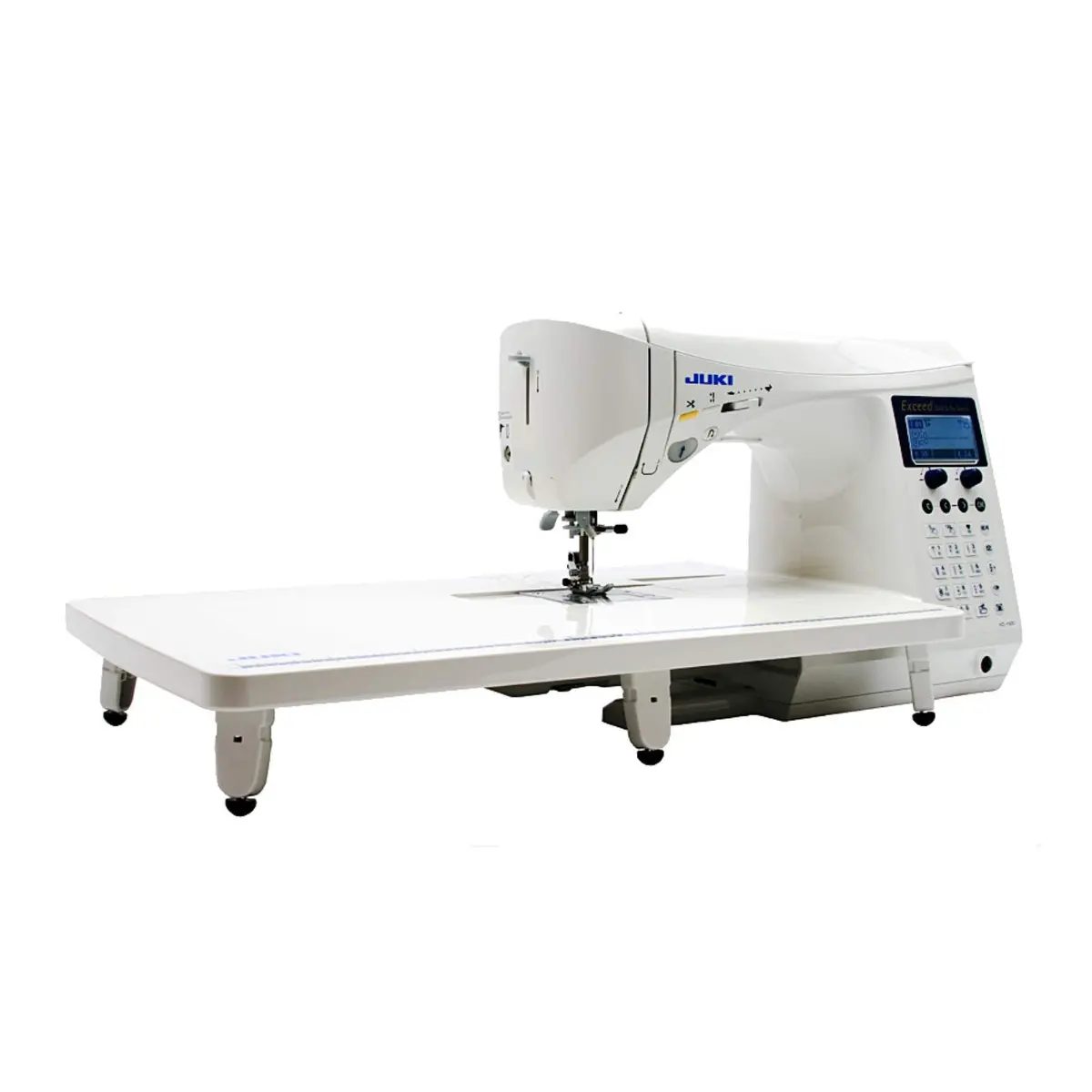 | Juki HZL-F600 Garment sewists adding occasional FMQ | Roughly 8 x 4.4-inch throat; wide table in the standard package shown by Juki | Check price |
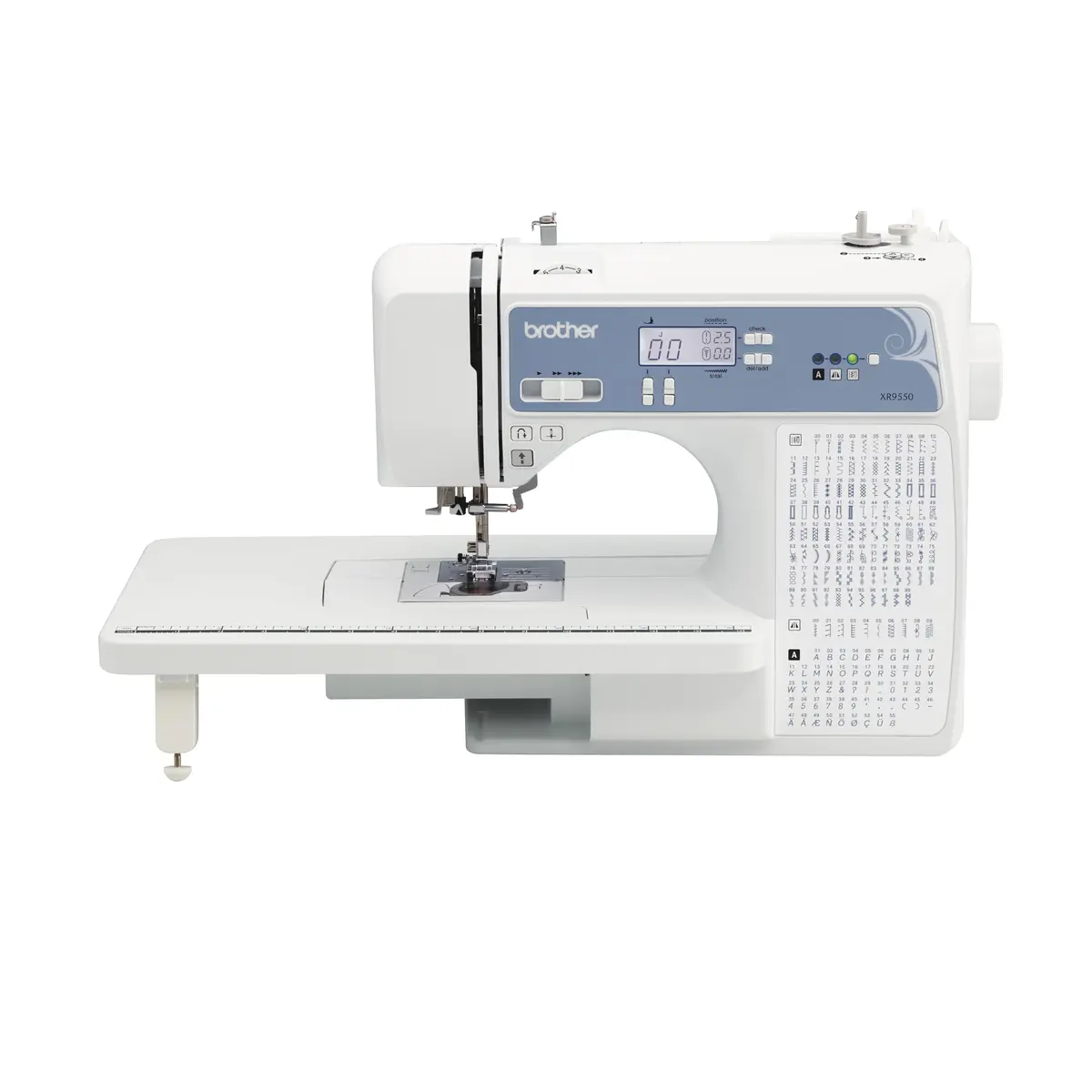 | Brother XR9550 Beginners practising on smaller projects | Included wide table with modest domestic throat | Check price |
Detailed recommendations
Juki TL-2010Q
Best overall for serious free-motion quilting
The Juki TL-2010Q is the strongest pick when free-motion quilting, straight-line quilting, and precision piecing make up most of the workload. It is a one-needle lockstitch machine built around a rigid aluminium bed rather than a broad menu of stitch patterns. That focused construction makes sense for a quilter who already owns another machine for zigzag, buttonholes, and garment stretch stitches.
Juki specifies a maximum-speed control range from 200 to 1,500 stitches per minute. That range is more meaningful for FMQ than the headline maximum alone. The operator can set a conservative ceiling while practising, then increase it when movement becomes steadier. Needle up/down supports deliberate stops, while the knee lifter raises the presser foot without taking both hands away from a bulky quilt.
The machine also offers drop feed and automatic thread trimming. The extension table expands the supporting surface around the bed. About 8.5 inches of space to the right of the needle provides useful domestic-machine room, though it does not remove the physical work of compressing and repositioning a large quilt.
Why it works for FMQ
A straight-stitch-only mechanism avoids paying for functions that do not contribute to FMQ. Its high top speed can support fluid curves, stippling, and longer motifs once the quilter has learned to coordinate movement. The heavy, flat bed is less inclined to skitter across the table than a very light beginner machine.
The knee lift is particularly helpful. During FMQ, both hands are normally controlling the quilt. Lifting the foot with a knee allows a small reposition while keeping the work stable. Automatic trimming can reduce the need to reach for scissors, but it does not replace thoughtful starts, stops, and thread-tail management.
The central limitation
This machine cannot zigzag, create an automatic buttonhole, sew stretch stitches, or provide decorative patterns. It is best as a specialist or as the straight-stitch half of a two-machine setup. A garment maker buying only one machine may find the restriction expensive and inconvenient.
It also does not provide the workspace of a true longarm. A queen-size quilt can be managed on domestic equipment with planning, but the operator still bears the bulk and repeatedly moves it through the throat.
Listing caution
The exact selected ASIN currently resolves to a TL-2010Q title, but some visible Amazon metadata is internally inconsistent, including unrelated model fields and an odd power-source label. Use Juki's official model page and manual for specifications. Before checkout, confirm the offer is a new TL-2010Q, verify the seller, included extension table and accessories, voltage, warranty coverage, and return conditions. Do not rely on every marketplace field.
Best for: Serious FMQ quilters and piecers who want speed, stability, and straight-stitch control and can keep a second machine for other stitches.
Skip it if: This will be your only machine for garment sewing, buttonholes, knits, and decorative work, or if you need genuine longarm space or stitch regulation.
Brother PQ1600S
Best straight-stitch alternative with a large included table
The Brother PQ1600S addresses the same serious straight-stitch buyer as the Juki, but it earns a separate role through its support table and feed adjustment. Brother lists an 11.1 by 23.3-inch wide table, a 5.7 by 8.7-inch needle-to-arm area, and four colour-coded feed-dog height settings.
Those feed settings matter because the user can select how much the dogs engage the work instead of treating feed as a simple up-or-down choice. For FMQ, the relevant configuration must follow Brother's manual and the chosen quilting foot. For piecing and straight-line quilting, the feed controls provide other ways to match the fabric stack and technique.
The PQ1600S is a high-speed straight-stitch platform. It also provides controls aimed at hands-on work with larger projects, including knee-lift and needle-position functions. The included table helps prevent the quilt from dropping immediately beside the machine, although an even larger surrounding surface is still useful for bed quilts.
Who should choose it over the Juki
Choose the PQ1600S when the included table and four feed-dog levels match your workflow, or when Brother dealer and service access is stronger in your area. It is also a logical choice for someone who wants one machine for straight-stitch piecing, free-motion work, and fast construction in woven fabrics.
Do not choose solely on a small price difference. Test the foot controller, visibility, noise, hand position, thread path, bobbin access, and knee-lift placement if a local dealer has both machines. Ergonomics become more important during a two-hour FMQ session than a minor accessory-count advantage.
What it does not solve
The 8.7-inch horizontal space is useful but still domestic or mid-arm territory. The 5.7-inch vertical figure helps, yet a dense quilt roll may remain awkward. The wide table carries fabric outside the machine but does not enlarge the arm opening.
Like the TL-2010Q, the PQ1600S is straight-stitch only. It should not be the sole machine for a sewist who regularly needs zigzag, overcasting, stretch construction, automatic buttonholes, or decorative work. It also does not remove the learning curve of unregulated FMQ.
Best for: Quilters who want a focused high-speed straight-stitch machine, an expansive included table, and multiple feed-dog height settings.
Skip it if: You need one machine for full garment construction, expect longarm-scale space, or want automatic stitch-length regulation.
Janome Memory Craft 6650
Best premium all-rounder
The Janome MC6650 is the best choice here for a sewist who wants strong FMQ capability without dedicating an expensive machine to straight stitch alone. Janome specifies a 10-inch-wide by 4.7-inch-high workspace, a 10-inch all-metal seamless flatbed, drop feed, a speed-control slider, adjustable presser-foot pressure, memorised needle up/down, an automatic thread cutter, and speeds up to 1,000 stitches per minute.
It also includes purpose-specific FMQ accessories: closed-toe, open-toe, and zigzag free-motion feet plus the relevant holder. That reduces the risk of buying a capable machine and then discovering that the required foot is a separate or poorly identified accessory.
The 10-inch width gives the MC6650 the most generous horizontal domestic workspace in this shortlist. Its 4.7-inch height should still be considered when planning how to roll, fold, or puddle a bulky quilt. Width alone is not the complete throat measurement.
Why it is the best one-machine studio option
The MC6650 retains 170 stitches, one-step buttonholes, 9mm stitch width, multiple needle positions, garment-sewing feet, and a top-loading rotary hook. A quilter can piece, appliqué, create buttonholes, sew garments, use decorative stitches, and free-motion quilt without changing machines.
The heavy metal flatbed provides a broad, smooth area immediately around the needle. Six LEDs across three locations improve visibility. Foot-pressure adjustment helps during normal sewing and can support tuning for different fabric stacks, although the correct FMQ setup should still follow Janome's manual.
Why a specialist may still be better
The MC6650 costs more than an entry-level domestic machine and includes many features a straight-stitch purist will not use. Its top speed is lower than the 1,500-SPM specialist machines, although maximum speed is not the main obstacle for many home quilters.
A specialist may also appeal to someone who prefers fewer menus and a dedicated tension setup. Conversely, keeping all sewing on one machine can be simpler in a small studio. This is a workflow decision, not proof that more stitches make the Janome better at FMQ.
Table and bundle check
Janome lists an extension table as optional on its current MC6650 product page, while individual dealer or marketplace bundles may include one. Confirm the exact Amazon offer rather than assuming a table shown in an image is standard. Also verify seller status and warranty eligibility, especially at this price.
Best for: Quilters who want the room and controls for serious FMQ plus garment, decorative, buttonhole, and general sewing functions in one machine.
Skip it if: You want a simple straight-stitch specialist, already own a capable general machine, or would rather put the budget toward a larger quilting-only platform.
Juki HZL-F600
Best for garment sewists adding FMQ
The Juki HZL-F600 is not ranked as a smaller version of the TL-2010Q. It serves a different person. This is a full computerized sewing machine with 225 stitch patterns, 16 buttonholes, lettering, adjustable foot pressure, drop feed, variable speed, and Juki's box-feed system for ordinary sewing.
Juki describes the box feed as moving the feed dogs in a rectangular path to reduce shifting during normal fed sewing. That is valuable for piecing and garment construction, but it is not the mechanism doing the work when the feed dogs are dropped for FMQ. The FMQ case rests instead on the machine's controllable speed, drop-feed capability, quilting foot, visibility, and table support.
The F-series throat is roughly 8 inches wide and 4.4 inches high. That is workable for smaller and medium projects but less comfortable than the Janome's 10-inch width or a true large-throat machine. The HZL-F600 package described by Juki includes a wide table, though marketplace offers should be checked for the exact contents.
Why garment makers should consider it
The F600 has meaningful capabilities after the quilt is finished. Buttonholes, zigzag, adjustable needle positions, decorative patterns, foot-pressure control, and strong normal feeding support dresses, shirts, bags, home décor, appliqué, and piecing. Someone with one machine and mixed projects may get more use from this versatility than from a faster straight-stitch head.
It can also perform free-motion zigzag with the correct compatible foot and setup, expanding creative thread work beyond ordinary straight-stitch FMQ. Accessory compatibility should be checked against Juki's current chart and exact machine series before buying a foot.
Where it stops fitting
The throat becomes the limiting factor as quilts grow. The F600 can form FMQ stitches, but a large rolled quilt may make hand movement less fluid and block the operator's view. A person who expects to quilt multiple queen or king quilts each year should prioritise more space rather than paying for stitch patterns.
This model has also been in the market for years, so verify that the exact seller offers a new US-market machine, current warranty support, the listed wide table, foot controller, quilting accessories, correct voltage, and a return policy. The sheet's ASIN must not be silently replaced by a different F600 bundle.
Best for: Garment sewists and general makers who want credible FMQ capability without giving up full computerized sewing functions.
Skip it if: Free-motion quilting large bed quilts is the dominant job, or you prefer a simpler straight-stitch mechanism with more open space.
Brother XR9550
Best budget starter for smaller FMQ projects
The Brother XR9550 provides the necessary entry points for learning free-motion quilting without asking a beginner to buy a specialist first. Brother and the selected listing identify variable speed control, drop-feed capability, an included wide table, and a spring-action quilting foot. The machine also provides needle up/down, start-stop operation, 165 built-in stitches, and eight one-step buttonhole styles.
For a first practice sandwich, wall hanging, table runner, placemat, cushion front, baby quilt, or small throw, these features are more useful than raw speed. A beginner can lower the maximum-speed setting, use the included foot, and learn how hand movement affects stitch length.
What makes it a sensible learning machine
The XR9550 remains useful if the owner decides FMQ is not enjoyable. It can make garments, buttonholes, utility stitches, decorative designs, and ordinary piecing. The lower purchase commitment also leaves budget for the parts that strongly influence FMQ comfort: a stable table, suitable needles and thread, practice materials, quilting gloves, and basting supplies.
The included wide table supports more fabric than the narrow free arm alone. It should be locked correctly and kept level with the machine bed. For anything larger, add adjacent support so the quilt does not hang over the front or left side and pull against the hands.
Why it ranks fifth
The XR9550 has a lighter chassis and less throat room than the specialist and premium machines. As a large quilt accumulates inside the arm, the limited opening can compress the sandwich and disturb smooth hand movement. The lighter body may also shift if the table is unstable or the quilt pulls from one side.
It is therefore a starter for skill development and smaller work, not the best long-term answer for frequent large-bed quilting. A low price cannot replace workspace. If the buyer already knows that queen-size FMQ is the goal, saving for a larger machine may prevent an early upgrade.
Best for: Beginners learning unregulated FMQ on practice pieces, wall quilts, table projects, baby quilts, and smaller throws.
Skip it if: You routinely manage large, heavy quilts, want a rigid high-speed platform, or need more room to the right of the needle.
What matters for free-motion quilting
The best sewing machine for free-motion quilting is not necessarily the machine with the most quilting stitches. During free-motion work, the feed dogs are lowered or covered and the quilter moves the quilt in every direction. Stitch length comes from the relationship between machine speed and hand movement. What matters is control, visibility, a smooth support surface, enough room to manage the quilt, and a machine that forms a stable straight stitch while the fabric is moving freely.
This guide recommends five machines for five different FMQ situations. The Juki TL-2010Q is the strongest overall choice for serious free-motion quilters who want a fast, rigid straight-stitch specialist. The Brother PQ1600S is the alternative for quilters who value its included wide table, four feed-dog height settings, and straight-stitch workspace. The Janome Memory Craft 6650 is the premium one-machine studio choice for FMQ, garment sewing, piecing, buttonholes, and decorative work. The Juki HZL-F600 is a capable crossover for garment makers adding smaller-scale FMQ. The Brother XR9550 provides the basic controls and accessories for a beginner learning on practice pieces and smaller quilts.
None of these machines turns free-motion quilting into an automatic process. None should be assumed to include true stitch regulation. A speed slider limits the machine's maximum speed, but the operator still coordinates foot control or start-stop operation with the movement of the quilt. That skill difference matters more than marketing labels.
How free-motion quilting changes the buying criteria
During ordinary sewing, feed dogs move the fabric a controlled distance for each stitch. During FMQ, the quilter normally lowers or disengages them and guides the layered quilt by hand. Moving the quilt quickly creates longer stitches. Moving it slowly while the needle cycles quickly creates shorter stitches. Smooth curves require the hands and machine to settle into a repeatable rhythm.
This changes which features deserve attention.
Throat room affects handling, not only quilt size
The distance to the right of the needle determines how much quilt can sit inside the machine. Height matters too because a compressed roll still needs vertical clearance. More room does not eliminate the need to reposition a quilt, but it reduces bunching and the force needed to fit a section near the needle.
A large table supports the weight around the machine. It does not increase the opening inside the arm. A machine can include an impressive extension table and still have a modest throat. For a bed quilt, both the opening and the surrounding support plan matter.
Speed control is a learning tool
A maximum-speed slider lets you cap how fast the machine can run even if the foot controller is pressed farther. Beginners can use a lower ceiling while learning hand coordination. Experienced quilters may raise the limit for smooth curves and longer continuous designs.
The fastest machine is not automatically best. High speed is useful only when the operator can control it and the quilt moves without drag. A 1,500-SPM specialist can also run slowly when its control range is properly used.
Visibility changes line quality
An open-toe or purpose-built FMQ foot helps the operator see the needle entry point and the line ahead. Good lighting reduces shadows around the foot. Needle up/down makes it easier to stop at a deliberate point, reposition the hands, or turn within a motif without losing the location.
Surface drag can overwhelm the machine
Even a powerful machine feels difficult when a quilt hangs from the table or catches on an edge. The machine should sit flush with a large, level surface when possible. An extension table, cabinet insert, adjacent table, or other stable support should carry the quilt's weight. The operator guides a small area near the needle rather than dragging the entire quilt through the opening.
Stitch regulation is a separate capability
True stitch regulation measures movement and changes needle speed to help maintain a target stitch length. The machines in this guide rely primarily on operator coordination. A speed slider is valuable, but it is not a regulator. Buyers who require regulated stitching should investigate compatible regulation systems or a sit-down or longarm platform designed around that feature.
How we selected these machines
The five models come from the site's approved Amazon shortlist. Exact model identity, ASIN, official specifications, current support information, and relevant bundle details were checked on July 22, 2026. Selection was based on FMQ fit, not review count, decorative-stitch totals, or the word “quilting” in a title.
Every machine has a distinct reason to appear. The Juki and Brother straight-stitch specialists serve quilters who accept a focused machine for speed and stability. The Janome serves a studio that needs serious workspace without giving up full sewing functions. The Juki F600 serves a garment maker who quilts too. The Brother XR9550 offers an accessible practice platform.
We did not turn this into a general quilting-machine ranking. Piecing feed, decorative stitches, lettering, and buttonholes are discussed only when they change the buyer's decision. We also excluded true longarms from the primary ranking because frame size, quilting method, room requirements, and cost create a different category.
This is a research-based guide and does not claim personal hands-on testing. Manufacturer specifications are treated as verified facts when tied to the exact model. Seller bundles, marketplace metadata, and owner experiences can change and are identified with more caution. The selected Amazon offer and warranty eligibility must be checked before purchase.
Straight-stitch specialist or computerized all-rounder?
A specialist is the better buy when FMQ, piecing, straight-line quilting, bag seams, and other straight-stitch tasks dominate and another machine already covers zigzag and buttonholes. The simplified job, higher top speed, rigid bed, knee lift, and direct controls can make long sessions more pleasant.
An all-rounder is better when space or budget allows only one machine. The Janome MC6650 offers the most room and premium construction among the versatile choices. The Juki F600 balances garment features with occasional quilting. The Brother XR9550 is the lower-cost learning route.
Do not compare only stitch count. For FMQ, a list of 225 decorative stitches is less important than the shape of the throat, foot visibility, speed range, needle stopping behaviour, table support, service access, and how the controls feel under sustained use.
Free-motion quilting setup checklist
- Read the machine manual's free-motion or darning section. Use the specified foot, feed-dog setting, presser-foot mode, and needle position.
- Fit a fresh needle suited to the quilt sandwich and thread. A damaged or undersized needle can deflect, skip, shred thread, and punch irregular holes.
- Clean lint from the hook and feed area before a major project. Oil only where and with what the manual specifies.
- Build a test sandwich from the same top fabric, batting, backing, thread, and basting method as the quilt.
- Support the entire sample or quilt on a level surface. Nothing should hang heavily over an edge.
- Lower the feed dogs or apply the machine's required FMQ setting. Do not force fabric sideways while the dogs are actively feeding unless the instructions call for that arrangement.
- Set needle down if available so stops remain anchored.
- Begin with a moderate speed ceiling. Move the hands smoothly rather than trying to correct every individual stitch.
- Check both faces of the sample. Adjust upper tension in small steps and follow the manual before altering bobbin-case tension.
- Practise starts, stops, curves, points, travel stitching, and changing hand positions before moving to the finished quilt.
Common FMQ problems are not always machine defects
Long and short stitches
Irregular stitch length usually reflects inconsistent coordination between needle speed and quilt movement. Lower the speed ceiling, practise a steady hand rhythm, and use a simpler motif. Drag from a hanging quilt can also make movement surge.
Eyelashes on the back
Loose loops at curves can indicate an upper-threading or tension problem, overly abrupt movement, or a mismatch among needle, thread, and speed. Rethread with the presser foot raised, confirm the thread enters the tension path, test a suitable needle, and make one change at a time.
Skipped stitches or thread breaks
Replace the needle, verify its orientation, check the foot height or FMQ setting, rethread the machine, and inspect for a rough thread path. A poorly basted sandwich that lifts with the needle can interfere with loop formation.
The quilt feels impossible to move
Check whether its weight is hanging from the table, the foot is set too low, the feed dogs are still engaged, the sandwich is catching on a seam, or the table surface has a lip. Solve support and setup before assuming a more powerful motor is needed.
When to move beyond a domestic or straight-stitch machine
A large-throat sit-down machine becomes attractive when the operator likes moving the quilt by hand but repeatedly runs out of room. It offers more space around the needle and may provide a table designed for quilt support. Some systems add stitch regulation, though compatibility and included features vary.
A true longarm changes the method by placing the quilt on a frame and moving the machine head. It requires substantial room, a different learning process, frame setup, maintenance, and a much larger budget. It should be compared in a dedicated longarm guide rather than treated as simply a better domestic machine.
Professional longarm service is another rational option. A quilter can piece at home and outsource bed-size quilting, avoiding storage, frame cost, and the physical work of pushing a large sandwich through a domestic throat.
Frequently asked questions
Do I need a special sewing machine for free-motion quilting?
Not always. A machine needs a workable way to disengage or cover the feed dogs, a compatible FMQ or darning foot, stable straight-stitch formation, and enough control and space for the intended project. A specialist becomes more worthwhile as quilt size and frequency increase.
Is a wide table the same as a large throat?
No. A wide table supports fabric outside the machine. Throat space is the opening to the right of the needle and under the arm. Large quilts benefit from both.
Do these machines regulate stitch length during FMQ?
Do not assume so. Their speed controls can cap maximum sewing speed, but the quilter still creates stitch length by coordinating machine speed with hand movement. True regulation requires a system designed to sense movement and adjust needle speed.
Is 1,500 stitches per minute too fast for a beginner?
It can be if used without control. The Juki TL-2010Q provides a 200 to 1,500-SPM maximum-speed range, so the operator can set a lower limit while learning. High maximum speed is an available capacity, not a requirement to quilt at full speed.
Which machine is best if I also sew clothes?
The Janome MC6650 is the strongest premium all-rounder. The Juki HZL-F600 provides broad garment and decorative features with credible FMQ capability. The Brother XR9550 is the budget choice. The two straight-stitch specialists cannot replace zigzag and buttonhole functions.
Can I free-motion quilt a queen-size quilt on a domestic machine?
It is possible, but it can be physically demanding. Throat space, table support, basting, quilt construction, batting loft, section planning, and operator comfort all affect the result. Frequent queen-size work is a reason to consider more throat room or professional quilting service.
Should I use the start-stop button or foot controller?
Use the control method allowed by the exact machine and preferred for your coordination. Many quilters like a foot controller because speed changes stay at the foot while both hands guide the quilt. Others use a speed slider plus start-stop for a fixed pace. Practise both on scrap before choosing.
Is faster always better for smooth FMQ curves?
No. Smoothness comes from a repeatable relationship between hand speed and needle speed. Too much speed can create tiny stitches, abrupt direction changes, thread stress, and loss of control. Increase the ceiling only after movement is comfortable.
Final verdict
The Juki TL-2010Q is the best overall recommendation for a serious quilter who wants a focused straight-stitch platform. The Brother PQ1600S is the best alternative when its large included table and four feed-dog settings carry more value. The Janome MC6650 is the best premium one-machine studio choice, while the Juki HZL-F600 suits garment sewists who quilt. The Brother XR9550 is the sensible starting point for learning on smaller projects.
The buying decision should follow project size and workflow. Pick a specialist for frequent straight-stitch and FMQ sessions. Pick an all-rounder when it must also make clothes and buttonholes. Choose more throat room when large quilts are the actual plan, and never confuse a speed slider with stitch regulation.
Editorial and affiliate note
This draft contains Amazon affiliate links. If a reader buys through a qualifying link, the site may earn a commission at no additional cost to the buyer. Products were selected for distinct FMQ roles, not review volume, decorative-stitch count, or commission. Prices, sellers, accessories, voltage, warranty eligibility, and bundles can change. Confirm the exact model and ASIN before publication and purchase.