
Affiliate disclosure: We may earn from qualifying Amazon purchases at no extra cost to you. Exact industrial bundles, motors, tables and accessories can change, so confirm the complete listing before ordering.
The best sewing machine for leather depends on what the leather is, how many layers meet at the seam, and how often the machine must repeat that job. A soft lambskin garment panel is not the same problem as a padded vinyl seat cover. A two-layer wallet seam is not the same as a folded belt edge. Choosing by the words “heavy duty” or “sews leather” hides the decisions that actually matter.
This guide uses a material-and-feed decision tree. The Janome HD3000 is the domestic option for garment leather, vinyl accents, and occasional light leather work. The Consew CP206RL adds a true walking foot in a portable form for medium leather repairs, marine canvas, and upholstery work where a full industrial table is impractical. The Consew 206RB-5 represents a table-mounted compound-feed class for upholstery leather, bags, canvas, and small production. The Juki DNU-1541S is the higher-end unison-feed choice for professional medium-to-heavy leather production, automotive trim, and upholstery.
No domestic machine is presented as a substitute for a leather industrial. The Janome belongs only because some leather projects genuinely fall within domestic limits. Conversely, neither the Consew 206RB-5 nor Juki DNU-1541S should be treated as a universal answer for thick holsters, saddles, dense belts, or every three-dimensional leather good. Those projects can require heavier needle and thread capacities, slower high-torque drive, cylinder-arm access, or a 441-class machine.
Quick decision guide
Choose the Janome HD3000 when you sew clothing-weight leather, faux leather details, vinyl accents, or occasional light seams and still need a normal household machine for hems, buttonholes, zigzag, and general fabric. Use a suitable leather needle, test first, and keep seam stacks modest.
Choose the Consew CP206RL when portability is essential and you need a walking foot for marine canvas, upholstery vinyl, medium leather repairs, or on-location work. Its compact 42-pound body and built-in 110V motor avoid a full table, but the small bed and portable drive give up some control and workspace.
Choose the Consew 206RB-5 when layered leather, vinyl, canvas, foam-backed upholstery, and bag seams need compound feed and a large bobbin at a permanent workstation. The verified Amazon offer is ASIN B005KKPVKE, which identifies both the model and part number as 206RB-5 and includes the machine head, table and servo motor. Confirm the seller, voltage, assembly requirements and included accessories before ordering because industrial bundles can change.
Choose the Juki DNU-1541S when consistent professional work justifies a table-mounted unison-feed machine with a safety mechanism, double-capacity hook, up to 9mm stitch length, and documented needle and thread ranges. It is still a flatbed medium-to-heavy machine, not a substitute for a cylinder arm or extra-heavy harness stitcher.
Quick comparison
Showing three products at a time. Scroll vertically to see the remaining models.
| Product image | Title and best fit | Type | Current price |
|---|---|---|---|
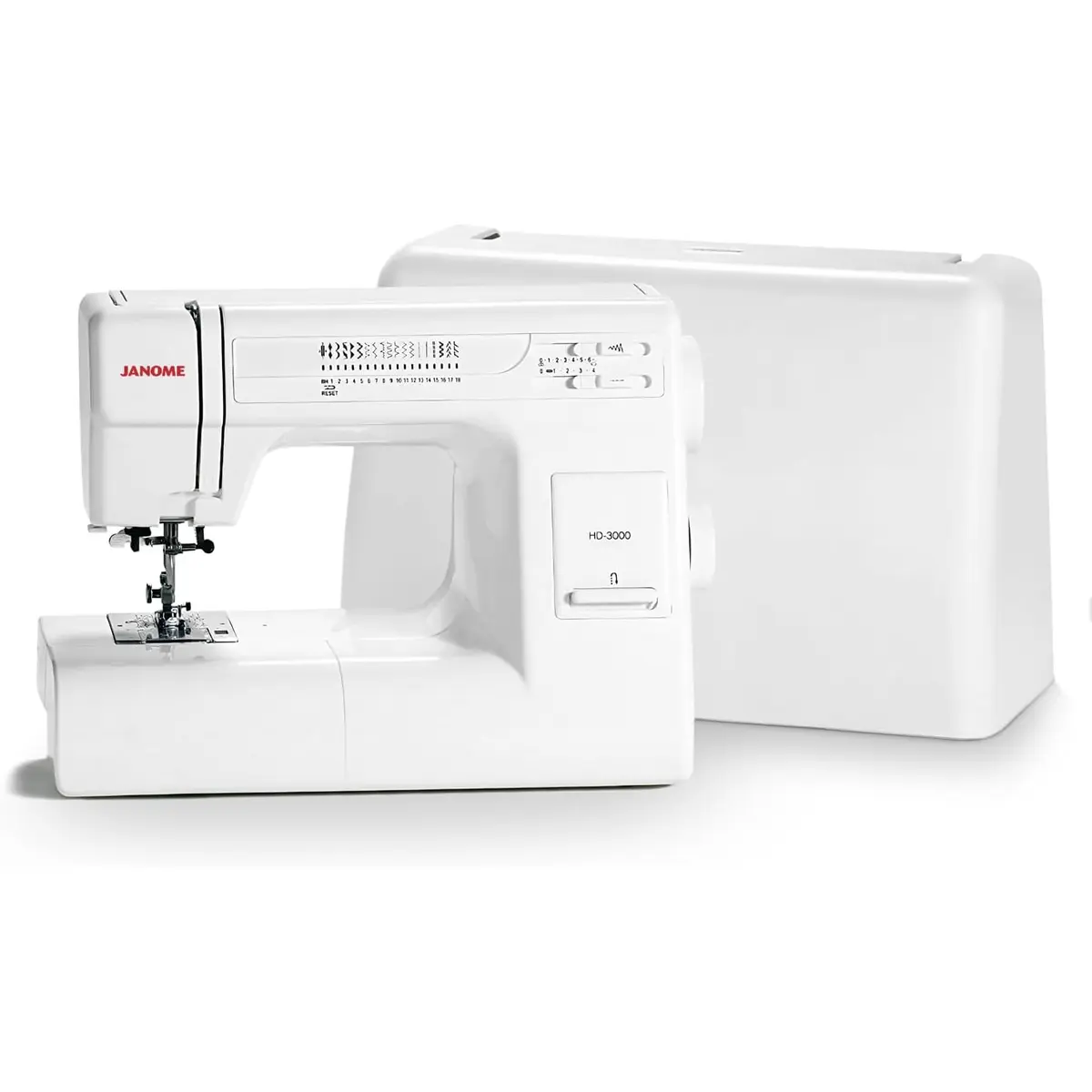 | Janome HD3000 Garment leather, vinyl details, and occasional light leather seams | Domestic bottom feed; optional accessory choices must be verified | Check price |
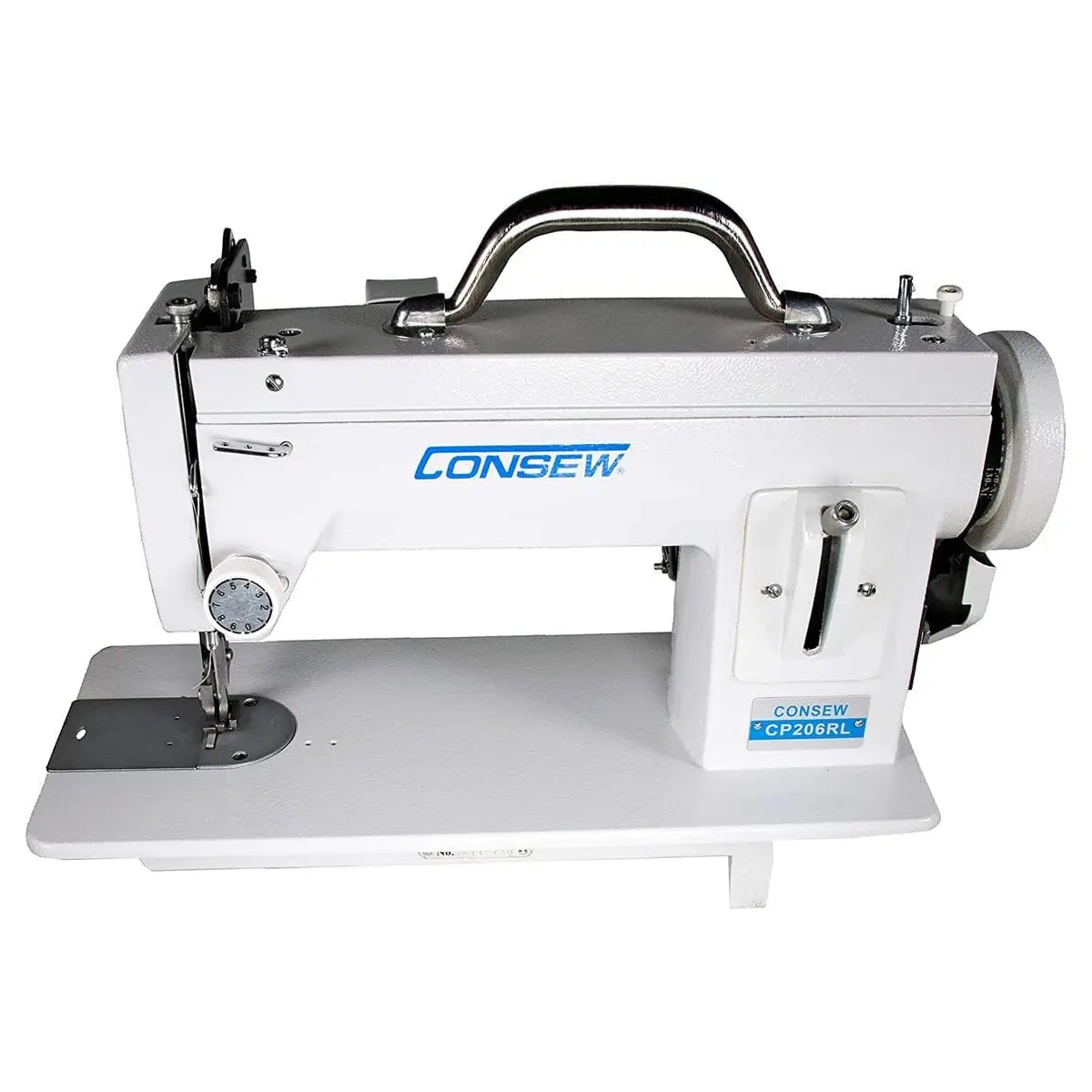 | Consew CP206RL Portable medium leather repair, marine canvas, and upholstery vinyl | Walking foot | Check price |
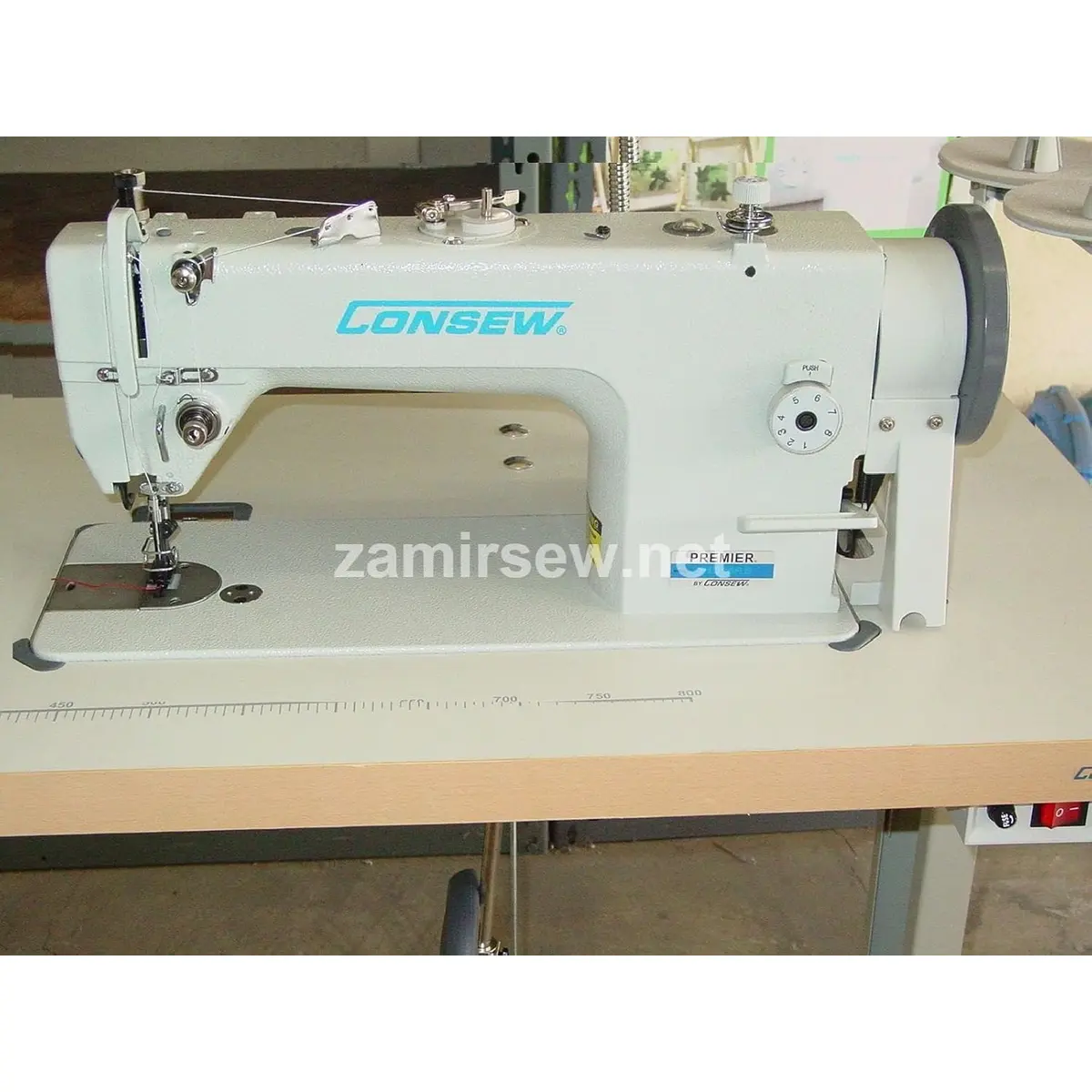 | Consew 206RB-5 Upholstery leather, bags, canvas, and small production | Compound feed with needle feed and alternating walking feet | Check price |
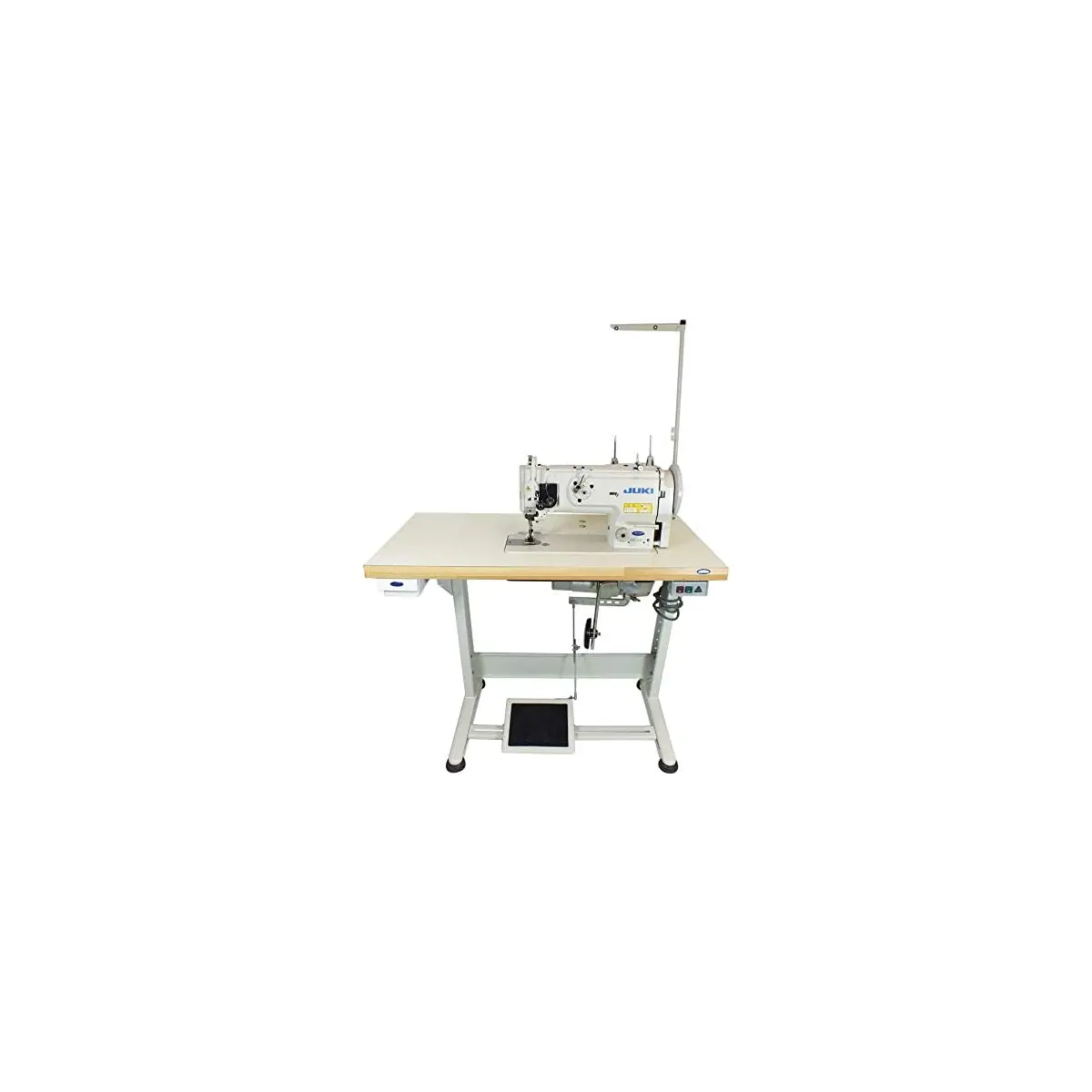 | Juki DNU-1541S Professional upholstery, automotive trim, bags, and consistent medium-to-heavy leather production | Unison feed | Check price |
Detailed recommendations
Janome HD3000
Best domestic option for garment leather
The Janome HD3000 is the only domestic machine in this shortlist because not every leather project requires industrial compound feed. Clothing-weight leather, suede-like fashion material, faux leather trim, vinyl accents, and occasional small repairs can fit a domestic workflow when seams remain within the machine's real limits.
Janome lists a heavy-duty frame, extra-high presser-foot lift, free arm, drop feed, 18 stitches, and a five-piece feed dog on its current product page. The mechanical controls make stitch selection, length, width, reverse, and tension direct. The selected listing also describes foot-pressure adjustment, though its visible marketplace metadata contains contradictions, including an incorrect-looking treadle power label and inconsistent stitch counts. Official Janome documentation should take priority.
Why it fits light leather
Mechanical controls are useful when testing a new material because changes are easy to see and repeat. Reverse allows short seam locking where backstitching is appropriate. The extra-high lift helps position a bulky area under the foot, but lift is not the same as sewing capacity. The needle still has to pierce the material, the feed dogs must advance it, and the hook must form a stable stitch.
The machine also remains a complete domestic sewing tool. A garment maker can sew fabric linings, install ordinary zippers, make buttonholes, finish woven seams, and switch to leather panels without keeping an industrial table in the room.
What to sew
Reasonable starting projects include a soft leather skirt panel, jacket detail, pocket trim, light pouch, vinyl tote accent, faux leather appliqué, or a simple seam in thin leather. Begin with scraps from the actual hide and reproduce the full seam stack, including lining and interfacing.
Use a leather-point needle when appropriate for genuine leather and a different point when the material manufacturer recommends it. Needle size, thread, stitch length, and foot should be selected together. Avoid tiny stitches because repeated close holes can perforate leather like a tear-off line.
Where the domestic limit appears
The HD3000 is not for belts, saddles, holsters, knife sheaths, repeated bag corners, thick wallet stacks, heavy upholstery production, or dense assemblies requiring large bonded thread. A metal frame does not enlarge the hook, needle system, motor torque, foot lift under motion, or domestic thread path.
An extra-high lift may let a stack fit while the machine cannot sew it. Never pull material from behind or force the handwheel through resistance. That can deflect the needle, damage the hook, disturb timing, or create an unsafe break.
Who should buy it
Choose the HD3000 if leather is a minority of your work and you need a robust mechanical household machine for fabric too. It is most defensible when projects use light, flexible leather and simple seams rather than structural leathercraft.
Who should not buy it
Skip it if leather is the main business material, the seams repeatedly cross folds or foam, or large thread is part of the visual design. A used or new industrial walking-foot machine can be the more economical path than damaging a domestic machine and replacing it later.
Best for: Garment makers and home sewists working with soft leather, vinyl details, and occasional light leather seams.
Skip it if: You make belts, saddles, holsters, structured bags, upholstery, or repeated thick stacks.
Consew CP206RL
Best portable walking-foot machine
The Consew CP206RL occupies the middle ground between a domestic machine and a full industrial table. The current listing identifies a single-needle portable machine with a horizontal oscillating hook, walking-foot feed, reverse, a built-in 110V motor, and included foot pedal. It lists a weight of 42 pounds and dimensions of 20.75 by 13.5 by 10 inches.
That is portable in an industrial context, not lightweight. One person may be able to move it between a workshop, boat, vehicle, or job site, but it still needs a strong surface and safe lifting. Its real advantage is avoiding a dedicated table, stand, external motor, and belt.
Where portability creates value
The CP206RL suits marine canvas repairs, upholstery vinyl, medium leather patches, covers, awnings, bags, and similar straight-stitch work when the job cannot be brought easily to a fixed machine. Reverse helps secure seams without turning a large cover around. Walking-foot action improves control on grippy surfaces and uneven layers.
It can also suit a small room where an industrial table cannot remain assembled. The machine can be stored between jobs, provided the user can lift it safely and has a stable bench ready for use.
What it gives up to remain portable
The compact bed provides less support and less arm space than a full industrial flatbed. Large panels need external support so their weight does not pull the seam sideways. The built-in drive may offer less slow-speed torque and less tunability than a well-matched industrial servo motor with a speed reducer.
Portable machines also require realistic expectations at bulky transitions. Walking feed helps layers travel together, but it does not create unlimited needle penetration or foot clearance. The operator should slow down, hand-position the needle before a critical edge, and test the exact seam.
Needle, thread, and specification check
The current Amazon listing confirms core identity and drive details but does not present a sufficiently complete needle and thread specification in the visible summary. Confirm the needle system, supported sizes, bobbin, maximum stitch length, presser-foot lift, lubrication points, and replacement parts with current Consew documentation or an authorised dealer before buying consumables in bulk.
Do not assume a portable walking-foot model uses the same needles, feet, bobbins, or binders as a 206RB-5. Similar brand and purpose do not establish parts compatibility.
Who should buy it
Choose the CP206RL when moving the machine is a real requirement, not a nice-to-have. It is a practical upgrade from a domestic machine for straight seams in medium leather, vinyl, and canvas, especially when surface grip and layer creep are the main problems.
Who should not buy it
Skip it if the machine will remain in one workshop and production volume justifies a full industrial table. A servo-driven compound-feed machine offers more workspace, better material support, and a wider service ecosystem for sustained work.
Best for: Mobile repairers, marine and upholstery users, and small-space makers who need portable walking-foot feed for straight seams.
Skip it if: You want cylinder-arm access, very slow high-torque control, large working space, or daily production at a permanent station.
Consew 206RB-5
Best established compound-feed workshop class
The Consew 206RB-5 is an established single-needle compound-feed lockstitch machine for leather, vinyl, upholstery, canvas, synthetics, and coated or laminated materials. Consew describes needle feed, alternating walking feet, a large bobbin, reverse, an adjustable walking motion, and long stitch capability for layered work.
This feed system is the main reason to step up from a portable walking foot or domestic machine. The needle travels with the material while the feet alternate, helping the layers remain aligned through long seams, piping, foam-backed upholstery, binding, and bag assemblies.
Why it fits a small production shop
A full industrial table supports the work on both sides of the needle. An external servo motor can provide a more controllable start than an old clutch motor, especially when the pulley and settings are chosen for leather rather than maximum factory speed. A large bobbin reduces interruptions on long upholstery seams and heavier thread.
The 206RB-5 also has a mature parts and service history. Common presser-foot sets, bobbins, folders, guides, needles, and maintenance knowledge are more likely to be available through industrial dealers than for an obscure marketplace machine. Compatibility still needs model-specific confirmation.
It is not an extra-heavy leather stitcher
The 206RB-5 is well matched to upholstery leather, handbags, canvas, auto and marine covers, luggage, outdoor gear, and many medium leather goods. It is not the natural choice for thick holsters, saddle skirting, dense sheath welts, heavy harness, or very large decorative thread. Those jobs may need a different needle system, heavier hook, cylinder arm, speed reduction, and much greater torque.
The flatbed also becomes awkward after a bag is partly closed. Plan construction order around access, or choose a cylinder-arm machine if tubular and three-dimensional work dominates.
Verified Amazon package
The current matching Amazon listing is ASIN B005KKPVKE. Its title, model number and part number all identify the machine as the Consew 206RB-5. The offer describes a package with the machine head, industrial table and servo motor, making it a closer fit for a buyer who wants a complete workshop setup rather than a head-only purchase.
Industrial listings can still change by seller. Before ordering, verify that the offer still names the 206RB-5, uses the correct voltage for your location, and includes the table, stand, motor, belt, knee lift, thread stand and assembly hardware you expect. Check whether professional assembly is available, because table alignment and motor setup affect control and reliability.
Bundle verification
Industrial Amazon offers vary between head only, head plus table, unassembled stand packages, clutch motor packages, and servo motor packages. Confirm the precise machine-head plate, table cut-out, stand, motor type and wattage, pulley, belt, voltage, knee lift, oil, thread stand, lamp, shipping method, assembly requirement, and dealer preparation.
Who should buy this class
Choose a verified 206RB-5 package if you sew open flat goods, upholstery, layered bags, and canvas regularly and have room for a permanent table. Prefer a dealer who can assemble, test-sew, specify needle and thread, and provide service.
Who should not buy it
Skip this class if projects are mainly clothing-weight leather, extremely heavy holsters and saddlery, or small closed shapes that need a cylinder arm. Do not order from the current sheet link expecting a 206RB-5 until the identity mismatch is fixed.
Best for: Upholstery leather, bags, canvas, vinyl, and small production where compound feed and a permanent table are justified.
Skip it if: You need extra-heavy harness capacity, cylinder-arm access, or a verified click-to-buy 206RB-5 from the current sheet ASIN.
Juki DNU-1541S
Best for professional medium-to-heavy production
The Juki DNU-1541S is the most thoroughly specified professional machine in this shortlist. Juki identifies it as a one-needle unison-feed lockstitch machine with a safety mechanism, horizontal-axis double-capacity hook, 264mm distance from needle to arm, and maximum stitch length of 9mm in forward and reverse.
Official specifications list a 36mm needle-bar stroke, presser-foot lift of 9mm by hand and 16mm by knee, alternating vertical movement from 2.5 to 6.5mm, and a delivery needle system of 135x17 with a documented size range. Juki lists thread ranges up to B138 for the class. These are meaningful specifications, but the exact needle point for leather and the complete thread setup should be confirmed with a dealer for the chosen material.
Why unison feed matters in production
The coordinated needle, inner foot, outer foot, and lower feed help maintain seam pitch across stacked or grippy assemblies. That is useful in automotive seats, furniture upholstery, bags, travel goods, canvas, coated fabric, and medium-to-heavy leather products where layer creep creates visible defects.
The double-capacity hook reduces bobbin changes. The 9mm maximum stitch length allows a longer visual stitch where material and seam design support it. A long setting should not be used blindly because stitch length affects strength, appearance, and how closely holes perforate the leather.
What the S safety mechanism does
The DNU-1541S adds a safety mechanism intended to operate when thread jams in the hook or another sewing problem occurs, helping prevent machine damage. It is a valuable distinction from the non-S DNU-1541, but it is not a substitute for correct timing, threading, maintenance, or stopping when the machine sounds abnormal.
Motor and speed control
Juki lists a maximum machine speed of 2,500 stitches per minute for the DNU-1541S. Leather workers rarely need to run detailed work at maximum speed. The motor package determines how controllably the machine begins and how much torque remains at low speed.
The selected Amazon bundle claims a table, 110V DC servo motor, lamp, drawer, belt, and related hardware with assembly required. That is seller-provided bundle information, not a permanent Juki factory configuration. Confirm the exact servo, power supply, pulley, stand, tabletop, and professional assembly options before purchase. A speed reducer may still be desirable for very slow work, depending on the servo and project.
Capacity boundary
The DNU-1541S is a medium-to-heavy flatbed industrial, not a universal heavy leather machine. Dense saddle parts, heavy holster welts, thick belts, harness, and large thread can exceed its intended class. A 16mm knee lift describes clearance, not a promise that every 16mm leather stack can be sewn reliably.
The flat bed is excellent for open upholstery panels and many bags but awkward inside narrow cylinders or nearly completed three-dimensional pieces. A cylinder-arm compound-feed machine may be the better production investment when access is the recurring constraint.
Who should buy it
Choose the DNU-1541S when professional consistency, documented specifications, safety clutch protection, parts support, and dealer knowledge justify the cost. It fits a workshop producing upholstery, automotive trim, bags, covers, and medium-to-heavy leather goods repeatedly.
Who should not buy it
Skip it if you only make occasional thin leather garments or need extra-heavy harness capacity. Also avoid a marketplace bundle if you cannot safely assemble the industrial table and motor or arrange local service.
Best for: Professional upholstery, automotive trim, bags, canvas, and consistent medium-to-heavy leather production.
Skip it if: You need cylinder-arm access, 441-class capacity, casual portability, or a simple domestic machine for mixed fabric sewing.
How to choose a sewing machine for leather
The best sewing machine for leather depends on what the leather is, how many layers meet at the seam, and how often the machine must repeat that job. A soft lambskin garment panel is not the same problem as a padded vinyl seat cover. A two-layer wallet seam is not the same as a folded belt edge. Choosing by the words “heavy duty” or “sews leather” hides the decisions that actually matter.
This guide uses a material-and-feed decision tree. The Janome HD3000 is the domestic option for garment leather, vinyl accents, and occasional light leather work. The Consew CP206RL adds a true walking foot in a portable form for medium leather repairs, marine canvas, and upholstery work where a full industrial table is impractical. The Consew 206RB-5 represents a table-mounted compound-feed class for upholstery leather, bags, canvas, and small production. The Juki DNU-1541S is the higher-end unison-feed choice for professional medium-to-heavy leather production, automotive trim, and upholstery.
No domestic machine is presented as a substitute for a leather industrial. The Janome belongs only because some leather projects genuinely fall within domestic limits. Conversely, neither the Consew 206RB-5 nor Juki DNU-1541S should be treated as a universal answer for thick holsters, saddles, dense belts, or every three-dimensional leather good. Those projects can require heavier needle and thread capacities, slower high-torque drive, cylinder-arm access, or a 441-class machine.
Start with the leather, not the machine label
Leather thickness alone does not predict sewing difficulty. Temper, density, finish, stretch, surface friction, adhesive, reinforcement, seam design, and the number of layers all matter. Two millimetres of soft garment leather can feed more easily than a thinner but dense, heavily finished stack. A seam allowance that folds four layers into eight at an intersection can exceed a machine that handled the flat sample.
Garment and upholstery leather require different feeding
Soft garment leather can often be sewn on a capable domestic machine if the seam is simple, the needle and thread are suitable, and the operator avoids repeated thick junctions. A roller, non-stick, or compatible even-feed foot may improve some materials, but an add-on foot does not turn the machine into compound feed.
Upholstery leather, vinyl, foam-backed assemblies, coated canvas, and bag seams tend to grip the foot and shift between layers. A walking foot helps the top and bottom layers travel together. True compound feed goes further by coordinating the needle, alternating feet, and lower feed so a stacked seam is less likely to creep.
Total seam stack matters more than a single hide
Measure the actual seam after folds, piping, binding, reinforcement, and overlap are included. A bag maker may begin with two moderate panels but create a dense corner with lining, stabiliser, binding, and a folded strap. A domestic machine that pierced the panel can stall, skip, or mark at the corner.
Access geometry can disqualify a flatbed
All four recommendations are flatbed or flatbed-style machines. They are well suited to panels, open seams, covers, and many bags before final closure. A cylinder arm is better when the work must wrap around a narrow bed, such as a gusseted bag, tight tube, small leather good, or three-dimensional assembly. A cobbler patcher is designed for different awkward repair access. Buying more power does not correct the wrong bed shape.
Feed systems in plain language
Domestic bottom feed
Feed dogs under the material move it while the presser foot holds it down. This works well for ordinary fabric and manageable leather seams. On sticky or uneven layers, the top can lag behind the bottom. Foot pressure and accessory selection may help, but capacity remains domestic.
Walking foot
An alternating walking foot lifts and steps over the work while the feed dogs advance it. This improves movement across grippy surfaces and layer changes. The CP206RL represents this portable class. It is materially different from a standard domestic foot, but it is not automatically equal to a full-size compound-feed industrial.
Compound or unison feed
The needle enters the work and travels with it while the inner and outer feet alternate and the lower feed operates. This coordinated movement helps keep leather, foam, vinyl, canvas, and lining aligned. The Consew 206RB-5 and Juki DNU-1541S belong to this class.
Compound feed improves control. It does not make every thickness or thread safe. Needle system, hook size, foot lift, alternating-foot movement, motor torque, machine timing, and presser-foot shape still set boundaries.
How we selected these leather machines
The four roles and exact product records come from the site's approved Amazon shortlist. Official specifications, manuals, current listing identity, bundle descriptions, and support information were checked on July 22, 2026. Selection was based on leather type, seam construction, feed, workspace, serviceability, and production level, not rating volume.
Each pick must own a distinct job. The Janome covers the honest domestic use case. The CP206RL covers portable walking-foot work. The Consew 206RB-5 represents the established compound-feed workshop step. The Juki DNU-1541S serves a professional buyer who values a documented safety mechanism and industrial specification set.
This is a research-based guide and does not claim personal hands-on testing. Manufacturer facts are separated from marketplace bundle statements and owner experience. “Heavy duty,” “industrial,” and “leather machine” are not treated as capacity specifications.
The original shortlist record was rechecked before publication. The currently verified matching offer is ASIN B005KKPVKE: Amazon identifies its model number and part number as 206RB-5, while Consew’s official product documentation confirms the machine’s intended use for leather, vinyl, upholstery, canvas and other layered materials. Bundle contents remain seller-controlled and should be confirmed at checkout.
Domestic, portable walking foot, or full industrial?
Choose a domestic machine only when the leather is light, seams are modest, and fabric sewing remains important. The machine must earn its place as a household all-rounder, not as a discounted industrial substitute.
Choose a portable walking foot when work moves between locations or a permanent table is impossible. Portability solves transport and storage. It usually compromises work support, arm space, and drive tuning.
Choose a table-mounted compound-feed industrial when leather or upholstery work is regular and layer alignment affects quality. It needs dedicated floor space, a suitable power supply, assembly, maintenance, and a realistic motor setup. In return, it provides the feed, support, bobbin capacity, and service ecosystem appropriate for repeat work.
Needle and thread decisions
Needle system determines what physically fits the machine. Needle size determines the blade and eye dimensions within that system. Point style determines how the needle penetrates or separates the material. Thread size must fit the eye, tension path, hook, bobbin, and seam design.
Do not order needles by household size alone for an industrial machine. The Juki DNU-1541S specifies 135x17 at delivery, while leather work may use the compatible leather-point system identified by the seller or dealer. Consew models require their own verified documentation. Domestic HD3000 needles follow household-machine guidance, not industrial charts.
Thread should be selected for seam strength, appearance, leather thickness, abrasion, and machine capacity. Large bonded thread creates a bold leathercraft look but demands a suitable needle and hook. Forcing it through a domestic tension path can cause jams, poor balance, and damage.
Always test the complete combination on an offcut from the real project. Inspect both faces and flex the seam. Look for skipped stitches, loose loops, puckering, surface marks, layer creep, torn holes, thread abrasion, and needle deflection.
Servo motor, clutch motor, and speed reducer
A clutch motor runs continuously and engages through the pedal. It can be fast and abrupt for a new operator, though experienced users can control a well-set system. A servo motor runs when commanded, is quieter at rest, and usually offers an adjustable maximum speed.
Not every servo provides equal low-speed torque or pedal response. Pulley size and machine load matter. A speed reducer changes the drive ratio so the handwheel turns more slowly with greater torque. It can improve control at corners and thick transitions, but must be installed with correct alignment, guarding, belt tension, and table geometry.
The motor is part of the machine purchase. A high-quality head paired with a poorly matched drive can feel harder to control than a less expensive head with a properly tuned servo.
Setup and service checklist
- Confirm the exact model plate and subclass before accepting delivery.
- Verify whether the offer is head only or includes table, stand, motor, belt, pulley, knee lift, thread stand, lamp, oil, drawer, and hardware.
- Check voltage, plug, phase, motor rating, and local electrical requirements.
- Inspect freight damage before discarding packaging or assembling the stand.
- Level and secure the table. Align motor, belt, pulley, pedal linkage, knee lift, and guards according to instructions.
- Use only the specified oil and lubrication method. Some industrial hooks are automatically lubricated while other points require manual attention.
- Install the correct needle system and orientation. Hand-cycle the machine to check hook and foot clearance.
- Thread with the presser feet raised and wind the correct bobbin evenly.
- Begin on a representative scrap at low speed. Adjust one variable at a time.
- Arrange dealer or technician support before production deadlines, not after a timing or feed problem stops work.
Alternatives this guide does not rank
A hand-powered leather machine serves off-grid work, deliberate stitch-by-stitch control, and certain craft situations. That is a separate buying intent and should be compared in the hand leather machines guide.
A cobbler patcher uses a narrow arm and directional feed to reach shoe uppers, boot shafts, and awkward repairs. It is not a general replacement for a flatbed compound-feed workshop machine.
A cylinder-arm walking-foot machine is preferable when bags, small leather goods, gussets, tubes, and closed shapes repeatedly need access around the bed. Flat work can often be supported with a removable table attachment.
A 441-class or harness stitcher belongs above the DNU-1541S class for very thick, dense leather and large thread. It involves a different budget, needle system, setup, and safety profile.
Frequently asked questions
Can a regular sewing machine sew leather?
Some domestic machines can sew light, flexible leather in modest seams with the correct needle, thread, foot, stitch length, and testing. That does not make them suitable for belts, holsters, saddles, upholstery production, or repeated thick stacks.
Is an extra-high presser-foot lift proof of leather capacity?
No. Lift shows how much clearance is available for positioning material. Reliable capacity also depends on needle penetration, feed, hook clearance, thread, motor torque, timing, foot motion, and material density.
What is the difference between a walking foot and compound feed?
A walking foot alternates over the material to help the top layer move. Compound feed coordinates the needle, alternating feet, and lower feed so the layers move together more completely. Terminology in listings can be loose, so verify the mechanism in the official manual.
Do I need a leather needle?
Often, but not every synthetic leather or coated material should be cut by the same point. Choose the full needle system, size, and point for the exact machine and material. Test because a cutting point leaves permanent holes.
Which machine is best for leather bags?
It depends on construction. A compound-feed flatbed suits open panels and many seams. A cylinder arm is easier for gussets and partly closed bags. Light fashion bags may fit a domestic workflow, while structured bags with heavy stabiliser and straps can need industrial capacity.
Can the Consew 206RB-5 sew holsters and saddles?
It is not the preferred class for dense holster welts, heavy saddle work, or large harness thread. Look at extra-heavy cylinder-arm or 441-class machines sized for those assemblies.
Is the Juki DNU-1541S better than the Consew 206RB-5?
It offers a well-documented unison-feed platform and an S-model safety mechanism, but “better” depends on dealer service, bundle, motor, parts access, price, and the material. Both occupy medium-to-heavy flatbed compound-feed territory rather than extra-heavy leather territory.
Does the Consew 206RB-5 Amazon listing include a table and motor?
The verified ASIN B005KKPVKE currently describes a package with the 206RB-5 machine head, table and servo motor. Seller bundles can change, so confirm the exact table, stand, motor, voltage, hardware and assembly requirements on the live listing before ordering.
Final verdict
The Janome HD3000 is the right entry point for garment leather and occasional light work when a normal household machine is still required. The Consew CP206RL is the portable walking-foot choice for repair, canvas, vinyl, and medium leather seams. The Consew 206RB-5 package is the established workshop step for upholstery and small production. The Juki DNU-1541S is the strongest documented professional choice for consistent medium-to-heavy flatbed work.
The correct progression is not cheap to expensive. It is light leather with domestic feed, portable work with walking feed, repeated layered work with compound feed, and professional production with a properly configured industrial system. If the project needs a cylinder arm or extra-heavy stitcher, none of these flatbed recommendations should be forced into the job.
Editorial and affiliate note
This guide contains Amazon affiliate links. If a reader buys through a qualifying link, the site may earn a commission at no additional cost to the buyer. Products were selected for distinct material and feed roles, not rating volume or commission. Prices, sellers, tables, motors, accessories, voltage, warranty and assembly services can change, so readers should verify the complete offer before ordering.