
Affiliate disclosure: We may earn from qualifying Amazon purchases at no extra cost to you. Products are selected for utility and reader fit, not ratings or commission.
The best Juki sewing machine depends first on the stitch system and workflow, not the price. A computerized domestic machine, a straight-stitch quilting specialist, a serger, and an industrial lockstitch machine do different jobs. Treating them as a simple good-better-best ladder leads to an expensive mismatch.
This shortlist maps five Juki machines to five distinct buyers:
- Juki HZL-F300: best value-focused computerized Juki for garment sewing and mixed home projects
- Juki HZL-DX7: best premium computerized Juki for advanced garment work and mixed quilting
- Juki TL-2010Q: best portable Juki for controlled straight-stitch quilting and tailoring
- Juki MO-654DE: best Juki serger here for fast seam finishing and knit construction
- Juki DDL-8700 with servo table: best Juki setup here for high-volume apparel straight stitching
The HZL-F300 and HZL-DX7 can zigzag, make buttonholes, sew utility and decorative patterns, and handle varied home sewing. The TL-2010Q and DDL-8700 make one straight lockstitch. The MO-654DE trims and overcasts fabric edges with two, three, or four threads. None can replace all the others.
For most home garment sewists, the HZL-F300 is the most rational starting point. The DX7 earns its premium only when its pivoting, electronic presser-foot control, built-in straight-stitch plate, wider quilting package, and additional patterns will be used. The TL-2010Q is a better second machine than first machine. The MO-654DE belongs beside a sewing machine. The DDL-8700 belongs in a permanent workstation built around repeated straight seams.
Quick decision framework
Choose the HZL-F300 when you want Juki's box-feed system, sensor buttonholes, automatic thread cutting, 106 patterns, three fonts, a free arm, and broad garment capability without paying for the DX7's complete feature set. The extension table and several specialized feet are optional, so compare the actual bundle rather than assuming every accessory shown online is included.
Choose the HZL-DX7 when precision garment construction and mixed quilting justify premium controls. Its box feed, 287 stitch patterns, four fonts, 16 buttonholes, electronic presser-foot lift, pivot function, straight-stitch slide plate, automatic cutting, knee lift, included wide table, walking foot, and quilting feet make it a more complete studio package. Buyers who mainly sew straight seams will pay for many functions they do not need.
Choose the TL-2010Q when straight-stitch quality, speed control, knee lift, automatic thread trimming, a rigid aluminium casting, and free-motion access matter more than zigzag or buttonholes. It works well as a dedicated quilting, tailoring, bag-panel, and production-style machine at home. It cannot be the only machine in a studio that regularly needs stretch stitches or buttonholes.
Choose the MO-654DE when the missing workflow is seam finishing, knit construction, rolled hems, differential feed, and fast trimming. It is a 2/3/4-thread overlocker, not a sewing machine. It cannot install a normal zipper, topstitch a pocket, make a conventional buttonhole, or replace lockstitch construction.
Choose the DDL-8700 only when a permanent industrial table, straight-stitch specialization, automatic lubrication, knee lift, DBx1 needles, regular oil and lint care, and production-scale speed fit the work. It is an apparel lockstitch, not a walking-foot upholstery machine and not a portable domestic model.
Readers comparing brands for quilt work should use the general quilting machine guide. For cross-brand industrial roles, see the best industrial sewing machines. The best overlock machines guide compares sergers by threading and seam-finishing workflow. Full professional studio planning belongs in the professional dressmaker machine guide.
Quick comparison
Showing three products at a time. Scroll vertically to see the remaining models.
| Product image | Title and best fit | Type | Current price |
|---|---|---|---|
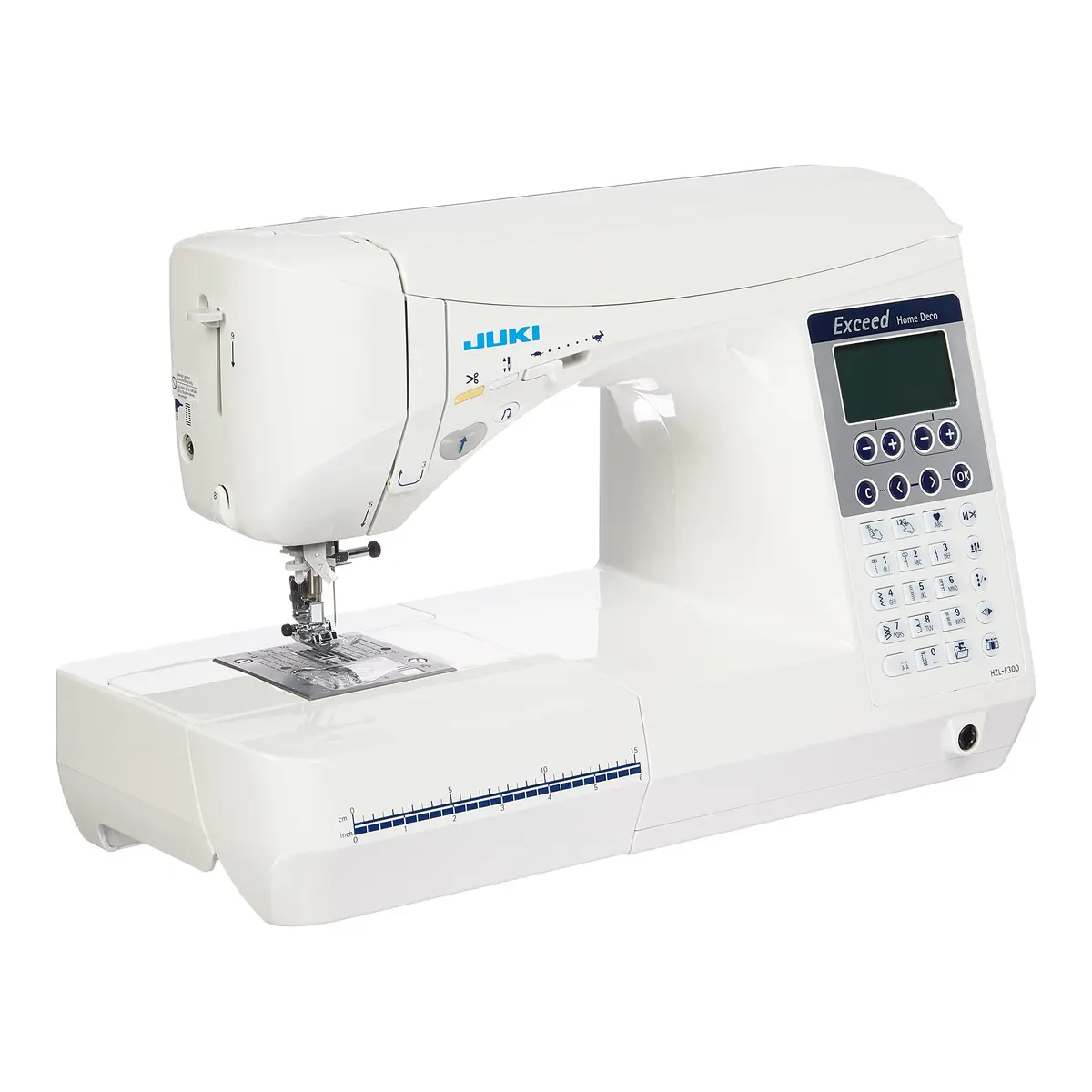 | Juki HZL-F300 Value-focused garment sewist wanting broad Juki capability | Computerized domestic sewing and quilting | Check price |
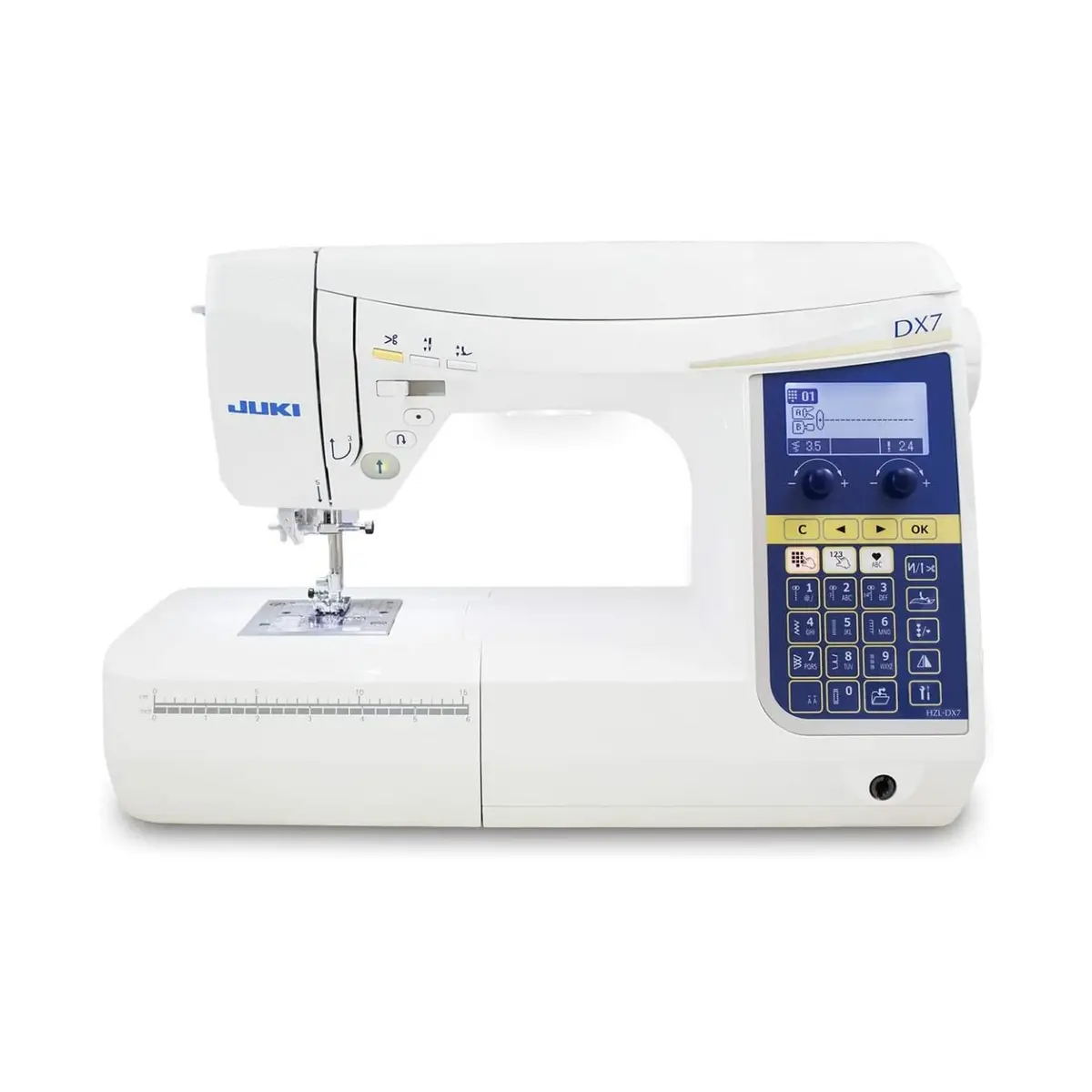 | Juki HZL-DX7 Advanced garment maker or mixed-use quilter who will use premium controls | Premium computerized domestic sewing and quilting | Check price |
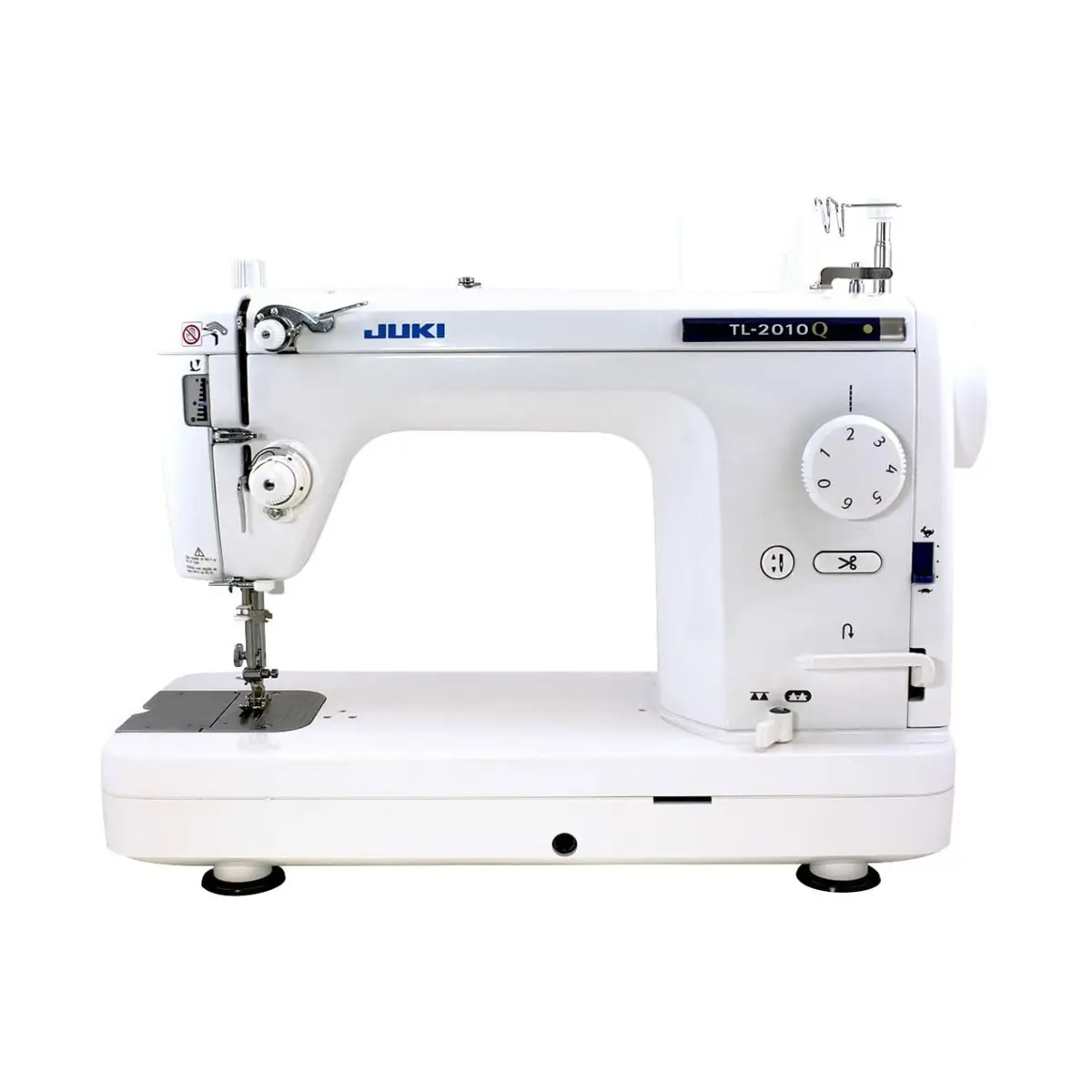 | Juki TL-2010Q Quilter or tailor wanting direct straight-stitch control | Portable straight-stitch specialist | Check price |
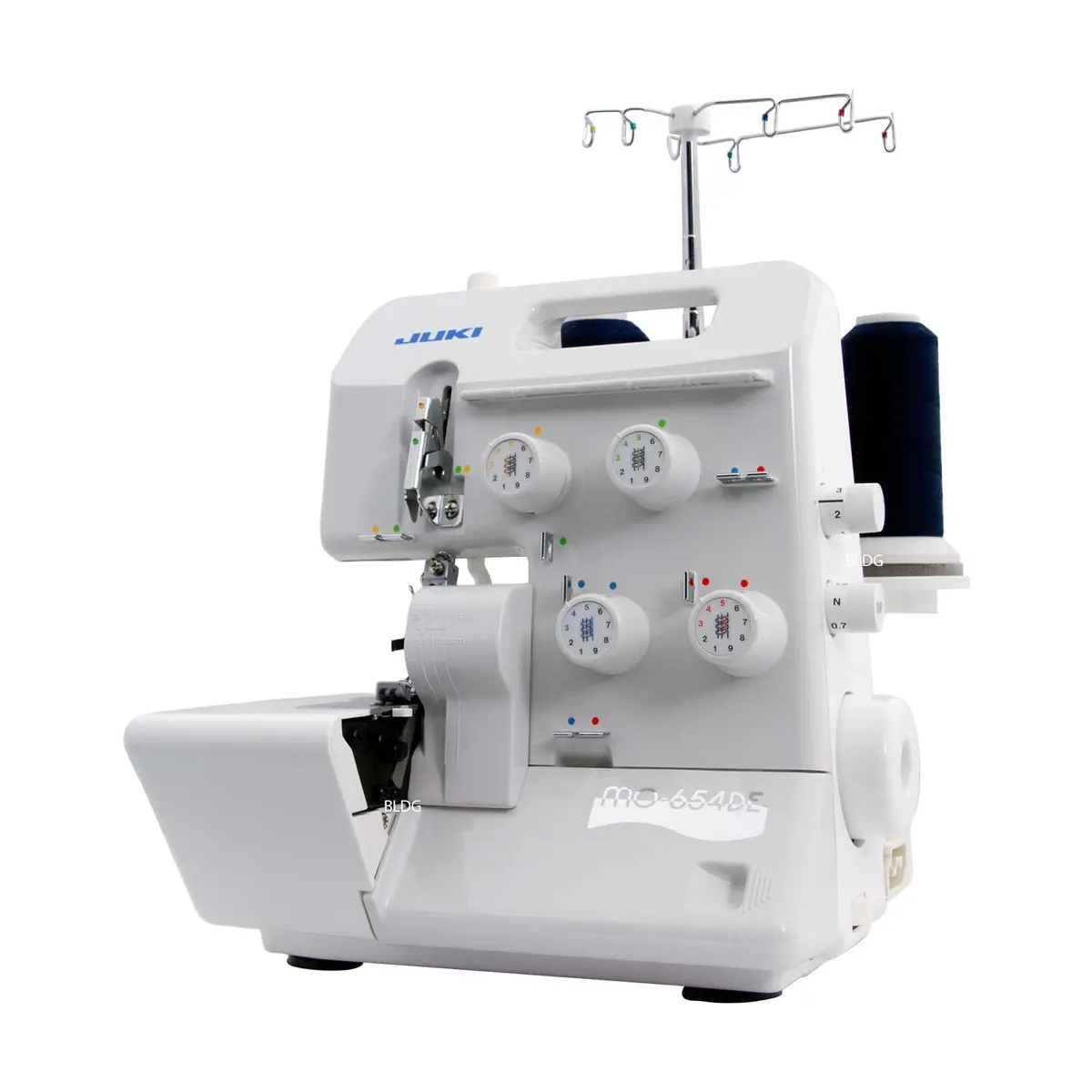 | Juki MO-654DE Garment maker needing fast edge finishing and knit seams | 2/3/4-thread serger | Check price |
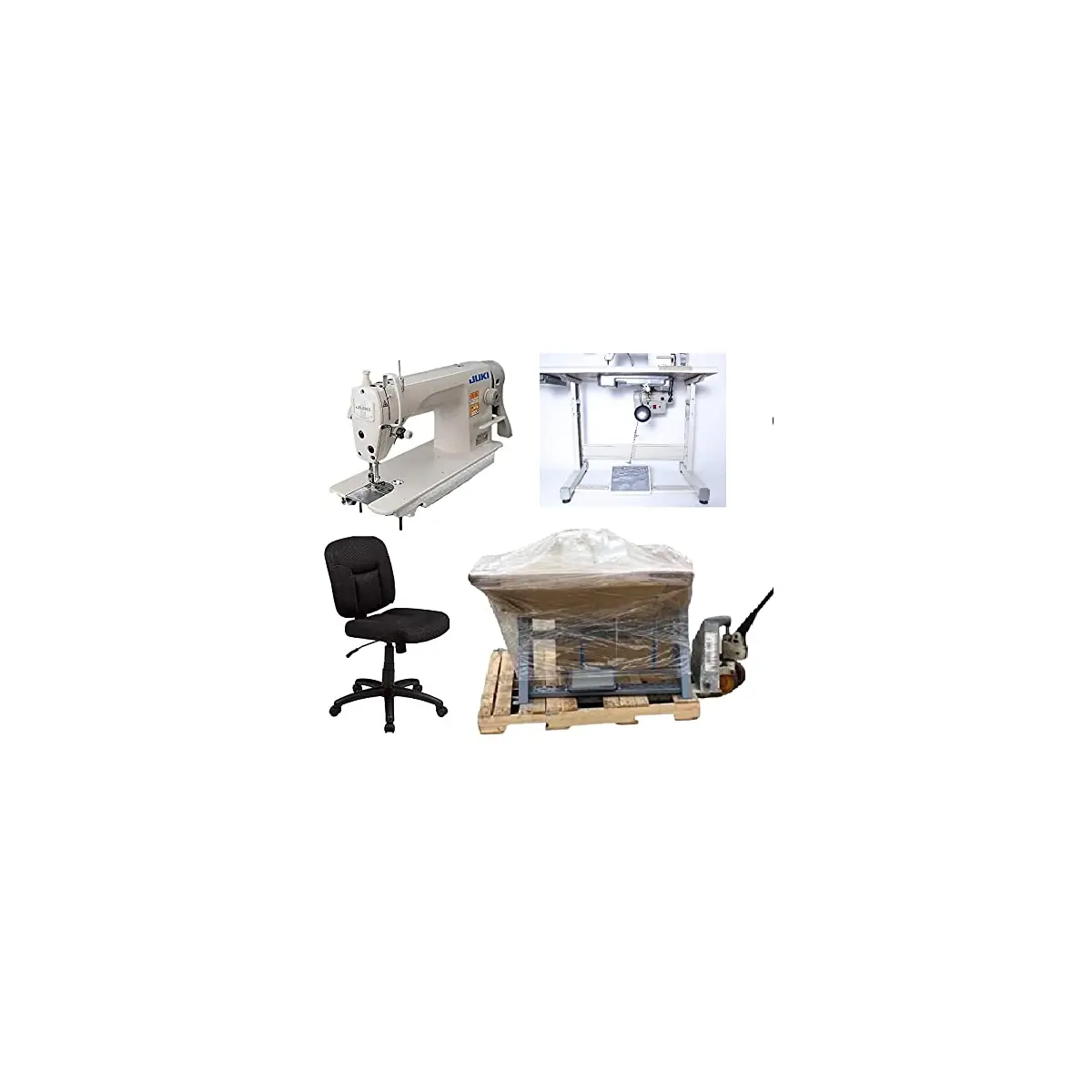 | Juki DDL-8700 with servo table High-volume apparel and alteration workflow | Industrial single-needle lockstitch workstation | Check price |
Detailed recommendations
Juki HZL-F300
Best value computerized Juki for garment sewing
The HZL-F300 is the strongest general recommendation because it gives a garment sewist the useful parts of Juki's Exceed platform without making premium automation mandatory. Juki specifies 106 stitch patterns, three fonts, 16 sensor-controlled buttonholes, speeds up to 900 stitches per minute, 7mm maximum zigzag width, 5mm maximum stitch length, adjustable presser-foot pressure, Class 15 bobbins, a free arm, and a low-shank foot system.
Why box feed matters
Conventional feed dogs usually move in an elliptical path. Juki's box feed is designed to maintain flatter contact through the feeding cycle. In practical garment sewing, that can help when crossing from a single layer into a seam allowance, matching plaid lines, feeding slippery layers, or keeping top and bottom layers aligned.
Box feed is not a walking foot. It does not independently pull the top layer, and it does not turn a domestic machine into a compound-feed industrial. Foot pressure, needle choice, presser foot, fabric preparation, seam direction, and operator guidance still matter.
Practical automation
The F300 includes automatic upper-and-bobbin thread cutting, programmable cutting, heel-operated cutting through the controller, automatic or manual tension adjustment, needle up/down, an automatic needle threader, independent bobbin winding, and pattern memory.
These features reduce repetitive hand movements during garment assembly. Needle down helps at collars and corners. Thread cutting is useful between construction steps. The sensor buttonhole system offers 16 styles and balances both sides of the buttonhole.
What the base package leaves out
The wide extension table is optional on the verified Amazon offer. A walking foot, quarter-inch guide foot, knee lift, dedicated straight-stitch plate, and many quilting feet are also listed as optional by Juki. Do not evaluate the F300 from a promotional image that shows accessories not included in a seller's box.
This matters for total cost. A buyer planning large quilts or frequent layered feeding should price the table and exact approved feet before comparing the F300 with a more complete DX7 bundle.
Project fit
The F300 suits shirts, dresses, trousers, children's wear, home decor, appliqué, buttonholes, light bags, piecing, and occasional free-motion work. It can sew heavier domestic materials within appropriate needle, thread, foot, and layer limits, but “heavy duty” marketing should not be read as approval for leather tack, upholstery stacks, or industrial production.
Best for: Value-focused garment sewists who want Juki box feed, automatic cutting, good buttonholes, and broad stitch capability.
Skip it if: A wide table and quilting feet must be included, you need the DX7's pivot automation, or you only sew straight seams.
Juki HZL-DX7
Best premium Juki for advanced garment work and mixed quilting
The HZL-DX7 is a premium domestic machine for a sewist who will use advanced fabric handling and electronic ergonomics. Juki specifies 287 patterns, four fonts, 16 buttonholes, maximum speed of 1,050 stitches per minute, 7mm zigzag width, 5mm stitch length, electronic presser-foot lift, adjustable foot pressure, Class 15 bobbins, and a 21.6-pound machine weight.
Pivot and hover reduce fabric handling
With the pivot function active, stopping with the needle down raises the presser foot so fabric can be turned while the stitch position is retained. The user can guide a collar point, appliqué curve, pocket corner, or quilt line without reaching for the presser-foot lever each time.
The electronic lift height can be adjusted for free motion and other tasks. The included knee lever gives another hands-free option. These controls are useful only after the user learns when the foot will move and how each mode interacts with needle position.
Built-in straight-stitch plate
The DX7 uses a slide mechanism to change from the normal needle opening to a single straight-stitch hole. The smaller opening supports fabric close to the needle and reduces the chance of a fine fabric being pushed down into a wide zigzag slot.
The straight-stitch setting is not compatible with zigzag needle movement. Confirm the selected stitch and needle position before sewing. Forcing a wide stitch against a straight-stitch plate can break the needle and damage the machine.
Included package is more complete
Juki lists a walking foot, wide table, hard case, knee lift, patchwork foot, quilt foot, open-toe foot, edge-sewing foot, and other garment feet among the standard DX7 accessories. This narrows the apparent price difference when the F300 would require several optional purchases.
The DX7 also gives an approximately 8-inch throat, which offers more right-of-needle working room than many compact domestic machines. It is still not a longarm. A bed quilt requires support, basting, and repeated repositioning.
Who actually needs the DX7
It suits an advanced home dressmaker who makes structured garments, precise topstitching, buttonholes, decorative details, and occasional quilts. It also suits a mixed-use studio where one domestic machine must handle fine fabric, layered projects, free motion, and utility sewing.
The buyer who mainly pieces quilts in straight stitch, hems woven garments, or already owns a specialized machine may not benefit from 287 patterns and complex electronic controls.
Best for: Advanced garment sewists and mixed-use quilters who will use pivoting, electronic lift, built-in straight-stitch support, and the included accessory package.
Skip it if: Budget matters more than automation, electronics increase unwanted complexity, or most work is straight stitch only.
Juki TL-2010Q
Best Juki for portable straight-stitch quilting and tailoring
The TL-2010Q is a single-needle portable lockstitch machine made with aluminium die-casting. It combines speeds up to 1,500 stitches per minute with a variable-speed slider, automatic thread trimming, knee lift, adjustable pressure, a sub-tension system, drop feed, and a large auxiliary table.
The one-stitch advantage
Every primary control serves straight stitching. There is no stitch menu, zigzag drive, alphabet, or buttonhole routine to navigate. The rigid structure and direct thread path support piecing, free-motion quilting, tailoring, bag panels, home decor, and long topstitching runs.
The speed slider matters more than maximum speed for most home users. It allows the operator to set a ceiling while learning free motion or approaching a precise stop. The foot controller and trim functions reduce reaching around a large project.
Table size is not throat size
Juki describes a work area up to 23 inches with the auxiliary table attached. That is the supported table surface, not the needle-to-column opening. The table helps carry quilt weight, but it does not expand the arm.
This distinction prevents a common buying error. Quilters should compare the actual open space to the right of the needle, its height, and their real rolled or puddled quilt sample.
It is not an all-purpose domestic
The TL-2010Q cannot zigzag, sew stretch seams, make automatic buttonholes, produce decorative patterns, or use a free arm. A garment studio normally pairs it with a computerized or mechanical zigzag machine. A quilting studio may pair it with a smaller domestic for appliqué and buttonholes.
Optional frame compatibility does not make it a stitch-regulated longarm. The machine keeps its original throat and operating system. Confirm exact frame, carriage, controls, and usable quilting area before buying components.
Best for: Quilters, tailors, and serious home sewists who want direct control over fast, stable straight stitching.
Skip it if: You need one machine for buttonholes, zigzag, knits, decorative work, or the broadest domestic throat.
Juki MO-654DE
Best Juki serger for garment finishing
The MO-654DE is a compact 2/3/4-thread overlocker with differential feed, built-in rolled-hem conversion, adjustable stitch length and cutting width, a dedicated knife drive, colour-coded threading, and a disengaging lower looper threader. Juki specifies maximum speed of 1,500 stitches per minute, up to 4mm stitch length, a 0.7-to-2.0 differential-feed ratio, up to 6mm overlock width, HAx1 household needles in sizes 11 to 14, and a weight of 15.5 pounds.
What it adds to a garment studio
The MO-654DE trims a seam allowance and wraps the raw edge in one pass. Four-thread overlock can construct many knit seams. Three-thread overlock can finish woven edges. Rolled hemming suits selected lightweight edges. Differential feed helps reduce wavy knit seams or create gathering and lettuce effects.
The dedicated knife mechanism matters because edge trimming is a central function, not an accessory. Cutting width and stitch length should be set for the fabric and thread, then tested on the full layer stack.
Manual threading is the tradeoff
The machine provides colour paths and a lower-looper threading aid, but it is not an air-threaded serger. Upper and lower loopers must be threaded in the required sequence. Threading out of order can cause one thread to interfere with another and produce immediate stitch failure.
Learning to tie on new thread colours can reduce full rethreading, but it does not remove the need to understand the correct path. Thread nests, broken looper threads, needle changes, and rolled-hem conversion still require manual access.
A serger cannot replace lockstitch
Overlock stitches solve stretch and edge finishing. They do not replace a standard sewing machine for darts, precise topstitching, zipper installation, buttonholes, many hems, or controlled construction inside a garment. The sensible studio sequence is often sewing machine first, serger second.
Best for: Garment makers who already own a sewing machine and want fast, controlled seam finishing and knit construction.
Skip it if: You need your first or only machine, want air threading, or need coverstitch rather than overlock.
Juki DDL-8700 with servo table
Best for high-volume apparel straight stitching
The Juki DDL-8700 is a high-speed, single-needle industrial lockstitch head for light-to-medium apparel materials. Official specifications list up to 5,500 stitches per minute, maximum 5mm stitch length, 5.5mm hand lift, up to 13mm knee lift, a DBx1 needle system, a full-rotary automatic-lubricating hook, and a 28kg head weight.
The selected Amazon ASIN is a table-and-servo package, not merely a portable machine. The exact seller offer must be checked for table, stand, servo motor, voltage, belt, oil pan, knee lift, thread stand, lamp, assembly state, delivery method, and warranty.
Why servo control matters
A clutch motor runs continuously and engages through the pedal, which can feel abrupt to a new operator. A servo motor generally runs when commanded and can make low-speed control easier. The head may be rated for 5,500 stitches per minute, but actual speed depends on motor settings, pulley size, adjustment, and operator input.
Slow control should be established before production speed. Fast sewing magnifies errors, needle heat, thread problems, and hand risk.
Automatic lubrication changes ownership
The DDL's hook and internal mechanism use an oil-pan system. Correct oil type and level are not optional. The head must be installed and tilted according to the manual, run and checked appropriately, and protected from oil contamination around fabric.
This is different from occasional domestic-machine maintenance. A business should have a technician or competent operator who understands timing, feed balance, hook clearance, belt tension, motor setup, lubrication, and parts sourcing.
Apparel machine, not upholstery walking foot
The standard DDL-8700 uses bottom feed. It does not have needle feed, walking foot, or compound feed. Its high presser-foot lift does not prove it can transport dense upholstery, leather assemblies, webbing, foam-backed vinyl, or thick bag seams.
It excels at repeated straight seams in appropriate woven apparel and alteration materials. A heavy upholstery workflow needs a different feed class.
Dedicated space is permanent
The assembled table and stand occupy floor space and are not moved like a domestic machine. Delivery may involve multiple heavy boxes or freight. Assembly must align the head, hinges, oil pan, belt, motor, pedal linkage, knee lift, guards, and electrical components.
Best for: Apparel production and alteration businesses with repeated straight seams, dedicated floor space, and service access.
Skip it if: You need portability, zigzag, buttonholes, a walking foot, occasional hobby use, or a machine that arrives ready to place on a desk.
How to choose a Juki sewing machine
The best Juki sewing machine depends first on the stitch system and workflow, not the price. A computerized domestic machine, a straight-stitch quilting specialist, a serger, and an industrial lockstitch machine do different jobs. Treating them as a simple good-better-best ladder leads to an expensive mismatch.
This shortlist maps five Juki machines to five distinct buyers:
- Juki HZL-F300: best value-focused computerized Juki for garment sewing and mixed home projects
- Juki HZL-DX7: best premium computerized Juki for advanced garment work and mixed quilting
- Juki TL-2010Q: best portable Juki for controlled straight-stitch quilting and tailoring
- Juki MO-654DE: best Juki serger here for fast seam finishing and knit construction
- Juki DDL-8700 with servo table: best Juki setup here for high-volume apparel straight stitching
The HZL-F300 and HZL-DX7 can zigzag, make buttonholes, sew utility and decorative patterns, and handle varied home sewing. The TL-2010Q and DDL-8700 make one straight lockstitch. The MO-654DE trims and overcasts fabric edges with two, three, or four threads. None can replace all the others.
For most home garment sewists, the HZL-F300 is the most rational starting point. The DX7 earns its premium only when its pivoting, electronic presser-foot control, built-in straight-stitch plate, wider quilting package, and additional patterns will be used. The TL-2010Q is a better second machine than first machine. The MO-654DE belongs beside a sewing machine. The DDL-8700 belongs in a permanent workstation built around repeated straight seams.
The Juki range makes sense by machine class
Juki's industrial background is useful context, but it should not be turned into a blanket claim that every Juki is “industrial strength.” The domestic HZL machines use home-machine needles, Class 15 bobbins, low-shank feet, electronic controls, and domestic accessories. The TL uses a portable straight-stitch architecture. The MO is an overlocker. The DDL is an actual industrial head installed in a table.
Computerized domestic: HZL-F300 and HZL-DX7
These are the only two selected machines designed to serve as broad primary sewing machines. Both can straight stitch, zigzag, make automatic buttonholes, vary stitch width and length, drop the feed dogs, and use a free arm. Both use Juki's box-feed approach, which keeps the feed dogs travelling in a box-like path for sustained fabric contact.
The F300 focuses on practical value. The DX7 adds more automation, workspace support, patterns, feet, and pivoting control. The correct question is not which is more advanced. It is whether the DX7's added controls remove enough friction from the buyer's actual work to justify its cost.
Portable straight-stitch: TL-2010Q
The TL looks industrial because of its aluminium casting, high speed, tension system, knee lift, and single-purpose layout. It remains a portable machine with an auxiliary table, domestic power arrangement, and removable setup. It is ideal when one excellent straight stitch is the point.
Overlock: MO-654DE
The MO trims a raw edge while loopers wrap it in thread. Differential feed lets the front and rear feed dogs move fabric at different rates, helping control knit stretching or create gathering. That workflow is fundamentally different from sewing a lockstitch seam on an HZL, TL, or DDL.
Industrial lockstitch: DDL-8700
The DDL-8700 is a machine head that operates as part of a table, stand, motor, belt, oil pan, knee-lift, thread stand, and electrical package. The head is designed for repeatable straight stitching in light-to-medium apparel materials. A marketplace bundle determines the motor, table, assembly state, lamp, voltage, freight conditions, and seller support.
How we selected these five models
The exact models, ASINs, and buyer roles come from the site's approved Amazon product shortlist. Official Juki specifications and manuals, current model pages, exact Amazon identities, standard accessories, stitch systems, feed arrangements, and important limitations were checked on July 22, 2026.
Ranking is based on intent fit, verified control, feed performance, support, value, and the clarity of each machine's role. Ratings volume did not determine placement. A product remains only when it owns a distinct workflow.
This is a research-based guide and does not claim personal hands-on testing. Juki's official specifications take priority when marketplace metadata conflicts. For example, Juki lists the DX7 at 287 stitch patterns and 21.6 pounds, while some Amazon fields display inconsistent counts or an implausible one-pound weight. Buyers should verify model documentation rather than treating every marketplace field as authoritative.
F300 versus DX7
The F300 is the value choice, not the beginner-only choice. It already provides box feed, pressure adjustment, automatic tension, cutting, sensor buttonholes, free-arm access, drop feed, and a useful pattern set.
Pay for the DX7 when the included wide table and walking foot, electronic lift, pivot function, knee lever, straight-stitch slide plate, additional lighting and stitches, and 1,050-spm speed support frequent work. If those features are occasional conveniences, price the F300 with only the accessories actually needed.
A dealer test should include fine woven fabric, a bulky seam crossing, a buttonhole in stabilized project fabric, a curve requiring pivoting, edge stitching, and the buyer's preferred foot-controller technique. Interface preference matters on a computerized machine used for years.
TL-2010Q versus DDL-8700
Both make a straight lockstitch, but they belong to different rooms.
The TL-2010Q is portable, can drop its feed dogs for free motion, includes a large auxiliary table, and is designed for home quilting and sewing workflows. Its 1,500-spm maximum and speed slider are manageable in a domestic environment.
The DDL-8700 is a table-installed industrial head with automatic lubrication and substantially higher production speed. It uses industrial needles and is intended for repeatable apparel seams. It cannot drop feed for domestic-style free motion, and its table package requires setup and maintenance.
Choose the TL for a flexible home straight-stitch station. Choose the DDL for production throughput and dedicated apparel work. Do not buy the DDL merely because it is faster.
Which Juki should you skip or upgrade from?
Skip the F300 when the final accessory cost approaches a DX7 package and the DX7 controls will be used weekly. Skip the DX7 when most of its patterns and automation will remain untouched.
Skip the TL-2010Q as an only machine unless every project is straight stitch. Upgrade to a wider-throat domestic or longarm class when quilt bulk, rather than stitch quality, is the unresolved problem.
Skip the MO-654DE when air threading is necessary for vision, dexterity, or workflow speed. Compare an air-threaded overlocker instead. Skip it when the actual need is a coverstitch hem, because overlock and coverstitch are different formations.
Skip the DDL-8700 when material stacks need synchronized top-and-bottom feeding. Compare walking-foot, needle-feed, or compound-feed industrial machines based on the material and seam. Also skip it when local technical support and permanent workspace are unavailable.
Dealer, service, and warranty checks
Before buying a domestic Juki, identify who will provide warranty evaluation, cleaning, timing, firmware or electronics diagnosis, and parts. A low marketplace price can lose its appeal if a 20-pound machine must be shipped at the buyer's cost for service.
Confirm the machine is new, region-correct, and sold by an authorized seller when warranty coverage matters. Verify voltage. Confirm the serial label, model suffix, accessories, foot controller, power cord, manual, and packaging before the return window closes.
For the DDL-8700, separate Juki head support from the bundle seller's responsibility for the table, servo motor, lamp, wiring, freight, and assembly. Ask whether the package is assembled, sewn off, and delivered by freight or arrives as components. Request the exact motor brand and specifications.
Buying checklist
- Start with required stitch type: lockstitch, zigzag, overlock, or straight-only
- Decide whether this is the primary machine or a specialist beside another machine
- Compare feed system with the real material and layer count
- Verify needle system, bobbin type, shank, and approved feet
- Check included table, walking foot, knee lift, and quilting accessories
- Test speed control, stopping, pivoting, reverse, and thread cutting
- Confirm free arm, throat space, lighting, and bobbin access
- Price essential optional accessories before comparing models
- Verify seller authorization, voltage, warranty, returns, and service distance
- For industrial bundles, confirm motor, table, stand, assembly, freight, oil, and electrical requirements
Safety and setup
Switch off and unplug before changing a needle, foot, plate, bobbin, knife setting, or performing maintenance. Use the needle system and orientation specified for the exact machine. A domestic 130/705H needle, TL-compatible needle, serger needle, and DDL DBx1 needle are not interchangeable merely because their sizes look similar.
Keep fingers away from the needle, take-up lever, feed dogs, thread cutter, serger knives, loopers, belt, pulley, and motor. Install all guards. Do not pull fabric against the needle or sew over pins.
On the MO-654DE, open covers only with power off and follow the prescribed threading order. On the DDL-8700, do not operate an exposed belt or pulley, bypass guards, or power an incorrectly wired motor. Industrial assembly and electrical work should be completed by a qualified person.
Frequently asked questions
Which Juki is best for garment sewing?
The HZL-F300 is the best value-focused primary garment machine. The HZL-DX7 is better when electronic lift, pivoting, a built-in straight-stitch plate, and a larger included accessory package will support advanced work. The MO-654DE complements either for edge finishing.
Is the TL-2010Q an industrial machine?
It uses industrial-inspired features and an aluminium casting, but it is a portable straight-stitch machine for quilting and home sewing workflows. The DDL-8700 is the true industrial table-installed machine in this shortlist.
Can the MO-654DE replace a sewing machine?
No. It overlocks, trims, flatlocks in selected configurations, and makes rolled hems. It does not replace lockstitch construction, ordinary zippers, topstitching, darts, or buttonholes.
Can the DDL-8700 sew leather or upholstery?
The standard DDL-8700 is a bottom-feed apparel lockstitch for light-to-medium materials. It is not the right default for thick leather, upholstery assemblies, or slippery multi-layer stacks that require synchronized feeding.
Is the HZL-DX7 worth more than the F300?
It is worth more to a sewist who uses pivoting, electronic presser-foot control, the straight-stitch slide plate, included wide table, walking foot, knee lift, higher speed, and additional patterns. The F300 is the better value when those additions are unnecessary.
Which Juki is best for quilting?
The TL-2010Q is the straight-stitch specialist for piecing and free motion. The DX7 is the more versatile one-machine option for quilting plus zigzag, appliqué, buttonholes, and garments. Choose based on whether stitch variety or straight-stitch specialization matters more.
Do these machines use the same feet and needles?
No. Compatibility varies by machine class. The HZL models use domestic low-shank systems and 130/705H needles. The MO uses serger accessories and HAx1 guidance. The TL has its own approved straight-stitch accessories and needle guidance. The DDL uses industrial DBx1 needles and industrial attachments.
Should I buy a Juki online or from a dealer?
Online buying can be reasonable when the exact model, seller authorization, return shipping, warranty service, and package are clear. Dealer setup and lessons are more valuable for a premium computerized machine, serger, or industrial bundle that may require adjustment and ongoing support.
Final verdict
The Juki HZL-F300 is the best starting point for most buyers seeking a versatile Juki domestic machine. It balances box feed, practical automation, buttonholes, utility stitches, and garment capability without requiring a premium feature budget.
The HZL-DX7 is the advanced all-rounder when pivot control, electronic presser-foot handling, straight-stitch support, wider accessories, and mixed quilting justify the cost. The TL-2010Q is the focused straight-stitch choice for quilting and tailoring. The MO-654DE is the garment-finishing partner. The DDL-8700 is the permanent production workstation.
Choose the machine class before comparing price. A faster or more expensive Juki is not automatically better. The right Juki is the one whose stitch formation, feed system, controls, workspace, and support match the work that will actually pass under its needle.
Research sources
- Juki official HZL-F300 product page, specifications, accessories, and manual
- Juki official HZL-DX7 product page, specifications, accessories, and manual
- Juki official TL-2010Q product page, specifications, accessories, and manual
- Juki official MO-654DE product page, specifications, accessories, and manual
- Juki Industrial official DDL-8700 specifications and documentation
- Current Amazon records for ASINs B004C04YIS, B01AVNW1KW, B00AAZU1KE, B001BG08DQ, and B07RHVNWSF, checked July 22, 2026
Prices, sellers, bundles, accessories, voltage, freight, and warranties can change. Verify the exact offer before purchase. This page contains affiliate links; the site may earn a commission from qualifying purchases at no additional cost to the buyer.