
Affiliate disclosure: This guide contains Amazon affiliate links. If you buy through them, we may earn a commission at no extra cost to you. Products were selected for intent fit and practical differences, not commission, ratings, or review volume. Prices, sellers, bundles, and warranty coverage can change.
First, make sure you need an overlocker
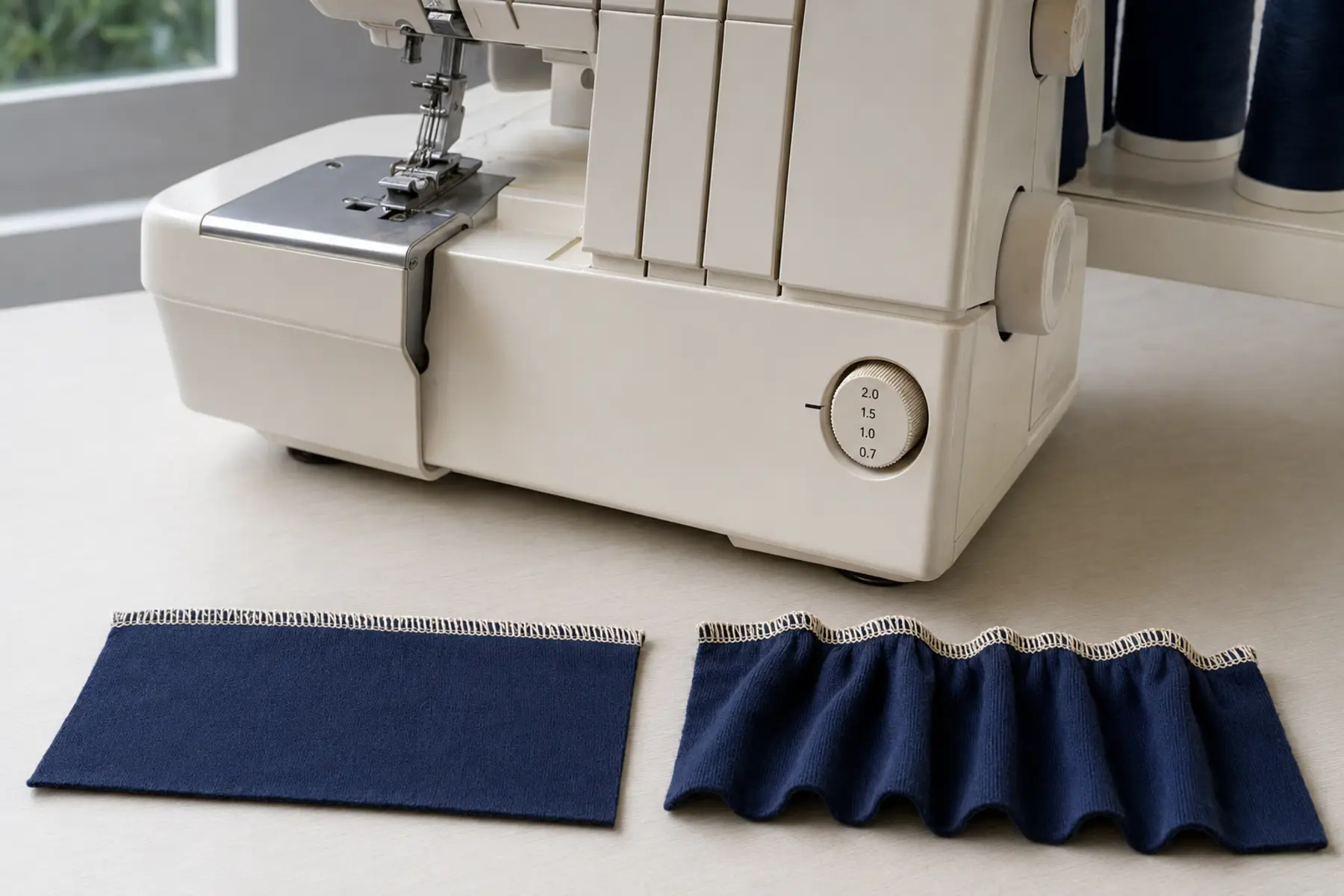
An overlocker, called a serger in North America, uses loopers and one or two needles to stitch around a fabric edge while a knife trims the seam allowance. It is particularly useful for stretch seams, neat woven seam finishes, rolled edges, and fast garment construction. It complements a regular sewing machine rather than replacing it.
A coverstitch machine does a different job. It creates the parallel rows of straight stitching and looper coverage seen on many T-shirt hems, usually without trimming the edge. If that is the finish you need, use our dedicated coverstitch machine guide. If you want both functions in one chassis and accept conversion time, compare serger-coverstitch combination machines. Neither category is ranked on this page.
Choose the stitch range before the brand
For most first-time buyers, reliable four-thread construction, three-thread finishing, differential feed, and an accessible rolled-hem conversion matter more than a long stitch count. Two-thread modes become useful when you can name the lightweight or decorative finish you intend to make.
Best overlock machines compared
| Product image | Title and best fit | Type | Current price |
|---|---|---|---|
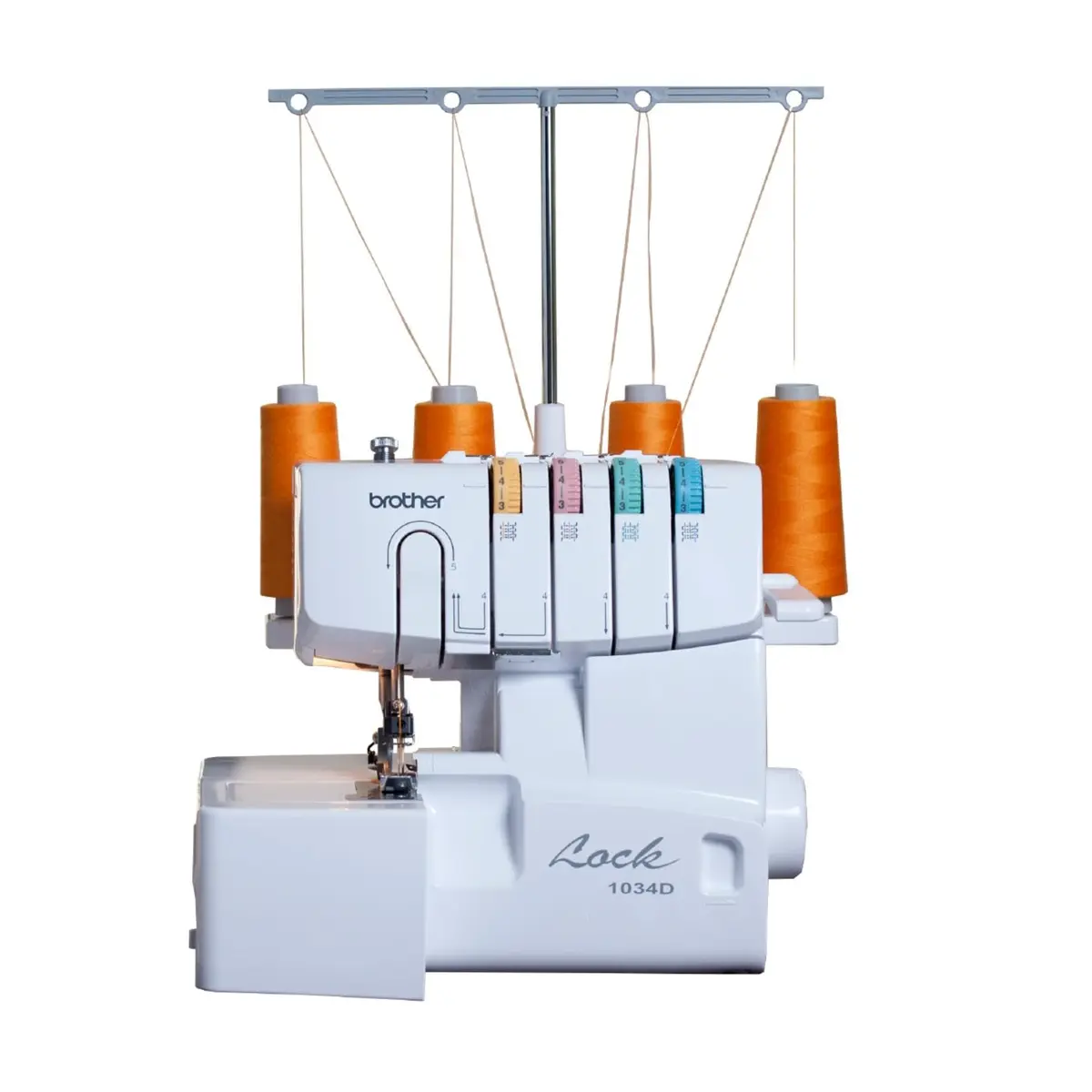 | Brother 1034D 3/4-Thread Serger Budget garment makers learning overlocking | 3 or 4-thread overlocker | Check price |
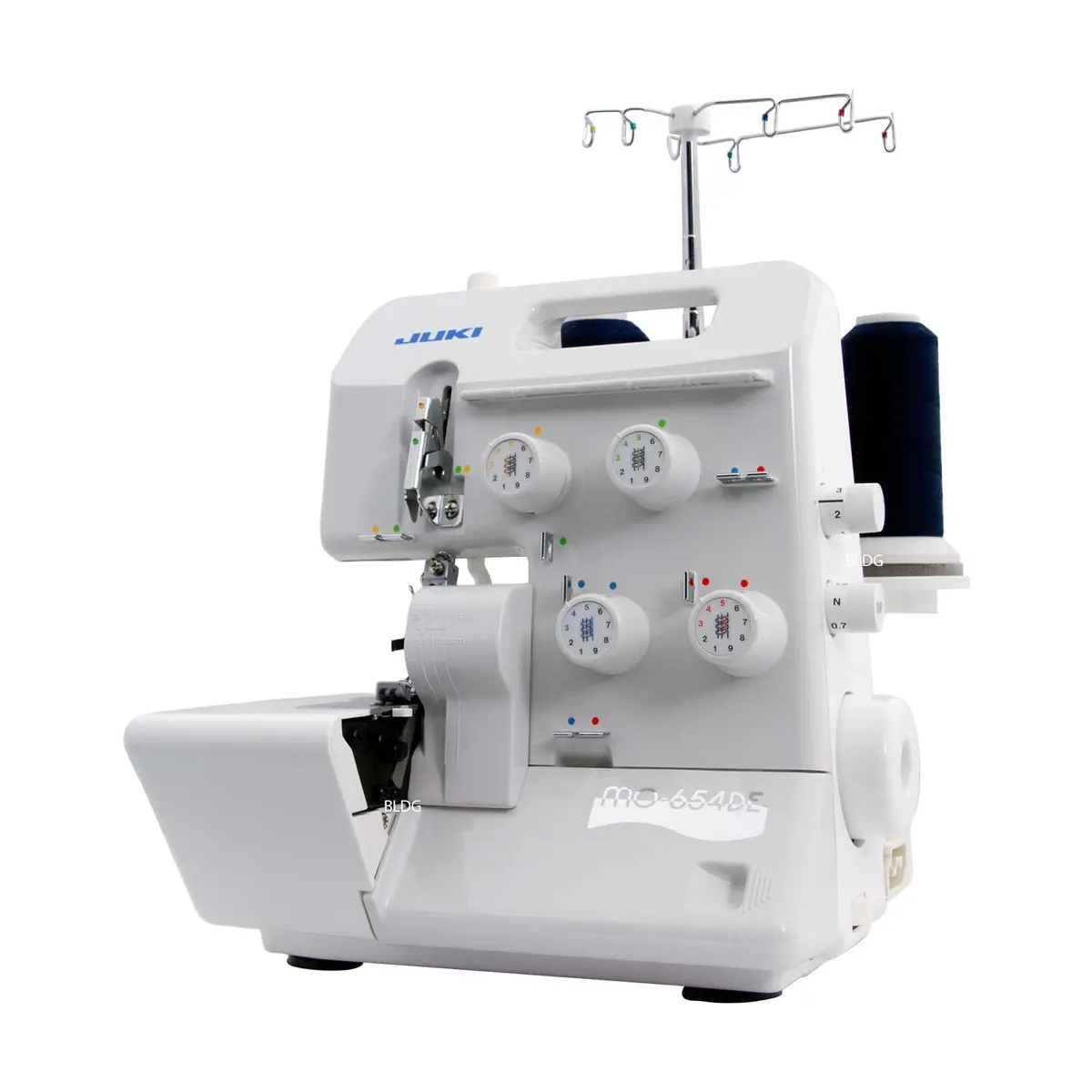 | Juki MO-654DE 2/3/4-Thread Serger Frequent garment sewing across light through heavier fabrics | 2, 3, or 4-thread overlocker | Check price |
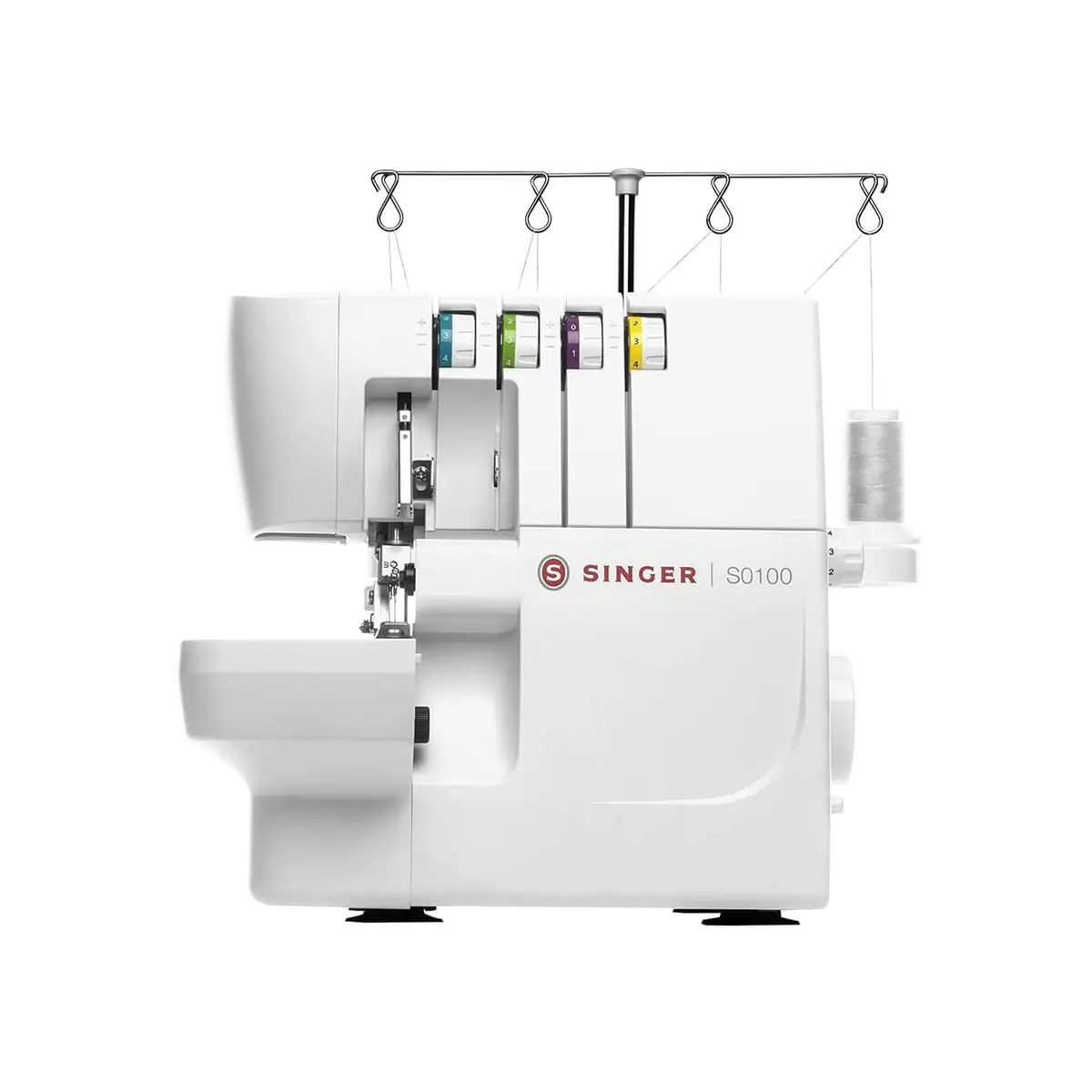 | SINGER S0100 2/3/4-Thread Serger Users wanting broad stitch options and a free arm at a moderate cost | 2, 3, or 4-thread overlocker | Check price |
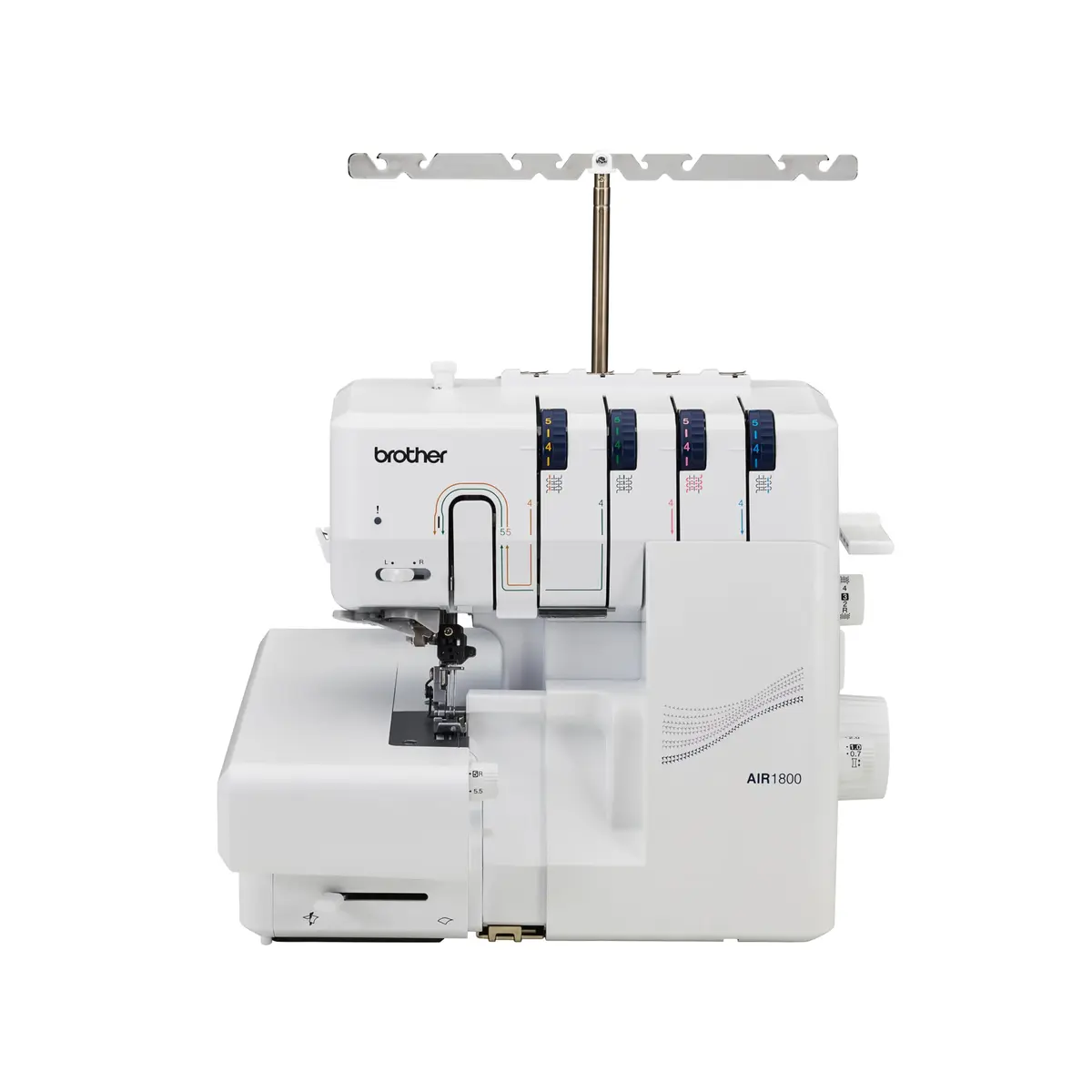 | Brother AIR1800 Air Serger Beginners or frequent colour changers who value easy looper threading | 2, 3, or 4-thread overlocker | Check price |
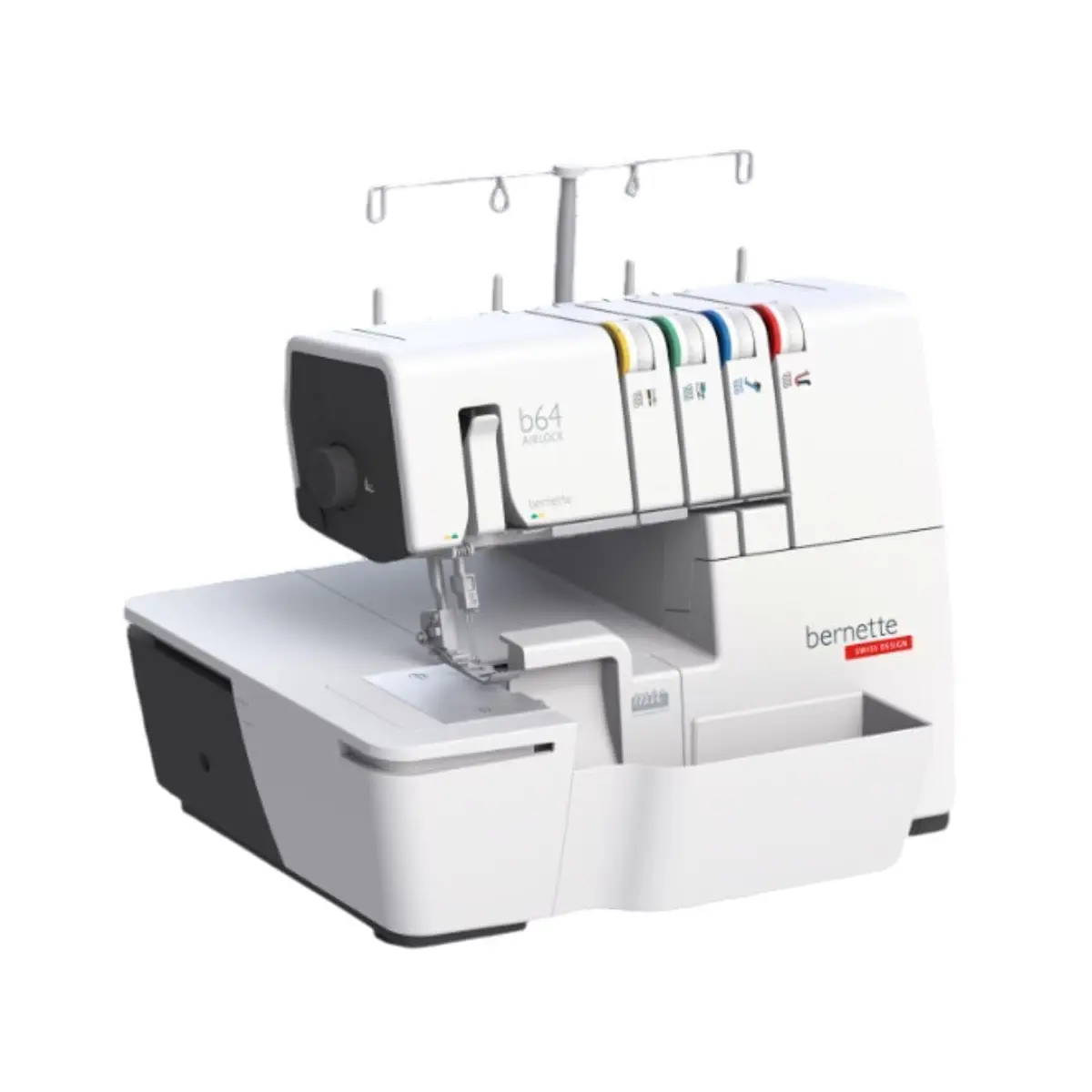 | Bernette B64 Airlock Overlocker Premium garment studios wanting air threading and generous workspace | 2, 3, or 4-thread overlocker | Check price |
Maximum speed is a manufacturer specification, not the correct speed for every seam. Curves, unstable knits, bulky intersections, decorative thread, and unfamiliar settings usually call for slower, controlled sewing.
How we chose these overlockers
This is a desk-researched comparison, not a claim that we personally tested every model. We checked current manufacturer pages and manuals first, matched each Amazon ASIN to the intended model, and used retailer or owner material only to identify purchase conditions and recurring usability questions. Specifications and listing identity were reviewed on July 22, 2026.
Every machine had to perform the page’s core job: trim and overcast raw edges as a dedicated overlocker. Coverstitch-only machines, combination machines, ordinary sewing machines, miniature machines, and near-duplicate variants were excluded. Each finalist also had to own a distinct buyer role based on thread range, threading access, differential feed, conversion workflow, fabric handling, workspace, or support.
We did not rank noise as an objective specification because manufacturers do not publish comparable measurements and perceived vibration changes with speed, maintenance, table stability, and floor surface. We also avoided hardcoded prices. Instead, we judged whether each feature set offers a defensible reason to pay more.
The best overlockers by buyer need
The order below follows the approved shortlist, but this is not a universal one-to-five performance ranking. A basic machine can be the better purchase when its workflow matches the owner, while an air-threaded premium model is worthwhile only when its convenience will be used.
Brother 1034D 3/4-Thread Serger
Best budget overlocker for learning the basics
Why it makes the shortlist
The 1034D earns its place because it gives a first-time overlocker owner the functions that matter most: dependable three- and four-thread finishing, differential feed, rolled hems, a free arm, and widely available learning support. It is inexpensive without being a toy or a compromised mini machine.
- Its 3/4-thread layout covers everyday seam construction and edge finishing without making the stitch menu needlessly complicated.
- Differential feed helps control wavy knit seams and puckering on finer woven fabrics once it is adjusted for the fabric.
- The convertible free arm is useful for cuffs, sleeves, and other small tubes, while three included feet add practical range.
- Brother still provides official product information, manuals, troubleshooting material, and an established service route.
Main limitation: It does not form a 2-thread stitch and it does not air-thread the loopers. Access inside the threading area is tighter and less convenient than on the premium machines here. The built-in light is also more basic than modern multi-LED systems.
Skip it if: You change thread colours constantly, need 2-thread decorative finishes, or know that manual looper threading will discourage you from using the machine.
Juki MO-654DE 2/3/4-Thread Serger
Best mechanical workhorse for frequent garment sewing
Why it makes the shortlist
The MO-654DE is the strongest fit for someone who values a compact, fast mechanical overlocker more than convenience features. Its dedicated knife drive, 1,500-stitch-per-minute maximum, 2/3/4-thread range, and straightforward controls make it a credible long-term garment machine.
- The dedicated knife system is designed to cut consistently across light and heavier garment fabrics rather than treating trimming as an afterthought.
- A differential-feed range of 0.7 to 2.0, external stitch controls, and adjustable cutting width give useful control over knits, fine fabrics, gathering, and edge coverage.
- The lower looper disengages for easier access, which reduces some of the frustration of a fully manual threading system.
- Automatic rolled-hem conversion avoids changing the throat plate, and the included 2/3-thread converter expands its finishing options.
Main limitation: It is still manually threaded, the internal space is compact, and there is no free arm. Amazon identifies a newer MO-654DEN variant, so confirm that the seller, voltage, model suffix, warranty, and included accessories match the exact listing before paying.
Skip it if: You want push-button air threading, a free arm for small tubes, or a machine whose front opens widely for the clearest possible threading access.
SINGER S0100 2/3/4-Thread Serger
Best mainstream all-rounder with a free arm
Why it makes the shortlist
The S0100 sits between the simpler Brother 1034D and the premium air-threaded choices. Six stitch configurations, 2/3/4-thread capability, adjustable stitch length and width, differential feed, and a free arm give it a flexible everyday specification without moving into a specialist studio price tier.
- Two-thread options let it create lighter finishes that the Brother 1034D cannot form.
- The free arm makes cuffs, children’s clothing, and narrow tubular openings less awkward than they are on a flat-bed-only overlocker.
- Differential feed, adjustable length and width, and a 1,300-spm maximum cover the normal range of garment-sewing demands.
- Singer currently provides the product page, manual, accessories, returns information, and service-centre resources.
Main limitation: Threading is manual, and six stitch configurations do not make setup automatic. Support and repair convenience can vary by location, so buyers should check the nearest authorised service route rather than assuming a large brand guarantees local help.
Skip it if: You already know you want air-threaded loopers, or you would rather trade the free arm for the Juki’s faster, more workhorse-focused mechanical platform.
Brother AIR1800 Air Serger
Best air-threaded overlocker for an easier setup
Why it makes the shortlist
The AIR1800 directly solves the setup problem that prevents many owners from changing colours or rethreading after a break. A burst of air carries thread through the looper tubes, while 2/3/4-thread stitches, differential feed, adjustable stitch settings, and quick rolled-hem controls keep it useful after the novelty of air threading wears off.
- Jet-air threading handles the loopers, which are normally the most fiddly part of an overlocker’s thread path.
- It retains the core controls a serious garment sewer needs: manual tension, differential feed, cutting control, and 2/3/4-thread configurations.
- The bright LED work area and safety/error indicators improve day-to-day visibility and reduce setup mistakes.
- Brother’s official manuals, troubleshooting information, and authorised-service network reduce ownership uncertainty.
Main limitation: Air threading does not thread the needles, choose the correct tension, clean lint, or eliminate test seams. It is also substantially more expensive than the 1034D, and it gives up a free arm, so the premium only makes sense if easier rethreading will materially change how often you use the machine.
Skip it if: You are comfortable tying on new threads and pulling them through, rarely change colours, or need a free arm more than automated looper threading.
Bernette B64 Airlock Overlocker
Best premium overlocker for workspace and fine control
Why it makes the shortlist
The B64 Airlock is the most complete dedicated overlocker in this group. It combines automatic looper threading with 16 stitches, Micro Thread Control, a 130 mm area to the right of the needle, five LEDs, a free arm, an included slide-on table, and a knee lifter. Those features are meaningful in a studio where the machine stays set up and is used often.
- Its air system threads each looper separately or both together, making frequent colour and stitch changes much less disruptive.
- Micro Thread Control adjusts how thread wraps the fabric edge, which can reduce repeated tension changes when cutting width or fabric thickness changes.
- The 130 mm work area, extension table, free arm, and knee lifter make fabric handling more comfortable than on compact entry-level overlockers.
- Sixteen stitches include 2/3/4-thread overlock, flatlock, rolled hem, narrow seam, super-stretch, picot, and wrapped-overlock options.
Main limitation: It is large and expensive for occasional edge finishing, and it is still not a coverstitch machine. The Amazon ASIN currently resolves to the correct B64 model but is sold by third parties, so confirm authorised-dealer status, warranty, voltage, bundle contents, return terms, and service arrangements before ordering.
Skip it if: You only need four-thread construction and occasional rolled hems, must store the machine after every project, or expect a cover hem on T-shirt bottoms.
How to choose the right overlocker
Buy for the seams you will actually sew
List five real projects and the finishes they require. If you mainly sew knit T-shirts, leggings, children’s clothes, or casual garments, four-thread construction and controllable differential feed should lead the decision. If you mainly finish woven seams, three-thread overlock and easy width adjustment may matter more. Decorative 2-thread stitches are valuable only if they belong to your real workflow.
If the main goal is sewing stretch fabric on a conventional machine, including zips, topstitching, buttonholes, and twin-needle hems, our sewing machines for stretch fabrics guide owns that broader decision. This page remains focused on dedicated trimming and overlocking.
Decide how much threading friction you will tolerate
Colour-coded diagrams make manual threading understandable, but they do not create more physical access. The Brother 1034D and Singer S0100 are reasonable learning machines, while the Juki adds a lower-looper aid. AIR1800 and B64 air systems remove much of the looper-routing work, but the needles still need attention and every stitch change still requires correct settings.
If you routinely sew one neutral thread colour, tying on a new thread and pulling it through can make an air system less important. If matching thread colour is part of your work, or a broken looper thread tends to stop a sewing session, air threading can be a practical productivity feature rather than a luxury.
Use differential feed as a control, not a preset
Differential feed changes the relationship between two sets of feed dogs. A higher setting can prevent a knit seam from stretching into a wave and can create gathering. A lower setting can counter puckering or deliberately stretch an edge for a lettuce finish. The correct setting depends on fabric, grain, stitch length, presser-foot pressure, and thread, so test on a project offcut rather than copying one number from a tutorial.
Check conversion steps, not just stitch count
Changing from four-thread overlock to a rolled hem may involve removing a needle, rethreading, moving a stitch finger or lever, changing length and width, and resetting tension. A machine with more stitches is not automatically easier. Read the manual section for the two or three conversions you expect to use and decide whether the sequence is clear enough for your working style.
Match the bed shape to the projects
A free arm helps with narrow cuffs and sleeves, but it should not outweigh stitch quality or service for every buyer. Most garment pieces are overlocked before a tube is fully closed. The Bernette’s larger area and slide-on table can support bulky work behind the needle, while the compact Juki is easier to accommodate on a crowded table.
Treat service as part of the specification
Before buying, search for the exact authorised service route in your area. Ask whether the retailer handles warranty claims, whether routine timing and knife work can be done locally, and whether the machine must be shipped. A lower purchase price can lose its advantage if return shipping, downtime, or unavailable parts make a repair impractical.
A realistic threading and conversion workflow
- Start from the manual. Thread in the manufacturer’s stated order. Overlockers rely on threads crossing in a specific sequence, so a correct-looking path can still fail if the order is wrong.
- Raise the presser foot before threading. On many machines this opens the tension discs so thread can seat correctly. Confirm the procedure for the exact model.
- Use contrasting thread while learning. Four colours make it much easier to identify which needle or looper controls each part of the stitch.
- Set the baseline from the manual. Begin with the recommended tension, length, width, differential feed, needle position, and presser-foot pressure instead of changing everything at once.
- Sew on a project offcut. Fold or layer it exactly as the real seam will be sewn. A single flat layer does not predict behaviour at a hem intersection.
- Change one variable at a time. Correct edge coverage with cutting width or Micro Thread Control where available, then refine tension. Use differential feed for fabric movement, not as a substitute for every tension problem.
- Record successful settings. Keep a labelled sample with fabric, needle, thread, stitch, and settings. That becomes more useful than a generic chart.
Air threading shortens step one for the loopers. It does not remove the rest of the process. That distinction is central to judging whether the AIR1800 or B64 premium is justified.
Maintenance, knives, needles, and long-term ownership
Overlockers generate more lint than ordinary sewing machines because they cut fabric continuously. Unplug the machine, open the covers, and brush accessible lint from the loopers, feed area, knives, and surrounding cavities as directed by the manual. Follow the exact oiling schedule for the model. Some owner habits apply well to one platform and poorly to another.
A dull or damaged knife can push fabric, leave ragged trimming, or make the machine appear to have a feeding problem. Bent or incorrectly installed needles can cause skipped stitches and thread breaks. Use the specified needle system, insert needles fully in the correct orientation, and replace them after a strike or when stitch formation deteriorates.
Seek professional attention when cleaning, rethreading, fresh needles, correct settings, and a verified test fabric do not resolve persistent skipping, timing symptoms, poor cutting, grinding, or a sudden change in sound. Do not keep increasing tension to hide a mechanical fault.
For buyers already committed to Brother, our Brother serger comparison goes deeper into differences within that brand. This cross-brand guide does not repeat that page’s full ranking.
Our practical verdict
The Brother 1034D is the sensible first choice when cost, a free arm, and a large learning ecosystem matter more than 2-thread stitches or modern lighting. The Juki MO-654DE is a better fit for frequent garment sewing when compact mechanical performance, fast stitching, and knife control matter more than a free arm. The SINGER S0100 offers the middle ground of 2/3/4-thread flexibility and a free arm.
Pay for the Brother AIR1800 when easier looper threading will remove a genuine barrier, not merely because air threading sounds advanced. Choose the Bernette B64 Airlock when you will use its wider workspace, Micro Thread Control, free arm, knee lifter, and 16-stitch range often enough to justify its footprint and cost. None of these makes a coverstitch hem, and none removes the need to learn tension, differential feed, and test seams.
Primary sources checked
Frequently asked questions
Is an overlocker the same as a serger?
Yes. Overlocker is the term used more often in the UK and several other markets, while serger is common in North America. This guide uses both words for the same dedicated machine category.
Should I buy a 3/4-thread or 2/3/4-thread overlocker?
A 3/4-thread machine covers the most common construction and edge-finishing jobs. A 2/3/4-thread model adds lighter, narrower, and decorative finishes. Buy the extra range only if you will use it, because every conversion still requires the correct thread path, needle position, tension, and test seam.
Is air threading worth paying for?
It is worth considering if threading difficulty stops you changing colours, experimenting with stitches, or recovering confidently from a broken thread. It is less valuable if you are comfortable tying on new threads and pulling them through. Air systems thread loopers, not the whole machine.
Can an overlocker replace a regular sewing machine?
No. An overlocker is excellent for trimming and enclosing raw edges, sewing stretch seams, and making rolled hems, but a regular machine is still better for topstitching, zips, buttonholes, precise corners, basting, and many construction steps.
Can an overlocker make a T-shirt cover hem?
A normal overlocker cannot make the parallel-needle cover hem seen on many ready-to-wear T-shirts. For that finish, choose a dedicated coverstitch machine or a true overlock-coverstitch combination machine.
How often should an overlocker be cleaned?
Lint collects quickly around the knives, feed dogs, and loopers. Brush out accessible lint after lint-heavy projects and follow the manual for oiling and deeper care. Do not use compressed air if it pushes debris farther into the machine, and seek service when timing, cutting, tension, or noise changes cannot be corrected through normal setup.