
Affiliate disclosure: We may earn from qualifying Amazon purchases at no extra cost to you. Exact industrial bundles, motors, tables and accessories can change, so confirm the complete listing before ordering.
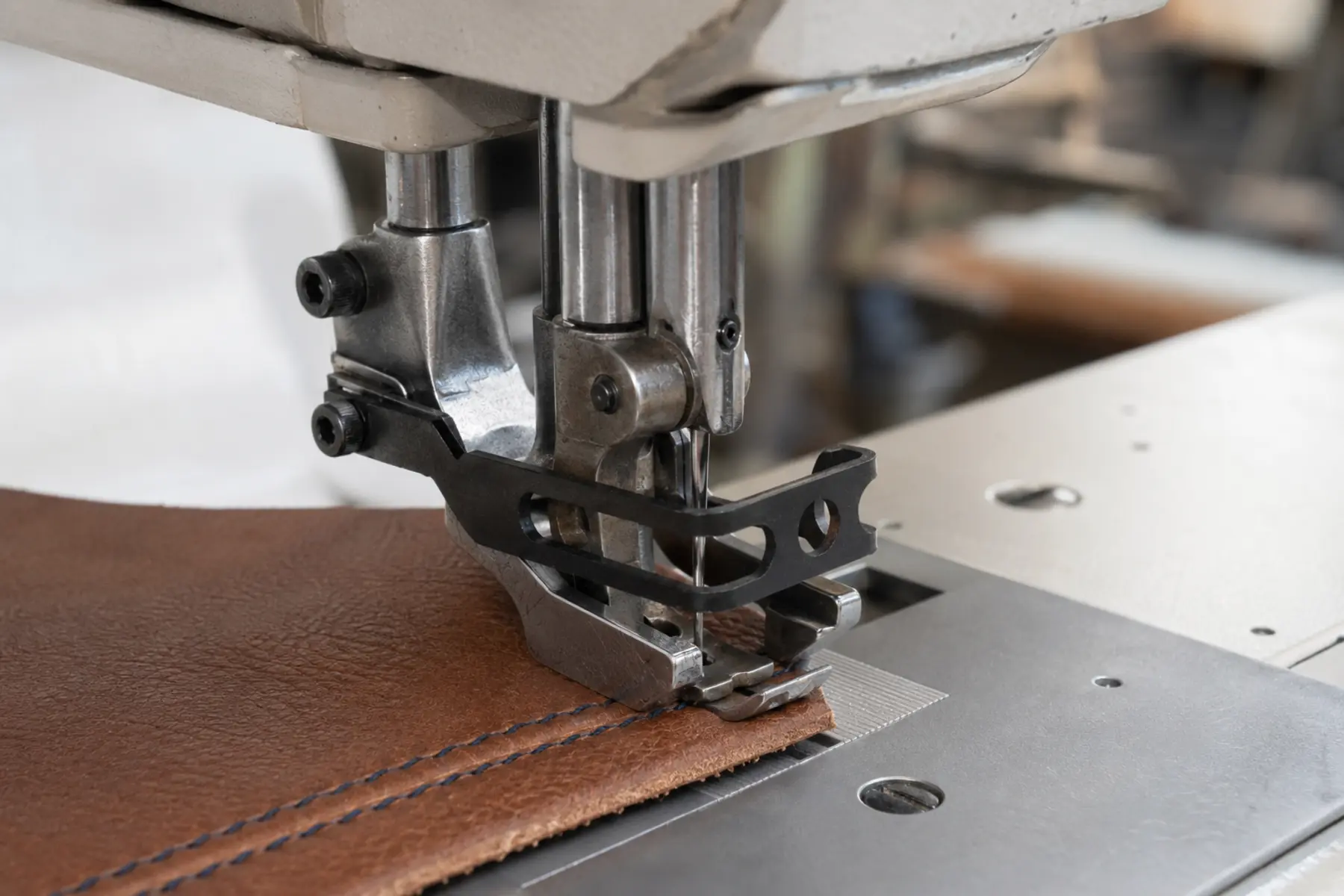
A walking-foot sewing machine can make leather layers feed more evenly, but the words “walking foot” do not describe one single mechanism. A portable machine with an alternating presser foot, an industrial top-and-bottom-feed machine, and a compound-feed machine can all be sold under the same broad label. They do not control leather in the same way, and they are not interchangeable simply because their feet appear to walk.
The best choice depends on the leather, the complete seam stack, the thread, the shape of the work, and how often the machine must repeat that seam. A mobile repairer working on boat covers has a different need from a bag maker sewing gussets every day. A maker who needs zigzag reinforcement should not buy a straight-stitch-only machine and hope an attachment will solve it. A professional upholstery shop should not judge a table-mounted unison-feed machine against a portable head only by price.
This guide compares five approved options by feed system and working role. The Consew CP206RL is the portable straight-stitch choice for repairs, marine canvas, and workshops without space for a permanent industrial table. The Family Sew FS-388 adds portable zigzag for sails, reinforcement, and projects where a straight lockstitch is not enough. The Juki DU-1181N is a lower-cost table-mounted bridge for moderate leather and vinyl layers. The Consew 206RB-5 class is the established compound-feed option for bags, upholstery, and repeat small-shop production, although its current master-sheet ASIN requires correction before publication. The Juki DNU-1541S is the premium unison-feed choice for professional medium-to-heavy leather work.
None of these machines is automatically suitable for every leather project. Fine garment leather can be marked by an aggressive foot or feed dog. Dense holsters, saddles, heavy belts, and harness work can exceed the needle, thread, feed, torque, or geometry of these flatbed machines. A cylinder-arm or 441-class machine may be more appropriate even when a flatbed model can technically pierce a sample.
Which walking-foot machine fits your leather work?
Choose the Consew CP206RL when portability is essential and most work is medium leather repair, marine canvas, vinyl, binding, or layered fabric. It provides a real alternating walking action and reverse in a tabletop format, but it remains a compact straight-stitch machine with limited workspace and less refined slow-speed control than a properly configured industrial table.
Choose the Family Sew FS-388 when you need a portable walking-foot platform that can also zigzag. That combination can be useful for sail repair, elastic, reinforcement patterns, and mixed canvas or leather work. Buy it only if you have confirmed parts, service, documentation, and the exact included package, because support is less predictable than it is for the major industrial brands.
Choose the Juki DU-1181N when you want a permanent table-mounted machine for moderate leather, vinyl, coated material, or canvas, and ordinary drop feed is allowing the upper layer to creep. Its top-and-bottom feed is a meaningful improvement, but the needle does not travel with the work. Demanding multi-layer leather is better served by true compound feed.
Choose the Consew 206RB-5 class when leather bags, upholstery, marine products, and repeat medium-leather production justify needle feed, alternating feet, a large bobbin, and a widely understood industrial platform. Do not purchase from the current sheet ASIN as though it were a verified exact 206RB-5 until the listing identity has been corrected.
Choose the Juki DNU-1541S when professional output, consistent layer matching, controllable long stitches, high foot lift, and strong dealer support justify the higher investment. It is the most complete flatbed unison-feed option in this shortlist, but it is still straight stitch only and is not an extra-heavy leather stitcher.
Readers comparing all leather machine types should use the best sewing machines for leather guide. For a broader feed-system comparison across non-leather projects, see the best walking-foot sewing machines guide. Portable hand-operated options belong in the hand leather sewing machine guide, while furniture and automotive work should be planned through the upholstery sewing machine guide.
Quick comparison
Showing three products at a time. Scroll vertically to see the remaining models.
| Product image | Title and best fit | Type | Current price |
|---|---|---|---|
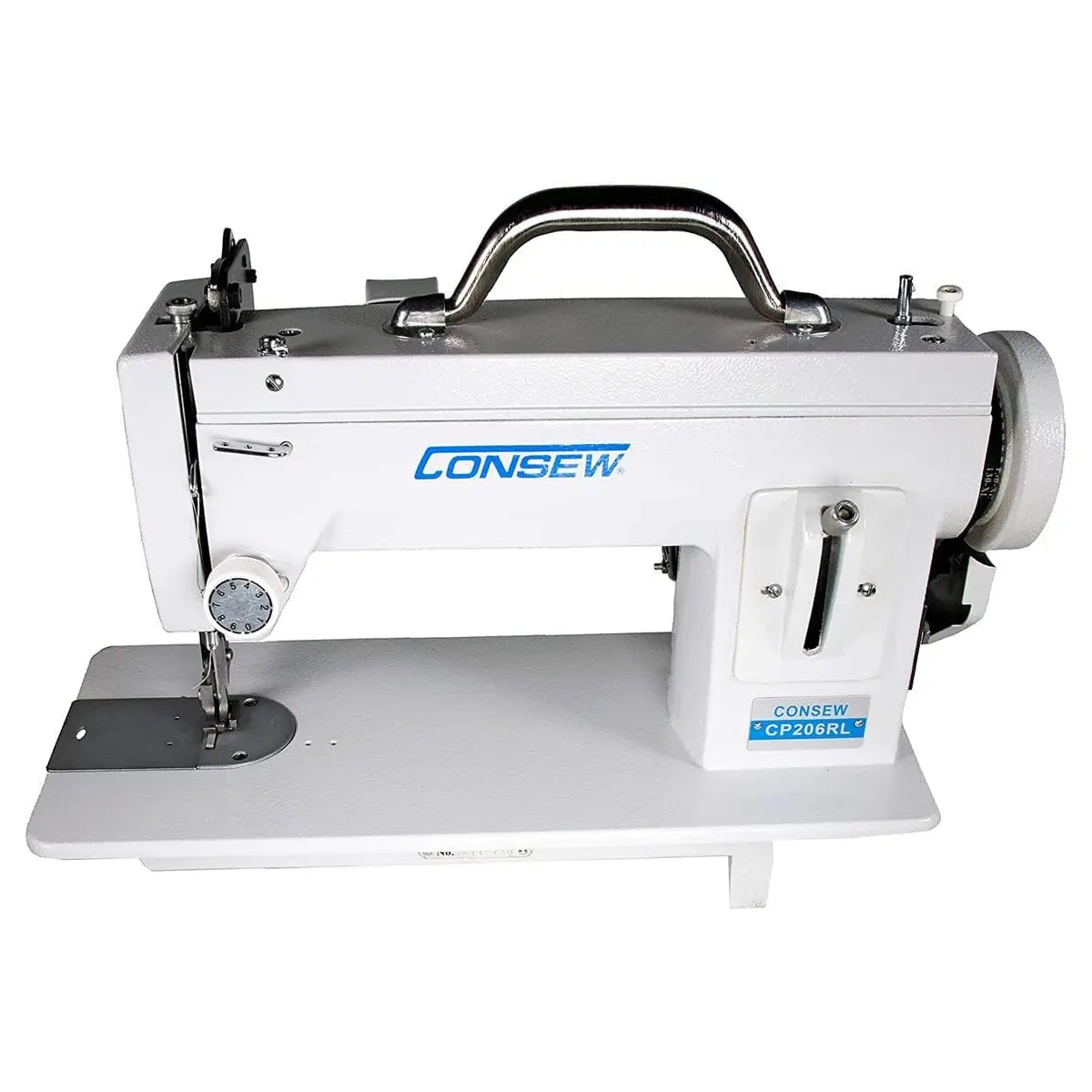 | Consew CP206RL Mobile repair, marine canvas, medium leather, and compact workshops | Portable alternating walking foot | Check price |
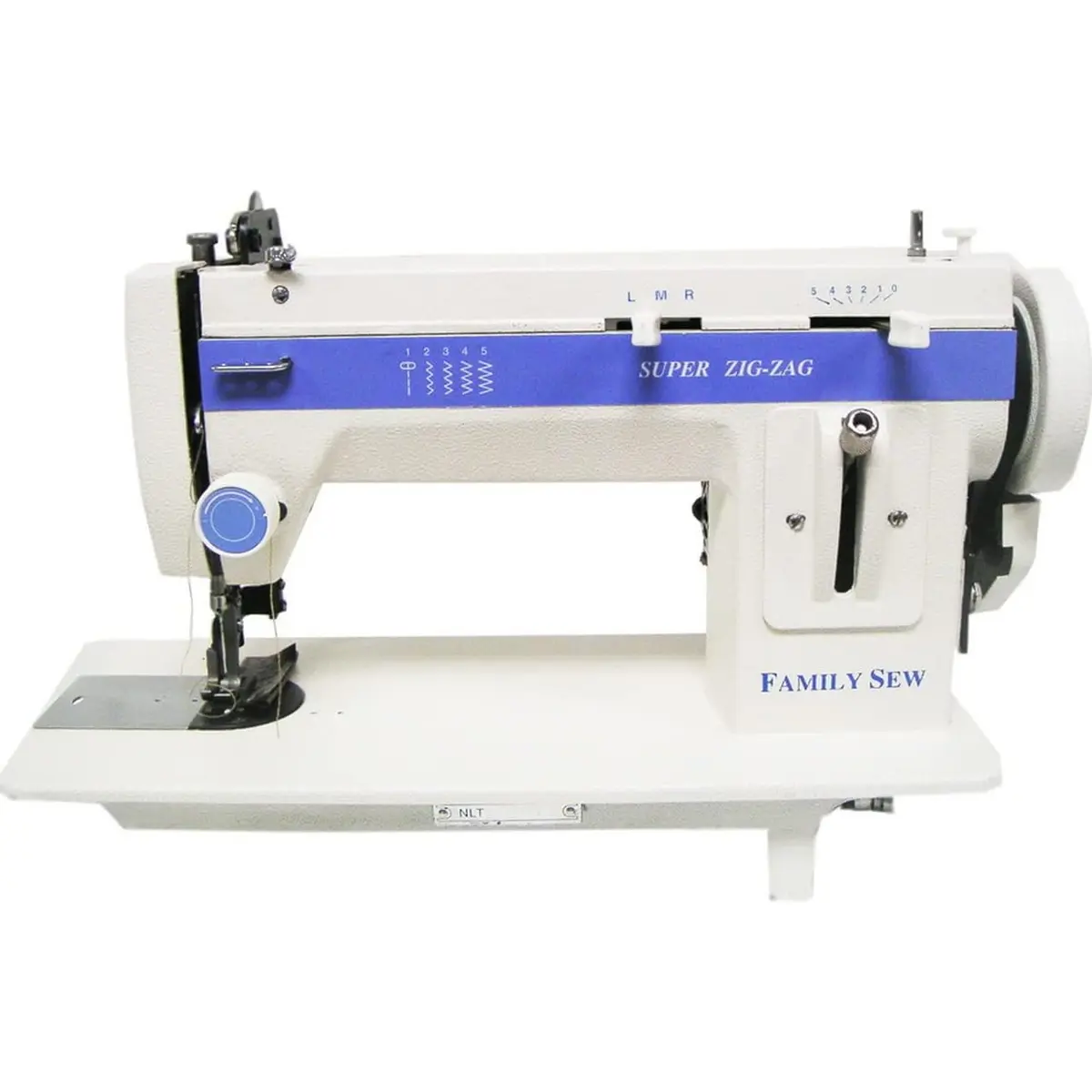 | Family Sew FS-388 Portable leather or canvas work requiring zigzag | Portable geared walking-foot platform | Check price |
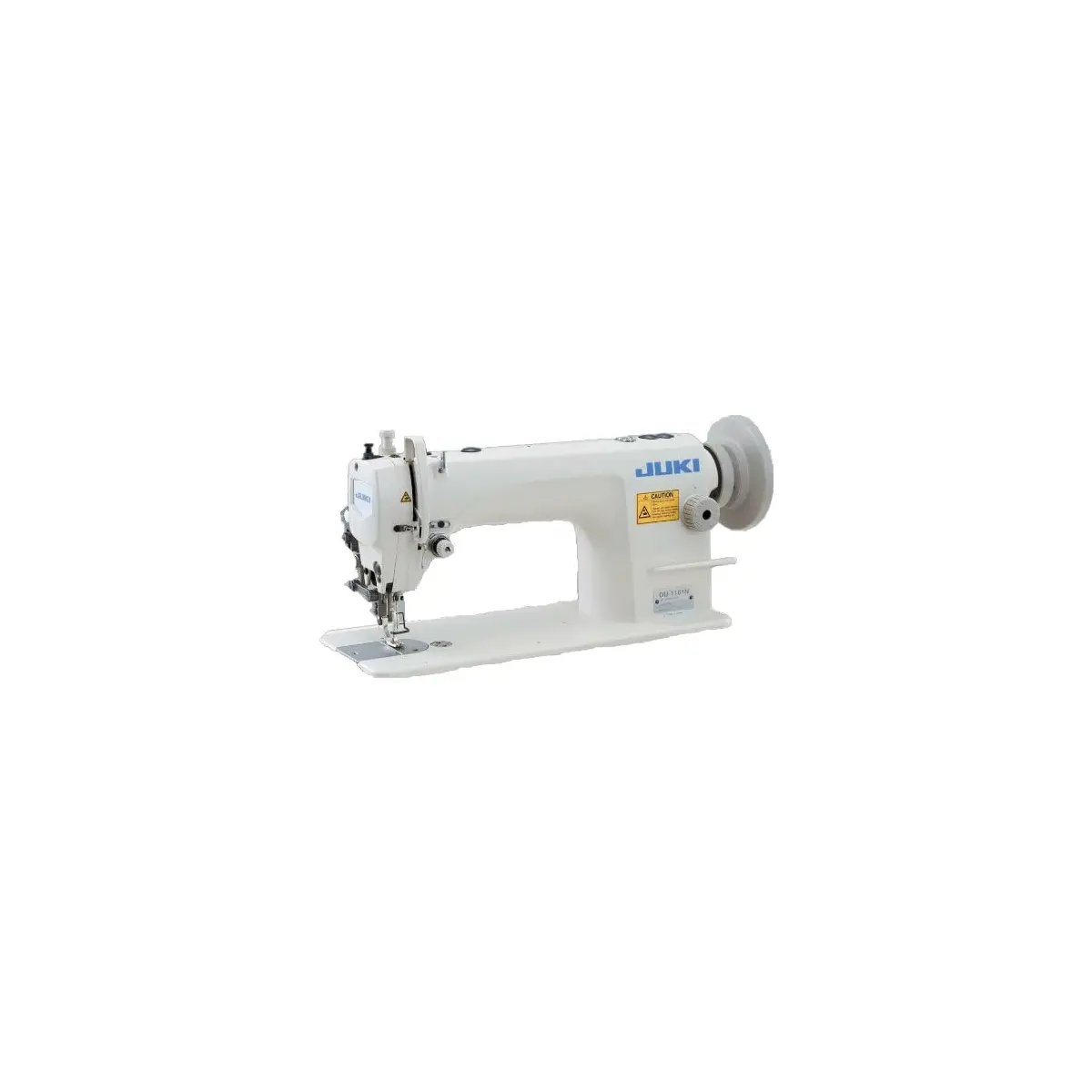 | Juki DU-1181N Moderate leather, vinyl, canvas, and layered materials | Top-and-bottom feed | Check price |
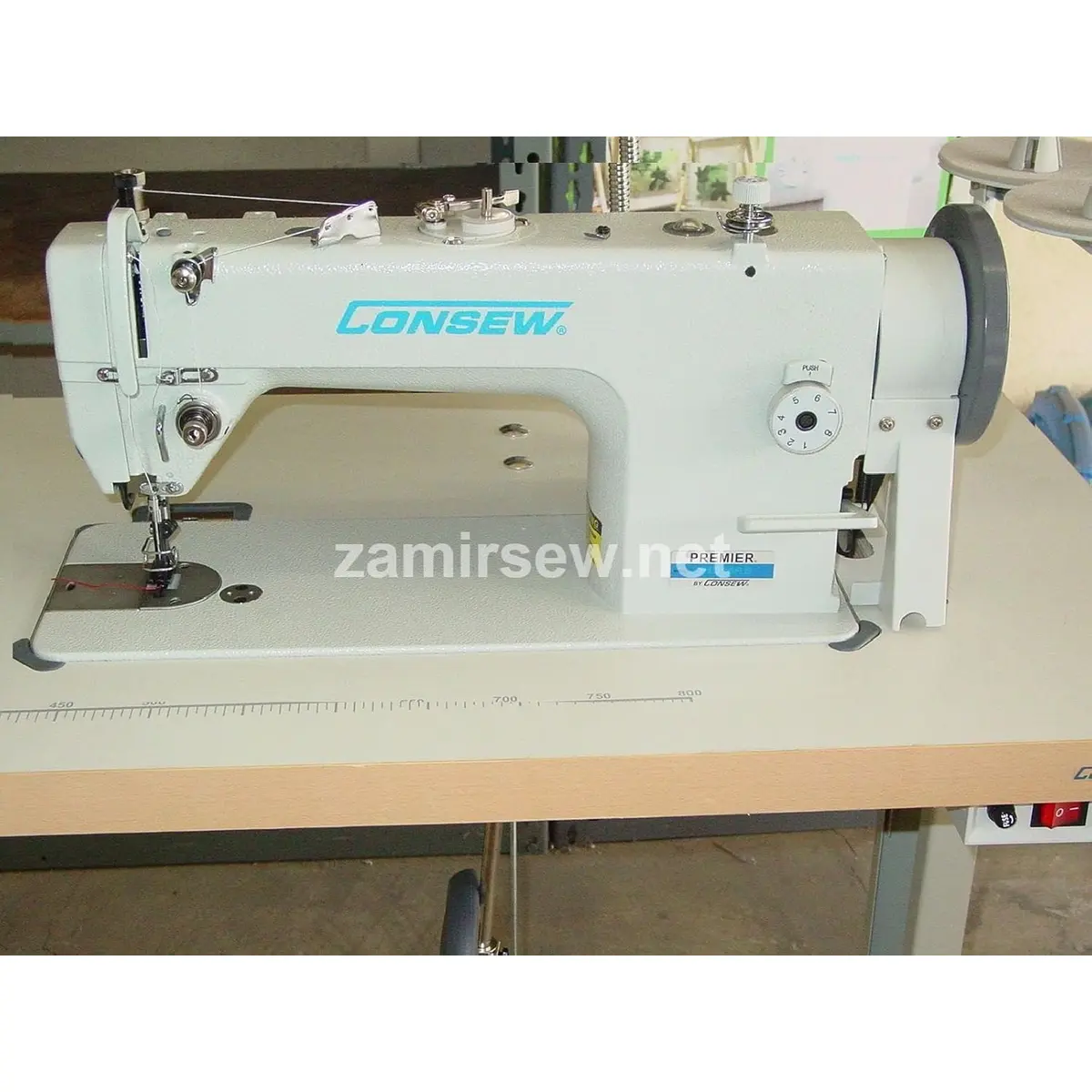 | Consew 206RB-5 Bags, upholstery, marine work, and repeat medium-leather production | Compound feed with needle feed and alternating feet | Verify model |
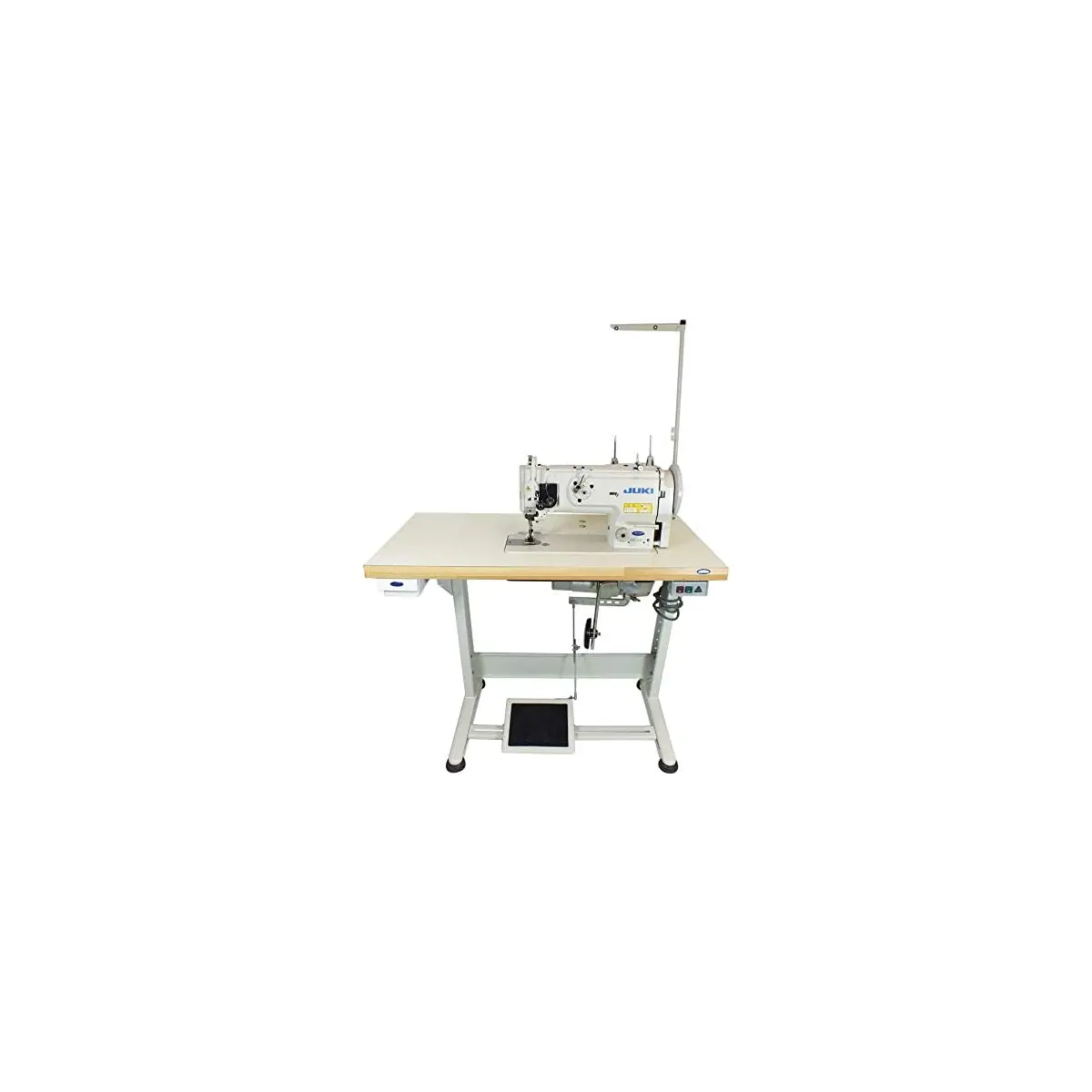 | Juki DNU-1541S Professional medium-to-heavy leather and upholstery production | Unison feed | Check price |
Detailed recommendations
Consew CP206RL
Best portable straight-stitch option
The Consew CP206RL is the most appropriate choice here when a real walking action is needed but a permanent industrial table is impractical. Its compact format suits mobile repair, boat canvas, leather patches, vinyl seating repairs, binding, and small workshops that must store the machine between jobs.
Unlike an ordinary domestic walking-foot attachment, the feeding action is built into the machine platform. The alternating feet help climb changes in thickness and reduce sliding between difficult surfaces. Reverse allows a seam to be secured without turning the complete workpiece, which is particularly useful when a boat cover or upholstery panel is large and awkward.
Where portability helps
A portable head can be carried to the product rather than forcing the product into a fixed sewing room. That can matter for marine repairs, vehicle interiors, market work, demonstrations, rented studios, and homes where the dining table must return to ordinary use.
Portability also limits the support around the machine. Large leather panels can pull sideways or downward, shortening stitches and deflecting the needle. Use a solid, level work surface and support the material at the same height as the bed. Do not allow a heavy roll to hang from the needle area.
Speed control is the main compromise
Leather work often requires the first stitch, a corner, or a bulky junction to be placed slowly. A compact built-in drive does not provide the same low-speed tuning as a table-mounted servo motor with a suitable pulley or reducer. Pedal response and operator familiarity therefore deserve a real test before purchase.
Turn the handwheel only in the direction stated by the manual, and use manual positioning rather than pulling the leather beneath a stationary needle. If controlled slow stitching is the main production requirement, a table-mounted industrial may be the more honest choice despite its footprint.
Who should buy it
Choose the CP206RL for occasional to moderate medium-leather work, canvas, vinyl, boat covers, on-site repair, and compact workshops. It is especially useful when straight stitch is sufficient and mobility has measurable value.
Who should skip it
Skip it if the business runs long daily production, needs highly refined servo control, uses very heavy thread, requires a large work area, or regularly sews demanding leather stacks. The machine is also straight stitch only.
Best for: Mobile leather repair, boat canvas, vinyl, binding, and tight workshops.
Main limitation: Compact workspace and less refined slow-speed control than a servo-driven industrial table.
Family Sew FS-388
Best portable option when zigzag matters
The Family Sew FS-388 earns a separate place because it adds up to 5mm zigzag to a portable walking-foot platform. That is not decorative padding. Zigzag can be functionally useful for sail repair, elastic attachment, reinforcement, selected edge treatments, and applications where a straight lockstitch would concentrate the seam in one line.
For a buyer who genuinely needs both portability and zigzag, a straight-stitch portable machine would require a second station. The FS-388 may consolidate those needs in a small workshop or mobile kit.
Confirm that zigzag is really required
Do not buy a less-supported machine only because it has another stitch. Most leather bags, upholstery seams, bindings, and topstitching are designed around straight stitch. If zigzag will be used rarely or only on non-leather material, a more established straight-stitch platform plus a separate domestic or industrial zigzag may produce a better long-term workflow.
When zigzag is required, test it at the intended width with the exact material and thread. Needle swing increases the chance of deflection and changes how the foot, plate opening, hook timing, and feed interact. A machine that forms a good narrow zigzag on canvas is not automatically approved for the widest zigzag through a dense leather junction.
Support is the decisive check
The FS-388 does not have the same service network and parts confidence as Juki or Consew's established industrial classes. Before purchasing, locate the manual, parts diagram, compatible feet, needles, bobbins, belts, motor components, and a technician willing to work on the exact platform.
Confirm the seller's voltage, included case or base, accessories, warranty, return process, and replacement-part route in writing. A low initial price becomes poor value when a small damaged component cannot be sourced.
Who should buy it
Choose it when portable straight stitch and functional zigzag are both regular requirements for leather, canvas, sails, or mixed repair work, and when parts and service have been verified locally.
Who should skip it
Skip it if straight stitch covers the work, predictable long-term support is more important than stitch variety, or daily production justifies a full industrial table.
Best for: Portable leather and canvas work that regularly requires zigzag reinforcement.
Main limitation: Less predictable documentation, parts access, and technician support than major industrial platforms.
Juki DU-1181N
Best table-mounted bridge for moderate leather
The Juki DU-1181N is a one-needle top-and-bottom-feed lockstitch with a double-capacity hook. Juki specifies up to 2,000 stitches per minute, a maximum 9mm forward and reverse stitch, a 15mm knee lift, and adjustable alternating movement.
It is the bridge choice for a workshop that has outgrown bottom feed but does not yet need the cost or stronger layer control of compound feed. Moderate leather, vinyl, coated fabrics, canvas bags, piping, and layered home-goods work are sensible candidates for testing.
How it handles leather
The upper feeding action helps move the face layer while the feed dogs advance from below. This can reduce drag and mismatch where an ordinary presser foot allows the upper surface to lag. The long available stitch can also create appropriate-looking topstitching and avoid excessive perforation when the leather and seam design permit it.
Its limitation is equally important: the needle does not feed with the material. At a slippery lining, foam-backed panel, folded binding, piping intersection, or multi-layer leather junction, a 206RB-5 or DNU-1541S class can hold alignment more positively.
Why the double-capacity hook matters
Leather seams often use longer stitches and heavier thread than garment work. A larger bobbin reduces interruptions, although it does not authorise thread beyond the manufacturer's supported range. Confirm the needle system, compatible point, thread range, bobbin class, and hook adjustment for the exact machine.
Bundle and motor checks
The selected Amazon offer identifies a DU-1181 platform with a 110V servo motor. Marketplace table dimensions, weight, assembly, accessories, and motor details can be inconsistent, so obtain a written packing list. Confirm head model, table, stand, motor brand and wattage, voltage, pulley, belt, oil pan, knee lift, bobbin winder, thread stand, lamp, delivery, and warranty.
Who should buy it
Choose the DU-1181N when moderate leather and vinyl layers need more control than drop feed, a permanent table is acceptable, and a dealer can demonstrate the actual seam successfully.
Who should skip it
Skip it if most work is fine garment leather, or if demanding upholstery and bag stacks make needle feed a routine requirement rather than an occasional advantage.
Best for: Moderate leather, vinyl, coated material, and canvas on a lower-cost industrial table.
Main limitation: Top-and-bottom feed is not the same as needle-feed compound feed.
Consew 206RB-5
Best established compound-feed workshop class
The official Consew 206RB-5 is a single-needle lockstitch with drop feed, needle feed, compound feed, and alternating walking feet. Consew lists a large horizontal-axis hook and bobbin, adjustable reverse, a safety clutch, centralised arm lubrication, and a reservoir-oiled hook.
Official specifications include up to 3,300 stitches per minute, a maximum 10mm stitch, 14mm presser-foot clearance, a 135x17 needle system, and 258mm of workspace. Those features make the class relevant to leather bags, upholstery, marine canvas, vinyl, luggage, outdoor products, and repeat small-shop work.
Why it is a practical workshop standard
The feed system controls multiple surfaces more completely than the DU-1181N. The large bobbin reduces interruptions, and the long stitch suits visible leather topstitching when the needle and thread setup is correct. Manuals, parts information, setup knowledge, and technician familiarity are also more widely available than they are for many generic marketplace machines.
The 206RB-5 remains a flatbed straight-stitch machine. It is awkward inside narrow cylinders, closed bags, footwear, and shaped leather goods. It is also not designed as an extra-heavy harness or saddle stitcher. Buying it for the wrong geometry or thread size will not be solved by a more powerful motor.
The master sheet assigns ASIN B01BJFQKT4 to the Consew 206RB-5. The current Amazon record shows a different Consew specification set, including figures that do not match the official 206RB-5 head. This appears closer to a P1206RB-type listing and cannot safely support an exact 206RB-5 recommendation.
The record below is retained only for internal traceability in this noindex draft. Before the article is published, replace it with a verified 206RB-5 listing or research and rename the product to the model actually sold.
Who should buy this class
Choose a verified 206RB-5 package when the workshop repeatedly sews leather bags, upholstery, marine products, canvas, vinyl, and medium leather, and values a repairable, well-understood compound-feed platform.
Who should skip it
Skip it for light garment leather, portable repair, zigzag, narrow cylinder access, and dense extra-heavy leather work. Those are different machine decisions.
Best for: Leather bags, upholstery, marine canvas, and repeat medium-leather production.
Main limitation: Large permanent workstation, straight stitch only, and the current sheet ASIN is not publication-safe.
Juki DNU-1541S
Best premium unison-feed option
The Juki DNU-1541S is the premium choice for a professional workshop whose income depends on consistent medium-to-heavy leather and upholstery seams. Juki specifies unison feed, a double-capacity horizontal-axis hook, up to 2,500 stitches per minute, a maximum 9mm stitch, a 16mm knee lift, and adjustable alternating movement.
Its needle, inner foot, outer foot, and lower feed work together to control the layers. That coordinated movement is most valuable when a seam combines leather, lining, foam, piping, webbing, or binding and must remain aligned through long runs, curves, and junctions.
What the premium buys
The higher cost is not justified by headline speed. It buys a refined, documented industrial platform, strong compound feeding, a large hook, high lift for positioning, adjustable foot movement, and access to Juki manuals, parts, dealers, and technicians.
The “S” model includes a safety mechanism that Juki describes as operating when thread becomes caught in the hook or another sewing problem occurs. This can help protect the machine, but it does not replace correct operation. Stop, switch off, disconnect power, identify the cause, and follow the manual before resetting the mechanism.
Protect the leather surface
Compound feed can mark soft or finished leather if the foot pressure, feed dog, foot texture, or presser-foot set is too aggressive. Test both the visible and hidden faces. Use only compatible smooth feet, plates, or feed components recommended for the operation, and have a technician adjust pressure and feeding balance rather than grinding or improvising safety-critical parts.
Where it stops fitting
The DNU-1541S remains a flatbed, single-needle straight-stitch machine. It does not supply zigzag or cylinder-arm access. Juki's documented needle and thread ranges still apply, and foot lift is not permission to sew every stack that fits beneath the foot.
Extra-heavy belts, holsters, saddles, harnesses, and heavy thread may require a different class. Three-dimensional bags and footwear may require a cylinder arm even when the material thickness falls within the head's capability.
Who should buy it
Choose the DNU-1541S when repeat professional leather or upholstery work justifies premium layer control, dealer commissioning, a permanent workstation, and ongoing technical support.
Who should skip it
Skip it if portability, zigzag, fine garment work, occasional hobby use, cylinder access, or extra-heavy leather capacity is the primary need.
Best for: Professional leather, automotive trim, upholstery, bags, and canvas production requiring reliable unison feed.
Main limitation: High purchase and setup cost, flatbed geometry, and straight-stitch specialisation.
How to choose a walking-foot sewing machine for leather
A walking-foot sewing machine can make leather layers feed more evenly, but the words “walking foot” do not describe one single mechanism. A portable machine with an alternating presser foot, an industrial top-and-bottom-feed machine, and a compound-feed machine can all be sold under the same broad label. They do not control leather in the same way, and they are not interchangeable simply because their feet appear to walk.
The best choice depends on the leather, the complete seam stack, the thread, the shape of the work, and how often the machine must repeat that seam. A mobile repairer working on boat covers has a different need from a bag maker sewing gussets every day. A maker who needs zigzag reinforcement should not buy a straight-stitch-only machine and hope an attachment will solve it. A professional upholstery shop should not judge a table-mounted unison-feed machine against a portable head only by price.
This guide compares five approved options by feed system and working role. The Consew CP206RL is the portable straight-stitch choice for repairs, marine canvas, and workshops without space for a permanent industrial table. The Family Sew FS-388 adds portable zigzag for sails, reinforcement, and projects where a straight lockstitch is not enough. The Juki DU-1181N is a lower-cost table-mounted bridge for moderate leather and vinyl layers. The Consew 206RB-5 class is the established compound-feed option for bags, upholstery, and repeat small-shop production, although its current master-sheet ASIN requires correction before publication. The Juki DNU-1541S is the premium unison-feed choice for professional medium-to-heavy leather work.
None of these machines is automatically suitable for every leather project. Fine garment leather can be marked by an aggressive foot or feed dog. Dense holsters, saddles, heavy belts, and harness work can exceed the needle, thread, feed, torque, or geometry of these flatbed machines. A cylinder-arm or 441-class machine may be more appropriate even when a flatbed model can technically pierce a sample.
What does “walking foot” actually mean?
The phrase is used too loosely in marketplace listings. Before comparing models, identify which components actively move the leather while the needle forms the stitch.
Portable alternating-foot machines
The Consew CP206RL and Family Sew FS-388 use portable walking-foot platforms derived from a familiar compact industrial style. Their presser-foot action helps step across layered canvas, vinyl, and leather more effectively than an ordinary domestic presser foot. Their portability is genuine, but it comes with a smaller working area, compact drive system, and fewer options for a large servo motor and reducer setup.
These machines make sense when the head must travel to a boat, workshop, event, or repair site, or when a full industrial table cannot remain assembled. Portable does not mean light in the domestic-machine sense. Plan a stable surface, safe lifting, protected transport, and enough room for the material to move without pulling against the needle.
Top-and-bottom feed
The Juki DU-1181N combines lower feed dogs with an upper feeding action. This helps move the top surface rather than allowing it to drag beneath a stationary presser foot. It can reduce layer creep in vinyl, coated canvas, moderate leather, piping, and similar assemblies.
The distinction is that its needle does not advance with the leather. For many moderate projects that is entirely adequate. When several sticky, padded, or differently textured layers must stay registered around curves and junctions, a needle-feed compound system offers more complete control.
Compound or unison feed
The Consew 206RB-5 and Juki DNU-1541S coordinate lower feed, needle feed, and alternating presser feet. The needle enters the material and moves with it during part of the feeding cycle. This reduces the opportunity for the layers to slide against one another before the stitch locks.
Compound feed is especially useful for bag panels, upholstery leather, foam-backed vinyl, binding, webbing, piping, coated canvas, and medium leather stacks. It does not make preparation irrelevant. Uneven skiving, poor basting, unsuitable adhesive, excessive foot pressure, an incorrect needle point, or an unstable seam design can still create mismatch or surface damage.
A domestic walking-foot attachment is different
A removable even-feed attachment for a domestic machine can help quilts and selected light layers feed more evenly, but it does not turn the machine into an industrial compound-feed leather machine. The domestic motor, internal drive, presser-foot lift, needle system, thread capacity, stitch formation, and duty cycle remain unchanged.
Use a domestic attachment only within the machine manufacturer's stated limits and for leather that the machine can handle safely. Do not use a larger needle, heavier thread, or greater foot pressure as a way to force an unsuitable machine through a dense stack.
Leather capacity starts with the complete seam
Leather is not one material class. A thin chrome-tanned lambskin panel may be soft but easily marked. Vegetable-tanned tooling leather may be firm and resistant even at a similar measured thickness. Upholstery leather may combine with foam, scrim, piping cord, vinyl, webbing, and folded allowances. Adhesive can make a stack harder and can contaminate the needle.
Describe the real seam before shopping:
- Leather type and temper
- Thickness of each layer
- Number of layers at the hardest junction
- Lining, foam, binding, piping, reinforcement, and webbing
- Intended thread type and size
- Needle system, point, and size
- Stitch length and appearance
- Flat, curved, tubular, or three-dimensional construction
- Short repair use or repeated daily production
A dealer test should use all of those materials in the same order as the finished product. A sample through two flat scraps proves very little if production requires turning a lined bag corner with folded binding and webbing beneath the foot.
Inspect both faces of the test. Look for balanced tension, consistent stitch length, clean hole formation, surface dents, feed-dog tracks, skipped stitches, needle deflection, thread abrasion, puckering, and layer creep. Repeat the seam at the speed the operator will actually use. One slow pass is not evidence of production capacity.
How we selected these machines
The five machines and their roles come from the site's approved Amazon product shortlist. The selection was built around distinct buyer situations rather than ratings, review volume, bestseller placement, or the number of accessories in a bundle.
Each machine had to represent a meaningful step in the feed and workspace decision. The CP206RL owns portable straight-stitch repair. The FS-388 owns portable zigzag. The DU-1181N represents top-and-bottom feed for moderate work. The 206RB-5 represents the established compound-feed workshop class. The DNU-1541S represents premium professional unison feed.
The comparison prioritises leather type, total seam stack, feed mechanism, lift, needle and thread system, speed control, reverse, motor package, maintenance, parts, and technician support. A machine is not ranked higher simply because it is more expensive or faster.
This is a research-based guide and does not claim personal hands-on testing. Manufacturer manuals and specifications are treated as primary evidence. Marketplace bundle information must be reconfirmed because a seller can change the table, motor, stand, voltage, accessories, assembly terms, or even the machine variant without changing the broad listing history.
One product requires special caution. The master sheet pairs the Consew 206RB-5 with ASIN B01BJFQKT4, but the currently visible Amazon specification set does not match Consew's official 206RB-5 data. The listing must be corrected or formally reverified before publication. It is retained in this draft only to preserve master-sheet traceability.
Needle, thread, and stitch length for leather
A walking foot cannot compensate for an incorrect needle and thread combination. Use the exact needle system specified for the machine. Within that system, select a leather point appropriate to the leather and desired seam appearance. Different point shapes cut the material in different directions and can change the angle and appearance of the stitch.
Match needle size to thread and material. A needle that is too fine can deflect, overheat, shred thread, skip stitches, or strike the hook. A needle that is unnecessarily large creates a larger permanent hole and can weaken a closely stitched edge.
Longer stitches are often used in leather because every needle penetration remains in the material. Closely spaced holes can create a tear line, particularly near an edge or in firm leather. That does not mean the maximum stitch length is always correct. Seam strength, leather temper, thread, edge distance, design, and appearance all matter.
Never judge tension only from the top. Inspect the reverse to confirm the lock sits within the material rather than pulling to either surface. Test after adhesive has dried and after the leather has passed through the same folds and curves as the real product.
Servo motors and slow-speed control
Leather production often needs torque and control at low speed. A servo motor is generally preferable to a continuously running clutch motor for a small shop because it is quiet at idle and allows the maximum speed to be limited. Pedal response still varies by motor, programming, linkage, pulley size, and operator technique.
A smaller motor pulley or compatible speed reducer can improve low-speed resolution and torque at the machine. It also changes belt geometry, guarding, maximum speed, and installation requirements. Plan the complete drive with the dealer or technician rather than treating a reducer as a universal accessory.
Portable machines cannot always be configured like full table-mounted heads. Test whether the first stitch can be placed reliably, whether the machine climbs the real junction without racing, and whether handwheel positioning is practical.
Do not pull leather through the machine to increase feeding. Pulling can bend the needle, disturb hook clearance, lengthen stitches unevenly, and place hands near the needle. Support the work and let the feed system move it.
Table, motor, and bundle checklist
Industrial Amazon listings often combine a known machine head with seller-selected components. Before ordering, confirm in writing:
- Exact head model and subclass
- Head only or complete workstation
- Table cutout, tabletop size, stand, and assembled dimensions
- Motor brand, power, voltage, phase, speed range, and warranty
- Pulley size, belt, speed reducer, and needle positioner if included
- Oil pan, knee lift, bobbin winder, thread stand, lamp, drawer, guards, tools, needles, bobbins, and oil
- Assembly, test sewing, delivery, installation, training, return terms, and freight-damage process
- Local parts source and warranty technician
Do not infer inclusion from a product photograph. Tables, motors, and assembly services can change while the ASIN remains the same. Verify local voltage and grounding before purchase, and use a qualified person for any electrical uncertainty.
Measure the room and delivery route as well as the tabletop. Allow space for the operator, pedal, material support, maintenance access, doors, stairs, and lifting. An industrial head should be moved with appropriate help and should never be lifted by the tension assembly, thread guides, handwheel, or other precision components.
When a walking-foot flatbed is the wrong machine
A walking-foot flatbed is not the answer when geometry, stitch type, or material class points elsewhere.
Choose a cylinder-arm machine for shaped bags, gussets, footwear, narrow tubes, curved assemblies, and products that cannot lie flat around the needle. A flatbed attachment can make some cylinder machines more versatile, but a flatbed cannot become narrow where the product needs clearance.
Choose a post-bed machine when visibility and access around three-dimensional uppers, bags, or shaped goods matter more than a broad flat surface.
Choose a 441-class or other extra-heavy stitcher for dense holsters, saddles, harnesses, thick belts, and heavy thread beyond the documented range of medium-to-heavy upholstery heads.
Choose an industrial zigzag when zigzag is a central production operation rather than an occasional repair requirement.
Choose a lighter garment machine for soft leather clothing when an aggressive feed system would mark or distort the surface. The correct machine is the one that forms the seam without damage, not the heaviest head in the room.
Setup and maintenance essentials
Have the delivered machine assembled, lubricated, timed, and test-sewn by a competent dealer or technician where possible. Confirm motor rotation, belt tension, guard installation, foot lift, reverse, alternating-foot height, feed timing, hook clearance, thread path, tension, oil flow, and safety-clutch operation before production.
Keep hair, sleeves, jewellery, cords, and tools away from belts, pulleys, the handwheel, take-up lever, needle bar, and foot linkage. Switch off and disconnect power before changing needles, feet, plates, feed dogs, belts, or making adjustments near moving parts.
Use the lubricant and schedule stated in the exact manual. Clear leather dust, adhesive residue, thread, and lint without pushing contamination into the hook or oil system. Replace damaged needles promptly and keep a record of jams, skipped stitches, broken needles, thread breaks, unusual noise, safety-clutch events, and technician adjustments.
Do not practise hook timing or feed synchronisation on a customer order. Arrange service support before downtime occurs and keep routine consumables on hand.
Frequently asked questions
Is a walking-foot machine always better for leather?
No. It is better when layer movement, sticky surfaces, piping, foam, binding, or changes in thickness make ordinary drop feed unreliable. Fine garment leather may be handled more gently by another machine and setup. Extra-heavy leather may require a stronger stitcher, while shaped goods may require a cylinder arm.
Is top-and-bottom feed the same as compound feed?
No. Top-and-bottom feed moves the material from above and below, but the needle does not travel with it. Compound or unison feed coordinates lower feed, needle feed, and alternating feet. That additional needle control can improve alignment in demanding layered leather assemblies.
Can the Consew CP206RL replace a full industrial table?
It can replace one for selected portable repair and moderate work, but not for every production environment. A permanent industrial table provides more material support, drive options, workspace, low-speed tuning, and operator ergonomics for sustained daily sewing.
Which option can sew zigzag?
The Family Sew FS-388 is the only shortlisted machine selected specifically for portable walking-foot zigzag. The CP206RL, DU-1181N, 206RB-5, and DNU-1541S are straight-stitch machines.
Can the Juki DNU-1541S sew belts and holsters?
It may sew some constructions within its documented needle, thread, lift, and material limits, but it should not be treated as a universal belt or holster machine. Dense vegetable-tanned stacks and heavy thread can require a 441-class or another extra-heavy machine. Test the exact finished seam with a knowledgeable dealer.
Does a higher presser-foot lift mean greater sewing capacity?
No. Lift provides clearance for positioning. Sewing capacity also depends on material density, needle and thread range, hook clearance, feed, torque, foot movement, stitch formation, and the machine's intended class.
Do I need a servo motor for leather?
A servo motor is strongly useful for table-mounted leather machines because it can provide quieter operation and a limited maximum speed. The exact low-speed quality depends on the motor, pulley, programming, reducer, linkage, and machine setup. It does not expand the head's published material or thread limits.
Why is the Consew 206RB-5 Amazon link marked as blocked?
The master-sheet ASIN currently presents specifications that do not match Consew's official 206RB-5 data. Publishing it as a verified exact model could send readers to a different Consew machine. The listing must be corrected or reverified before the draft is released.
Final verdict
For portable straight-stitch repair, marine canvas, and medium leather work, the Consew CP206RL is the clearest compact choice. If portable zigzag is a genuine operational requirement, the Family Sew FS-388 fills that narrower role, provided parts and service have been verified.
For a permanent table and moderate leather or vinyl layers, the Juki DU-1181N offers a useful step beyond ordinary drop feed. When repeat bag, upholstery, marine, and medium-leather production requires true compound feed, the Consew 206RB-5 class is the established workshop option, but the current master-sheet ASIN must be corrected before publication.
For professional buyers who can justify the cost, commissioning, and floor space, the Juki DNU-1541S offers the strongest combination of documented unison feed, long-stitch control, lift, safety mechanism, and support in this shortlist.
The final decision should follow the hardest real seam. Test the complete stack with the intended needle, thread, foot, motor, stitch length, and operating speed. Then confirm that the machine's geometry fits the product and that parts and technical support are available. “Walking foot” is only the beginning of the specification, not the answer by itself.
Research sources
- Consew CP206RL documentation and current marketplace listing
- Family Sew FS-388 current product documentation and marketplace listing
- Juki official DU-1181N specifications and catalog
- Consew official 206RB-5 specifications, manual, and parts resources
- Juki official DNU-1541S specifications and industrial catalog
- Current Amazon records for ASINs B07G8FY9DF, B0B2YL9ZSH, B005I5DXIS, B01BJFQKT4, and B07S2L6BBB, checked July 22, 2026
Prices, stock, sellers, tables, motors, assembly terms, voltage, accessories, and marketplace titles can change. Verify the exact offer before purchase. This page contains affiliate links; the site may earn a commission from qualifying purchases at no additional cost to the buyer.