
Affiliate disclosure: This page contains Amazon affiliate links. If you buy through them, we may earn a commission at no extra cost to you. Products are included for application fit, not rating count or commission. Availability, bundles, training, and warranty coverage can change.
How we chose machines for shirts and hats
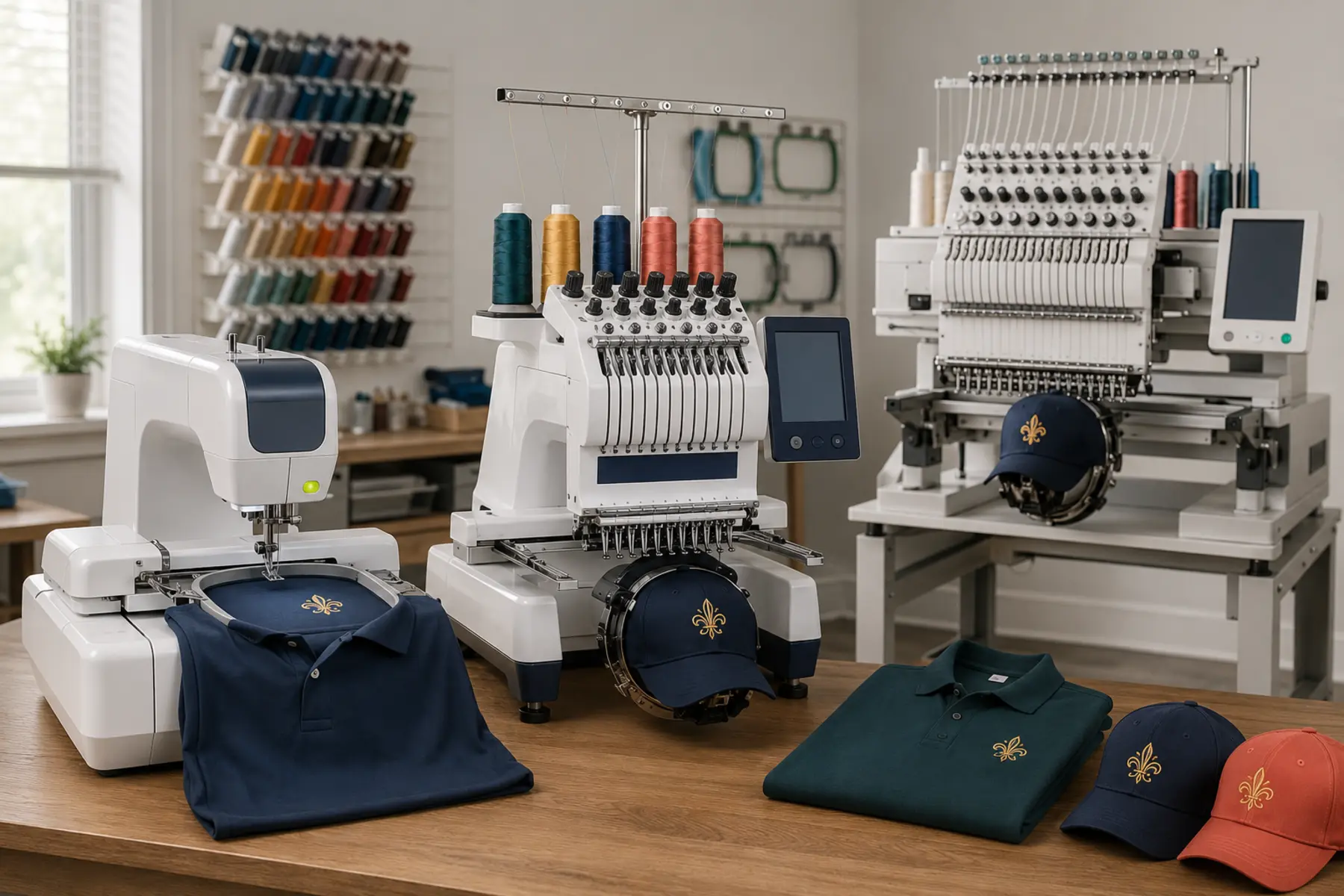
This guide is intentionally narrower than a general embroidery-machine roundup. A model had to solve at least one finished-garment or cap-specific workflow without duplicating another pick. We prioritized tubular access, compatible cap systems, usable field, needle count, automatic color changes, placement tools, trimming, transfer workflow, training, repair access, and the level of operator involvement required.
This is a research-based comparison rather than a claim that every machine was personally tested. Specifications were checked against manufacturer information and current listings on July 22, 2026. Before purchasing, confirm the exact machine, seller, cap driver, frames, stand, software, training, warranty, and service eligibility.
Shirt and hat embroidery machines compared
| Product image | Machine and best fit | Type | Current price |
|---|---|---|---|
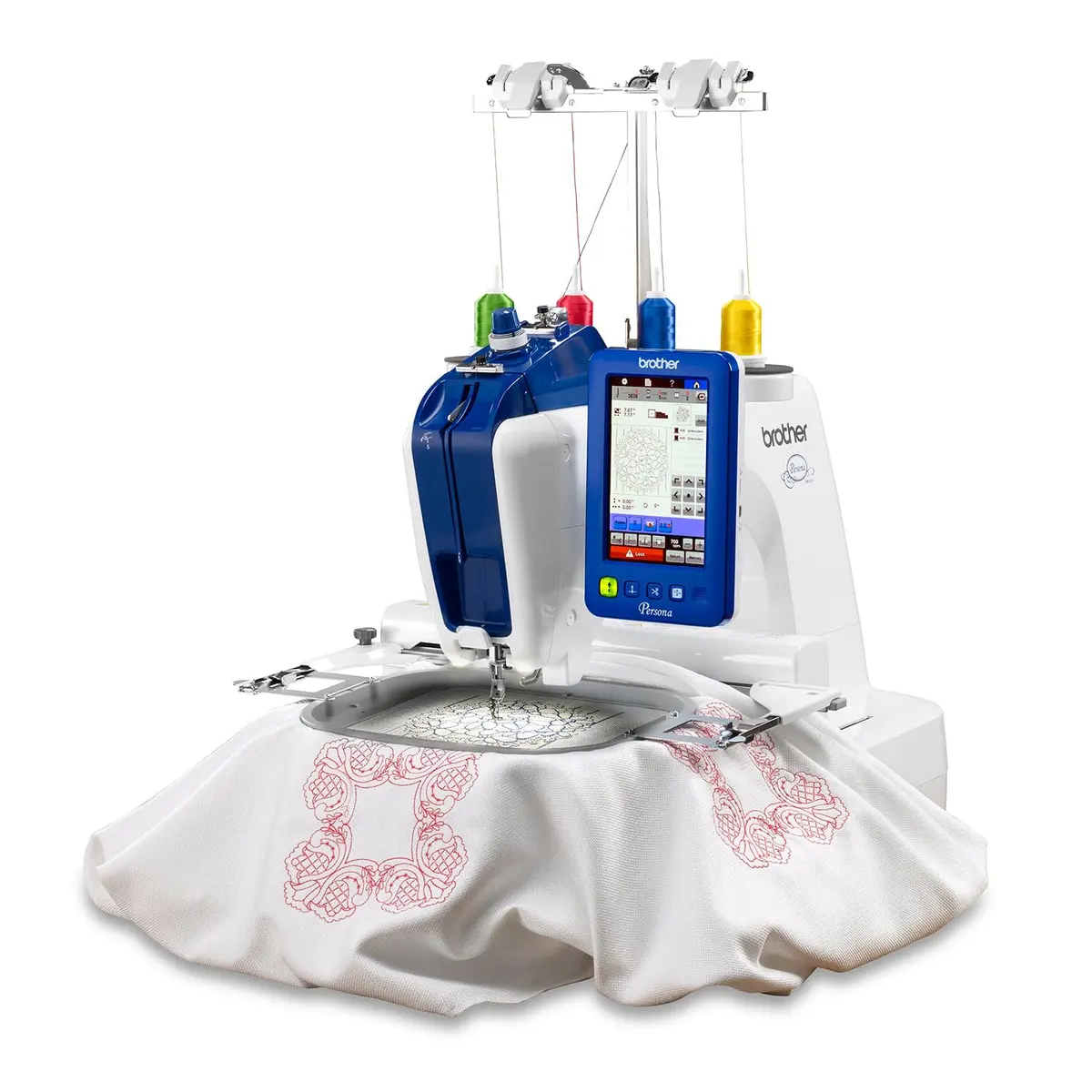 | Brother Persona PRS100 Shirts, sleeves, pockets, bags, and occasional cap orders | Single-needle tubular free arm | Check price |
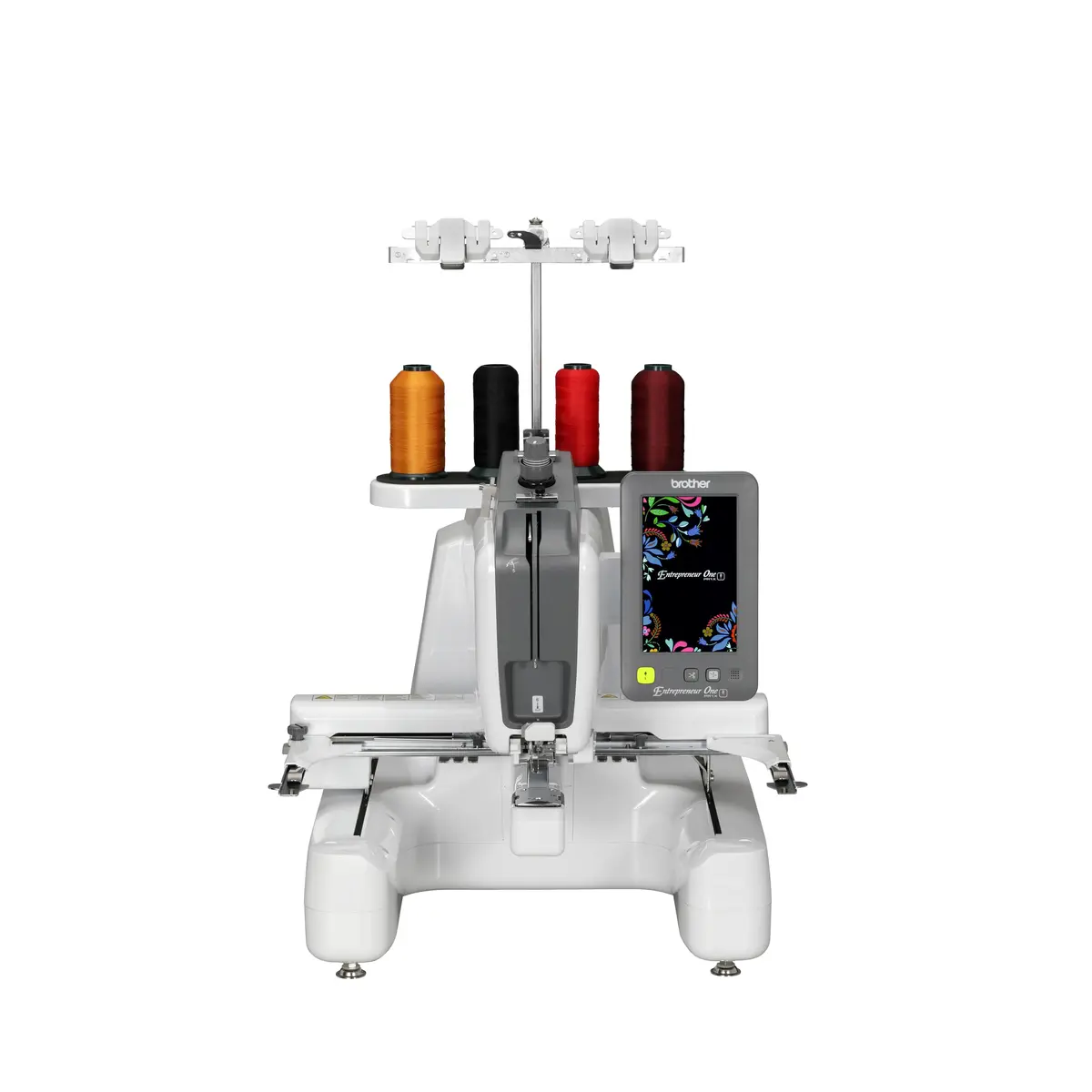 | Brother Entrepreneur One PR1X Logos on shirt fronts, pockets, bags, sleeves, and low-volume custom orders | Single-needle tubular free arm | Check price |
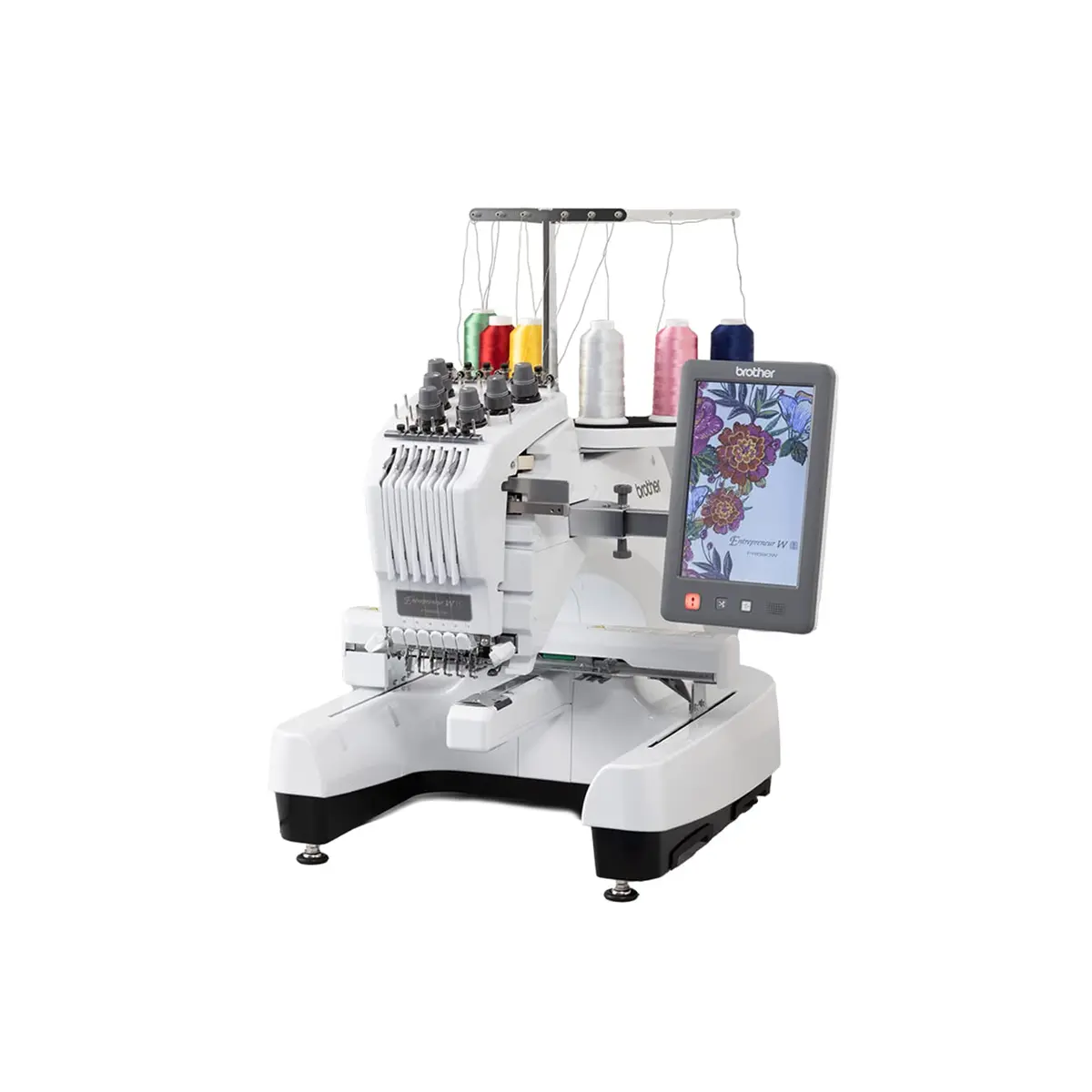 | Brother Entrepreneur PR680W with Cap Kit Repeat multicolor shirts and caps with dealer-backed ownership | Six-needle tubular | Check price |
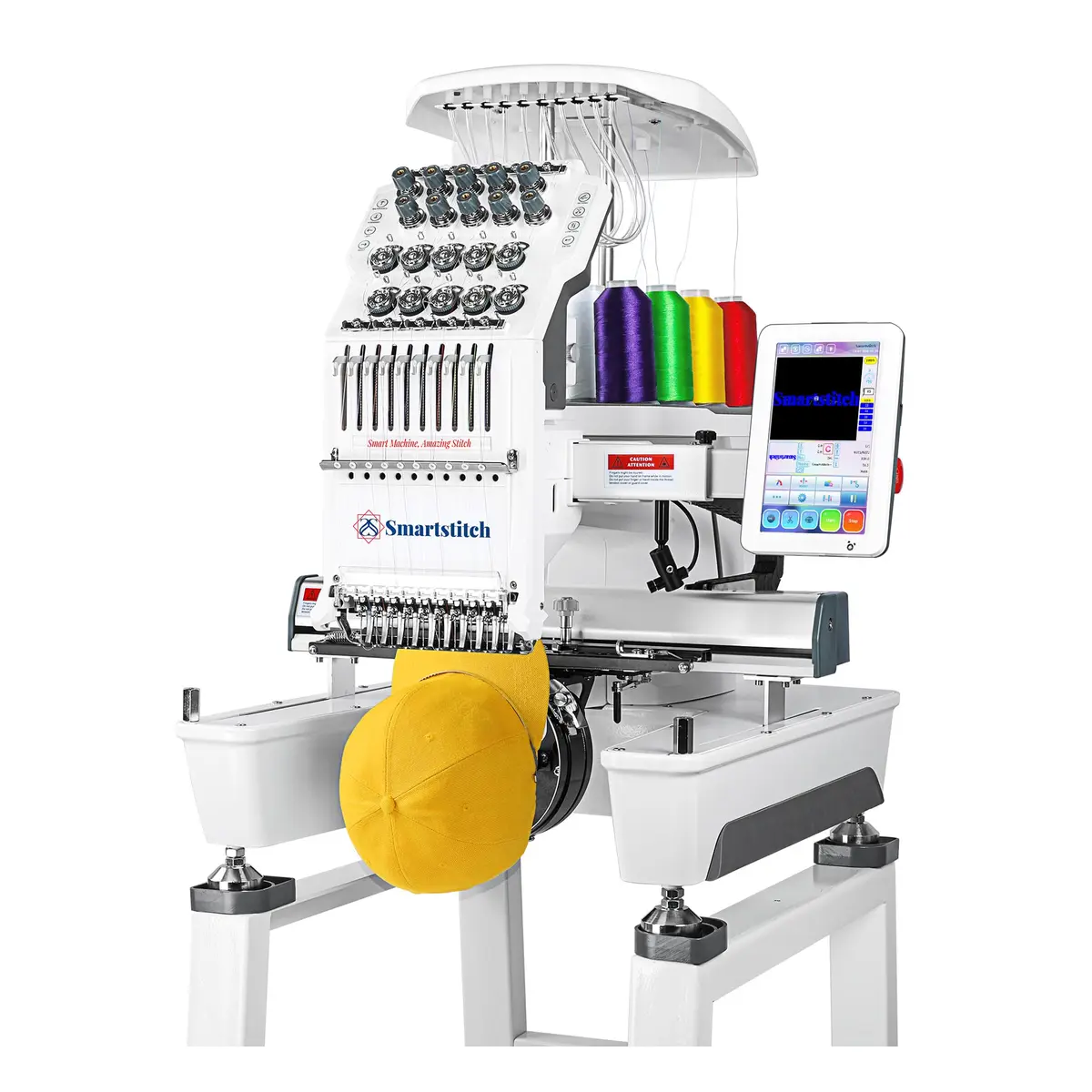 | Smartstitch S-1001 Small businesses producing shirts, hats, patches, and short multicolor runs | Ten-needle tubular commercial | Check price |
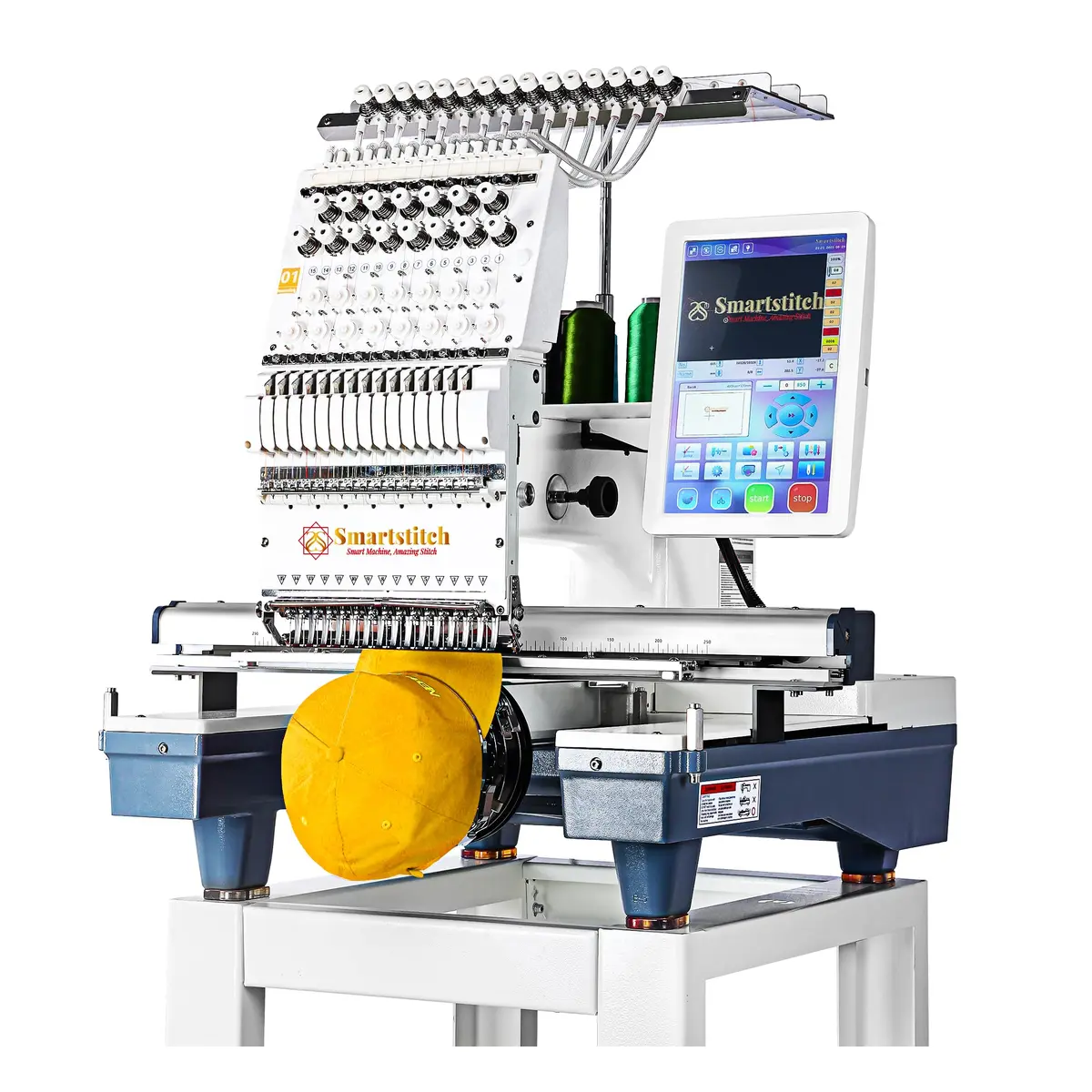 | Smartstitch S-1501 Higher-volume caps, 3D puff, jacket backs, shirts, and large flat work | Fifteen-needle tubular commercial | Check price |
The normal maximum embroidery field is not the cap sewing field. Cap frames restrict height and placement, especially close to the brim. Check the exact compatible cap system before committing to a machine.
The best machines by shirt and cap workflow
A fifteen-needle machine is not automatically the best purchase. The right choice depends on finished-product access, daily color changes, order volume, available space, and who will support the machine when production stops.
Brother Persona PRS100
Best compact free-arm machine for low-volume garment work
Why it makes the shortlist
The narrow free arm lets finished sleeves, pockets, bags, and small garments wrap around the machine instead of forcing excess fabric under a flatbed hoop. Compact frames help with tight placement areas, and the optional cap setup provides a legitimate entry into low-volume hat work.
Main limitation: It is single needle, so every thread-color change is manual. The cap field is much smaller than the machine’s normal maximum field, and placement close to the brim remains constrained.
Skip it if: You expect repeat multicolor cap orders or want the machine to run long designs with little operator involvement.
Brother Entrepreneur One PR1X
Best single-needle option for precise garment placement
Why it makes the shortlist
The 8 × 12 field and crosshair laser make it easier to position logos accurately on finished garments and awkward placement zones. It offers more room and visual positioning help than the PRS100 while retaining a single-needle workflow that is approachable for varied custom work.
Main limitation: Single-needle color changes slow multicolor production. A cap driver and frame are separate considerations, and the maximum cap speed is lower than normal frame speed.
Skip it if: Your main goal is batches of multicolor caps or shirts where automatic color changes determine profitability.
Brother Entrepreneur PR680W with Cap Kit
Best supported multi-needle step-up for a growing business
Why it makes the shortlist
Six loaded colors reduce manual thread changes, while the tubular arm, 8 × 12 field, wireless transfer, crosshair positioning, and established Brother service ecosystem suit a business moving beyond single-needle production.
Main limitation: Six needles may still require rethreading for complex logos. The seller, included cap driver and frames, stand, training, warranty, and local service eligibility must be checked before buying the bundle.
Skip it if: You do not yet have enough repeat work to justify the cost, permanent space, and maintenance responsibility.
Smartstitch S-1001
Best compact ten-needle commercial option
Why it makes the shortlist
Ten needles cover more logo colorways without stopping to rethread. Its tubular construction, wide-angle cap system, 9.5 × 14.2 field, automatic color changes, and compact commercial format offer a substantial throughput step beyond single-needle machines.
Main limitation: Setup, tension management, maintenance, and cap embroidery require training. Support is more remote-led than many Brother dealer purchases, and local repair access may be limited.
Skip it if: You want dealer-led installation nearby or are not prepared to learn routine commercial-machine maintenance.
Smartstitch S-1501
Best for a broader shirt, cap, and jacket production mix
Why it makes the shortlist
Fifteen needles reduce rethreading across complex logos, while the 14 × 20 field covers jacket backs and larger flat designs that smaller machines cannot stitch in one hooping. The tubular arm and cap system make it a more versatile production platform.
Main limitation: This is a large industrial-style purchase. Delivery access, assembly, stand stability, electrical requirements, training, software workflow, maintenance, and repair arrangements need to be settled before the machine arrives.
Skip it if: Your available room, order volume, cash flow, or technical support plan does not justify a full commercial setup.
How to choose the right machine
Separate shirt volume from cap volume
Do not describe the business only as “apparel embroidery.” Count expected shirt fronts, sleeves, pockets, unstructured caps, structured caps, and 3D puff jobs separately. Shirts are often easier to hoop and stabilize. Caps introduce curvature, seams, crown height, brim clearance, and a smaller usable field. A machine that feels fast on flat garments can become operator-heavy on hats.
Buy tubular access before headline speed
The machine’s shape determines whether a finished item can rotate around the needle area without stitching through the wrong layer. Tubular access is valuable for sleeves, pockets, bags, and caps. Rated stitches per minute matter only after the item can be framed correctly and the design can run reliably.
Choose needle count from recurring logos
Review the color counts in the logos you expect to repeat. A six-needle machine can hold a simple corporate palette, while ten or fifteen needles reduce rethreading across more complex designs and multiple customer colorways. Extra needles save labor, but they do not replace good digitizing or create demand.
Decide how much support you need
Brother’s dealer ecosystem can make training and repair access easier, but the machine price is higher. Smartstitch offers more needles and field size at competitive commercial entry points, with more reliance on remote training and owner maintenance. Evaluate the actual support available to your location instead of assuming every warranty provides the same experience.
Why shirts and hats need different workflows
Shirt fronts and flat garments
Shirt embroidery depends on accurate placement, a level hoop, suitable stabilizer, and keeping the back of the garment clear of the needle path. Tubular arms simplify finished shirts, but magnetic or conventional garment hoops can be more important than a cap system for daily efficiency. Large jacket-back designs also require enough normal embroidery field, which gives the S-1501 a distinct role.
Structured caps
A structured cap cannot simply be flattened like fabric yardage. The sweatband must be moved, the cap must sit squarely in the driver, and the design must respect crown height and brim clearance. Cap files are commonly digitized to sew from the center outward to reduce registration problems across the curved surface.
Unstructured caps and beanies
Some soft caps and beanies can be handled with alternative frames, clamps, or flattening techniques. That does not make a normal flatbed machine equivalent to a cap-capable tubular setup. The correct method depends on seams, stretch, thickness, design size, and whether the item can remain stable throughout stitching.
3D puff embroidery
Puff embroidery needs more than a commercial machine. The file must be digitized to cover and cut the foam cleanly, with suitable stitch density, capped ends, needle choice, speed, and sequencing. A poorly prepared flat design will not become production-ready simply because it is stitched on a fifteen-needle machine.
Budget beyond the machine
A realistic setup may include a stand, cap driver, cap frames, garment hoops, hooping station, stabilizer, needles, bobbins, thread, digitizing software or outsourced digitizing, training, routine maintenance supplies, spare parts, delivery, assembly, and electrical preparation. Bundle names are not enough. Confirm each component by model number and verify who provides warranty service.
For a business, also calculate operator time. A lower-priced single-needle machine may be financially sensible for varied low-volume orders, while repeated manual color changes can become expensive once batches grow. A multi-needle purchase makes sense when it removes a measured production bottleneck.
Our practical verdict
For varied, low-volume garment work, the Brother PRS100 offers the most approachable tubular entry. The PR1X is the stronger single-needle choice when its larger field and two-point laser solve placement problems. Neither should be treated as a high-throughput substitute for a multi-needle machine.
The Brother PR680W is the safer growth step for buyers who value an established dealer and service network. The Smartstitch S-1001 offers ten-needle efficiency in a compact commercial format. The S-1501 earns its place only when fifteen colors, jacket-back capacity, caps, and larger flat work are part of a real production mix.
Frequently asked questions
Can a regular home embroidery machine embroider hats?
It can sometimes embroider an unstructured cap if the usable area is flattened and securely hooped, but that is not the same as a true cap workflow. Structured caps are better matched to a tubular machine with a compatible cap driver and frame.
What is the difference between a flatbed and tubular embroidery machine?
A flatbed machine requires fabric to lie around the hoop and machine bed. A tubular free arm lets a finished shirt, sleeve, bag, or cap wrap around the arm so only the intended layer sits under the needle. That access matters more than marketing speed for many finished products.
How many needles are enough for a shirt and hat business?
A single needle can handle custom and low-volume work but needs manual thread changes. Six needles reduce intervention for simpler logos. Ten or fifteen needles are more convenient when designs use many colors or different brand palettes, but needle count should be justified by real orders.
Can these machines sew 3D puff embroidery on caps?
Commercial tubular machines can be configured for 3D puff, but the result depends on suitable digitizing, foam, needle choice, cap framing, speed, design sequence, and machine clearance. Buying a cap-capable machine does not make every logo suitable for puff embroidery.
Do I need a special design file for hats?
Usually yes. Cap designs are commonly digitized to sew from the center outward and account for the curved, structured surface. A file made for a flat shirt front may stitch poorly on a cap even when it fits the frame.