
Affiliate disclosure: We may earn from qualifying Amazon purchases at no extra cost to you. Products are selected for utility and reader fit, not ratings or commission.
Brother sells several serger and overlock models, but a useful guide does not need to repeat near-identical 1034-series variants to create a longer list. Three current Brother machines cover the main decisions clearly: an affordable standard serger for everyday garments, a sturdier model with better support for heavier projects, and a premium air-threaded machine for users who want to reduce the most frustrating part of serger ownership.
These machines trim fabric and form overlock stitches in one operation. They can finish raw edges, construct stretch garments, create rolled hems and improve the inside of sewn projects. They do not replace every function of a normal sewing machine, and none of the models below creates a true coverstitch like the parallel rows commonly seen on T-shirt hems.
The right Brother serger depends less on decorative stitch count and more on threading burden, fabric type, differential feed, conversion steps, stability and how often the machine will be rethreaded.
Quick recommendations
Quick comparison
Showing three products at a time. Scroll vertically to see the remaining models.
| Product image | Title and best fit | Type | Current price |
|---|---|---|---|
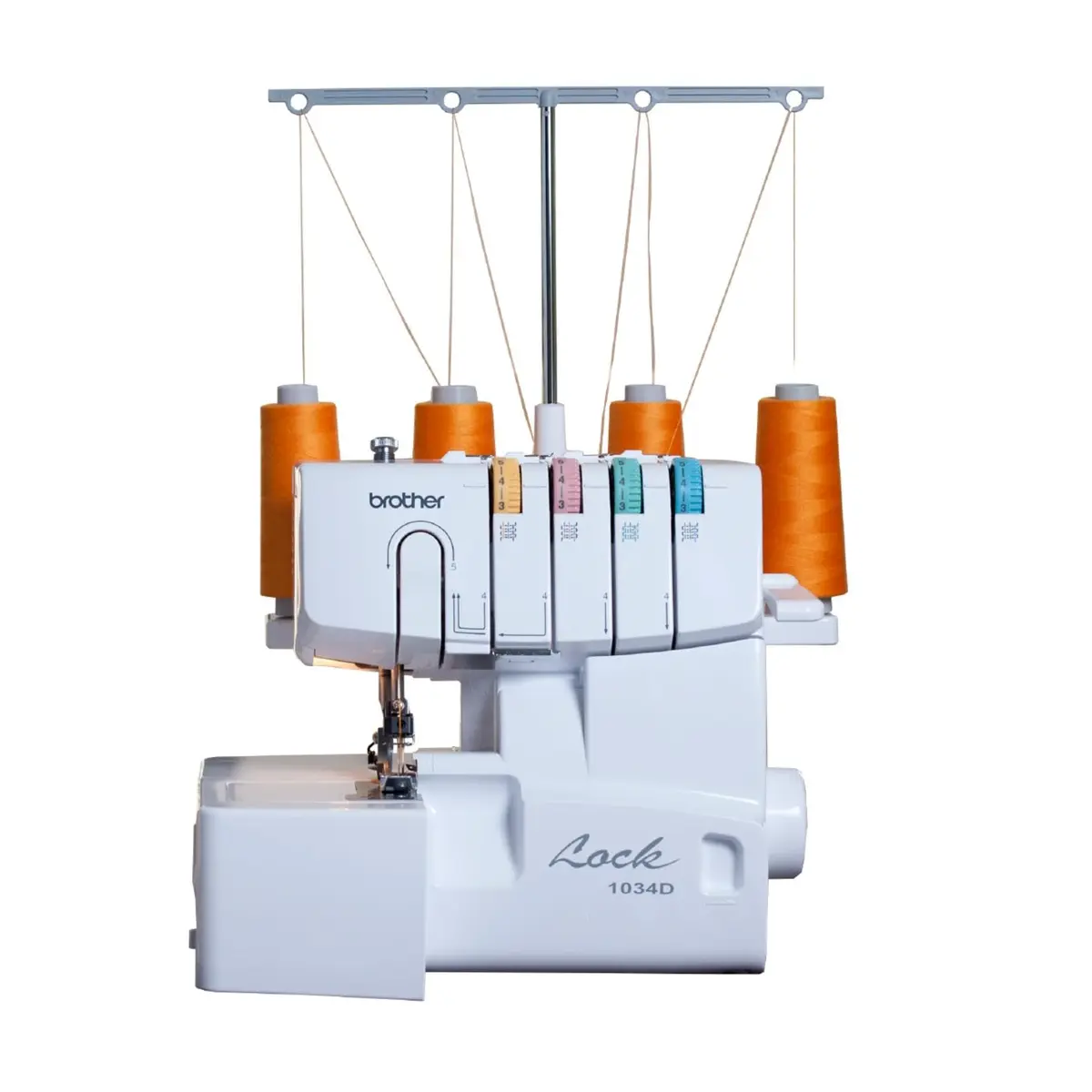 | Brother 1034D First-time serger users | 3/4-thread | Check price |
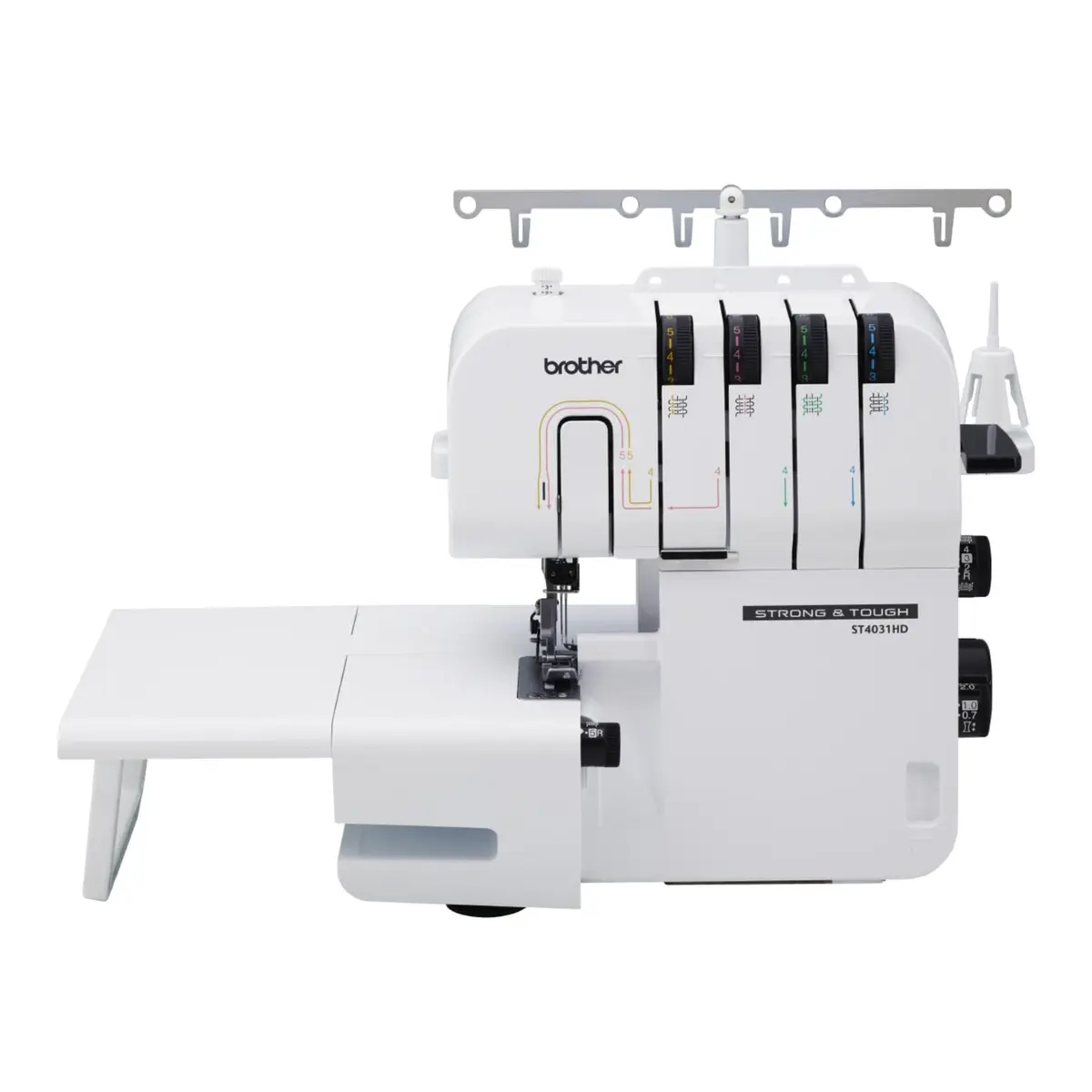 | Brother ST4031HD Heavier garment projects | 3/4-thread | Check price |
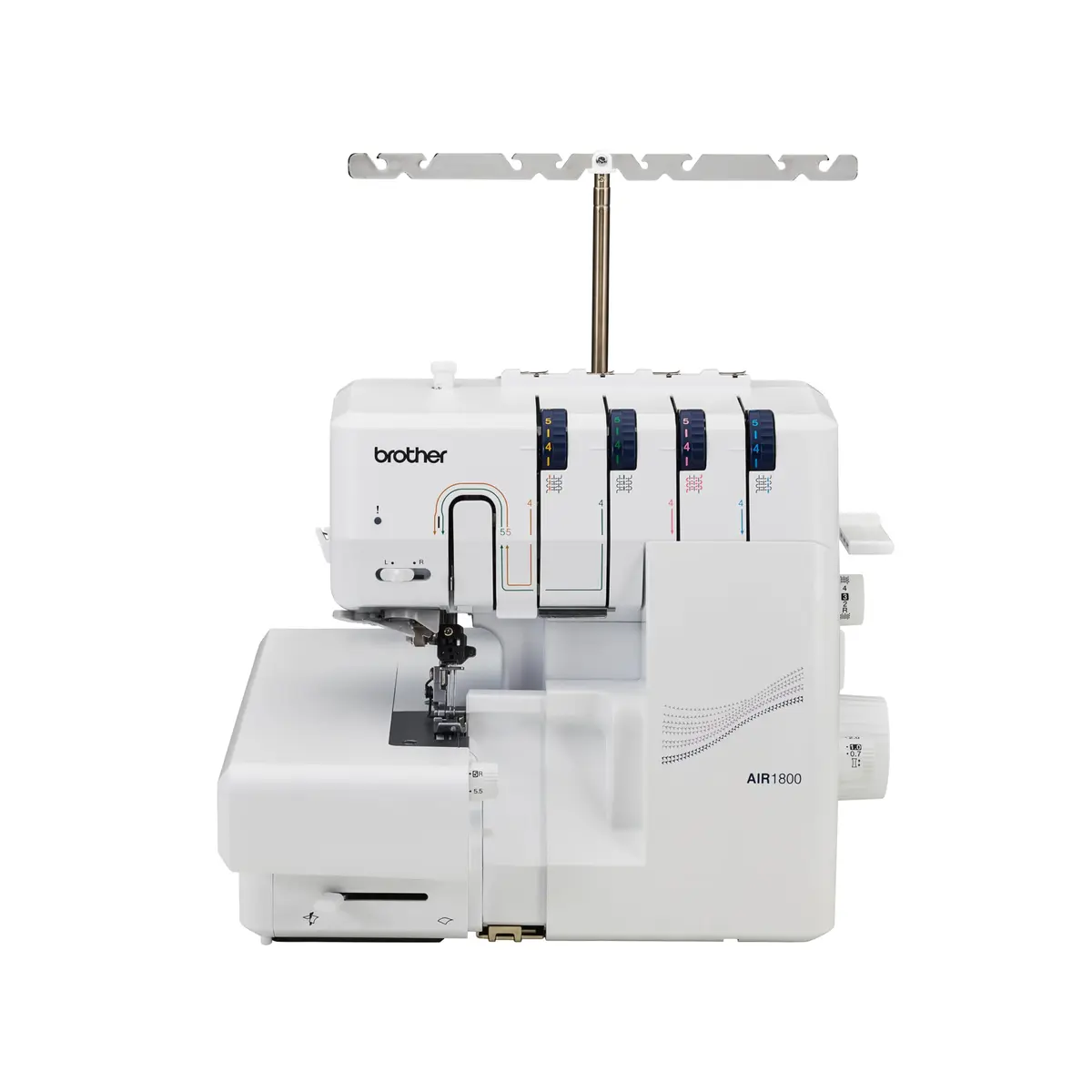 | Brother AIR1800 Easier frequent rethreading | 2/3/4-thread | Check price |
Detailed recommendations
Brother 1034D 3/4-Thread Serger
Recommended for its specific use case
Best for: First-time serger users and everyday garment finishing
The Brother 1034D is the practical starting point for most home sewists. It offers 3-thread and 4-thread overlock construction, colour-coded lay-in threading, differential feed, free-arm conversion, rolled-hem capability and sewing speeds of up to 1,300 stitches per minute. Those features cover the work that usually motivates someone to buy a first serger.
A 4-thread overlock seam is useful for constructing and finishing many knit garments in one pass. A 3-thread configuration can create lighter edge finishes, while the rolled-hem setup supports narrow decorative or lightweight hems. Differential feed helps manage fabric movement, reducing unwanted stretching on some knits and controlling puckering on lightweight fabrics when properly adjusted.
The machine's popularity also creates a practical advantage: tutorials, threading demonstrations and owner discussions are easy to find. That support can matter more to a first-time user than a minor specification difference between similar models.
The 1034D is still a manually threaded serger. Colour coding shows the path, but the lower and upper loopers must be threaded in the correct order, and thread needs to pass through every guide. If one thread breaks or is incorrectly seated, simply rethreading the final section may not solve the stitch problem.
It can also be noisy and may vibrate at high speed, particularly on an unstable table. A solid surface, correct presser-foot pressure, suitable needles and controlled pedal use improve the experience.
Choose the 1034D if you want a proven, affordable machine for garment construction, edge finishing and rolled hems and are willing to learn standard serger threading. Do not choose it expecting a coverstitch or industrial production capability.
Brother ST4031HD Strong & Tough Serger
Recommended for its specific use case
Best for: Denim, layered knits and heavier garment or home-sewing projects
The ST4031HD addresses the buyer who likes the basic 3/4-thread Brother format but wants a more supported setup for substantial projects. Its larger extension table provides additional fabric support, while the carbon-steel cutting blade and stable metal frame offer more confidence when trimming and finishing heavier appropriate materials.
Support matters because a serger works at speed while the knife trims the seam allowance. Large garment sections can pull away from the needle area or shift as they leave the table. An extension surface does not change the machine's motor class, but it can make bulky pieces easier to guide without lifting or dragging them excessively.
The stronger cutting hardware is relevant when seam allowances include controlled layers of denim, sweatshirt fleece or home-decor fabric. However, the operator still needs to grade thick seams, reduce bulky intersections and test the complete layer stack. A domestic serger should not be forced through dense lumps simply because it carries a heavy-duty label.
The ST4031HD remains a 3/4-thread domestic overlocker. It does not become an industrial machine, walking-foot sewing machine or coverstitch machine. It is designed to trim and overlock appropriate fabrics, not sew every leather, canvas or upholstery assembly.
Choose it over the 1034D when heavier garment work is frequent enough to justify the more substantial support and cutting setup. If most projects are lightweight garments and ordinary knits, the 1034D may provide all the capability you need for less money.
Brother AIR1800 Air Serger
Recommended for its specific use case
Best for: Frequent thread changes and users intimidated by looper threading
The AIR1800 solves a different problem. It does not primarily offer a new category of finished seam; it reduces the setup burden that stops many owners from changing thread colours or stitch configurations. Jet-air technology sends the looper threads through enclosed paths, removing much of the manual guide-by-guide looper threading required by the 1034D and ST4031HD.
Needle-threading assistance, safety sensors, differential feed and quick rolled-hem controls further simplify routine use. For someone who changes thread frequently to match garments, these conveniences can have more practical value than additional stitch variations.
Air threading does not make the entire machine automatic. The needle threads still require handling, tension and thread quality still matter, and the user must understand the correct stitch configuration. Very thick or woolly decorative threads may not pass reliably through narrow air tubes and should only be used where the manual permits.
The AIR1800 supports 2-thread, 3-thread and 4-thread configurations, giving it more flexibility than the two standard models here. A 2-thread finish can be useful for certain lightweight edge treatments, while ordinary garment construction will commonly rely on 3-thread or 4-thread setups.
Its limitation is price. Buyers pay substantially for easier threading and operating convenience while the machine remains a domestic overlocker. If you usually leave the serger threaded in neutral colours and tie on new threads rather than completely rethreading, the premium may be difficult to justify.
Choose the AIR1800 when threading friction genuinely reduces how often you use a serger, when colour changes are frequent or when easier setup is worth paying for. It is not automatically the best choice for a beginner on a limited budget.
Top Brother Serger Machines: Three Models That Serve Different Sewists
Brother sells several serger and overlock models, but a useful guide does not need to repeat near-identical 1034-series variants to create a longer list. Three current Brother machines cover the main decisions clearly: an affordable standard serger for everyday garments, a sturdier model with better support for heavier projects, and a premium air-threaded machine for users who want to reduce the most frustrating part of serger ownership.
These machines trim fabric and form overlock stitches in one operation. They can finish raw edges, construct stretch garments, create rolled hems and improve the inside of sewn projects. They do not replace every function of a normal sewing machine, and none of the models below creates a true coverstitch like the parallel rows commonly seen on T-shirt hems.
The right Brother serger depends less on decorative stitch count and more on threading burden, fabric type, differential feed, conversion steps, stability and how often the machine will be rethreaded.
Brother 1034D vs ST4031HD vs AIR1800
The 1034D is the value-focused standard machine. It teaches conventional serger threading and provides the core stitches most home garment makers need.
The ST4031HD retains a conventional 3/4-thread workflow but gives heavier projects better physical support and cutting confidence. Its advantage is project handling, not a dramatically different stitch library.
The AIR1800 prioritises convenience. It reduces looper-threading effort and adds a 2-thread option, making it attractive for frequent configuration changes and users who otherwise avoid rethreading.
What a Brother serger can do
A serger uses multiple threads to wrap and secure a fabric edge while a knife trims excess seam allowance. Depending on configuration and settings, these Brother models can support:
- 4-thread overlock construction for many knit garments
- 3-thread edge finishing
- Narrow and rolled hems
- Controlled gathering using differential feed
- Reducing wavy edges on some stretch fabrics
- Neater seam allowances on woven garments
- Fast finishing for casual clothing and household projects
The exact result depends on thread configuration, tension, stitch length, differential-feed setting, cutting width, needle choice and fabric behaviour. Presets or manual diagrams provide a starting point, not a guarantee for every fabric.
What these machines cannot replace
A normal sewing machine
A serger cannot conveniently perform many common tasks such as standard topstitching, sewing a zipper, creating most buttonholes, pivoting at tight corners or stitching inside an area away from an edge. Most sewists need a normal sewing machine alongside it.
A coverstitch machine
A true coverstitch creates parallel rows on the right side and a looper formation underneath without trimming the fabric edge. It is commonly used on T-shirt and activewear hems. The Brother 2340CV belongs to that category and should not be presented as an ordinary substitute for the overlock machines reviewed here.
An industrial overlocker
These are domestic machines. They are designed for home-sewing workflows, not continuous factory production. An industrial overlocker is normally configured for a narrower range of operations but offers a different motor, table, speed, feed and duty cycle.
A walking-foot machine
Differential feed is not the same as compound or walking-foot feeding. These Brother sergers are not substitutes for machines designed to transport thick leather or upholstery assemblies evenly.
How difficult is it to thread a Brother serger?
The 1034D and ST4031HD become manageable when the correct sequence is followed. Usually, the loopers are threaded before the needles. The exact order and guide path should always come from the manual and the diagram inside the machine.
Use contrasting thread colours while learning. They make it easier to see which thread forms each part of the stitch and which tension needs adjustment. Thread with the presser foot raised so the tension discs open, and make sure every thread is properly seated.
If a looper thread breaks, rethread in the documented order rather than patching only the visible broken section. Serger threads cross in a specific relationship, so an apparently minor shortcut can prevent the stitch from forming.
The AIR1800 reduces the looper-path work, but users still need to prepare thread correctly, operate the air system as directed and thread the needles.
Differential feed explained
Differential feed uses front and rear feed dogs that can move fabric at different rates. A neutral setting feeds them evenly. Adjusting the ratio can help control how fabric enters and leaves the stitch area.
On stretch knits, an appropriate setting can reduce a wavy seam caused by fabric stretching during sewing. On lightweight woven fabric, another adjustment can help control puckering. Differential feed can also create deliberate gathering.
It is not a universal tension fix. Test it together with stitch length, cutting width, presser-foot pressure where applicable and thread tension. Record successful settings for fabrics you use often.
Choosing thread for a Brother serger
Quality serger cone thread is appropriate for most routine overlock work because it feeds smoothly and provides enough yardage for multi-thread seams. All-purpose thread may be used where the manual and project permit, but small spools empty quickly.
Do not assume decorative or woolly thread can follow every standard path. Bulky thread may be suitable in a looper for certain finishes, but the model manual should guide compatibility. It is particularly important to verify whether specialty thread can pass through the AIR1800's air tubes.
Matching every cone exactly is not always necessary for internal construction, but visible rolled hems and exposed seams benefit from deliberate colour choice. Beginners can practise with four contrasting colours before moving to a coordinated final setup.
Rolled hems on Brother sergers
A rolled hem narrows and rolls the fabric edge while thread wraps around it. It works well on scarves, ruffles, lightweight napkins and decorative edges when the fabric is suitable.
Conversion steps vary by model and may include removing one needle, changing a stitch-finger control, adjusting stitch length, increasing or decreasing particular tensions and changing cutting width. Follow the manual rather than copying settings from another Brother model.
Test on a generous fabric strip. Lightweight or loosely woven fabrics may need stabilisation, while dense or thick material may not roll neatly.
Noise, vibration and table setup
Sergers operate quickly and use loopers plus a moving knife, so they can sound and feel different from a sewing machine. A weak folding table can amplify vibration. Place the machine on a stable surface with enough room for fabric to move without hanging heavily from the edge.
Check that thread cones unwind freely and do not strike nearby objects. Clean lint from the cutting and looper area as directed, since trimming fabric creates more debris than ordinary sewing. Never oil points that the manual does not identify.
Common Brother serger buying mistakes
Buying several near-identical variants by mistake
The Brother 1034 family has multiple versions and bundles. Compare the exact model, included feet, threading layout and warranty rather than assuming a different suffix creates a new machine class.
Confusing a coverstitch machine with a serger
The Brother 2340CV creates coverstitch and chain-stitch formations. It does not replace a standard trimming overlocker for most garment construction.
Expecting “heavy duty” to mean industrial
The ST4031HD offers useful domestic improvements, but it still has material and duty-cycle limits.
Paying for air threading without needing it
Air threading is valuable for frequent changes and users who struggle with loopers. If the machine stays threaded most of the time, the 1034D may be the better value.
Adjusting every tension dial at once
Changing multiple controls makes it difficult to identify the cause of a stitch problem. Begin with documented settings, use contrasting threads and change one variable at a time.
Forgetting the cost of four cones
A serger uses several threads simultaneously. Include thread, needles, maintenance, optional feet and project supplies in the total budget.
Final verdict
The Brother 1034D is the best starting point for most home garment makers. It provides the essential 3-thread and 4-thread functions, differential feed, rolled hems and a large body of learning material without charging for premium automation.
Choose the Brother ST4031HD when layered knits, denim and heavier garment projects are common enough to benefit from its support table, stable frame and cutting hardware. It is more substantial than the entry model but remains domestic.
Choose the Brother AIR1800 when looper threading is the main barrier to using a serger or when thread colours and stitch setups change frequently. Its premium pays for workflow convenience rather than industrial capability.
There is no need to pad this shortlist with minor 1034 variants or include a coverstitch machine as though it does the same job. These three models represent the actual decision: affordable conventional overlocking, better support for heavier domestic projects, or easier premium threading.
Frequently asked questions
Which Brother serger is best for a beginner?
The 1034D is the best value for a beginner willing to learn manual threading. The AIR1800 is easier to rethread but costs substantially more. Choose based on budget and how much threading friction matters.
Can the Brother 1034D sew a coverstitch?
No. It creates overlock and rolled-hem formations but not a true coverstitch. A separate coverstitch machine such as the Brother 2340CV serves that purpose.
Is the Brother ST4031HD industrial?
No. It is a sturdier domestic 3/4-thread serger. It is not designed for continuous factory production or as a substitute for industrial leather and upholstery equipment.
Does the Brother AIR1800 thread the needles automatically?
Its jet-air system threads the loopers, while needle-threading assistance helps with the needles. Users should not assume every thread path is fully automatic.
Can a Brother serger sew stretch fabric?
Yes, these machines are useful for many stretch fabrics. Correct differential feed, thread tension, stitch choice, needle and testing are still required for a stable result.
Can I use a serger without a sewing machine?
You can complete some knit construction largely on a serger, but a normal sewing machine is still needed for many zippers, buttonholes, topstitching, precise corners and operations away from a raw edge.
Why does my serger stitch look unbalanced?
Common causes include incorrect threading order, thread not seated in the tension discs, a missed guide, unsuitable tension, an incorrect needle, wrong cutting width or a mismatch between differential feed and fabric.
Should I buy four matching cones immediately?
For learning, four contrasting colours make stitch formation easier to understand. For final visible work, coordinated serger thread is useful. Buy supplies based on real projects rather than accumulating every colour at once.