
This guide helps you select a dress pattern style and understand its likely difficulty. It does not provide copied commercial pattern pieces or pretend that one pattern fits every body. The goal is to help you recognise a realistic first project before spending time and fabric on it.
When comparing printed options, you can browse easy women’s dress sewing patterns on Amazon. Read the size chart, suggested fabrics, views, and required closures rather than choosing from the cover photograph alone.
What makes a dress pattern genuinely easy?
A practical beginner pattern has enough wearing ease to tolerate small fitting errors, a neckline that can be finished with a facing or binding, and seams that are easy to identify. Stable fabric and a clear grainline matter just as much as piece count.
Beginner-friendly dress pattern styles
1. Loose shift dress
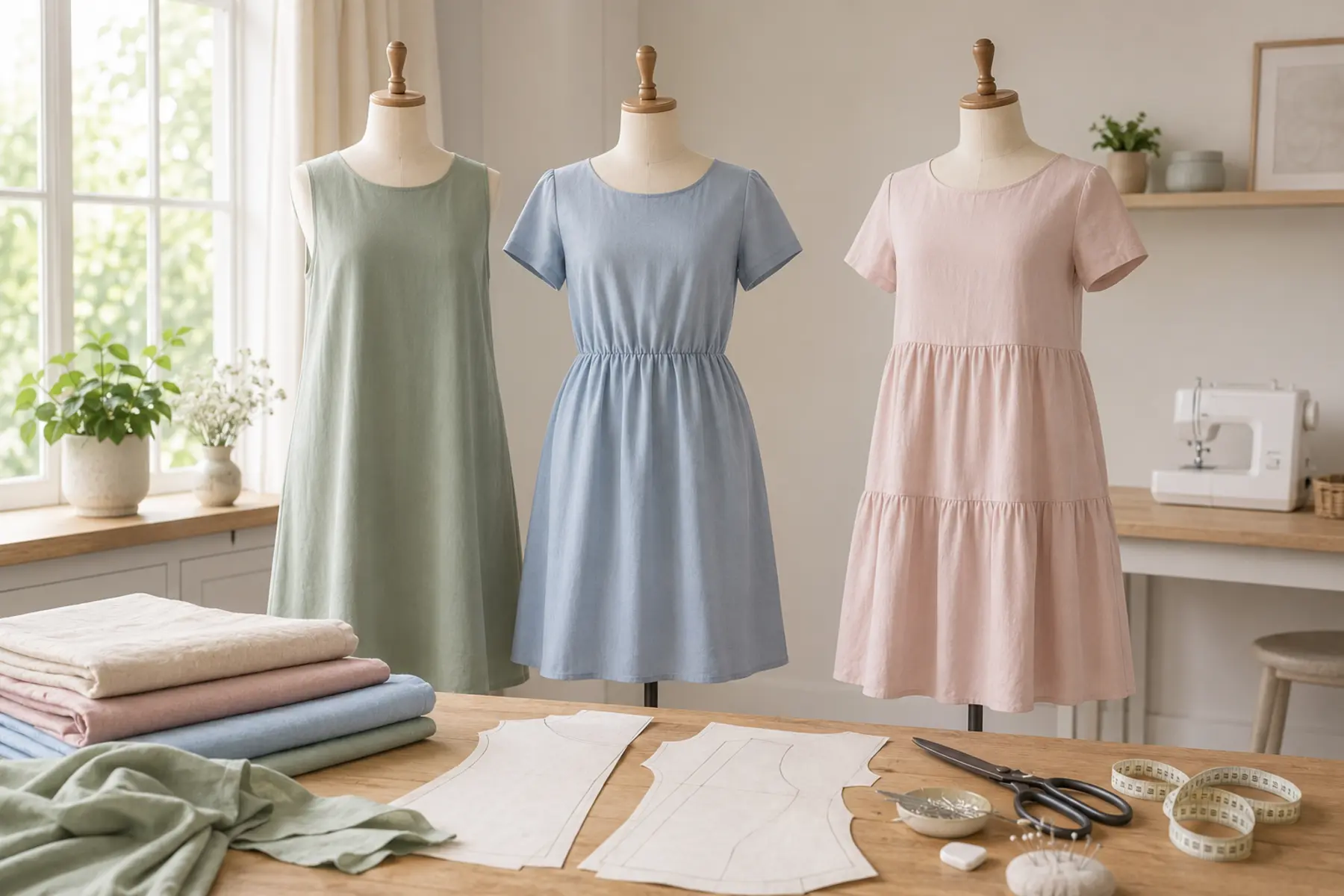
A shift hangs from the shoulders with limited waist shaping. Choose a version with a simple round or V-neck and no centre-back zipper. Stable cotton, linen blend, chambray, or lightweight denim can make the seams easy to control. Check that the neckline is wide enough for a pull-on design.
2. Elastic-waist dress
An elastic casing creates shape without darts, a fitted waistband, or precise closure placement. The casing must remain even and the elastic length should be comfortable rather than copied blindly from a size chart.
3. Gathered skirt with a simple bodice
This style introduces gathering while keeping the skirt fit forgiving. Select a bodice with minimal shaping and a simple neckline. It is a useful second project if the bodice requires a zipper.
4. T-shirt dress
A T-shirt dress can be quick because it usually pulls on and has few pieces. However, knit fabric requires the correct ballpoint or stretch needle, a flexible seam, and neckband handling. Choose a stable jersey rather than a very thin or slippery knit.
5. Tiered dress
Rectangular gathered tiers make fit flexible and provide practice in gathering long edges. The challenge is distributing fullness evenly and managing increasing fabric weight. Begin with two or three tiers rather than an extremely full maxi dress.
6. Simple wrap-style dress
A true wrap can avoid a zipper and provide adjustable fit, but the neckline may gape and bias edges can stretch. Choose a pattern with secure overlap, waist ties anchored into seams, and clear stabilisation instructions.
7. Sleeveless A-line dress
An A-line shape offers room through the hip while teaching neckline and armhole finishing. A facing or bias-bound version is more approachable than a fully lined fitted dress.
Measure yourself before choosing the size
Take bust, high bust, waist, and hip measurements over the undergarments you expect to wear. Keep the tape level and comfortably close without pulling it tight. Compare your body to the pattern company’s chart, because commercial sewing-pattern sizes often differ from ready-to-wear labels.
Then check finished-garment measurements. The difference between body and finished measurements is ease. A loose design needs more ease than a close-fitting knit dress. If measurements fall across sizes, blend gradually between the relevant lines rather than cutting one size everywhere and hoping the fabric compensates.
Choose fabric that supports the pattern
Suggested fabric is part of the design. A crisp cotton can make a gathered dress stand away from the body, while rayon may drape softly but shift during cutting. A pattern drafted for knit stretch may not fit over the body in woven fabric.
For a first woven dress, consider quilting cotton only when the design benefits from structure; garment cotton, poplin, chambray, lightweight denim, or stable linen blends often drape more naturally. For knit, start with a medium-weight jersey or interlock that does not curl aggressively.
Use the fabric sewing guide and test the selected needle using the needle size and type guide before sewing the garment.
Prepare the pattern and fabric carefully
- Prewash and dry the fabric using the method planned for the finished dress.
- Press without stretching and identify the grainline.
- Read all instructions before cutting, including seam allowance and interfacing requirements.
- Trace or preserve the original pattern if you expect to alter the size.
- Transfer notches, darts, centre lines, and pocket placements accurately.
- Cut a test neckline facing, seam, or knit neckband when the technique is new.
If preserving a printed pattern matters, compare sewing-pattern tracing paper by transparency, width, and marking compatibility.
Use a construction order that protects the fit
Staystitch curved woven necklines when instructed, sew and press darts, stabilise shoulder seams when needed, and test the bodice before attaching a large skirt. Try the dress on at logical checkpoints. It is easier to adjust side seams before the armholes are finished and easier to correct length before the final hem.
Finish raw edges according to the fabric. A serger is optional. Zigzag, overcasting, bound, turned-and-stitched, and French seams can all work when appropriate. If the pattern includes buttons, practise on scraps before using the machine buttonhole guide.
What to avoid in a first dress
Avoid choosing a project solely because it is labelled “easy.” Inspect the line drawing and instructions for a fitted lining, invisible zipper, shaped waistband, complex collar, placket, boning, slippery fabric, or many pattern pieces that must meet precisely.
One challenging detail can be a useful lesson. Several at once make it difficult to know whether the problem is fitting, fabric handling, cutting accuracy, or construction. A clean shift that fits and gets worn is a stronger first result than an unfinished formal dress.
Frequently Asked Questions
Beginner dress pattern questions
What is the easiest dress pattern for a beginner?
A loose shift, simple T-shirt dress, or elastic-waist dress is usually easier than a fitted bodice. Look for few pieces, stable fabric, clear ease information, and no invisible zipper or complex collar.
Should a beginner start with a knit or woven dress?
Stable woven cotton is easier to cut and control, but it may require a closure if the dress is fitted. A loose woven shift avoids that problem. Stable knit can eliminate closures but needs a suitable stretch stitch, needle, and careful handling.
How do I choose a sewing pattern size?
Use current body measurements and the pattern company’s measurement chart, not ready-to-wear size. Check the finished-garment measurements and design ease before choosing or blending sizes.
Can I sew a dress without a serger?
Yes. A regular sewing machine can construct woven and knit dresses. Use a zigzag, stretch stitch, overcasting stitch, French seam, binding, or another finish appropriate for the fabric and pattern.
What dress features should a first-time dressmaker avoid?
Avoid complex fitted princess seams, tailored collars, welt pockets, slippery lining, boning, and an invisible zipper all in the same first project. One new skill is manageable; several interacting skills make fitting and diagnosis harder.
Choose the pattern you can finish and wear
The best first dress pattern suits your current skills, measurements, fabric, and tolerance for fitting. Prioritise a clear silhouette, forgiving ease, and one or two new techniques. Once that dress fits and survives normal wear, you will have a reliable baseline for more fitted or detailed styles.