
Affiliate disclosure: We may earn from qualifying Amazon purchases at no extra cost to you. Products are selected for utility and reader fit, not ratings or commission.
Buying a dress form is less about finding the model with the most adjustment dials and more about choosing a workable starting shape. A form can match your bust, waist and hip circumferences yet still differ from your body in shoulder slope, bust position, back length, posture and where fullness is carried. That is why even a good adjustable dress form often needs padding before it becomes genuinely useful for fitting clothes.
For most home sewists, the best dress form is slightly smaller than the body it needs to represent, falls within the correct adjustment range, can be padded where necessary and stands securely enough for the intended work. Adjustable forms are convenient for general fitting, alterations and hemming. Fixed foam forms are usually easier to pin into and can be better for light draping, but they cannot change size and must be chosen with even more care.
This guide compares eight distinct options for different body-size ranges and sewing tasks. It also explains what a dress form can realistically do, where common models fall short and how to choose without mistaking a display mannequin for fitting equipment.
Quick recommendations
Quick comparison
Showing three products at a time. Scroll vertically to see the remaining models.
| Product image | Title and best fit | Type | Current price |
|---|---|---|---|
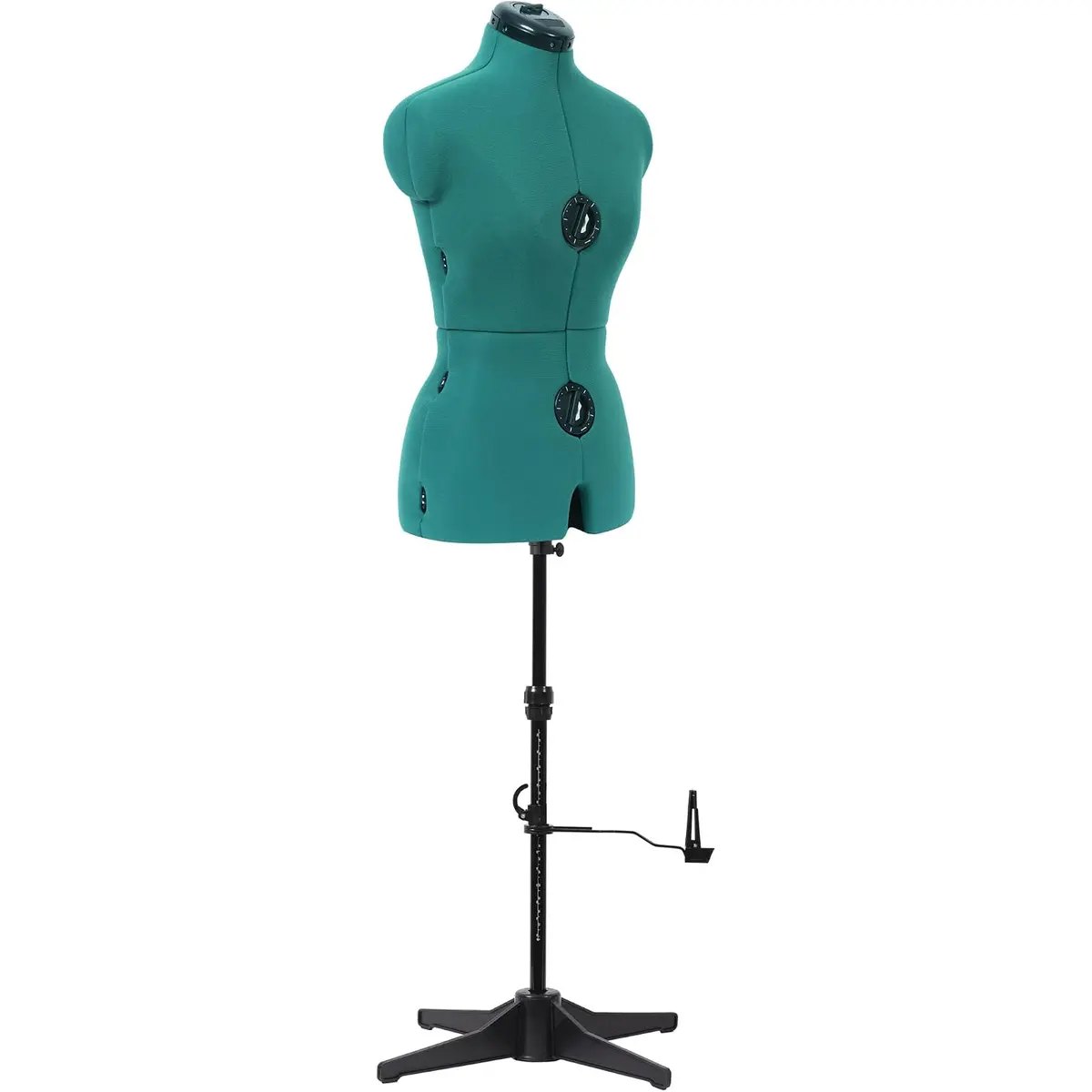 | Dritz Sew You Small/Medium Most home sewists | An accessible adjustable starting point for common fitting and hemming tasks | Check price |
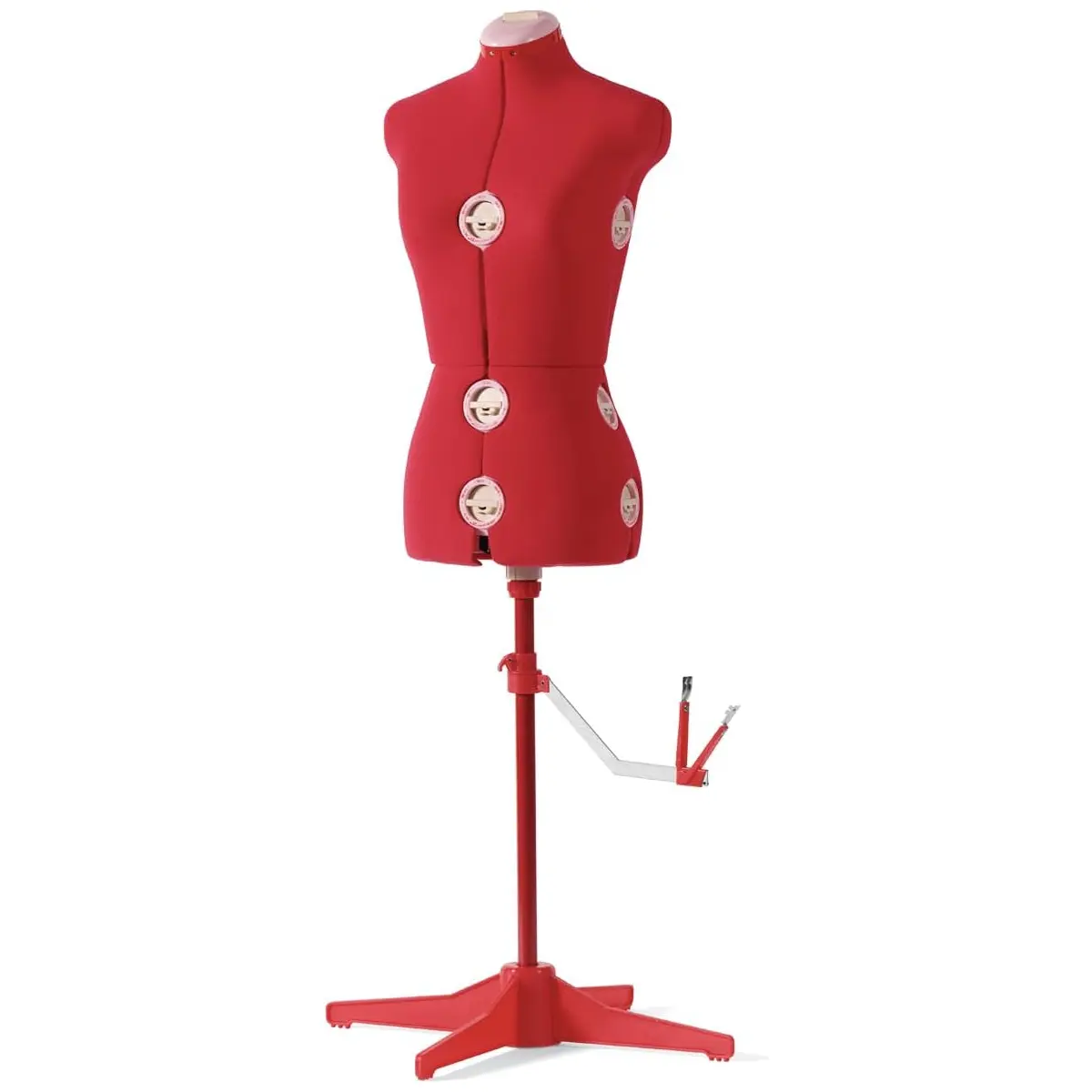 | SINGER Adjustable Small/Medium Beginners | Straightforward controls, foam-backed exterior and a 360-degree hem guide | Check price |
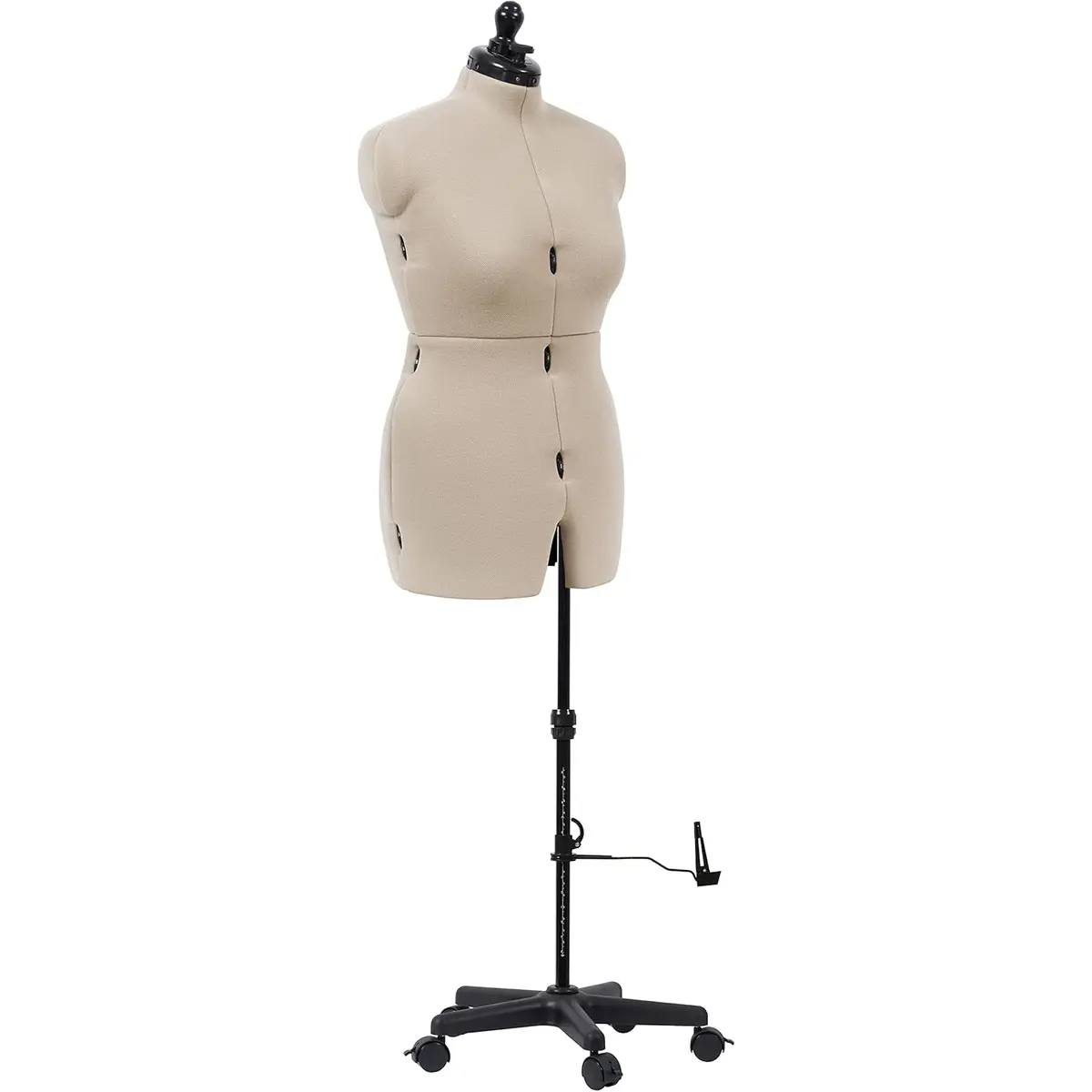 | Dritz My Double Designer Medium Medium to plus sizes | Thirteen adjustment points and a broader home-sewing size range | Check price |
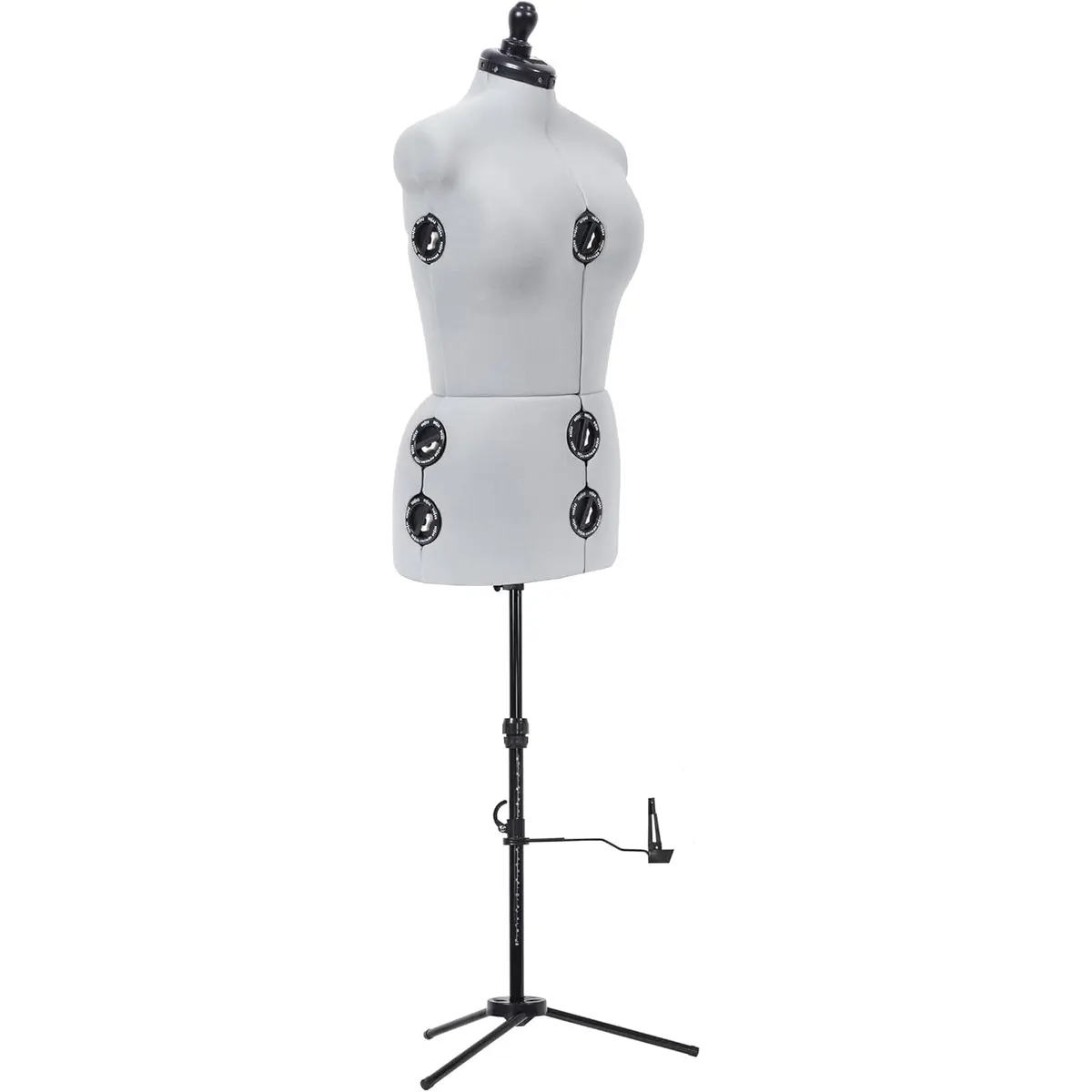 | Dritz Twin-Fit Medium Torso-length adjustment | Useful when back-waist length matters alongside circumference | Check price |
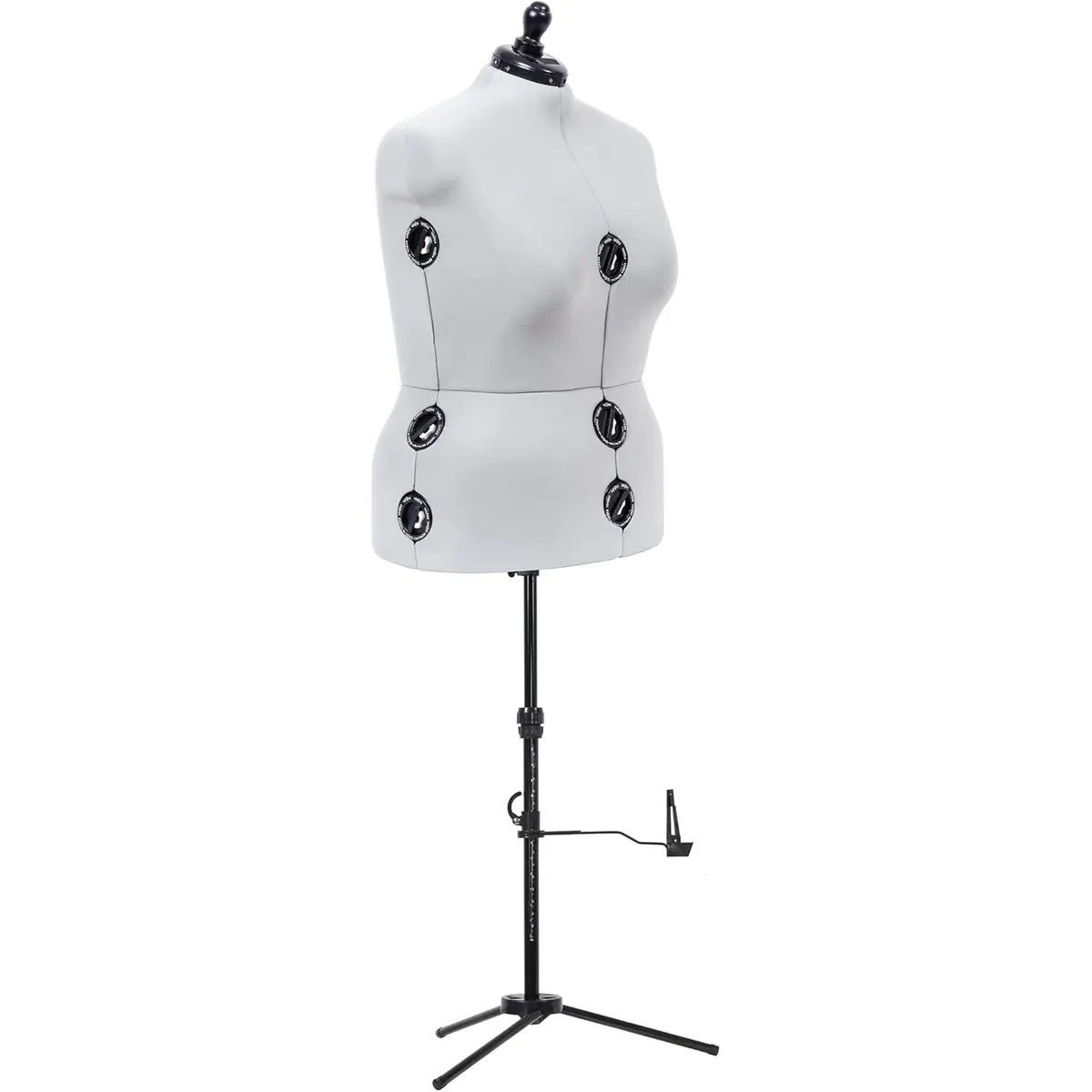 | Dritz Twin-Fit Full-Figure Full-figure range | A genuinely larger base rather than an over-expanded smaller shell | Check price |
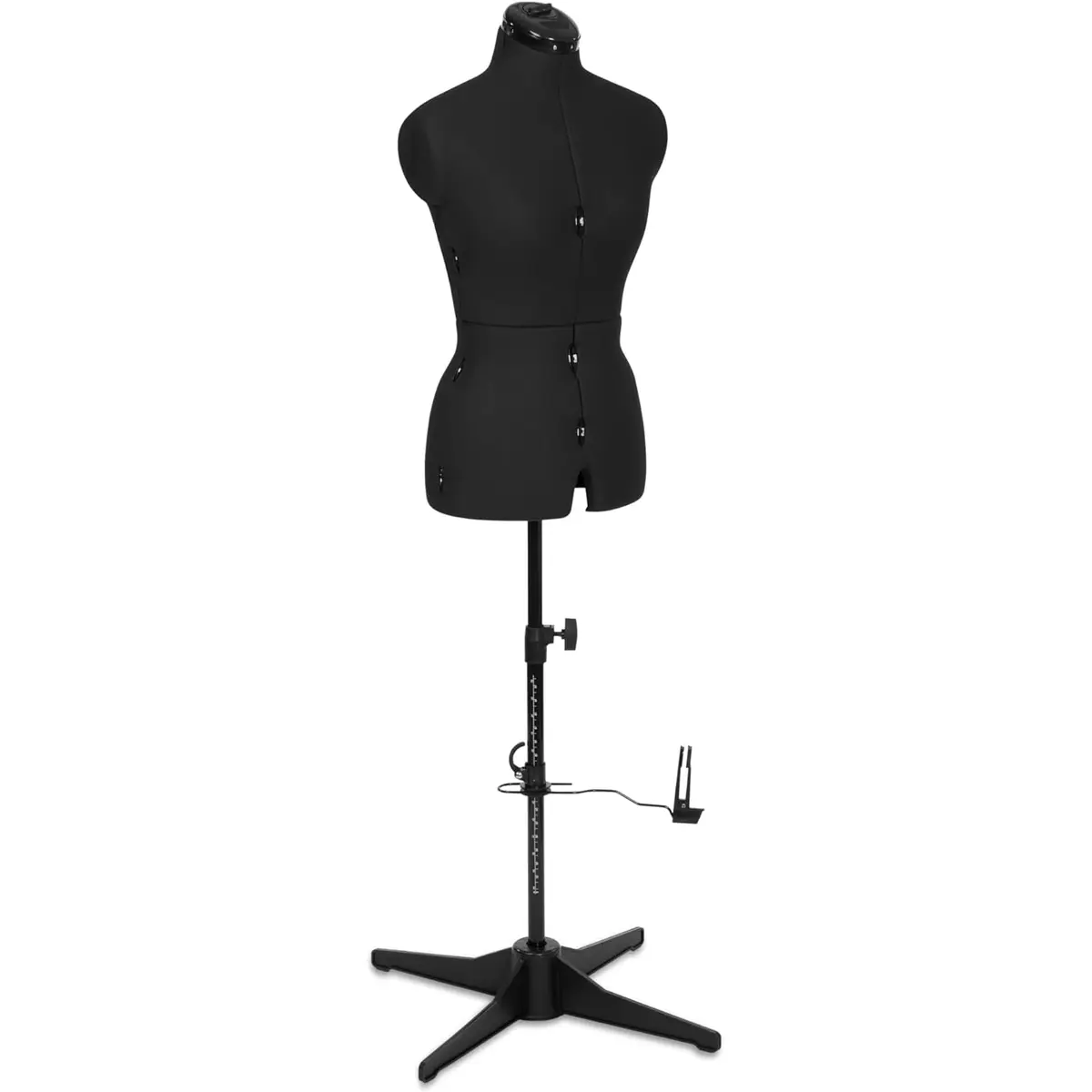 | Adjustoform Sew Simple FG306 Simple occasional use | Easy-to-understand setup for fitting and hem work | Check price |
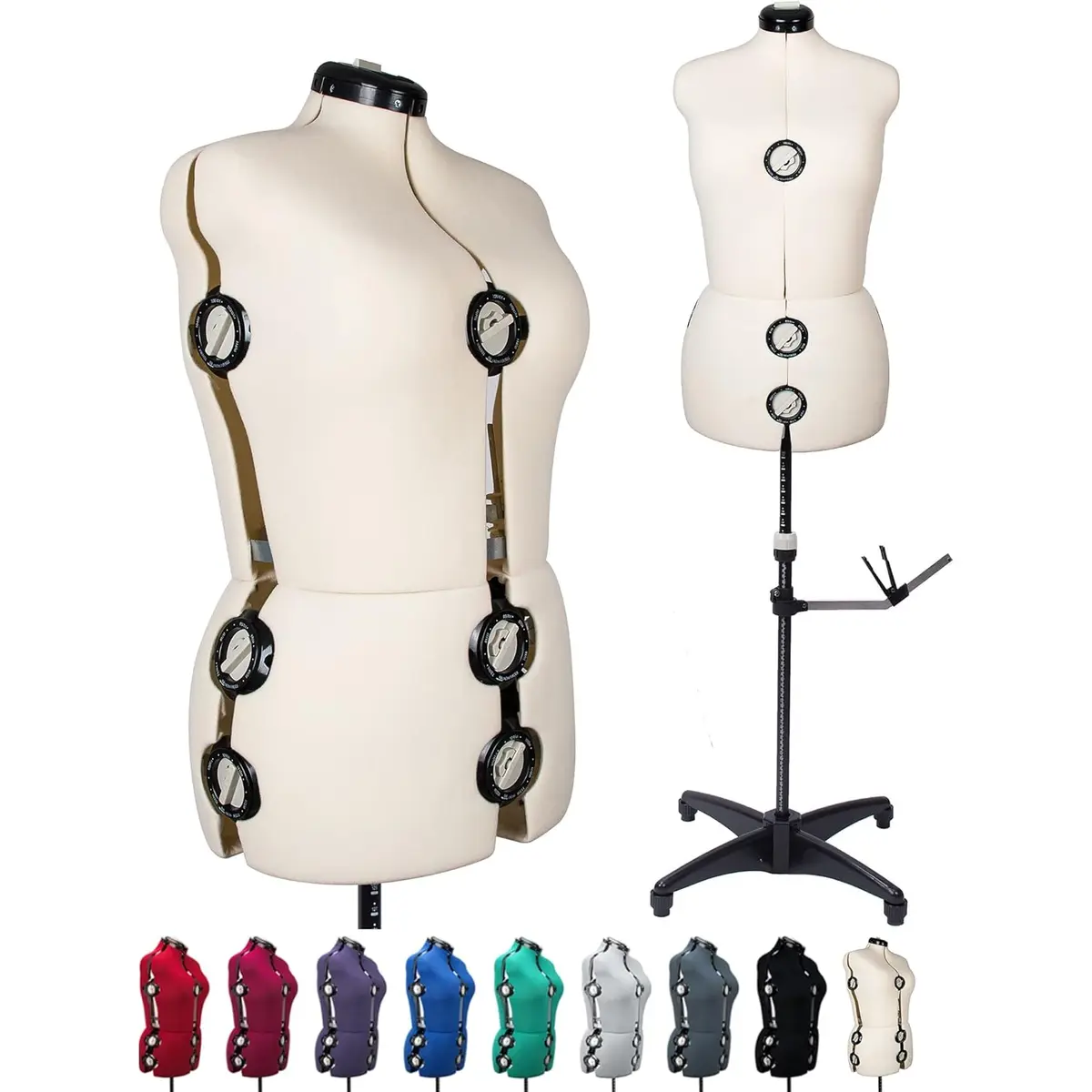 | BHD BEAUTY 13-Dial XL Budget-conscious XL buyers | A broad adjustment range at a lower-cost position | Check price |
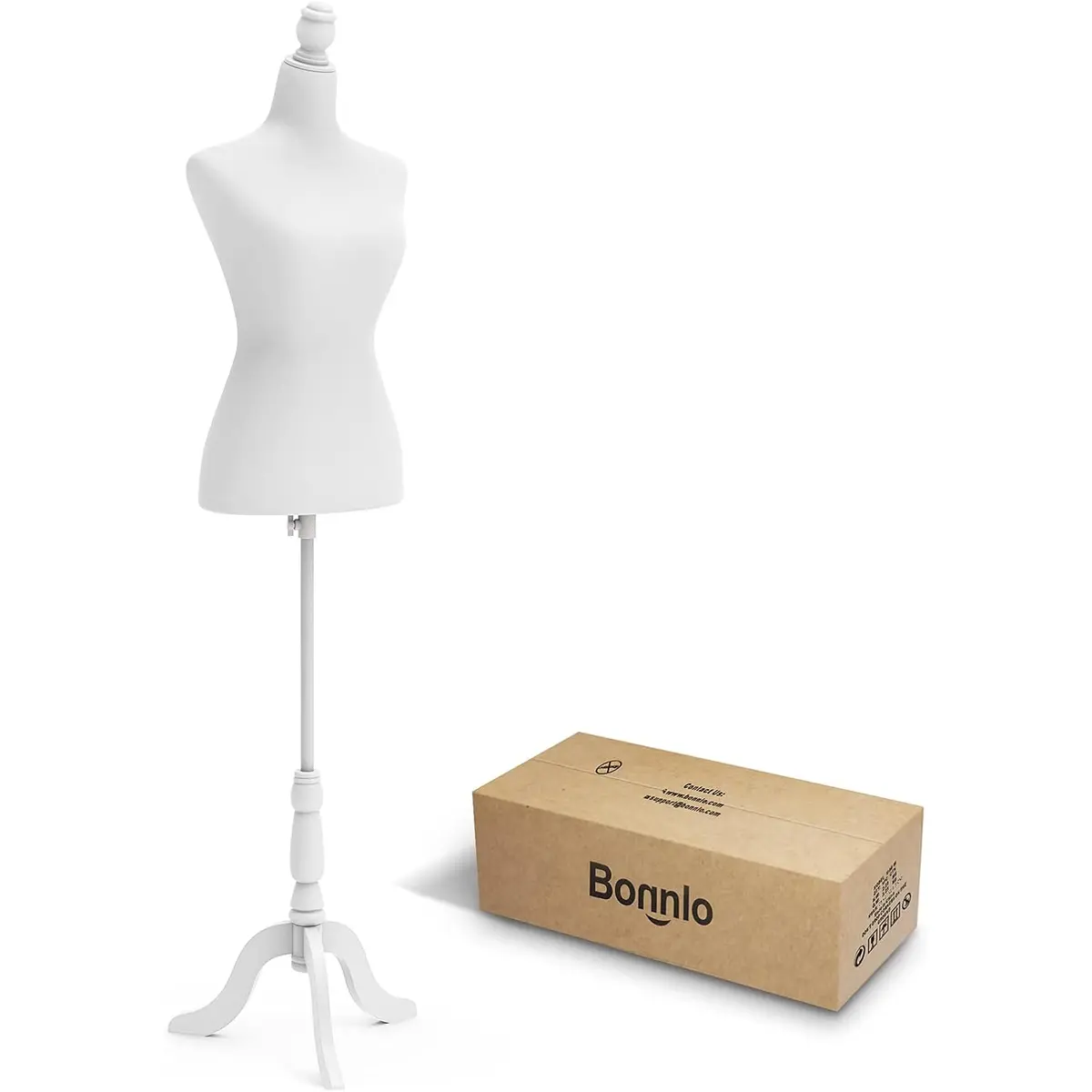 | Bonnlo Fixed Pinnable Size 6 Repeated pinning at one size | Foam construction accepts pins more naturally than segmented plastic shells | Check listing |
Detailed recommendations
Dritz Sew You Adjustable Dress Form, Small/Medium US 4–12
Recommended for its specific use case
Best for: Most home sewists wanting an affordable adjustable starting point
The Dritz Sew You covers the everyday reasons many people buy their first form: checking general garment balance, seeing how a neckline sits, marking hems, planning alterations and evaluating a garment from angles that are difficult to inspect while wearing it. Its adjustment wheels change the main circumferences, while height and back-waist length controls make it more useful than a decorative mannequin.
It is a sensible choice when the target measurements fall comfortably within its stated range and the user accepts that adjustment is only the first step. Set the shell slightly below the required measurements, then add padding and a fitted cover to reproduce the body more accurately. This approach also covers the gaps that open between shell sections when the form is expanded.
The limitation is shape. Its segmented torso remains generic, and the spaces between sections are awkward for precise pinning or draping. It is best treated as a practical home fitting aid, not a substitute for a professional custom form.
SINGER Adjustable Dress Form, Small/Medium
Recommended for its specific use case
Best for: Beginners who want simple controls and a foam-backed exterior
The SINGER Small/Medium combines 12 adjustment dials with adjustable neck and overall height. Its 360-degree hem guide is particularly useful for people who sew skirts and dresses but do not have another person available to mark an even hem while the garment is being worn.
The foam-backed covering makes surface pinning more approachable than it is on bare plastic, although this should not be confused with a fully pinnable professional foam torso. Pins may need to enter at an angle rather than straight into the body. For routine fitting, garment viewing and hem marking, that can be sufficient.
The tripod is comparatively light. Heavy coats, elaborate costumes or forceful draping can make it wobble, so it is better suited to normal home garments. Buyers should also check that all three primary measurements fall inside one size range; choosing by dress size alone can result in a form that cannot be adjusted to the required body.
Dritz My Double Designer Adjustable Dress Form, Medium US 14–20
Recommended for its specific use case
Best for: Mid-to-plus-size sewists wanting more adjustment points in a home form
The My Double Designer Medium provides 13 adjustment points, adjustable neck and height, a hem guide and a foam-backed torso. It occupies a useful middle ground for sewists whose measurements sit beyond many small forms but who do not need the largest full-figure range.
Multiple adjustment points allow the bust, waist and hips to be distributed more gradually than on a form with only a few controls. That does not automatically create a personal body double, but it gives padding a more suitable foundation. It can work well for checking ease, side-seam balance, garment length and broad fitting changes.
Some users may find the dials stiff, particularly when attempting a large change at one point. Adjust opposite dials in small increments instead of forcing one control to its final position. The stand can still tip under uneven pressure, and the form is intended for home sewing rather than continuous commercial studio use.
Dritz Twin-Fit Adjustable Dress Form, Medium US 12–18
Recommended for its specific use case
Best for: Sewists who need medium sizing plus back-waist length control
Circumference is only part of fit. Two people with similar bust, waist and hip measurements can need different bodice lengths. The Twin-Fit Medium is relevant because its torso controls include length adjustment, giving users a better starting point when a standard torso makes every waistline sit too high or too low.
It is useful for garments where waist placement affects the whole silhouette, including fitted dresses, jackets and bodices. As with any adjustable shell, choose a form whose minimum measurements do not exceed the body. A form cannot be made smaller than its rigid base, while a slightly smaller form can usually be padded outward.
Back-waist length adjustment still cannot reproduce shoulder slope, bust apex position, a rounded back or asymmetrical hips. Those features require targeted padding. The form should therefore be judged by whether it provides the right underlying size and length, not by whether its dials alone can copy a real body.
Dritz Twin-Fit Adjustable Dress Form, Full-Figure US 20–24
Recommended for its specific use case
Best for: Full-figure sewists who fall outside standard adjustable ranges
This Twin-Fit is not simply a standard form stretched to its maximum. Its larger base range makes it a more credible option for full-figure bodies. Starting with the appropriate shell size reduces wide gaps, excessive instability and distortion caused by expanding a smaller form beyond the range in which it works well.
It is most helpful for checking garment circumference, overall balance, length and the relationship between bust, waist and hips. Users can then pad the bust, abdomen, back and hip areas to move beyond the form's generic contour.
The important distinction is between matching measurements and matching shape. A dial can increase circumference but cannot decide whether that fullness belongs at the front abdomen, high hip, seat or back. Full-figure users should expect to build those contours with batting, foam pads or a padding system under a snug cover.
Adjustoform Sew Simple FG306 Adjustable Dress Form, Black S–M US 4–12
Recommended for its specific use case
Best for: Beginners prioritising uncomplicated setup and occasional use
The Sew Simple FG306 uses an eight-part body, accessible adjustment controls and a pin-grip hem marker. Its appeal is clarity. Someone learning garment construction can use it for basic fitting checks, hem work and viewing a project without paying for features intended for frequent professional draping.
It has fewer adjustment points than some 13-dial alternatives, so there is less scope for distributing size changes across the torso. That matters most when the bust-to-waist or waist-to-hip relationship is far from the form's default proportions. Padding can help, provided the shell begins smaller than the target measurements.
The lightweight stand suits normal home use but is not ideal for repeatedly manipulating heavy fabric. Choose it for straightforward fitting and display tasks rather than demanding studio work.
BHD BEAUTY 13-Dial Adjustable Dress Form, Beige XL
Recommended for its specific use case
Best for: Buyers seeking a broad adjustable range at a lower price
The BHD BEAUTY XL offers 13 dials and a tall height range, giving larger-body and long-garment users another adjustable option. Its main value is range relative to price, not a claim that it equals a professional fitting form.
Before buying, compare the minimum and maximum bust, waist, hip and torso measurements with the intended body. Do not rely on the XL label, since clothing-size labels vary between manufacturers. The same smaller-base rule applies: all required measurements should be at or above the form's minimums, with room for controlled padding.
Brand support and long-term durability are less established than with Dritz or SINGER. Stand stability, dial consistency and replacement-part availability deserve careful consideration. It may make sense for occasional fitting, photography and garment display, while a high-volume dressmaker may prefer a more established studio system.
Bonnlo Female Pinnable Fixed Dress Form with Wooden Tripod, Size 6
Recommended for its specific use case
Best for: Light draping, display and repeated pinning when a fixed size is acceptable
The Bonnlo differs from the other choices because it is fixed rather than adjustable. Its foam torso accepts pins more naturally than a segmented plastic shell, while the wooden tripod is presentable for finished-garment photography and display.
This construction can be useful for light draping and repeated pinning, but only when the fixed measurements provide a workable foundation. The form should be equal to or smaller than the target body at every critical point. A fixed form that is too large cannot be corrected with padding.
It is also important not to confuse pinnability with fitting accuracy. The torso still represents a standardised shape. Custom fitting will require padding for personal contours and a firmly fitted cover. Buyers who regularly sew for changing sizes may find an adjustable form more convenient, while those who work at one stable size may prefer the cleaner pinning surface.
How to Choose the Best Dress Form for Sewing
Buying a dress form is less about finding the model with the most adjustment dials and more about choosing a workable starting shape. A form can match your bust, waist and hip circumferences yet still differ from your body in shoulder slope, bust position, back length, posture and where fullness is carried. That is why even a good adjustable dress form often needs padding before it becomes genuinely useful for fitting clothes.
For most home sewists, the best dress form is slightly smaller than the body it needs to represent, falls within the correct adjustment range, can be padded where necessary and stands securely enough for the intended work. Adjustable forms are convenient for general fitting, alterations and hemming. Fixed foam forms are usually easier to pin into and can be better for light draping, but they cannot change size and must be chosen with even more care.
This guide compares eight distinct options for different body-size ranges and sewing tasks. It also explains what a dress form can realistically do, where common models fall short and how to choose without mistaking a display mannequin for fitting equipment.
Adjustable dress form or fixed pinnable form?
An adjustable dress form is usually the more flexible choice for a home sewer who makes garments for more than one person or whose measurements change. Its dials can modify the main circumferences, and many models include height, neck or torso-length controls. It is convenient for general fitting and hems, but the expanded gaps and thin foam covering restrict precise pinning.
A fixed pinnable form has a continuous surface and normally accepts pins more easily. It can be better for draping, pattern work and repeated studio use at one size. It cannot be dialled larger or smaller, so the base measurements must be selected carefully and padding becomes the only method of customisation.
Neither type automatically becomes a body double. The best choice depends on whether size flexibility or surface quality matters more for the work you actually do.
How to measure before buying a dress form
Wear the undergarments normally used beneath fitted clothing and tie narrow elastic around the natural waist. Keep the tape level and comfortably close without pulling it tight. Record at least:
- Full bust at the fullest level
- Natural waist
- Full hip at the fullest seat level
- Back-waist length from the prominent neck bone to the waist elastic
- Shoulder width and shoulder slope
- Bust apex height and distance between bust points
- Neck circumference if high-neck or tailored garments are common
- Overall height required for dresses, trousers or long coats
Compare the body measurements with the manufacturer's actual measurement chart, not the dress-size label. Ideally, the form's minimum bust, waist and hip measurements should be slightly smaller than the body. If one minimum is larger than the body, that area cannot be corrected by adjusting or padding.
Do not choose a small shell and expand every dial to its absolute maximum if a larger base size is available. Extreme expansion creates wider gaps, reduces the usable pinning surface and can make the body less stable.
Why an adjustable form still needs padding
Adjustment dials primarily change circumference. They do not reproduce where a body carries that circumference. For example, two bodies may share the same hip measurement while one carries fullness at the high hip and abdomen and another carries it through the seat and outer thigh.
Padding allows the form to reflect:
- Bust position, projection and spacing
- Forward or sloping shoulders
- Rounded upper back
- Prominent abdomen
- High-hip or full-seat shape
- Uneven shoulders or hips
- Differences between front and back length
Build padding in thin, controlled layers and remeasure often. A close-fitting cover compresses and smooths the layers, creates a clean surface and bridges the gaps of an adjustable shell. Mark centre front, centre back, waist, bust and hip lines on the cover with narrow tape or stitched guidelines.
Pinning depth: what product descriptions often obscure
“Pinnable” can mean different things. A thin foam-backed adjustable shell may accept pins only at an angle through the cover. A fixed foam torso may accept them more deeply and from more directions. A display mannequin may have a fabric surface but little useful padding underneath.
If draping is the main goal, look for construction details describing the depth and direction of pinning rather than relying on the word pinnable alone. For routine fitting, marking and displaying garments, shallow angled pinning may be adequate. For frequent pattern draping, a continuous professional-style foam surface is more efficient.
Stand stability and working height
A form that matches the body but moves whenever fabric is pinned or smoothed becomes frustrating quickly. Lightweight tripod stands are convenient and easy to store, but they may wobble or tip under heavy garments. A wider, heavier base is preferable for coats, costumes, bridal layers and repeated draping.
Check whether the pole locks securely and whether the torso rotates unintentionally. The height range should place the form's shoulders and working area at a comfortable level. A hem marker is helpful, but it cannot compensate for an uneven floor or a pole that slips during use.
What a dress form can and cannot do
A well-prepared form can help you evaluate silhouette, garment balance, seam placement, neckline shape, hem level and broad fitting adjustments. It lets you step back and view the garment from all sides. It can also hold work while you pin trims, arrange design details or photograph finished pieces.
It cannot show comfort, movement, sitting ease or how fabric responds when the wearer raises an arm. It cannot reveal pressure against the body, and it will not automatically reproduce posture or asymmetry. Final fitting should still take place on the wearer whenever possible.
Common mistakes to avoid
Buying by clothing size
Ready-to-wear size is inconsistent. Use the manufacturer's bust, waist, hip and length ranges.
Choosing a form larger than the body
Padding adds size but cannot subtract a rigid shell. The base should be smaller at all critical points.
Assuming more dials mean a custom fit
Dials adjust circumference, not bust placement, shoulder shape or posture. Shape still requires padding.
Treating a display mannequin as sewing equipment
A display mannequin may look attractive but lack accurate measurements, stable construction or a useful pinning surface.
Ignoring the stand
The stand affects every fitting and draping session. Consider garment weight and how much pressure the work requires.
Expecting the form to replace fittings on the wearer
Use the form as an additional viewpoint, not as proof that a garment will move comfortably.
Final verdict
For many home sewists in the common small-to-medium range, the Dritz Sew You is a practical place to start because it covers everyday adjustment, height and hemming needs without pretending to be a professional studio form. The SINGER Small/Medium is another accessible beginner choice, particularly for users who value simple controls and a hem guide.
The Dritz My Double Designer Medium and Twin-Fit Medium are stronger candidates when a broader size range or torso-length control matters. The Twin-Fit Full-Figure is the more appropriate starting shell for users beyond standard ranges. Buyers prioritising simpler occasional use can consider the Adjustoform Sew Simple, while the BHD BEAUTY XL provides a lower-cost broader-range alternative with less-established long-term support.
Choose the Bonnlo fixed pinnable form only when its fixed measurements suit the intended body and surface pinning matters more than size adjustment.
The most reliable buying rule is simple: start slightly smaller, confirm every relevant measurement, then pad for shape. A carefully padded modest form is usually more useful than an expensive form whose base proportions do not match the person being fitted.
Frequently asked questions
Is a dress form worth buying for a beginner?
It can be worthwhile for beginners who make garments regularly, especially dresses and skirts. It helps with hems, overall balance, neckline placement and viewing a garment from all sides. It does not replace learning to take measurements or fitting on the wearer.
Should a dress form be smaller than my measurements?
Yes. The form should be equal to or slightly smaller than the target body at the bust, waist and hips. You can add padding, but you cannot make a rigid shell smaller than its minimum size.
Are adjustable dress forms fully pinnable?
Most affordable adjustable forms are foam-backed rather than fully foam-filled. They usually accept pins at an angle through the cover but may not support deep perpendicular pinning. Check the construction rather than relying only on a pinnable label.
Can one adjustable dress form fit several people?
It can cover several people whose measurements remain within its range, but accurate personal contours require repadding. Constantly changing the form is possible for general fitting but inconvenient for close custom work.
Can I use a mannequin instead of a dress form?
A display mannequin can hold and photograph garments, but many are not measurement-accurate, adjustable or meaningfully pinnable. For sewing and fitting, choose a form designed for those tasks.
What is the best dress form for draping?
A stable fixed form with a continuous pinnable surface is generally better for frequent draping. An adjustable form can still support light draping after padding and covering, but segmented gaps and shallow pinning make it less efficient.
How do I make a dress form match my body shape?
Set the form below the target measurements, add thin layers of padding at the bust, shoulders, back, abdomen and hips, and check measurements after every layer. Finish with a tight cover and mark the main reference lines.
Does a dress form replace fitting clothes on the person?
No. A form cannot report comfort or show movement. Use it for visual balance and controlled alterations, then confirm fit on the wearer whenever possible.