
Affiliate disclosure: We may earn from qualifying Amazon purchases at no extra cost to you. Products are selected for utility and reader fit, not ratings or commission.
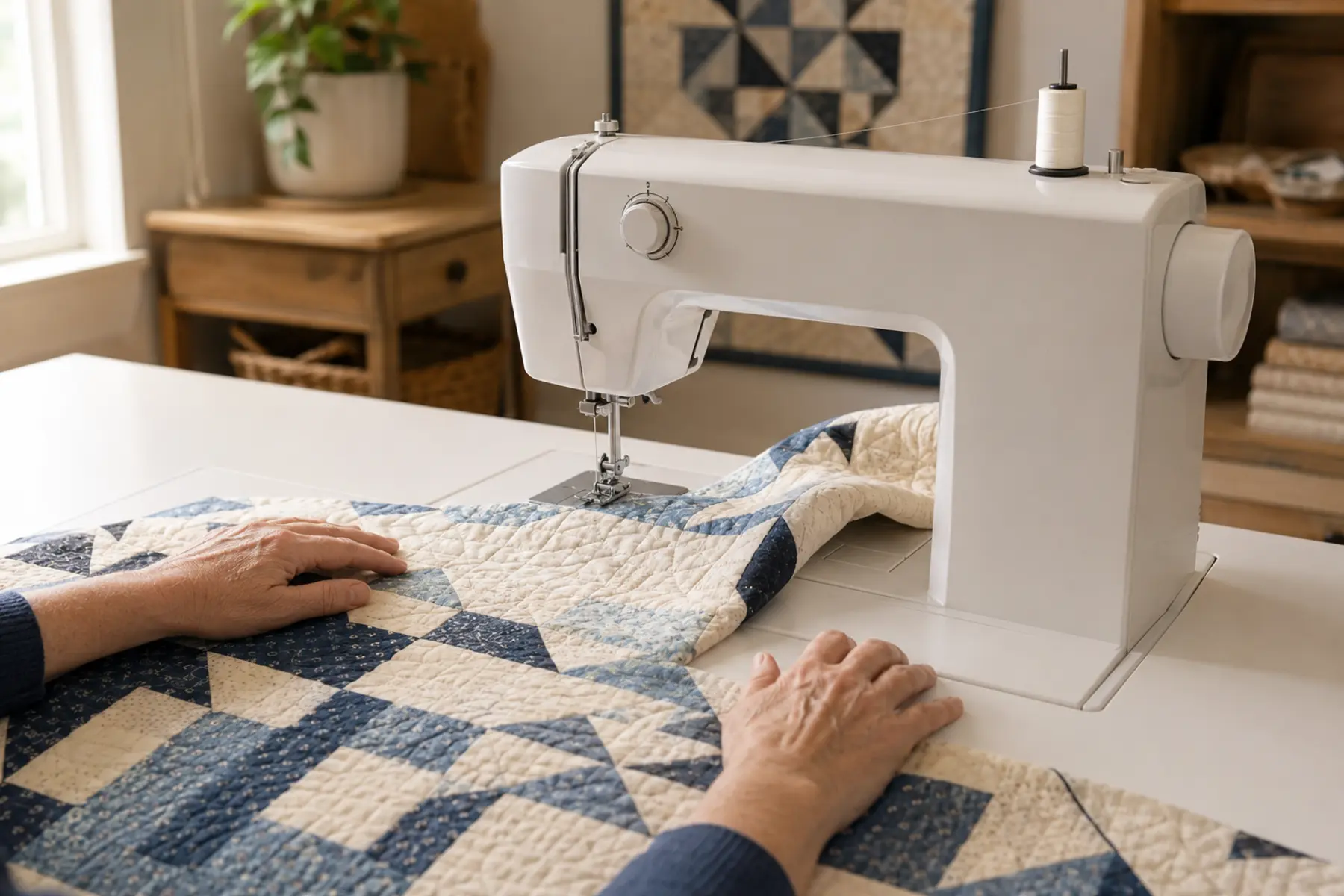
A large-throat sewing machine gives a quilter more room to the right of the needle, but throat width alone does not determine whether a quilt will feel manageable. Vertical clearance, table support, machine height, feed control, lighting, knee lift, speed control, free-motion access, and the way the quilt is basted can matter just as much.
This guide is for quilters who have outgrown a standard domestic workspace but are not automatically ready for a standing, frame-mounted longarm. The five selected machines sit between those categories. Two retain full computerized sewing functions. Three are straight-stitch specialists designed around speed, stability, piecing, and free-motion work.
The Juki DX-3000QVP is the best fit for a quilter who wants the largest domestic-style arm in this shortlist without giving up zigzag, buttonholes, decorative stitches, or garment sewing. The Janome 1600P-QC is the high-speed straight-stitch specialist for piecing and free-motion quilting. The Brother PQ1600S combines straightforward controls with a large included table and adjustable feed options. The Juki TL-2010Q offers proven straight-stitch mechanics, a rigid aluminium body, speed control, knee lift, and frame compatibility. The Janome MC6650 is the one-machine studio choice, balancing a broad all-metal flatbed with utility and decorative sewing.
None is a true longarm. A queen or king quilt still has to be supported, folded, puddled, or rolled through a domestic-style arm. These machines reduce crowding; they do not make quilt bulk disappear.
Quick decision framework
Choose the Juki DX-3000QVP when maximum domestic-style arm space and stitch versatility are equally important. Its 304mm, roughly 12-inch arm, computerized controls, box feed, Smart Feed system, buttonholes, alphabets, and decorative stitches make it the broadest one-machine option here. It is also the largest, most complex, and most expensive domestic-style machine in the shortlist.
Choose the Janome 1600P-QC when speed, straight-stitch accuracy, foot-pressure adjustment, knee lift, independent bobbin winding, and a nearly 9-by-6-inch workspace matter more than zigzag or garment versatility. It is purpose-built for one stitch and should not be the only machine in a studio that needs buttonholes or stretch stitches.
Choose the Brother PQ1600S when an included 23.3-inch-wide extension table, 8.7-by-5.7-inch needle-to-arm space, four feed-dog height settings, pin feed, and direct controls fit the workflow. It is a strong sit-down quilting package, but it is still straight stitch only and still relies on the quilter to move the sandwich.
Choose the Juki TL-2010Q when you want a rigid, portable straight-stitch platform with adjustable speed, automatic thread trimming, knee lift, a large auxiliary table, and compatibility with some quilting frames. It has a generous portable-machine workspace, but substantially less arm width than the 12-inch DX-3000QVP.
Choose the Janome MC6650 when quilting shares the room with garments, home decor, bags, buttonholes, alphabets, and decorative work. Its 10-inch all-metal seamless flatbed, drop feed, 170 stitches plus alphabets, speed control, and one-push needle-plate system provide versatility. Its flatbed design does not include a free arm.
If the buying question is broader than workspace, use the general quilting machine guide. For technique-first recommendations, see the free-motion quilting machine guide. If even a 12-inch domestic-style arm will not solve the workload, continue to the true longarm quilting machine guide.
Quick comparison
Showing three products at a time. Scroll vertically to see the remaining models.
| Product image | Title and best fit | Type | Current price |
|---|---|---|---|
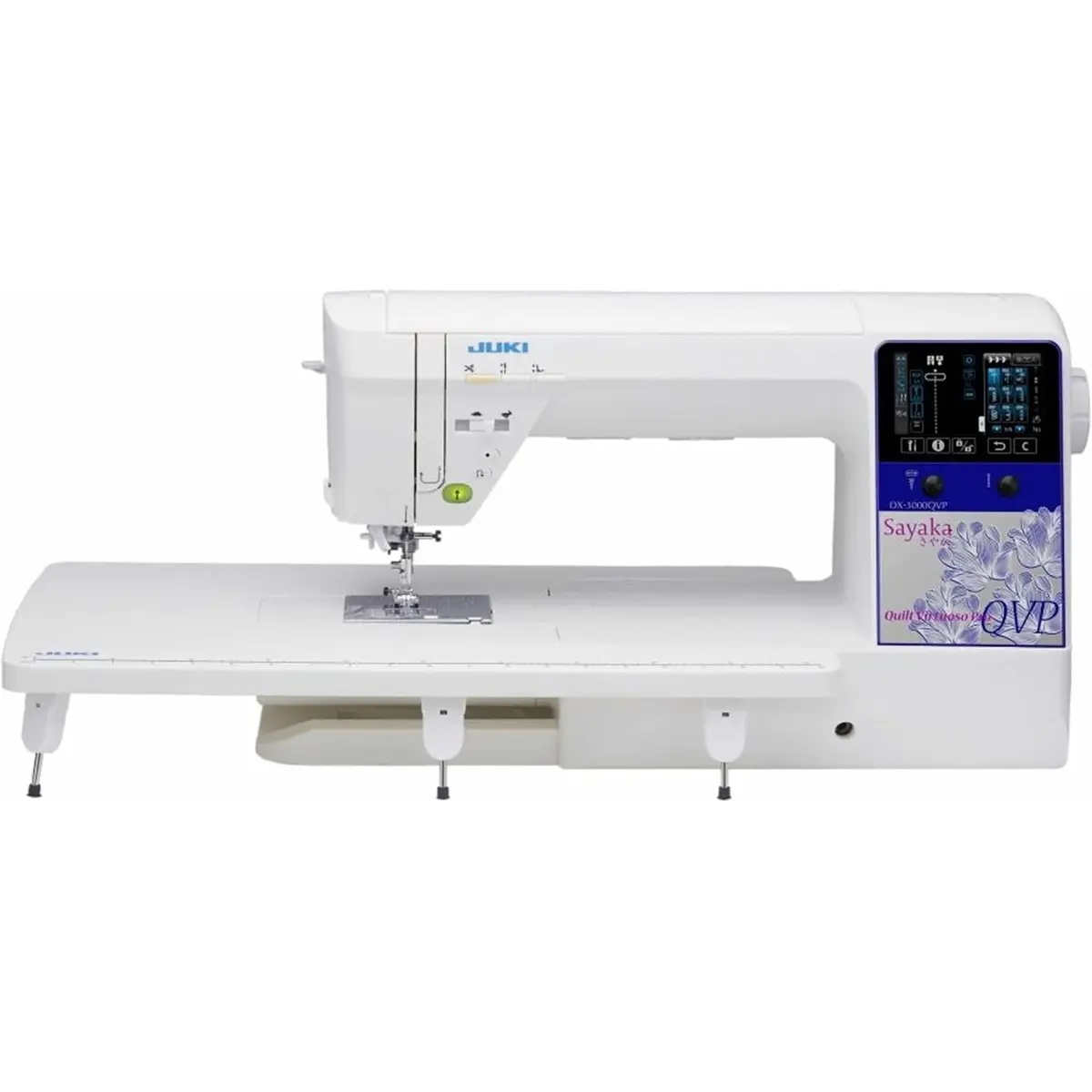 | Juki DX-3000QVP Quilters wanting the largest domestic-style throat plus zigzag, buttonholes, decorative stitches, and garment capability | Full-featured computerized sewing and quilting | Check price |
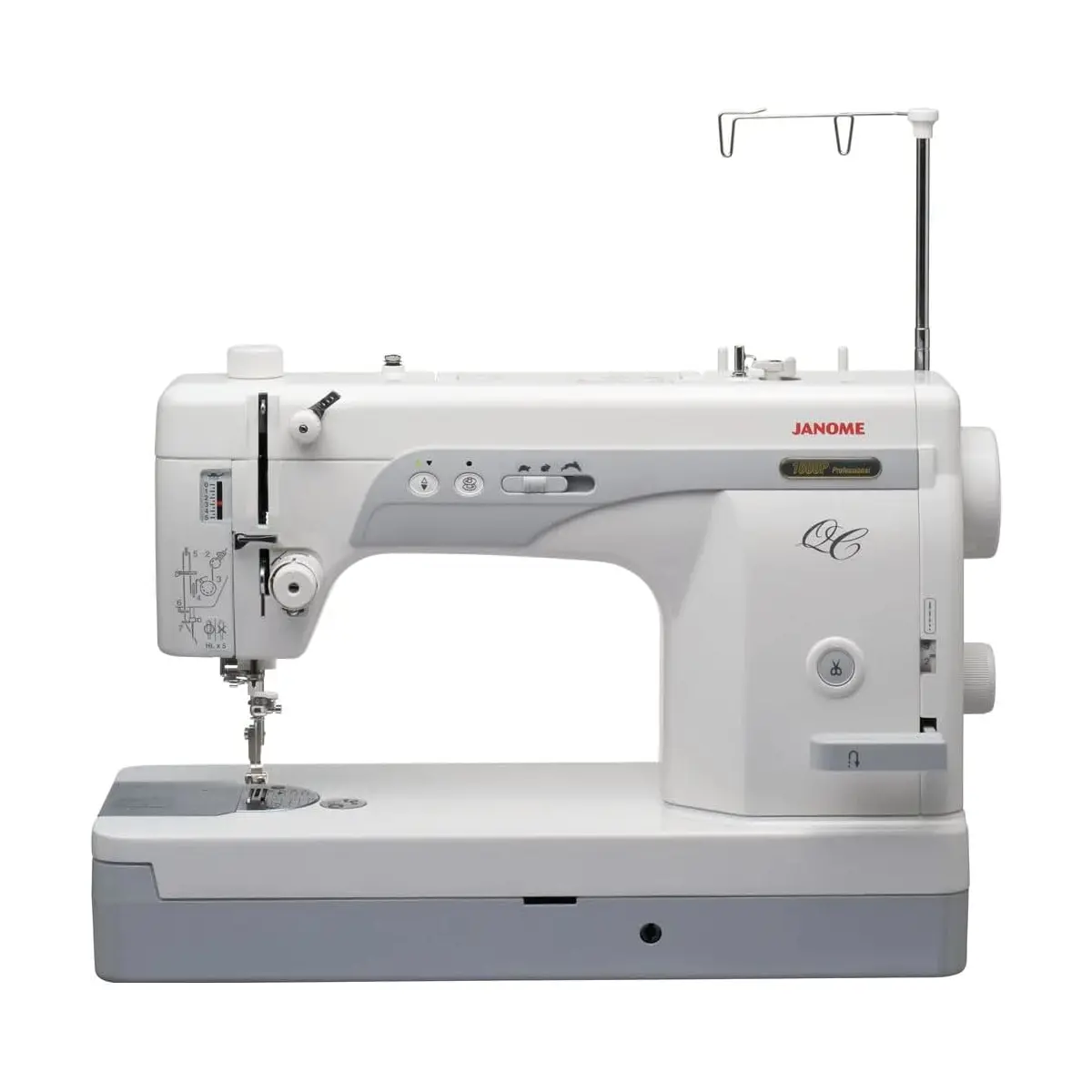 | Janome 1600P-QC Fast piecing and free-motion quilting with direct controls | High-speed straight-stitch specialist | Check price |
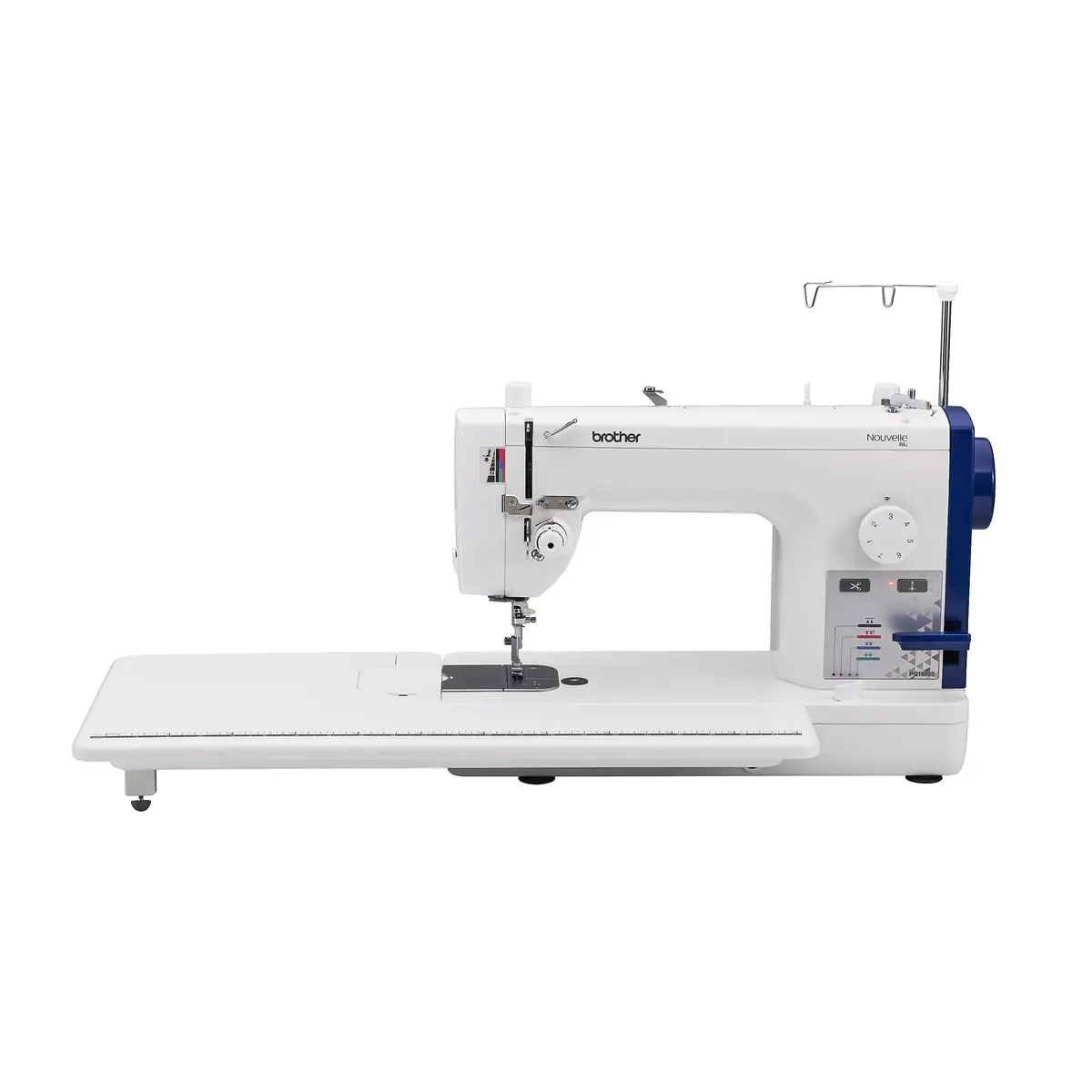 | Brother PQ1600S Quilters prioritising fabric support and adjustable feed control | High-speed straight-stitch specialist | Check price |
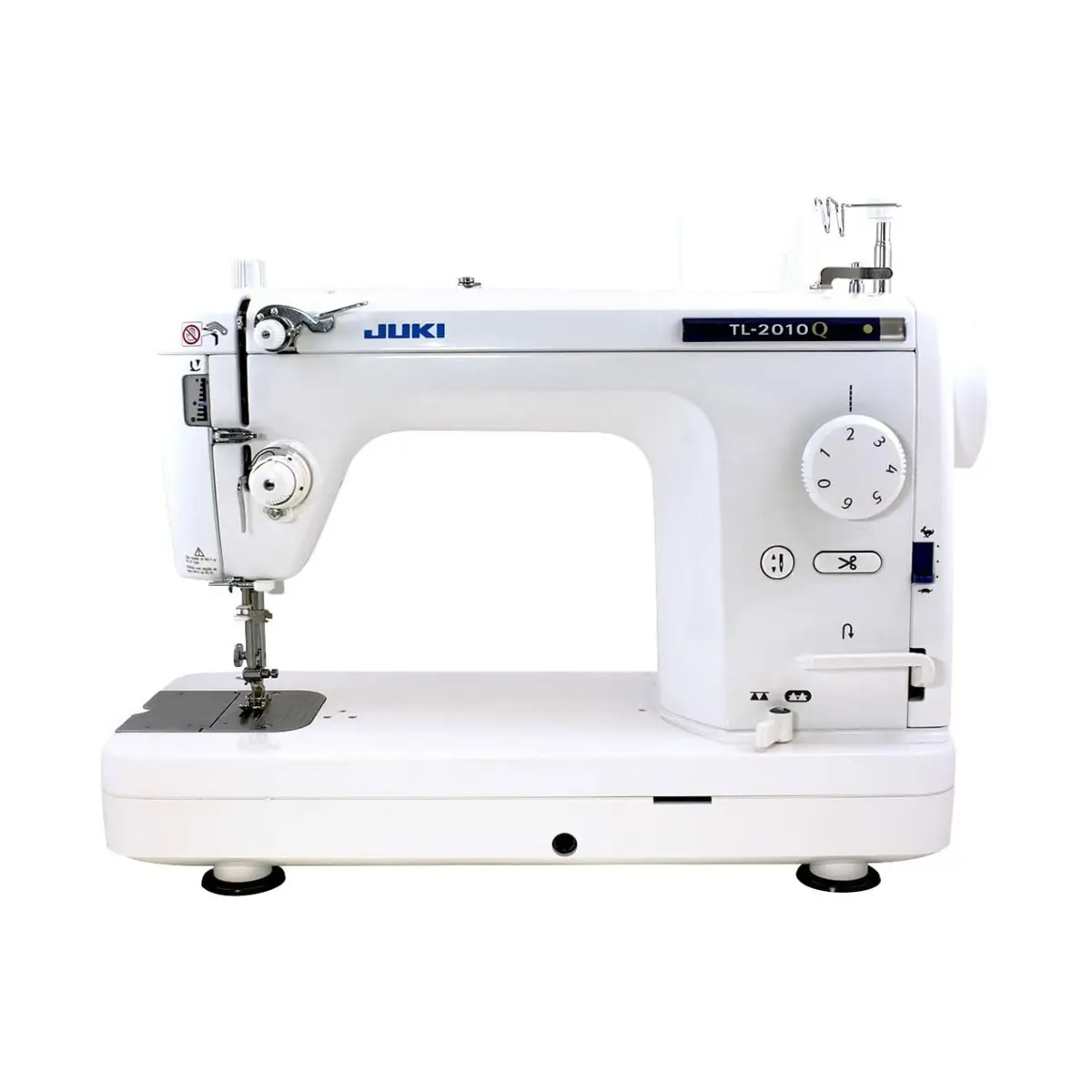 | Juki TL-2010Q Quilters wanting proven mechanics, speed control, and frame options | Straight-stitch quilting and tailoring specialist | Check price |
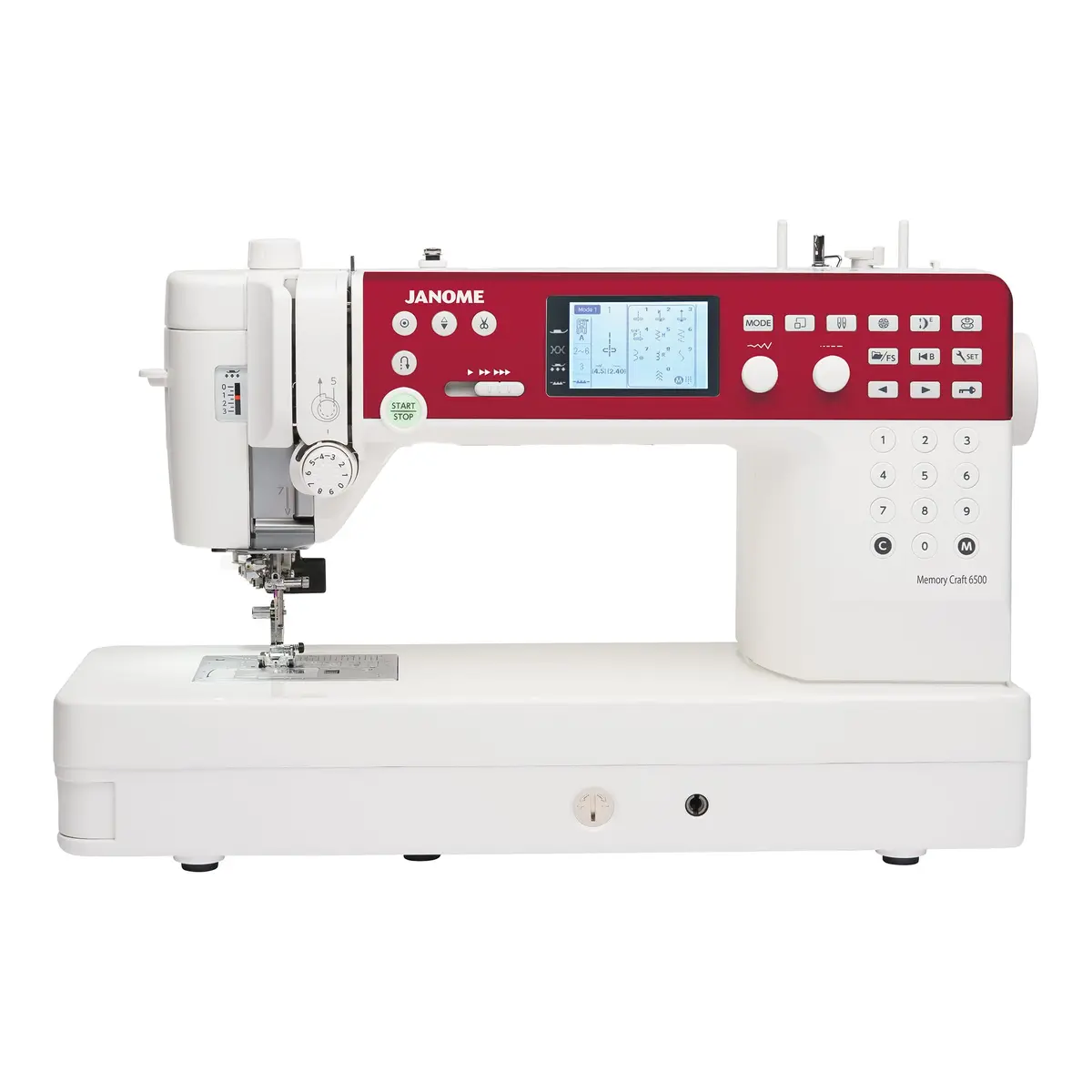 | Janome MC6650 One-machine studios needing quilting room and general sewing | Full-featured computerized sewing and quilting | Check price |
Detailed recommendations
Juki DX-3000QVP
Best for maximum domestic-style space and full versatility
The Juki DX-3000QVP owns the top role for quilters who want the broadest domestic-style workspace in this shortlist without giving up full sewing functions. Juki publishes a 304mm computer-controlled arm size, approximately 12 inches, a maximum sewing speed of 1,050 stitches per minute, 351 stitch patterns, multiple alphanumeric fonts, and sensor buttonholes.
The machine's value is not simply that it is wider. It combines that arm with feed and control features intended for varied sewing.
Why the arm matters
Compared with the roughly 8.7-to-8.8-inch workspaces of the straight-stitch Brother and Janome, a 12-inch arm gives rolled or puddled quilt sections more room to spread. The difference is especially noticeable when working toward the centre of a bed quilt.
The opening does not remove the need for good basting, a flush table, or frequent repositioning. It simply reduces how tightly the quilt must be compressed.
Box feed and Smart Feed
Juki's box-feed system is designed to move the feed dogs in a box-like path, helping maintain contact and consistent feeding. The machine also includes Juki Smart Feed for materials prone to uneven movement, including quilt layers, subject to the pattern and setup restrictions described in the manual.
Smart Feed is not the same as longarm stitch regulation, and it is not used for every stitch. Follow the manual for engagement, compatible feet, stitch patterns, and pressure settings.
Full sewing capability
The DX-3000QVP can zigzag, appliqué, make sensor buttonholes, sew decorative stitches, create lettering, and handle garment construction that a straight-stitch specialist cannot. The free arm becomes available when the accessory area is removed, supporting sleeves and other tubular sewing.
This makes it suitable for a studio that quilts but does not want to keep a second computerized domestic machine for garments and craft work.
Complexity and footprint
The benefit comes with menus, accessories, electronic functions, and a large body. Juki lists a machine weight of 14.8kg, about 32.1 pounds, while the selected Amazon page has historically shown inconsistent marketplace weight data. Use official Juki figures for planning and confirm the actual bundle.
The wide table must be level with the machine bed. Juki's manual warns against placing heavy material on the auxiliary table and against moving the machine with the table attached. Support the quilt across a larger furniture surface rather than asking the accessory legs to carry hanging quilt weight.
Who should buy it
Choose the DX-3000QVP if the 12-inch arm will materially improve quilt handling and the studio also uses zigzag, buttonholes, decorative stitches, appliqué, or garments.
Best for: Quilters wanting the largest domestic-style throat in this shortlist plus full computerized sewing capability.
Skip it if: You only need straight stitch for piecing and free motion, prefer simple mechanical controls, or cannot dedicate space to a large machine and support table.
Janome 1600P-QC
Best for fast piecing and straight-stitch quilting
The Janome 1600P-QC is a straight-stitch specialist for quilters who value speed, stability, pressure control, and a simple needle area. Janome lists an 8.8-inch-wide by 5.5-inch-high workspace, speeds up to 1,600 stitches per minute, a maximum 6mm stitch length, up to 11 pounds of presser-foot pressure, a knee lift, speed slider, automatic thread cutter, independent bobbin-winding motor, and side-loading full-rotary hook.
Why it fits sustained quilt work
The independent bobbin winder can wind a bobbin without tying up the main sewing drive. The side-loading bobbin is designed for access when the machine is used on a compatible quilt frame. A knee lift leaves both hands available to position blocks or manage quilt bulk.
Foot-pressure adjustment is useful when changing between crisp piecing cotton, a layered sandwich, and other materials. It must be tested rather than simply increased. Too much pressure can inhibit movement or mark a surface; too little can reduce control.
Speed with control
The 1,600-stitch maximum makes the 1600P-QC the fastest head in this shortlist. That speed is valuable for long straight seams and chain piecing. Free-motion quilting usually needs a much lower controlled range.
Use the speed slider to set a ceiling and practise with the responsive foot control. Maximum speed should never substitute for accuracy or safe hand position.
Straight stitch only
The limitation is absolute: there is no zigzag, stretch stitch, built-in buttonhole, alphabet, or decorative pattern. The machine also has no free arm. Janome describes it as an extra-wide straight-stitch machine, not an all-purpose domestic replacement.
The 1600P-QC uses the HLx5 needle system and exclusive bobbin guidance in the manual. Generic domestic bobbins that appear to fit may affect stitch quality or damage the machine. Use manufacturer-approved consumables and verify accessory compatibility by exact model.
Who should buy it
This model fits a quilter who already owns another machine for zigzag and buttonholes or who genuinely works almost entirely in straight stitch. It is particularly appealing for chain piecing, straight-line quilting, free-motion practice, bag panels, and frame experimentation.
Best for: High-speed piecing and sit-down or compatible-frame straight-stitch quilting with strong pressure and bobbin control.
Skip it if: This will be the only sewing machine in a studio that also makes garments, buttonholes, appliqué, or decorative work.
Brother PQ1600S
Best included table and direct fabric control
The Brother PQ1600S is another straight-stitch specialist, but its strongest intent-specific advantage is the supplied working package. Brother publishes an 8.7-inch needle-to-arm width, 5.7-inch height, an expanded table measuring 11.1 by 23.3 inches, and speed up to 1,500 stitches per minute.
Table support is central
The wide table gives the quilt a broad, flat surface around the needle. Brother includes bobbin-case access so the table does not have to be removed for every bobbin change. That is a practical feature when a basted quilt is spread across the work area.
The table still needs surrounding furniture support for a bed quilt. If quilt weight falls over the front or left edge, it can pull the sandwich and distort stitches. A large desk, cabinet, or additional flush tables can create a better sit-down layout.
Four feed settings and pin feed
Brother gives the feed dogs four visible, colour-coded height settings. The machine also includes an adjustable pin-feed mechanism intended to move layers accurately or handle fabrics where feed-dog marks are undesirable.
Pin feed is a specialised mode, not a universal upgrade. Install the correct foot, set the mechanism according to the manual, and test on scrap. The pin can damage inappropriate material or contact an incompatible foot.
For free-motion quilting, the feed system must be set according to Brother's instructions and the proper quilting foot must be used. Lowering feed does not add stitch regulation.
Direct controls
The PQ1600S includes a push-button thread cutter, programmable needle-stop position, knee lifter, tension dial, pressure adjustment, dual-cone thread stand, and bright work lighting. These controls support a focused straight-stitch workflow without decorative-stitch menus.
Brother states that the US model is intended for 120V sale and that other use or sale may void the warranty. Buyers outside the US should obtain the correct regional model rather than relying on a travel transformer or informal voltage solution.
Who should buy it
Choose the PQ1600S when an included large table, adjustable feed height, pin feed, strong lighting, and familiar Brother support matter more than full stitch variety.
Best for: Quilters wanting a stable straight-stitch workstation with a large included table and multiple fabric-control options.
Skip it if: You need zigzag or buttonholes, expect built-in stitch regulation, or need a genuine frame-mounted longarm throat.
Juki TL-2010Q
Best proven straight-stitch platform with frame options
The Juki TL-2010Q is a one-needle portable lockstitch machine built from aluminium die-casting. Juki specifies speed control up to 1,500 stitches per minute, an automatic thread trimmer, knee lift, sub-tension system, bright lighting, and a large auxiliary work surface. The machine can be used on a tabletop, in compatible cabinets, or with certain quilting frames.
Why quilters keep choosing this format
The rigid casting helps limit vibration at speed. Straight stitch is the only operation, so the needle area and thread path are focused on piecing, quilting, tailoring, bag work, and home decor rather than hundreds of patterns.
The speed-control slider lets the user reduce the maximum while learning free motion. The knee lift keeps both hands on the quilt. Automatic thread trimming reduces reaching under a bulky sandwich, though thread tails and securing methods still need to match the quilting technique.
Workspace needs context
Juki promotes a large work area when the auxiliary table is attached. That figure describes the supported surface, not a 23-inch throat. The actual portable arm is generous compared with an ordinary domestic machine but smaller than the DX-3000QVP's 12-inch arm.
This distinction is crucial. A wide table helps carry quilt weight; only needle-to-column distance determines how much quilt fits inside the opening.
Frame compatibility is not a true longarm conversion
The TL-2010Q can be mounted on some quilting frames. Compatibility must be checked by exact frame, carriage, machine dimensions, controls, and available movement. The machine retains its original throat depth and does not gain built-in longarm stitch regulation simply because it rides on a carriage.
Frame use may improve movement for smaller patterns while reducing the quilt area available within the frame and throat. Buyers should see a complete compatible setup in operation before committing.
Needle and accessories
Juki lists compatible HAx1 and HLx5 needle guidance for the TL series. Use the exact system, size, and point recommended for the thread, fabric, and speed. Confirm that quilting feet, ruler feet, walking feet, bobbins, and thread stands fit the TL-2010Q specifically.
Who should buy it
The TL-2010Q suits a quilter who wants a mature straight-stitch platform, direct speed control, a rigid body, an auxiliary table, and possible cabinet or frame integration.
Best for: Straight-stitch quilters prioritising reliable mechanics, free-motion control, piecing speed, and flexible tabletop or compatible-frame use.
Skip it if: You need zigzag, decorative stitches, built-in buttonholes, or the 12-inch arm space of the larger computerized Juki.
Janome MC6650
Best one-machine studio with a broad flatbed
The Janome Memory Craft 6650 is the alternative for a quilter who does not want a straight-stitch-only machine. Janome describes a 10-inch all-metal seamless flatbed, 170 stitches plus two alphabets, a top-loading full-rotary hook, one-push needle-plate conversion, six LEDs in three locations, drop feed, speed control, pressure adjustment, automatic thread cutting, and speed up to 1,000 stitches per minute.
Why the flatbed helps quilting
The broad metal bed provides a stable surface around the needle and more room to the right than a standard domestic body. The straight-stitch needle plate can support precise piecing, while the standard plate preserves wider utility and decorative stitches.
One-push plate change is convenient, but the machine must be powered off and the correct plate, foot, needle position, and stitch must be confirmed before sewing. A needle striking the wrong plate can break and cause injury or machine damage.
Full studio capability
The MC6650 can make buttonholes, utility seams, alphabets, decorative stitches, appliqué, garment seams, and quilting stitches. Memorised needle up/down, start/stop, locking stitch, speed slider, and automatic cutting support both piecing and general sewing.
This makes it a rational choice when the room or budget allows only one high-quality machine. It avoids buying a straight-stitch specialist plus a second computerized domestic machine.
Flatbed means no free arm
The seamless flatbed is a quilting and project-support advantage, but it does not convert to a free arm. Sleeves, cuffs, trouser hems, and small tubes must be sewn using another construction method. A studio that regularly makes garments should decide whether the broad bed is worth that tradeoff.
The 10-inch claim should also not be compared casually with the DX-3000QVP's 304mm arm without seeing both machines. Janome describes the flatbed; Juki publishes arm size. Dealer testing is the safest way to compare usable needle-to-right space and height.
Who should buy it
Choose the MC6650 when quilt handling needs improvement but garment, craft, decorative, and buttonhole functions remain essential.
Best for: A one-machine quilting and sewing studio that needs a broad flatbed, full stitch variety, and direct computerized controls.
Skip it if: You want maximum throat width, a free arm, or the speed and simplicity of a dedicated straight-stitch specialist.
What matters in a large-throat quilting machine
A large-throat sewing machine gives a quilter more room to the right of the needle, but throat width alone does not determine whether a quilt will feel manageable. Vertical clearance, table support, machine height, feed control, lighting, knee lift, speed control, free-motion access, and the way the quilt is basted can matter just as much.
This guide is for quilters who have outgrown a standard domestic workspace but are not automatically ready for a standing, frame-mounted longarm. The five selected machines sit between those categories. Two retain full computerized sewing functions. Three are straight-stitch specialists designed around speed, stability, piecing, and free-motion work.
The Juki DX-3000QVP is the best fit for a quilter who wants the largest domestic-style arm in this shortlist without giving up zigzag, buttonholes, decorative stitches, or garment sewing. The Janome 1600P-QC is the high-speed straight-stitch specialist for piecing and free-motion quilting. The Brother PQ1600S combines straightforward controls with a large included table and adjustable feed options. The Juki TL-2010Q offers proven straight-stitch mechanics, a rigid aluminium body, speed control, knee lift, and frame compatibility. The Janome MC6650 is the one-machine studio choice, balancing a broad all-metal flatbed with utility and decorative sewing.
None is a true longarm. A queen or king quilt still has to be supported, folded, puddled, or rolled through a domestic-style arm. These machines reduce crowding; they do not make quilt bulk disappear.
What throat space changes in real quilting
The throat is the space between the needle and the machine body. More width allows a larger portion of the quilt to sit to the right of the needle. More height allows a thicker fold or puddled section to pass without rubbing the underside of the arm.
Extra width reduces compression
On a small domestic machine, the quilt may have to be rolled tightly to fit. A larger arm permits looser folds and a broader working area. The quilter can see more of the intended path and may spend less time stopping to reposition bulk.
The benefit is strongest during free-motion quilting in the centre of a bed quilt. Piecing, binding, and quilting near an outer edge usually place less material inside the throat.
Height can matter as much as width
A wide but shallow opening may still compress a lofty batting or dense fold. The Janome and Brother straight-stitch machines publish both width and height figures, which makes their working rectangle easier to understand. If possible, place a sample quilt sandwich in the opening and sit at the machine before buying.
Extension tables support weight but do not enlarge the throat
An extension table creates a larger flat surface around the machine. It keeps the quilt from dropping off a narrow bed and pulling against the needle. It does not move the machine column farther right.
A smaller-throat machine with excellent flush support may feel easier than a wider machine perched on a narrow desk. Throat space and table support must be planned together.
Who should buy a large domestic-style machine
This category works best for a quilter who wants to sit at the needle and move the quilt sandwich by hand. The machine remains portable or tabletop-based, and the footprint is much smaller than a frame-mounted longarm system.
It is a good fit when:
- Piecing and quilting happen in the same room or on the same machine
- Floor space cannot accommodate a longarm frame
- The user is comfortable basting and physically moving the quilt
- Quilts are made occasionally rather than as a high-volume service
- Garment, bag, and home-decor stitches may still be needed
- The budget does not justify a true longarm plus frame and training
It is a poor fit when the main goal is finishing large quilts quickly for customers, working with pantographs from the back of a frame, using built-in stitch regulation, or avoiding the physical work of pushing bed-quilt bulk through a stationary machine.
Straight-stitch specialist or full-featured machine
This is the most important decision after workspace.
Straight-stitch specialists
The Janome 1600P-QC, Brother PQ1600S, and Juki TL-2010Q form one lockstitch. Their rigid architecture, direct thread path, speed, knee lift, pressure adjustment, and large tables suit piecing, straight-line quilting, free-motion quilting, bag work, and selected tailoring.
They do not zigzag. They do not make conventional built-in buttonholes or decorative stitches. Feed dogs can be lowered or controlled for free motion, but these machines do not become stitch-regulated longarms. The quilter's hand speed and machine speed determine stitch length during free motion.
Choose this class if quilting performance matters more than owning one machine for every sewing operation.
Full-featured computerized machines
The Juki DX-3000QVP and Janome MC6650 retain utility, decorative, and buttonhole functions. They can piece a quilt, drop feed for free motion, stitch appliqué, make garments, finish home decor, and handle projects that need width.
The additional capability introduces menus, stitch plates, pattern selection, electronic settings, and more systems to learn. A quilter who only wants an excellent straight stitch may prefer the simplicity and lower price of a specialist.
Quilt handling matters more than headline speed
High maximum speed helps long piecing seams, binding, and production-style straight stitching. It is not the target for free-motion quilting. At 1,500 or 1,600 stitches per minute, small differences in hand movement can create abrupt changes in stitch length.
Good speed control lets the quilter cap the machine at a comfortable range. A responsive foot controller should start predictably and increase smoothly. Practise curves, points, echoes, starts, stops, and direction changes on a basted sample made from the same fabric, batting, backing, needle, and thread as the quilt.
During free motion, coordinate hand movement with needle speed. Short, jagged stitches usually mean the machine is moving faster than the hands. Long stitches usually mean the hands are moving too quickly for the needle.
How we selected these machines
The five products and roles come from the site's approved Amazon product shortlist. Official manufacturer pages and manuals, exact current Amazon identities, workspace claims, standard accessories, feed controls, and important limitations were checked on July 22, 2026.
Selection was based on usable space, quilt support, feed and drop-feed control, speed management, visibility, ergonomics, stitch versatility, service, and distinct buyer intent. Review count did not determine ranking. Every machine had to make additional needle-to-right workspace central to its design.
This is a research-based guide and does not claim personal hands-on testing. Manufacturer dimensions are retained in the form published because brands use different measurement methods. Marketplace bundle claims are separated from permanent machine specifications.
All five ASINs currently resolve to the intended model identities. Price, seller, voltage, accessories, bonus packs, tables, warranties, and availability can change. Buyers should verify the exact offer and purchase from a seller who can provide service for a large, expensive machine.
Building a quilt-support workspace
A large machine on a small desk can be harder to use than a standard machine in a well-designed cabinet. The goal is a broad, level surface that carries the quilt without allowing its weight to pull away from the needle.
Set the bed flush where possible
A drop-in cabinet or correct insert can place the machine bed level with the surrounding table. If the machine sits on top, use the supplied extension table and add compatible side support. Do not stack books or unstable objects beneath an expensive machine or quilt.
Support the left, front, and back
Most attention goes to the right-side throat, but quilt weight usually accumulates to the left and front as well. Add a side table, rear table, or smooth surrounding surface. Cover gaps that can catch binding, backing, or basting pins without blocking machine ventilation.
Prevent drag
Clean the table and remove rough edges. A quilting slider may reduce friction during free motion if it is compatible and does not cover feed openings, sensors, or vents. Secure it so it cannot move into the needle area.
Keep the quilt off the floor. A chair, table, or controlled puddling arrangement can support excess fabric without pulling. Never loop quilt bulk around the operator's neck or body.
Choose a stable chair height
The forearms should rest roughly level with the machine bed, shoulders relaxed, wrists neutral, and feet able to operate the controller without reaching. The knee lift should be positioned so it does not force the leg outward or cause unintended activation.
Preparing a large quilt for a stationary machine
Good basting prevents layers from shifting while the quilt is compressed and moved. Pin, spray, thread, or another method should suit the fabric, batting, ventilation, washing plan, and machine. Keep pins well away from the needle path and remove them before they reach the foot.
Divide the quilting into manageable zones. Start near the centre when the design and basting method call for it, then work outward while keeping the active section loose and flat. Roll only when a roll helps; many quilters find soft folds or “puddling” easier than a rigid tube.
Do not force a large roll through the throat. Compression can distort the sandwich and increase hand strain. Reposition more often, reduce the active area, or choose a different quilting design.
Free-motion limitations on these machines
None of the five has the same integrated stitch-regulation system as a purpose-built longarm with regulation. When feed dogs are lowered and the quilter moves the sandwich, stitch length comes from the relationship between machine speed and hand speed.
The larger throat helps movement, but it does not teach control. Practise on samples before a finished quilt. Begin with smooth curves and meanders, then add points, echoes, rulers, and dense fills only after starts and stops become consistent.
Use a proper free-motion or ruler foot approved for the model. Ruler work requires a foot designed to protect the needle area and a ruler of appropriate thickness. A thin rotary-cutting ruler can slide beneath the foot and strike the needle.
Buying checklist
Before ordering, verify:
- Actual needle-to-right width and vertical height
- Overall machine dimensions and weight
- Included extension table and its exact dimensions
- Straight stitch only versus full stitch capability
- Drop-feed method and approved free-motion feet
- Knee lift, speed control, needle stop, lighting, and thread cutter
- Bobbin type, needle system, and local consumable supply
- Walking or even-feed foot availability and compatibility
- Ruler-foot and frame compatibility if relevant
- Voltage, regional warranty, seller authorisation, and service location
- Cabinet, insert, desk, chair, and surrounding quilt-support plan
- Return shipping implications for a large, heavy machine
Bring a layered sample and, if possible, a rolled or puddled section of a real bed quilt to the dealer. Sit at the machine. Test visibility, reach, controller response, knee lift, bobbin access, thread path, noise, vibration, and how often the quilt must be repositioned.
Safety and care
Switch off and unplug before changing the needle, plate, foot, bobbin, or performing maintenance. Keep fingers away from the needle, take-up lever, thread cutter, and moving feed components. Do not sew over pins or pull the quilt against the needle.
Use the correct needle system and install the needle fully in the required orientation. A bent or deflected needle can strike the plate, foot, or hook. Replace a dull, burred, or damaged needle promptly.
Clean lint according to the manual, particularly after cotton batting and high-volume piecing. Follow model-specific oiling instructions. Do not add oil to a location merely because another straight-stitch machine requires it.
Move the machine with two hands or appropriate help. Remove the auxiliary table and accessories first. Never lift by the thread stand, needle bar, handwheel, display, or presser assembly.
When a true longarm is the better purchase
A true longarm becomes more logical when quilting large tops is frequent, the user wants the machine to move over a framed quilt, stitch regulation matters, pantograph work is planned, or paid quilting volume must increase.
Longarms also require floor space, frame length, setup, maintenance, training, and a larger budget. A sit-down longarm changes the throat and table while retaining a move-the-quilt workflow. A standing frame system changes the workflow more completely.
Do not buy a true longarm only because one king quilt felt difficult on a small domestic machine. First decide whether a large-throat domestic or straight-stitch specialist with excellent support tables solves the actual frequency and budget. Conversely, do not spend heavily on the largest domestic model if the business will soon require a regulated frame system.
Frequently asked questions
How much throat space is enough for quilting?
There is no universal minimum. An 8.7-to-8.8-inch opening is a meaningful improvement over many standard domestic machines. A 10-to-12-inch arm reduces compression further. Quilt size, batting loft, design density, basting, table support, strength, and technique determine whether the space feels sufficient.
Is a 12-inch machine a longarm?
Not in the sense used by this guide. The DX-3000QVP is a large domestic-style computerized machine. A true longarm usually has a deeper throat and is designed for a dedicated sit-down table or frame-mounted quilting workflow. Marketing terminology varies, so compare the physical machine and workflow.
Which machine is best if I also sew garments?
The Juki DX-3000QVP offers the widest stitch versatility and includes a free-arm conversion. The Janome MC6650 also provides full utility, decorative, alphabet, and buttonhole functions, but its seamless flatbed does not convert to a free arm. The other three are straight stitch only.
Which machine is best for free-motion quilting?
All five can support free-motion work with the correct setup. The best choice depends on throat space, table support, foot availability, speed control, visibility, and whether other stitches are needed. This page does not turn into an FMQ-only ranking; use the linked free-motion guide for that narrower intent.
Does an extension table increase throat space?
No. It increases the supported surface around the machine. Throat space is the open area between the needle and the machine body. Both measurements matter, but they solve different problems.
Are straight-stitch specialists better for piecing?
They can provide a focused thread path, rigid body, responsive controls, and high speed. They are not automatically more accurate than a well-set computerized machine. Needle plate, foot, feed, pressure, thread, needle, seam guide, and operator control all matter.
Do these machines regulate stitch length during free motion?
Not like a purpose-built regulated longarm. With feed dogs lowered, the quilter's hand movement and machine speed set stitch length. Some machines offer feed systems for ordinary layered sewing, but that is different from free-motion stitch regulation.
Can I quilt a king-size quilt on one?
It is possible for experienced quilters to complete large quilts on domestic-style machines, but “possible” does not mean comfortable for every person or design. A large throat, low-loft batting, excellent basting, broad table support, manageable quilting zones, and a less dense design can help. Test the physical workflow before purchasing specifically for king quilts.
Final verdict
The Juki DX-3000QVP is the best choice when maximum domestic-style arm space and full sewing versatility must coexist. The Janome 1600P-QC is the high-speed straight-stitch specialist for quilters who value pressure control and an independent bobbin workflow. The Brother PQ1600S provides the strongest included-table package and direct feed adjustment.
The Juki TL-2010Q is the proven straight-stitch platform for quilters who want speed control, a rigid portable body, knee lift, and optional cabinet or frame integration. The Janome MC6650 is the balanced one-machine studio option, preserving buttonholes, utility stitches, decorative work, and a broad quilting flatbed.
Choose by the full working system: real throat dimensions, vertical clearance, table support, machine type, controls, basting method, physical comfort, service, and future longarm plans. The biggest advertised number is not automatically the easiest quilting experience.
Research sources
- Juki official DX-3000QVP product specifications and instruction manual
- Janome official 1600P-QC product page, brochure, and instruction manual
- Brother official PQ1600S product page, operation manual, and support resources
- Juki official TL-2010Q product page, catalog, and instruction manual
- Janome official Memory Craft 6650 product page, feature sheet, and manual
- Current Amazon records for ASINs B08HM67HZC, B006K5TGY0, B0CFYQZX5Q, B00AAZU1KE, and B07RRJDQ75, checked July 22, 2026
Prices, sellers, voltage, bundles, tables, bonus accessories, and warranties can change. Verify the exact offer before purchase. This page contains affiliate links; the site may earn a commission from qualifying purchases at no additional cost to the buyer.