
Affiliate disclosure: We may earn from qualifying Amazon purchases at no extra cost to you. Products are selected for utility and reader fit, not ratings or commission.
The best Janome sewing machine is not one universal model. Janome makes basic mechanical machines, portable computerised models, sturdy domestic heavy-duty machines and larger sewing-and-quilting platforms. Those machines solve different problems, so ranking them as though they were interchangeable would not help a buyer choose well.
This guide works as a Janome range navigator. Each shortlisted model has a distinct job: learning core controls, handling frequent garment and home-decor work, offering computerised convenience at a moderate level, travelling to classes, supporting mixed garment and quilting projects, providing a robust premium mechanical experience, or delivering the speed and workspace serious sewists need.
If you already know that you specifically need an industrial machine, embroidery-only machine or true longarm quilting system, this is not the right shortlist. The models below are domestic Janome sewing machines selected for clearly different home-sewing roles.
Quick recommendations
Quick comparison
Showing three products at a time. Scroll vertically to see the remaining models.
| Product image | Title and best fit | Type | Current price |
|---|---|---|---|
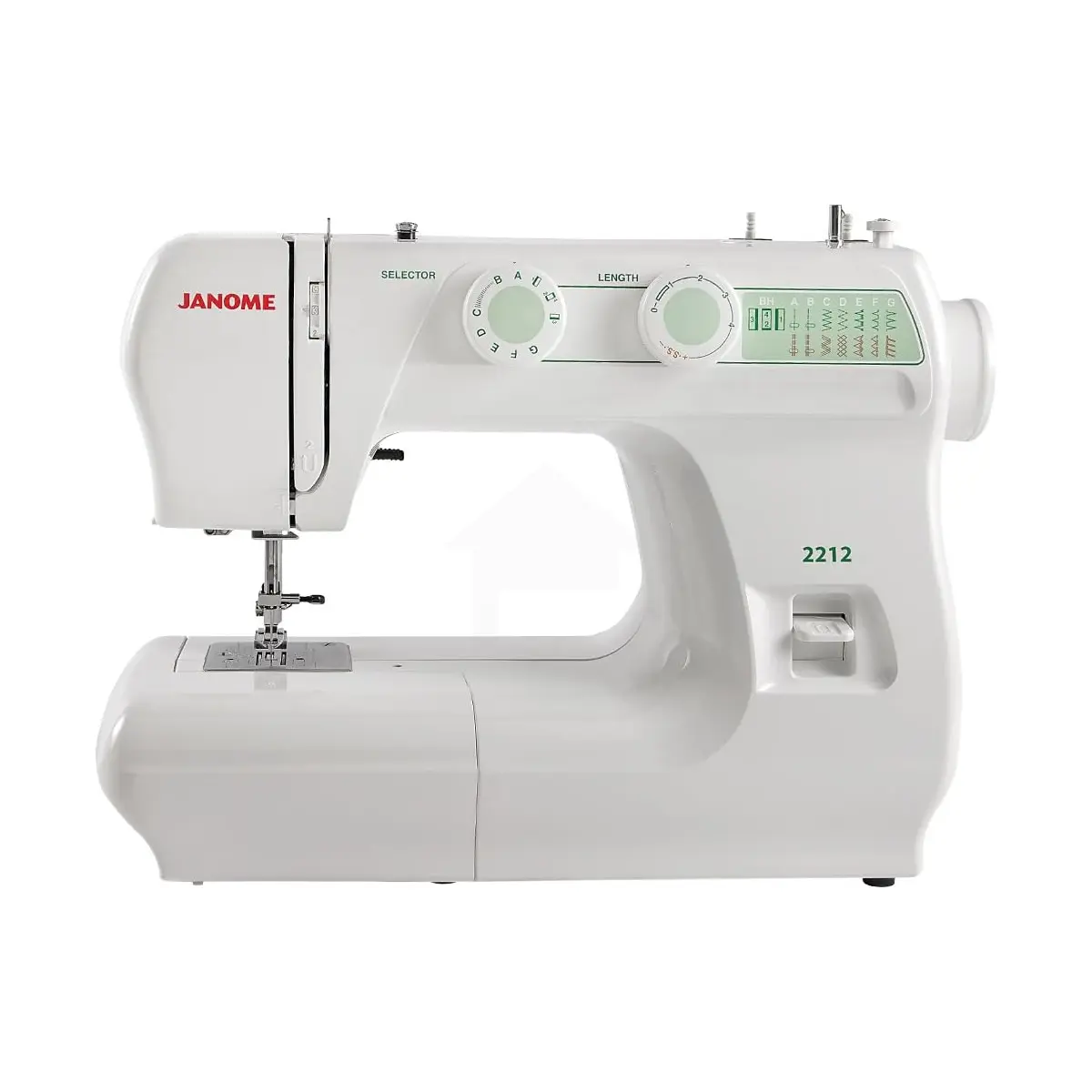 | Janome 2212 Learning with mechanical controls | Entry mechanical | Check price |
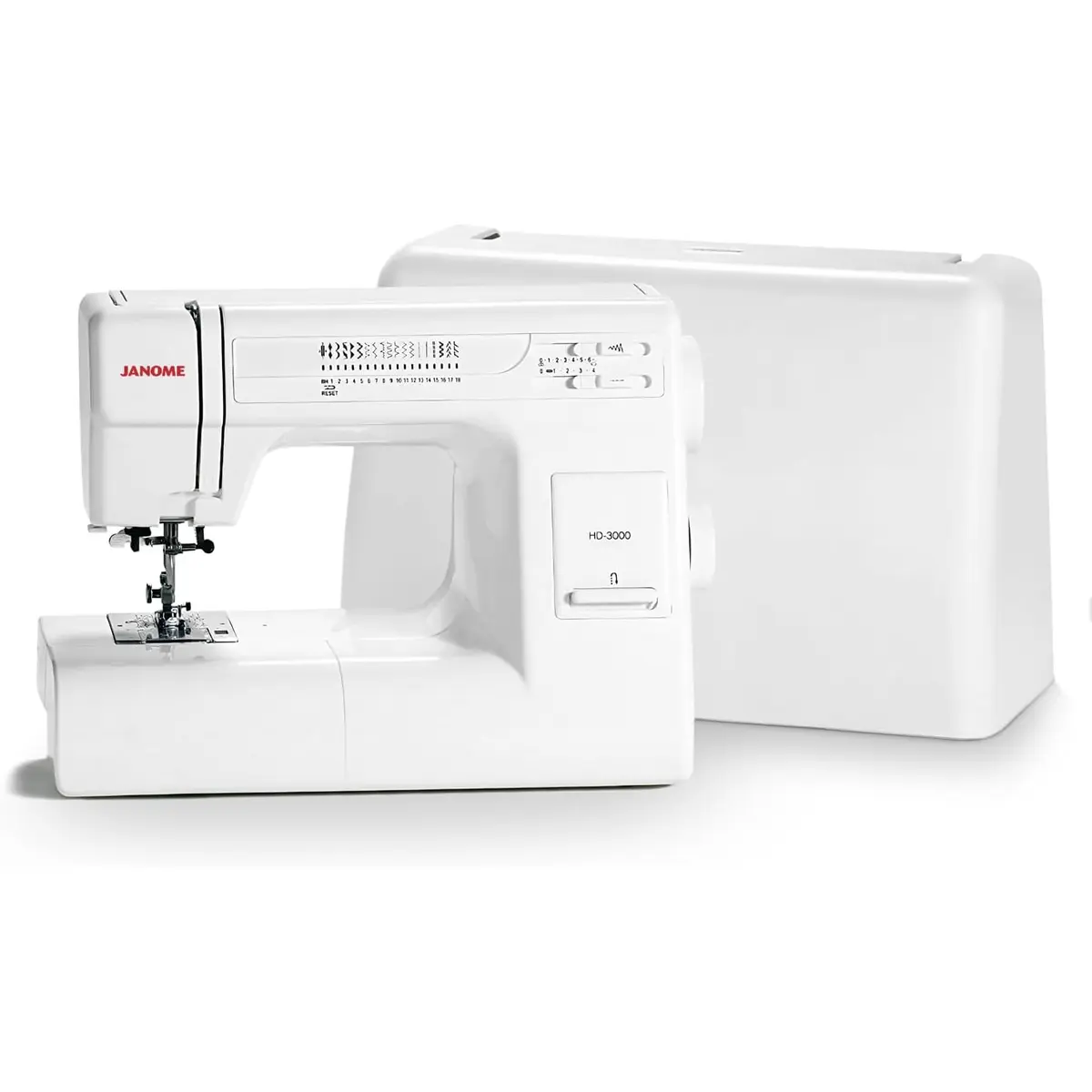 | Janome HD3000 Sturdy everyday mechanical sewing | Heavy-duty domestic mechanical | Check price |
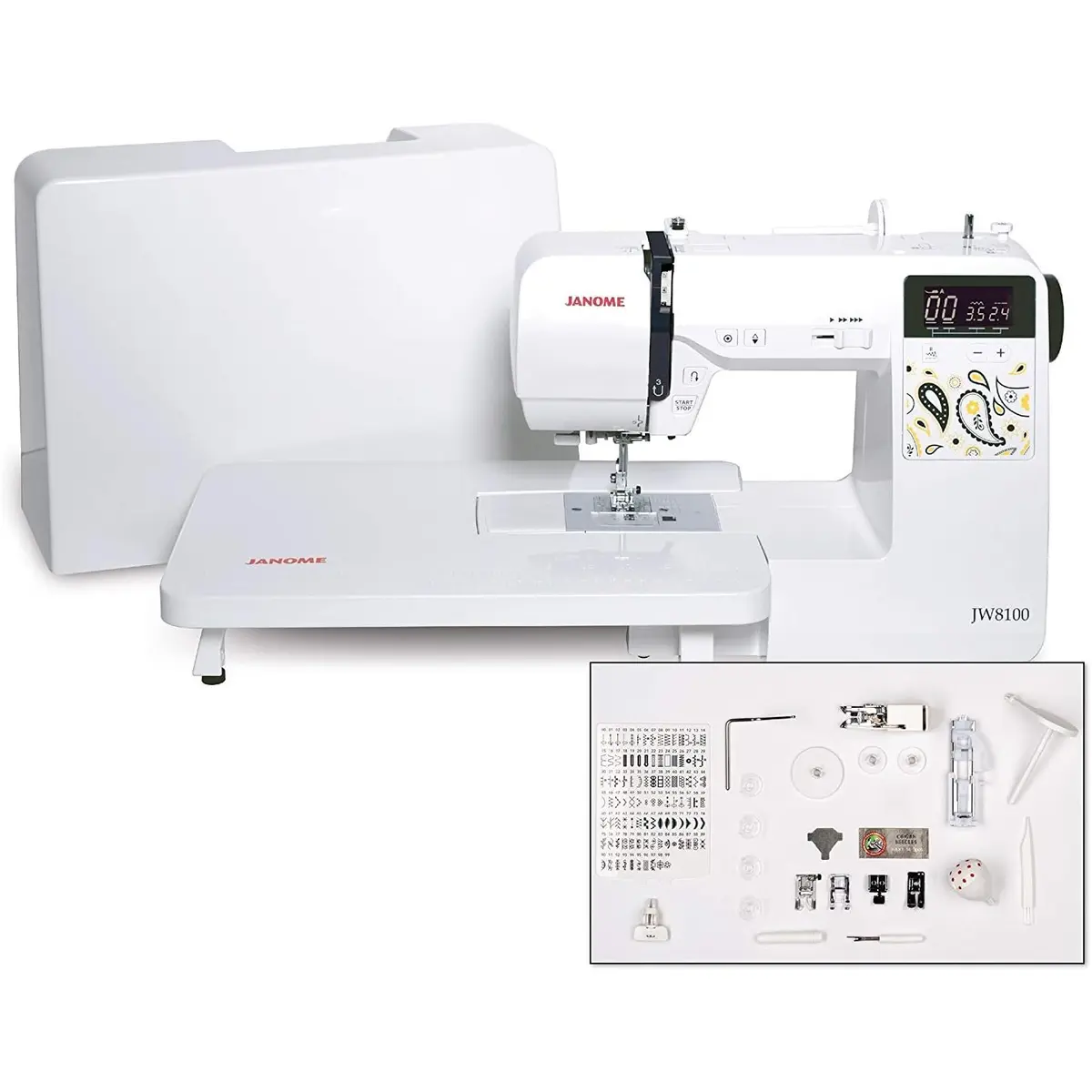 | Janome JW8100 Computerised value | Portable computerised | Check price |
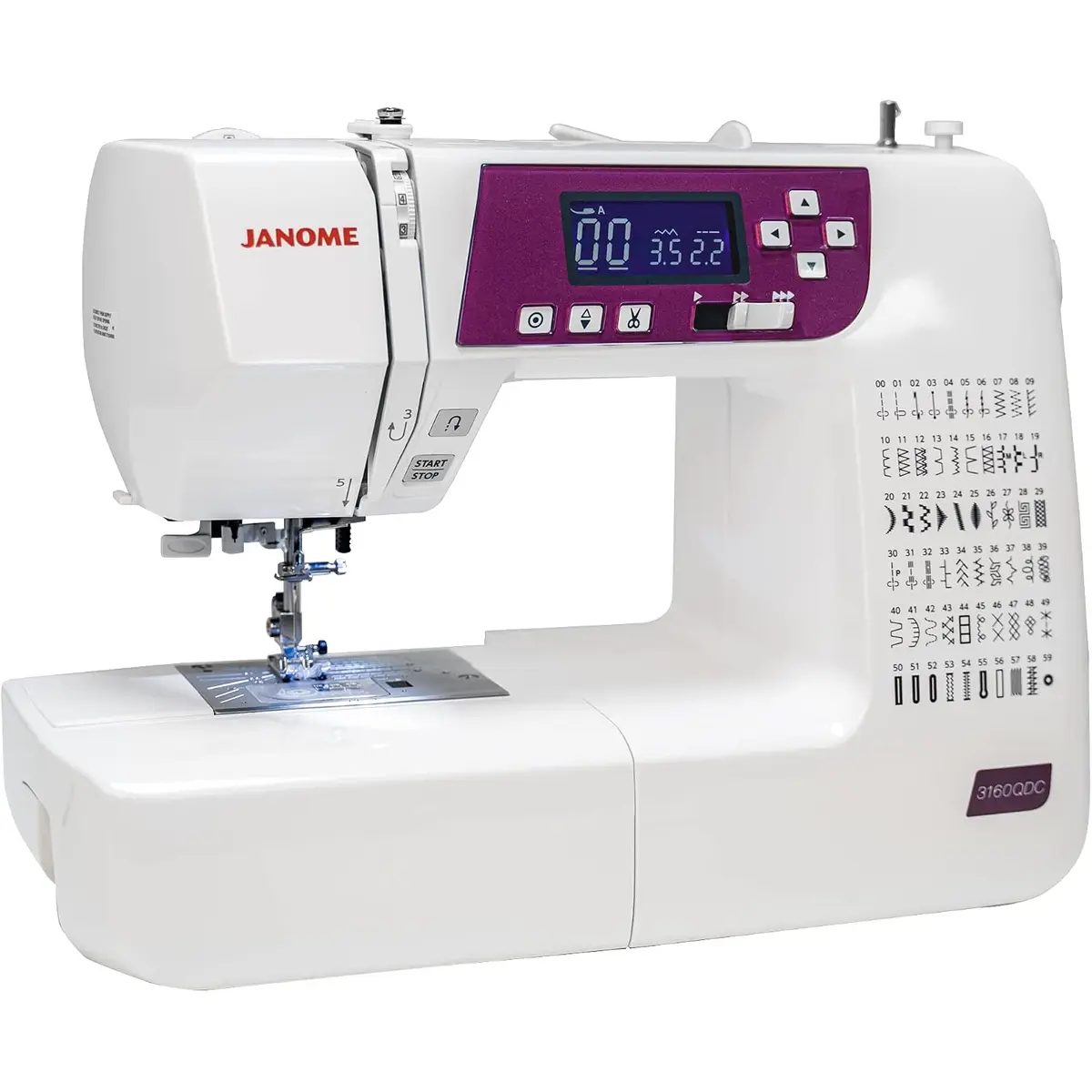 | Janome 3160QDC-G Classes and retreats | Lightweight sewing and quilting | Check price |
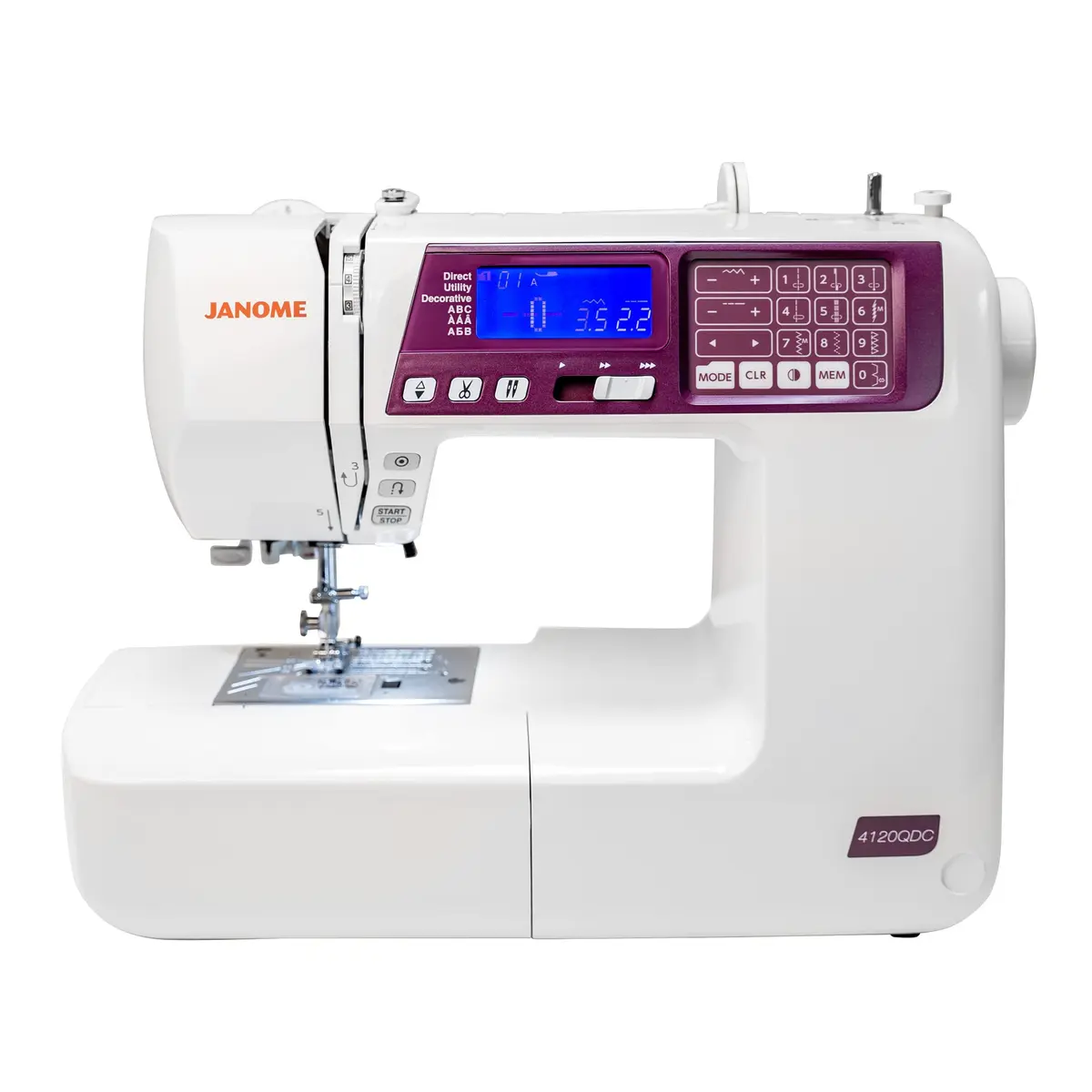 | Janome 4120QDC-G Mixed garments and quilting | Advanced domestic computerised | Check price |
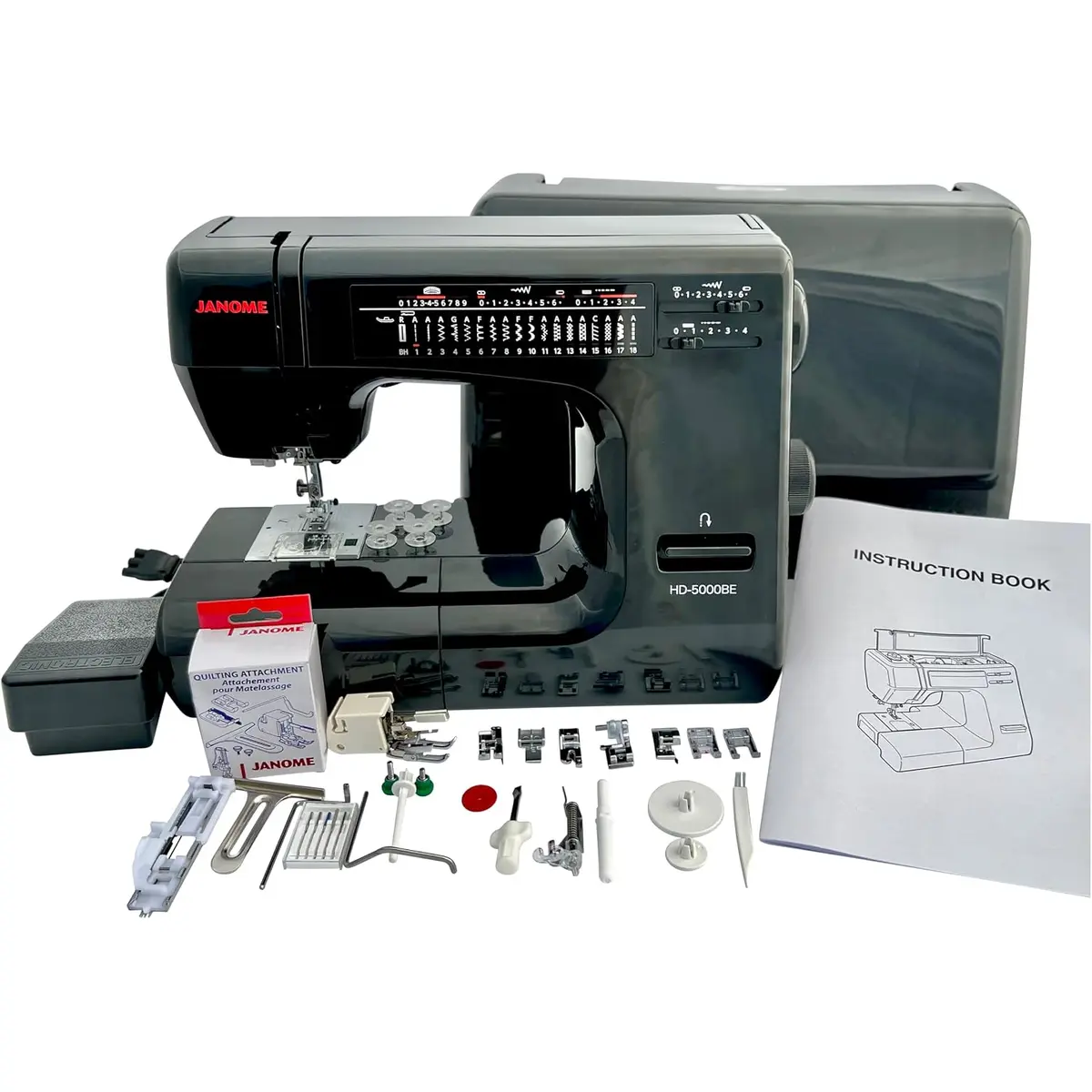 | Janome HD5000 Black Edition Premium mechanical use | Robust mechanical | Check price |
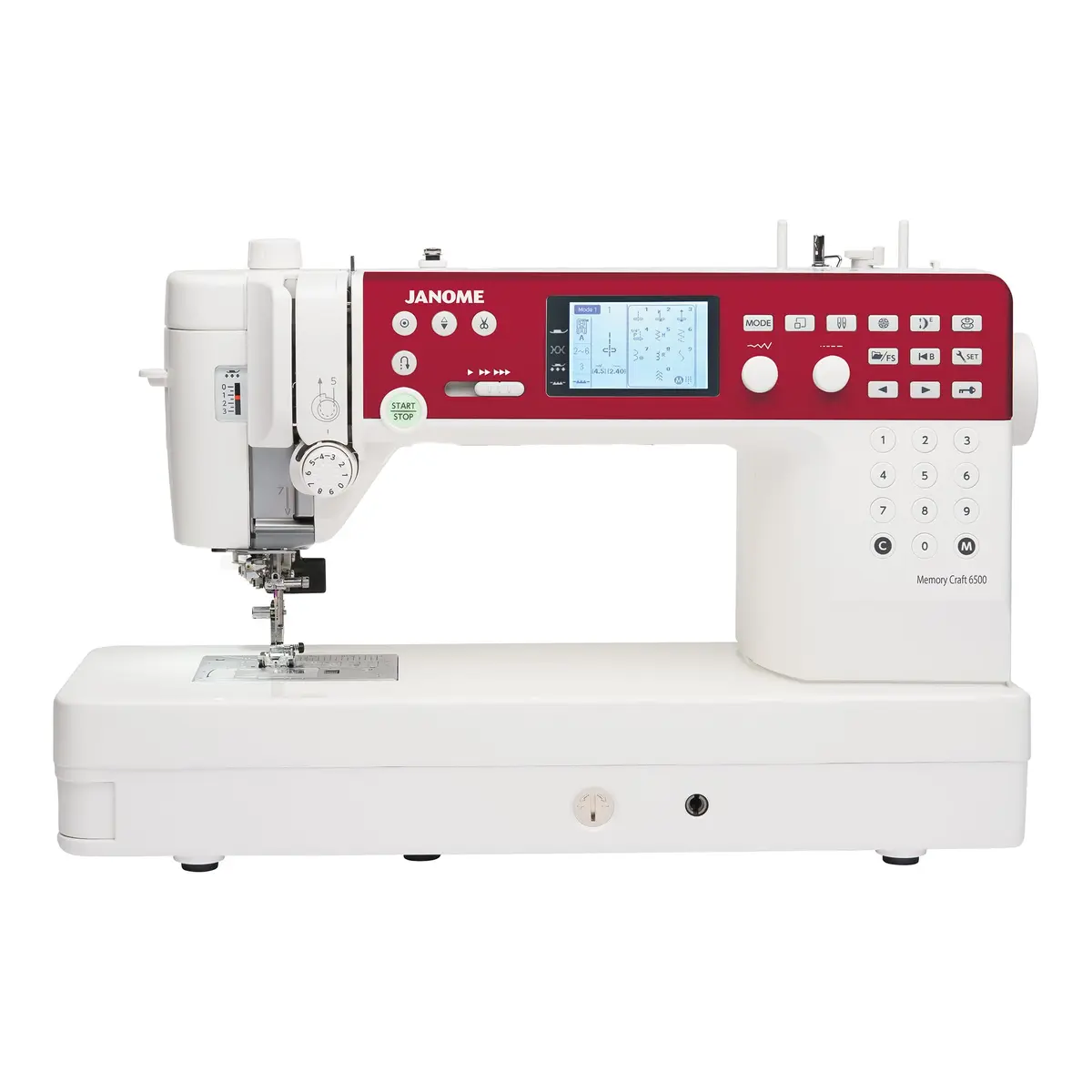 | Janome MC6650 Serious sewing-room work | Large flatbed computerised | Check price |
Detailed recommendations
Janome 2212 Mechanical Sewing Machine
Recommended for its specific use case
Best for: Beginners who want simple mechanical controls at a lower starting cost
The Janome 2212 is the most straightforward machine in this shortlist. Its 12 stitches cover the core functions a beginner actually needs, while manual dials make the relationship between stitch selection, length and width visible. There is no screen, stitch menu or collection of decorative options competing for attention.
That simplicity makes it useful for learning basic seams, zigzag finishing, simple hems, buttonholes and small household projects. The free arm helps with cuffs and trouser legs, and the machine provides adjustable stitch length and width rather than locking the user into preset choices.
The 2212 is not effortless in every respect. It uses a front-loading bobbin, which takes more practice than a top-loading system, and its buttonhole is completed in four steps rather than one automatic cycle. It also lacks a needle threader, speed slider and start-stop button. A beginner who values electronic speed control may be happier with the JW8100.
Choose the 2212 if you want to understand mechanical sewing controls and do not need advanced automation. It is a learning machine with room for useful everyday work, not a feature-rich long-term platform for ambitious quilting or heavy production.
Janome HD3000 Heavy-Duty Mechanical Sewing Machine
Recommended for its specific use case
Best for: Garment and home-decor sewists wanting a sturdy mechanical all-rounder
The HD3000 is often described only as a heavy-duty machine, but its more important strength is balanced domestic versatility. Its aluminium internal frame provides a planted feel, while adjustable presser-foot pressure helps the machine adapt to different fabrics more effectively than models that offer only a strong motor and aggressive feed.
The extra-high presser-foot lift creates room when positioning bulky seams, and the top-loading bobbin is easier to monitor than the 2212's front-loading system. A hard cover is useful for storage, and the mechanical controls appeal to sewists who prefer direct adjustment over screens and menus.
For garment making, adjustable foot pressure matters when moving between lighter woven fabrics, stable knits and thicker layers. For home decor, the sturdy body and lift are helpful with curtain hems, cushions and controlled layers of appropriate upholstery-weight fabric.
The HD3000 remains a domestic sewing machine. It should not be bought as a substitute for an industrial walking-foot machine, and “heavy duty” does not mean it can sew unlimited layers of dense leather. Needle choice, thread, seam thickness and changes in layer height still determine what it can handle safely.
Its 18 stitches and mechanical buttonhole can feel limited relative to its price. Buyers paying for it should value construction, control and longevity more than decorative stitch count.
Janome JW8100 Computerized Sewing Machine
Recommended for its specific use case
Best for: Home sewists wanting computerised convenience, accessories and strong overall value
The JW8100 is the practical step into computerised Janome sewing. It combines 100 stitches with a start-stop button, speed control, a seven-piece feed system, an extension table and a hard cover. That package suits someone who wants helpful automation without moving into a much larger or more expensive sewing-room machine.
Speed control is particularly useful for beginners who find foot-pedal control difficult and for experienced sewists working through detailed curves. The start-stop function permits pedal-free sewing, while the extension table supports larger garment sections and modest quilting projects.
The seven-piece feed system gives fabric more consistent contact than very basic feed arrangements. That does not turn the JW8100 into a heavy-duty machine, but it makes it a credible general-purpose option for clothing, crafts, alterations and occasional quilting.
Most owners will not use all 100 stitches. The meaningful value lies in controllable speed, convenient operation and the included working setup rather than the headline stitch number. The machine is also lighter and less planted than the HD and Memory Craft models. If frequent thick seams are the main task, the HD3000 or HD5000 is a better direction. If workspace and sustained speed matter, consider the MC6650.
Janome 3160QDC-G Sewing and Quilting Machine
Recommended for its specific use case
Best for: Sewists who need a capable machine for classes, groups or retreats
The 3160QDC-G earns its place because portability is a real buying need. A large flatbed machine may be more stable and spacious, but it becomes inconvenient when the user regularly attends quilting classes, workshops or sewing groups. This model retains useful features while remaining comparatively manageable to transport.
An automatic thread cutter, needle up-down control and speed slider reduce repetitive hand movements. Drop feed allows free-motion work, and the quilting-oriented accessory package makes it easier to begin common quilting tasks without immediately buying every additional foot.
Needle up-down is useful beyond quilting. It keeps the needle in the fabric while pivoting corners or following curves, and it helps maintain control during topstitching. The thread cutter is also valuable during piecing or repeated construction steps.
The tradeoff is physical scale. Its workspace is smaller than the MC6650's flatbed, and its lighter body is less planted during very fast sewing or when a bulky quilt pulls against it. It is best for someone who genuinely values mobility. If the machine will stay on one table and handle large projects frequently, a larger platform may justify its weight and price.
Janome 4120QDC-G Computerized Sewing and Quilting Machine
Recommended for its specific use case
Best for: Intermediate garment makers and quilters wanting more control in one domestic machine
The 4120QDC-G is a balanced mixed-use choice. Adjustable presser-foot pressure and a seven-piece feed system support garment work, while the extension table, drop feed and quilting functions accommodate piecing and manageable quilting projects. A thread cutter, stitch memory and alphabet add convenience for users moving beyond basic construction.
Adjustable foot pressure is one of its more important features. It helps control how firmly the presser foot holds the fabric, which can reduce distortion on some lighter or stretchier materials and improve feeding when used correctly. This makes the 4120QDC-G more relevant to garment makers than a model selected only for decorative stitches.
Stitch memory and the alphabet are useful for repeated combinations, simple labels and personalisation, but they should not be mistaken for embroidery capability. This is a sewing and quilting machine, not a hoop embroidery machine.
The domestic-sized throat limits how comfortably a large quilt can be manoeuvred. An extension table supports the fabric but does not create more space to the right of the needle. Buyers whose main goal is quilting large projects should compare a wider flatbed such as the MC6650 or a more specialised quilting platform.
For a sewist alternating between clothing, crafts, piecing and smaller quilts, the 4120QDC-G offers a more complete control set than entry-level computerised models without requiring the permanent space of the MC6650.
Janome HD5000 Black Edition Mechanical Sewing Machine
Recommended for its specific use case
Best for: Frequent users wanting a premium robust mechanical machine with a one-step buttonhole
The HD5000 Black Edition is for the buyer who actively prefers mechanical control but does not want a basic machine. Its die-cast aluminium body, adjustable presser-foot pressure, seven included feet and one-step buttonhole make it better equipped for frequent garment, denim and home-decor work than an entry mechanical model.
The one-step buttonhole is a meaningful distinction from simpler mechanical machines because it reduces manual sequencing and helps produce more consistent repeated buttonholes. Adjustable pressure expands fabric control, and the solid body helps the machine remain stable during regular use.
This is not necessarily the best value for a buyer attracted by electronic convenience. A computerised Janome at a similar level may offer speed control, needle positioning, automated cutting and a much larger stitch library. The HD5000's value depends on wanting tactile controls, sturdy construction and a simpler operating system.
It is also not an industrial or compound-feed machine. It can manage appropriate denim seams and many domestic heavy-fabric tasks with the correct needle, thread and technique, but it cannot reliably sew every thickness of leather, webbing or upholstery. Calling it heavy duty should never erase those domestic limits.
Janome MC6650 Sewing and Quilting Machine
Recommended for its specific use case
Best for: Serious sewists and quilters who need speed and a wide, stable work area
The MC6650 is the most substantial machine in this shortlist. Its ten-inch all-metal flatbed provides more space for large garment pieces and quilt sections, while a maximum speed of up to 1,000 stitches per minute supports sustained work. An independent bobbin winder and one-push needle-plate conversion are designed for people who sew often enough to value a more efficient workflow.
The flatbed construction creates a broad, stable surface around the needle. This is helpful for precise topstitching, piecing, bags, larger garments and quilting. The machine's weight also works in its favour when speed increases or a project pulls from several directions.
The straight-stitch needle plate supports more controlled straight stitching on suitable fabrics by reducing the opening around the needle. Quick conversion is useful when alternating between construction and techniques that require wider needle movement.
The MC6650 is heavy, expensive and lacks a free arm. It is not a convenient class machine and may be frustrating for someone who regularly sews narrow tubular items using a free arm. It makes the most sense as a dedicated sewing-room machine for an experienced user who will take advantage of the speed, surface and workflow features.
Best Janome Sewing Machines: Seven Models for Different Types of Sewist
The best Janome sewing machine is not one universal model. Janome makes basic mechanical machines, portable computerised models, sturdy domestic heavy-duty machines and larger sewing-and-quilting platforms. Those machines solve different problems, so ranking them as though they were interchangeable would not help a buyer choose well.
This guide works as a Janome range navigator. Each shortlisted model has a distinct job: learning core controls, handling frequent garment and home-decor work, offering computerised convenience at a moderate level, travelling to classes, supporting mixed garment and quilting projects, providing a robust premium mechanical experience, or delivering the speed and workspace serious sewists need.
If you already know that you specifically need an industrial machine, embroidery-only machine or true longarm quilting system, this is not the right shortlist. The models below are domestic Janome sewing machines selected for clearly different home-sewing roles.
How to choose between these Janome machines
Start with machine class, not stitch count
The first decision is whether you want mechanical or computerised operation. Mechanical models use direct dials and generally keep the operating system simple. Computerised models can add speed control, programmable needle position, automated cutting, stitch memory and start-stop sewing.
A large stitch library does not automatically make a machine better. Most construction depends on a small number of stitches. Convenience, feed quality, pressure adjustment, workspace and the correct machine class usually matter more.
Decide whether portability is a real requirement
The 3160QDC-G is valuable because it combines useful controls with a body that is easier to carry. The MC6650 is valuable for the opposite reason: it is a large, planted flatbed designed to stay in a sewing space.
Do not pay for a travel-friendly compromise if the machine will never leave its table. Likewise, do not buy a large platform if lifting, storage or class attendance will make it difficult to use.
Separate domestic heavy duty from industrial work
The HD3000 and HD5000 are robust domestic machines. They can be good choices for garments, denim, bags and home-decor projects within domestic limits. They do not have the feeding mechanism, table, motor system or duty cycle of an industrial machine.
For thick leather, dense upholstery assemblies or continuous production, choose equipment intended for that work rather than pushing a domestic Janome beyond its design.
Consider feed control and presser-foot pressure
Feed quality affects seam consistency, layer alignment and how fabric behaves before and behind the needle. Adjustable presser-foot pressure is particularly useful for sewists who move between fabrics with different thickness, texture and stretch.
It is not a universal correction for every feeding problem, but it gives the user another meaningful control. The HD3000, 4120QDC-G and HD5000 stand out when this flexibility matters.
Match workspace to the project
An extension table supports fabric outside the machine, but it does not increase throat space. Quilters and bag makers should consider how much room exists to the right of the needle, not only the total table width.
The MC6650 provides the largest working platform here. The 3160QDC-G and 4120QDC-G suit users who want quilting functions in a more conventional domestic body.
Janome 2212 vs JW8100: which is better for a beginner?
Choose the 2212 if learning mechanical control is part of the goal. Its limited stitch set and manual dials keep the process visible, and it avoids dependence on screens or electronic selection.
Choose the JW8100 if controlled speed and operational convenience matter more. A speed slider can make early practice less intimidating, and start-stop sewing helps users who struggle with a foot pedal. Its extension table and accessories also give it more room to grow.
Neither choice is automatically better. The 2212 teaches a simple mechanical workflow; the JW8100 makes speed and stitch selection easier while offering broader functionality.
Janome HD3000 vs HD5000
Both machines appeal to sewists who want sturdy mechanical construction. The HD3000 is the more established practical all-rounder with 18 stitches, adjustable pressure, extra-high lift and a top-loading bobbin.
The HD5000 is the more premium mechanical option. Its one-step buttonhole and included feet make it more convenient for frequent garment work, while the die-cast body supports a solid sewing experience.
Choose based on features you will actually use and current price, not the larger model number. Neither machine should be selected for industrial leather or upholstery production.
Janome 3160QDC-G vs 4120QDC-G
The 3160QDC-G is the better fit when portability is central. It keeps thread cutting, needle up-down, speed control, drop feed and quilting accessories in a class-friendly machine.
The 4120QDC-G is better for a mixed garment-and-quilting user who wants adjustable pressure, stitch memory, alphabet options and a broader long-term control set. Its value is not simply more stitches; it provides a more rounded domestic workspace for varied projects.
If both machines would remain at home, the 4120QDC-G is usually the more capable direction. If the machine travels often, the 3160QDC-G's balance of weight and features may matter more.
Who should buy the MC6650?
The MC6650 is appropriate for someone who sews frequently, has a permanent work area and needs more flat space and speed than a standard portable machine provides. Garment makers, quilters and bag makers can all benefit from the stable surface and efficient controls.
It is excessive for a beginner who is still unsure whether sewing will become a regular activity. It is also inconvenient for anyone who must pack away the machine after every session or depends on a free arm.
What Janome does well across these models
Janome's useful strength is not a single signature feature. The range gives buyers clear steps from direct mechanical machines to refined domestic computerised platforms. Several models prioritise fabric control and practical construction rather than decorative novelty.
The brand also maintains meaningful differences between portable machines, robust mechanical bodies and wide flatbeds. That makes it possible to choose for workflow rather than assuming the most expensive machine is automatically the best.
Model availability, included accessories and warranty arrangements can vary by seller and region. Confirm the exact model suffix, package contents and authorised service conditions before purchasing.
Common buying mistakes
Buying the model with the most stitches
Stitch count is easy to compare but often less important than speed control, pressure adjustment, feed quality, workspace and the correct machine class.
Treating every Janome as equally portable
The MC6650 and HD models are intentionally more substantial. Their stability becomes a disadvantage if the machine must be carried or stored frequently.
Assuming “heavy duty” means industrial
Domestic heavy-duty machines remain domestic. Project thickness, seam density, material type and duty cycle still matter.
Paying for quilting features without checking throat space
Drop feed and an extension table are useful, but large quilts also require room to the right of the needle.
Ignoring local service
A machine is a long-term tool. Dealer support, warranty coverage, servicing access and replacement parts can matter more than a small difference in features.
Final verdict
The Janome 2212 is the clearest choice for a beginner who wants mechanical simplicity. The JW8100 is better for someone who wants electronic speed control, accessories and a computerised machine that can support varied home projects.
The HD3000 is the strongest general mechanical all-rounder in this group, while the HD5000 Black Edition suits a frequent user prepared to pay more for a premium mechanical setup and one-step buttonhole.
Choose the 3160QDC-G when classes and portability matter. Choose the 4120QDC-G for a more rounded garment-and-quilting feature set in a domestic body. Choose the MC6650 when sewing is already a serious, frequent activity and a permanent wide flatbed will improve the workflow.
The right Janome is the machine whose class, controls and physical format match how you sew. A modest machine chosen for the correct job will be more useful than a higher-ranked model whose weight, workspace or operating system does not suit you.
Frequently asked questions
Are Janome sewing machines good for beginners?
Yes. The 2212 offers simple mechanical learning, while the JW8100 adds speed control and computerised convenience. The better choice depends on whether the beginner prefers direct dials or electronic assistance.
Which Janome machine is best for heavy fabrics?
The HD3000 and HD5000 are the most relevant domestic options in this shortlist. They are suitable for appropriate garment, denim and home-decor work, but neither replaces an industrial walking-foot machine for very thick leather or upholstery.
Which Janome is best for quilting?
The 3160QDC-G is suitable for classes and portable quilting, the 4120QDC-G balances garments with quilting, and the MC6650 provides the most workspace and speed for serious sewing-room use. Quilt size and portability should guide the choice.
Is a mechanical Janome better than a computerised one?
Not universally. Mechanical models offer direct controls and simpler operation. Computerised machines add conveniences such as speed sliders, needle positioning, thread cutting and stitch memory. Choose the control system you will use confidently.
Is the Janome HD3000 an industrial machine?
No. It is a sturdy domestic mechanical machine. It does not have the motor, feed system, table or continuous-duty design of an industrial machine.
What is the difference between the Janome 3160QDC-G and 4120QDC-G?
The 3160QDC-G prioritises a relatively portable sewing-and-quilting setup. The 4120QDC-G provides a broader mixed-use feature set, including adjustable foot pressure, stitch memory and alphabet functions.
Does the Janome MC6650 have a free arm?
No. It uses a large flatbed design. That workspace is useful for sustained sewing and quilting but less convenient for narrow tubular items commonly sewn with a free arm.
Should I buy a Janome online or from a dealer?
Compare the exact model, included accessories, seller authorisation, warranty coverage, return terms and access to local service. A reputable dealer can be valuable when setup lessons and long-term support matter.