
Affiliate disclosure: This page contains Amazon affiliate links. If you buy through them, we may earn a commission at no extra cost to you. Products are shortlisted for use-case fit, not commission or review volume. Availability, bundles, and warranty coverage can change.
How we chose these embroidery machines
This is a research-based comparison, not a claim that every machine was personally tested. Each model had to represent a genuinely different buyer situation. We prioritized maximum embroidery field, single- versus multi-needle workflow, flatbed versus tubular construction, design transfer, trimming and positioning tools, learning resources, repair access, and the amount of operator involvement required.
Specifications were checked against manufacturer information and current listings on July 22, 2026. Before purchasing, confirm the exact model, seller, included hoops or cap system, warranty, training, return terms, and service arrangements.
Embroidery machines compared
| Product image | Machine and best fit | Type | Current price |
|---|---|---|---|
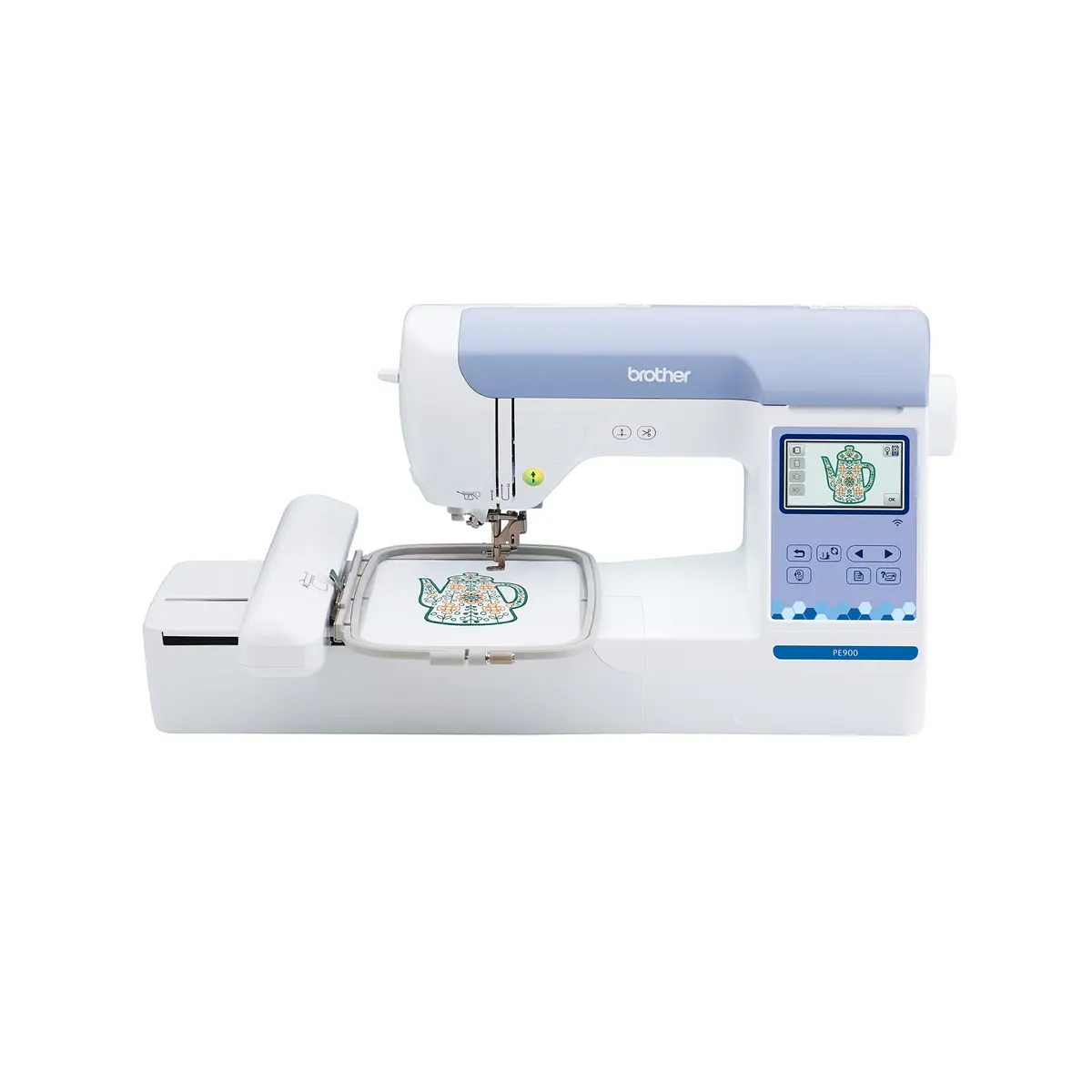 | Brother PE900 Home personalization, gifts, appliqué, and regular 5 × 7 projects | Single-needle flatbed | Check price |
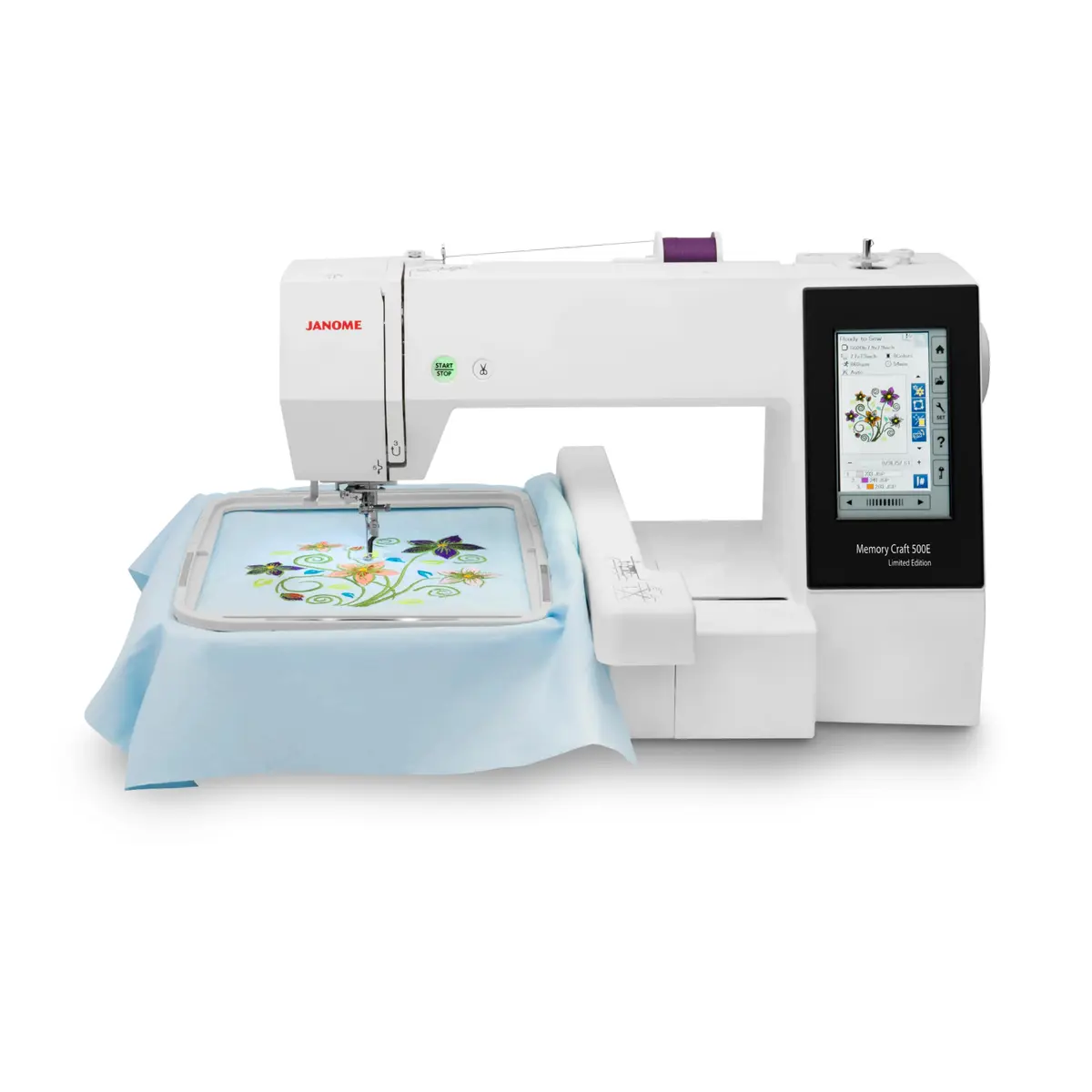 | Janome Memory Craft 500E LE Large motifs, quilting designs, home décor, and buyers who value dealer support | Single-needle flatbed | Check price |
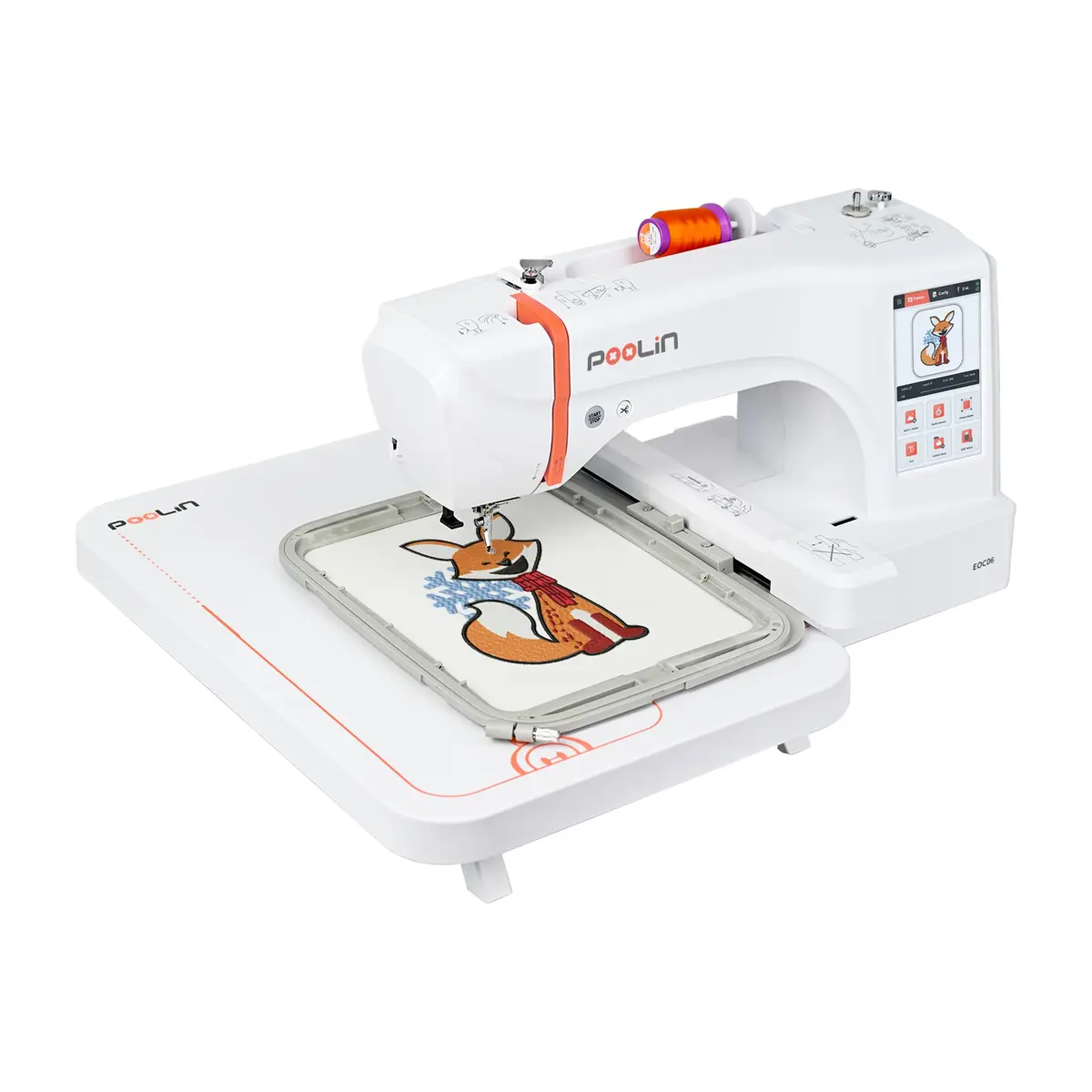 | PooLin EOC06 Budget-conscious buyers who want a 7.9 × 11 field and can use remote support | Single-needle flatbed | Check price |
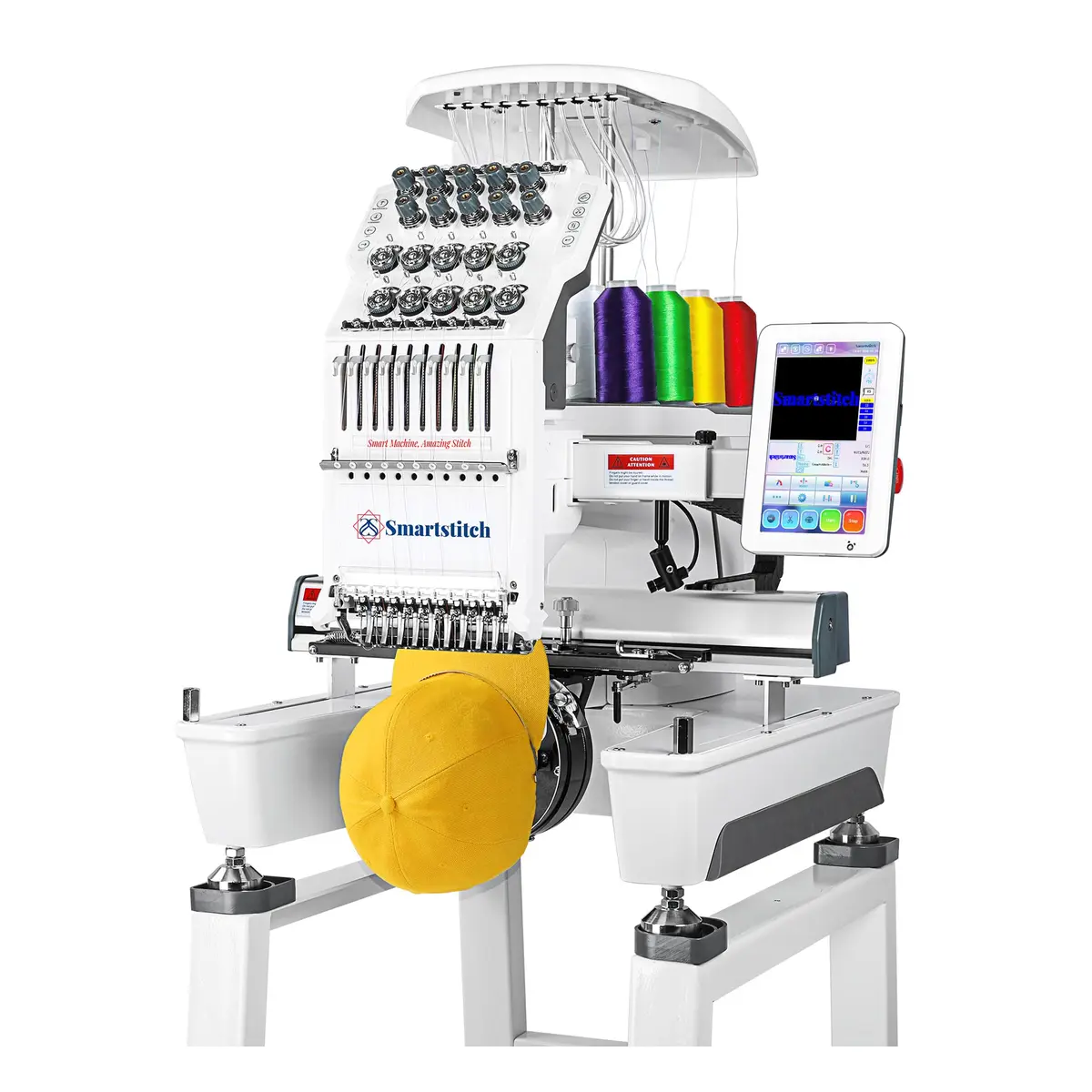 | Smartstitch S-1001 Small-batch garments and hats where automatic color changes save labor | Ten-needle tubular commercial | Check price |
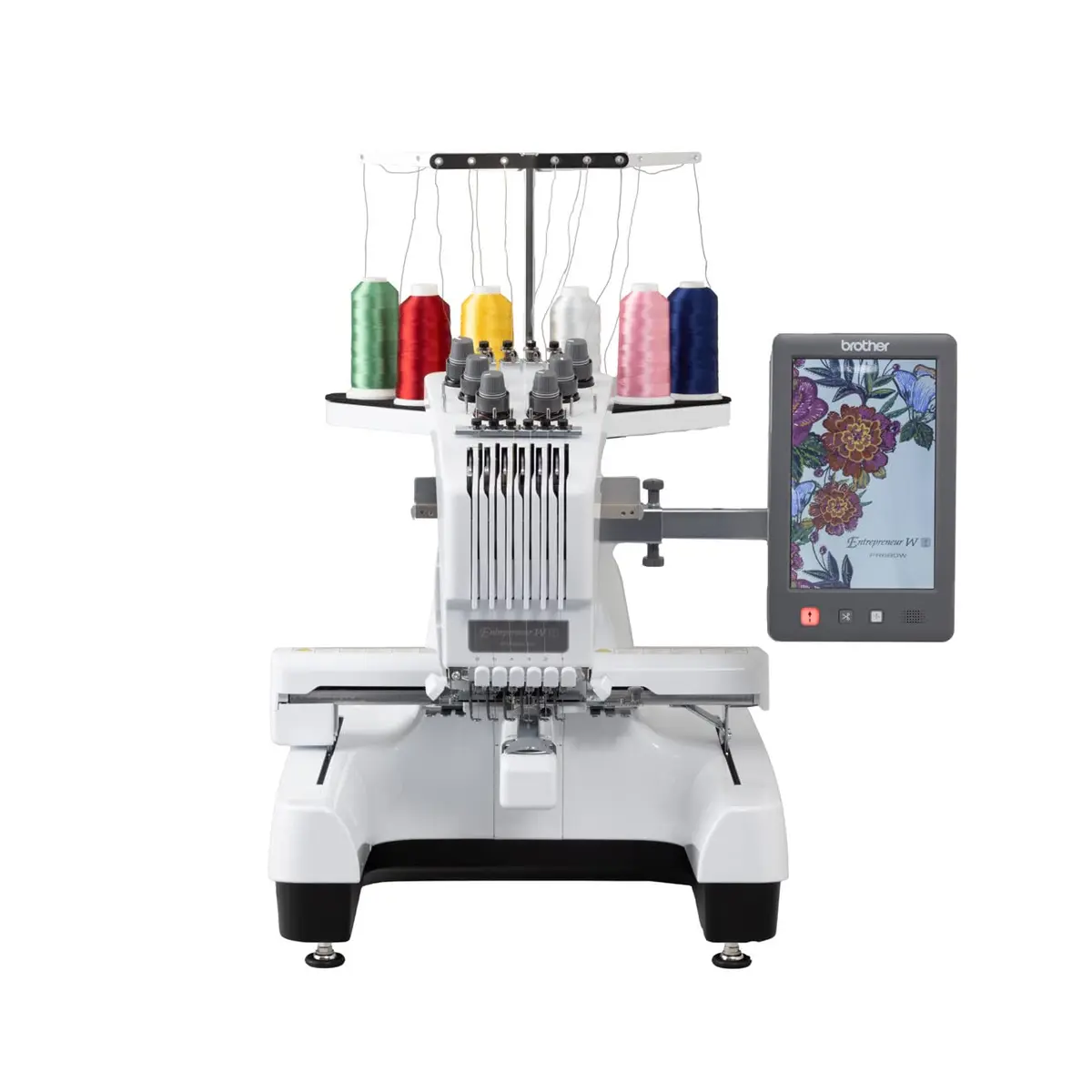 | Brother Entrepreneur PR680W Repeat multicolor orders where established dealer and service support matter | Six-needle tubular commercial | Check price |
Maximum speed is not normal speed for every design. Dense fills, caps, delicate fabric, metallic thread, and poor digitizing may require slower operation.
The best embroidery machines by use
This is not a simple one-to-five ranking. A well-matched home machine can be a better purchase than a commercial model, while a multi-needle machine becomes valuable only when automatic color changes and tubular access solve real production problems.
Brother PE900
Best embroidery machine for most home users
Why it makes the shortlist
Its 5 × 7 field is a useful middle ground for home embroidery, while wireless transfer, on-screen editing, Color Sort, and automatic jump-stitch trimming reduce everyday friction. It is easier to accommodate than the larger machines here and has a broad learning and support ecosystem.
Main limitation: It is embroidery-only and single needle. Every color change still needs operator attention, and designs larger than 5 × 7 require splitting or rehooping.
Skip it if: You regularly need fields larger than 5 × 7, structured caps, finished tubular items, or automated multicolor production.
Janome Memory Craft 500E LE
Best premium large-field home embroidery machine
Why it makes the shortlist
The 7.9 × 11 field gives home embroiderers far more room than a 5 × 7 machine without moving to a commercial multi-needle platform. Four standard hoops, detailed on-screen editing, programmable jump-thread trimming, and Janome dealer support make it a strong long-term home setup.
Main limitation: It is expensive, wide, and embroidery-only. Design transfer is via USB rather than the wireless workflow offered by some newer machines.
Skip it if: Most of your work fits 4 × 4 or 5 × 7, or you need a compact machine that can be stored after each session.
PooLin EOC06
Best value-focused large-field home option
Why it makes the shortlist
It brings an unusually large embroidery field, multiple included hoops, a large screen, and modern file transfer into a lower price tier. That can be compelling when field size matters more than brand familiarity.
Main limitation: Local service, parts availability, resale value, documentation, and third-party training are less established than Brother or Janome. The buyer must be comfortable learning through online resources and working with remote support.
Skip it if: You want a mature dealer network, easy local repairs, or the lowest-risk ownership experience.
Smartstitch S-1001
Best compact ten-needle step into commercial work
Why it makes the shortlist
Ten needles, automatic color changes, a tubular arm, cap capability, and a 9.5 × 14.2 field change the workflow more than a simple speed upgrade. It can reduce operator intervention on repeat multicolor orders while remaining smaller than many full-size commercial machines.
Main limitation: It needs training, stable floor space, routine maintenance, and comfort with remote technical support. Local repair coverage may be limited, and the advertised maximum speed will not suit every design or garment.
Skip it if: You are still learning basic embroidery, have no repeat orders, or need nearby dealer-led installation and service.
Brother Entrepreneur PR680W
Best supported multi-needle option for a growing business
Why it makes the shortlist
Six needles automate many color changes, while the tubular arm, crosshair positioning, 8 × 12 field, wireless transfer, and Brother dealer network make the transition to paid production more manageable for many owners.
Main limitation: It costs substantially more per needle than some imported ten- or fifteen-needle machines. Cap frames, stand, training, warranty coverage, and bundle contents must be confirmed with the seller.
Skip it if: Your work is occasional, mostly single-color, or still fits comfortably on a home flatbed machine.
How to choose the right embroidery machine
Start with the products, not the machine
Write down the items you expect to embroider, their usable stitching area, and how many you expect to make. Flat towels, quilt blocks, and unassembled garment panels suit a flatbed machine. Finished sleeves, pockets, bags, and structured caps become easier on a tubular platform. A commercial-looking machine is not a shortcut around weak hooping or poor digitizing.
Choose the field size from real design files
A 5 × 7 field handles many monograms, appliqués, gifts, and medium motifs. Moving to 7.9 × 11 gives home users much more freedom for larger designs. Commercial machines add both field size and access, but they also demand permanent space. Check ten designs you would genuinely use and record their stitch dimensions before comparing machines.
Understand what additional needles change
Single-needle machines require a manual thread change whenever the design changes color. Multi-needle machines keep several colors loaded and switch automatically. That reduces operator time on repeat work, but it does not improve bad files, incorrect stabilizer, poor tension, or inaccurate placement.
Put service access into the purchase price
Support is part of the machine. Brother and Janome have more established dealer and learning ecosystems, while value-focused and imported commercial models may rely more heavily on video training, remote diagnostics, shipped parts, and owner maintenance. Neither route is automatically wrong, but the workload is different.
Keep overlapping guides separate
If you have already decided on the brand, our Brother embroidery machine comparison goes deeper into Brother-specific choices. This guide stays focused on cross-brand capability and workflow.
Budget beyond the embroidery machine
The machine is only one part of a reliable setup. Home users need suitable stabilizer, thread, bobbins, needles, hoops, and enough clearance for the moving carriage. A small business may also need a stand, cap system, hooping station, digitizing service or software, spare consumables, maintenance tools, training, and a plan for downtime.
Do not buy a large generic supply bundle simply because it looks economical. Start with the fabric and products you intend to use, then choose compatible stabilizer, needles, hooping aids, and thread. That produces a more useful kit and makes troubleshooting easier.
Our practical verdict
For most home users, the Brother PE900 offers the clearest balance of capability, learning curve, support, and size. The Janome Memory Craft 500E LE is the stronger premium home choice when its 7.9 × 11 field will be used regularly. The PooLin EOC06 offers unusual field size for the money, but asks the owner to accept a less established support ecosystem.
For business use, the decision is not simply ten needles versus six. The Smartstitch S-1001 offers more loaded colors and a larger field at a competitive entry point, while the Brother PR680W trades some needle count for a mature dealer, training, and service network. Choose based on the bottleneck you need to remove and the support model you can live with.
Frequently asked questions
What is the best embroidery machine for most beginners?
For a beginner who expects to keep embroidering, the Brother PE900 is the most balanced choice here. Its 5 × 7 field is more flexible than 4 × 4, but the machine is still approachable. A true first-time buyer should also budget for stabilizer, thread, needles, and practice fabric.
Is a multi-needle embroidery machine better than a single-needle machine?
It is better for repeat multicolor production because several thread colors stay loaded and the machine changes needles automatically. It is not automatically better for occasional home projects, where the extra cost, space, training, and maintenance may outweigh the time saved.
Can a home embroidery machine embroider hats?
Some unstructured caps can be flattened and carefully hooped on a home flatbed machine. Structured caps are much better matched to a tubular machine with a compatible cap driver and frame. Hat embroidery is also affected by digitizing, placement, speed, and needle choice.
Do I need embroidery digitizing software?
Not for stitching built-in designs or compatible purchased files. You do need digitizing software or a digitizing service when turning a logo or artwork into a stitch-ready file. Image conversion is not the same as proper digitizing.
How large an embroidery field should I buy?
Check the dimensions of the designs you genuinely plan to stitch. A 5 × 7 field covers many home projects, while 7.9 × 11 or larger reduces rehooping for bigger motifs. Buying the largest field is not useful if the machine becomes too expensive or too large to keep set up.