
Affiliate disclosure: We may earn from qualifying Amazon purchases at no extra cost to you. Products are selected for utility and reader fit, not ratings or commission.
The best computerized sewing machine is not necessarily the model with the largest stitch number on its box. Decorative stitch counts are easy to advertise, but they say very little about how confidently a machine starts at low speed, feeds a garment seam, places the needle at a corner, repeats a buttonhole, handles a large project, or lets the user recover from an incorrect setting.
Useful computerization should make sewing easier to control. A speed slider can limit the machine while the foot pedal remains fully usable. Needle up/down can make pivoting and appliqué more predictable. A start/stop button can help users who cannot or prefer not to use a pedal. A thread cutter can remove a repeated manual step. Sensor-controlled buttonholes can improve consistency. Clear stitch information can prevent the wrong foot or stitch width from sending the needle into metal.
Those features matter only when the machine also feeds well, forms a balanced stitch, accepts appropriate feet and accessories, and has service support. A screen does not strengthen the motor, create more room to the right of the needle, or turn a household machine into an industrial one.
This guide compares five approved models by the kind of control they provide. The Brother CS7000X is the budget entry point for beginners who want speed control, needle positioning, quilting accessories, and enough utility stitches to learn. The Brother HC1850 offers a wider mixed-craft feature set with basic monogramming. The JUKI HZL-F300 is the garment-focused choice for buyers who care more about feeding and buttonholes than a low price. The Janome 4120QDC-G is the portable intermediate option with a thread cutter and strong everyday controls. The Janome Memory Craft 6650 is the advanced flatbed choice for experienced users who need a large workspace and high-volume control.
No model is best for every sewist. The right choice depends on which controls will be used repeatedly, what projects must fit around the needle, whether the machine will travel, and how far the user expects to grow.
Which computerized machine should you choose?
Choose the Brother CS7000X if you are buying your first computerized machine on a controlled budget and want a speed slider, needle up/down, wide table, drop-feed capability, and a practical set of included feet. It provides a lot of learning room without requiring payment for advanced automation. Its lightweight body and modest feeding power are not intended for sustained thick-layer work.
Choose the Brother HC1850 if you want one affordable machine for garment alterations, crafts, quilt piecing, free-motion practice, and occasional basic lettering. Its broad stitch library is useful only if you genuinely plan to mix techniques. The built-in font is simple monogramming, not machine embroidery.
Choose the JUKI HZL-F300 if garment construction, feed consistency, buttonholes, fabric handling, and full-size stability matter more than buying the cheapest screen-equipped machine. Its 106 stitches and 16 sensor-controlled buttonholes support real sewing decisions, while the box-feed approach is more relevant than decorative count. Confirm whether the extension table is included in the exact offer.
Choose the Janome 4120QDC-G if you are an intermediate home sewist who wants speed control, start/stop, needle up/down, a thread cutter, stable seven-piece feeding, and a machine compact enough for classes or storage. It costs more than entry models, so it is difficult to justify if basic utility stitches already cover your work.
Choose the Janome Memory Craft 6650 if you regularly sew garments, quilts, bags, or home décor and need a 10-inch flatbed workspace, extensive needle positioning, a thread cutter, and a stable machine that can remain on a dedicated table. It is large and heavy, and its flatbed design has no free arm for narrow sleeves or trouser hems.
If you are still deciding whether electronic controls are right for you, compare them with the best mechanical sewing machines. A first-time buyer who needs broader help choosing a machine class should begin with the sewing machine for beginners guide. Project-led buyers can continue to the best sewing machines for quilting, best sewing machines for making clothes, and best sewing machines for professional dressmakers guides.
Quick comparison
Showing three products at a time. Scroll vertically to see the remaining models.
| Product image | Title and best fit | Type | Current price |
|---|---|---|---|
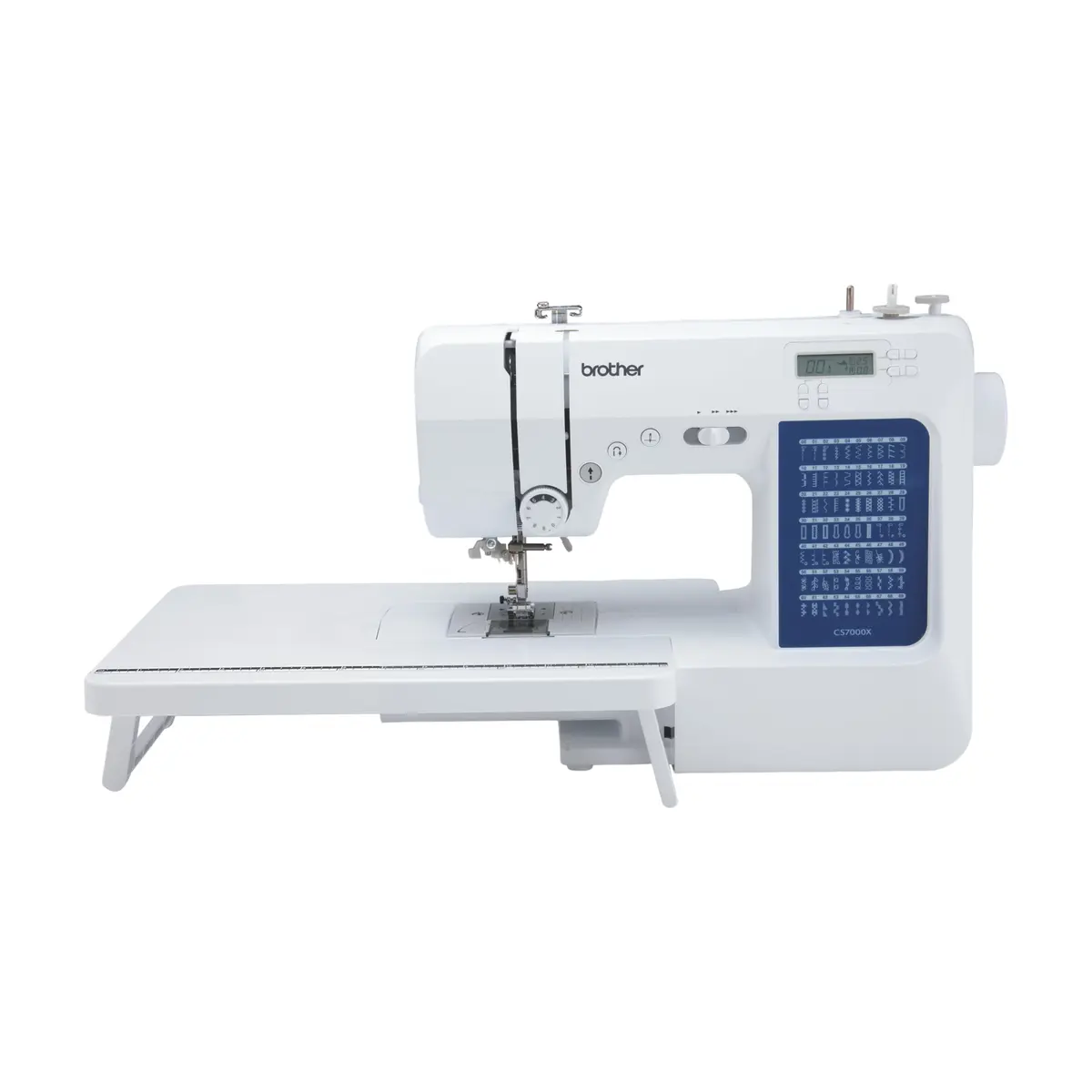 | Brother CS7000X Budget computerized sewing and first-time users | Speed slider, needle up/down, start/stop, 70 stitches | Check price |
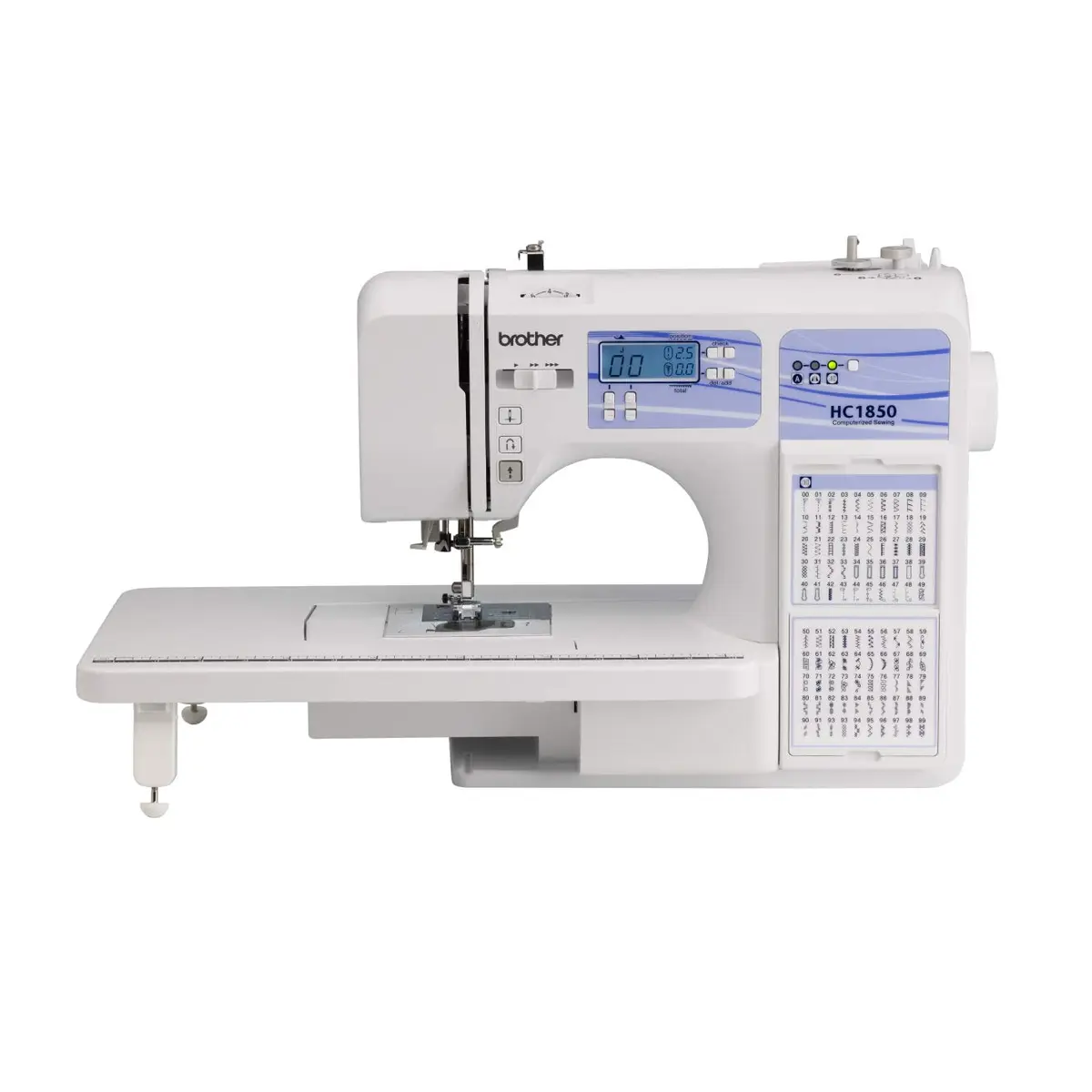 | Brother HC1850 Versatile sewing, quilting, crafts, and basic monogramming | Speed slider, needle up/down, start/stop, 185 stitches and font | Check price |
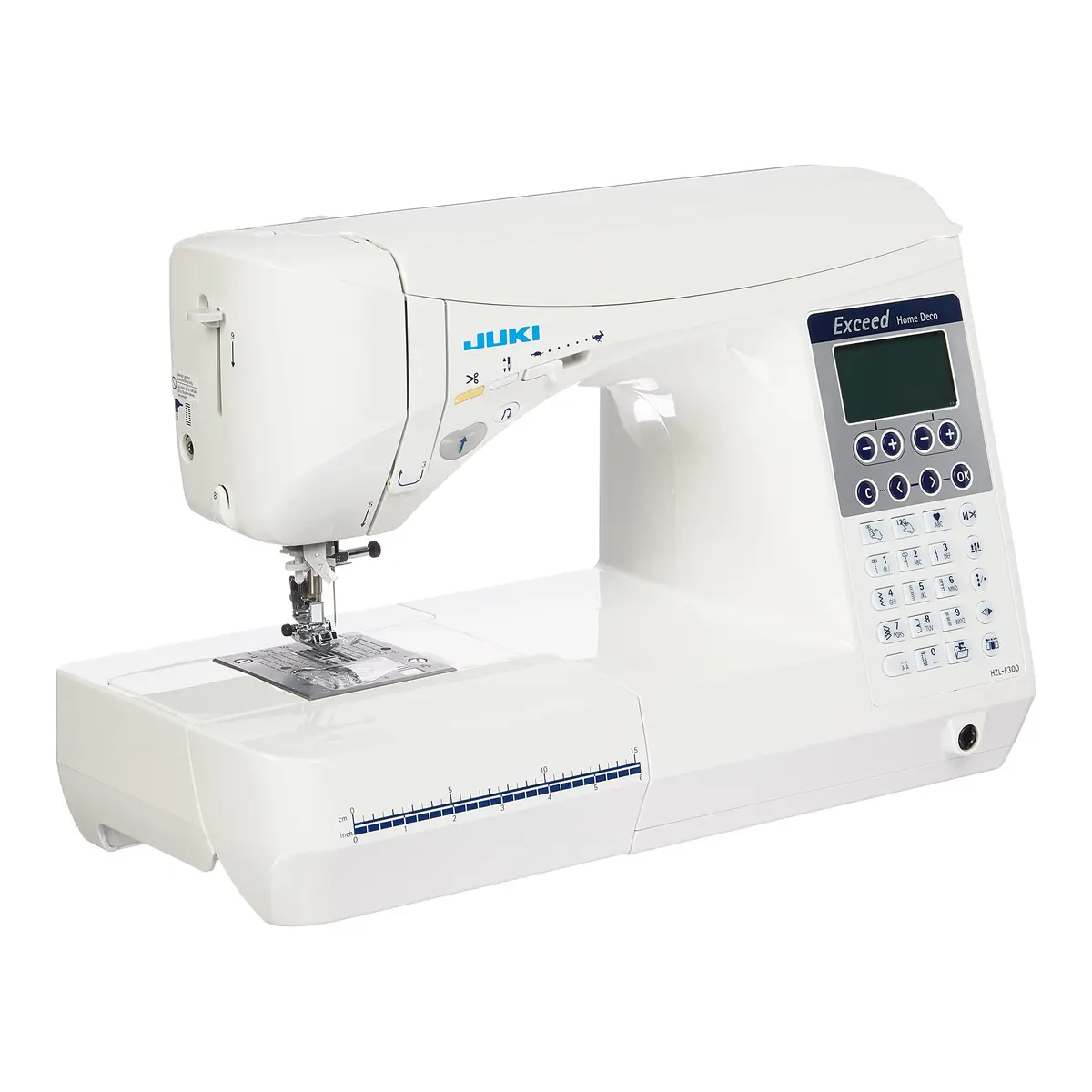 | JUKI HZL-F300 Garment construction, fabric feeding, and buttonholes | Direct controls, needle up/down, speed control, 106 stitches, 16 buttonholes | Check price |
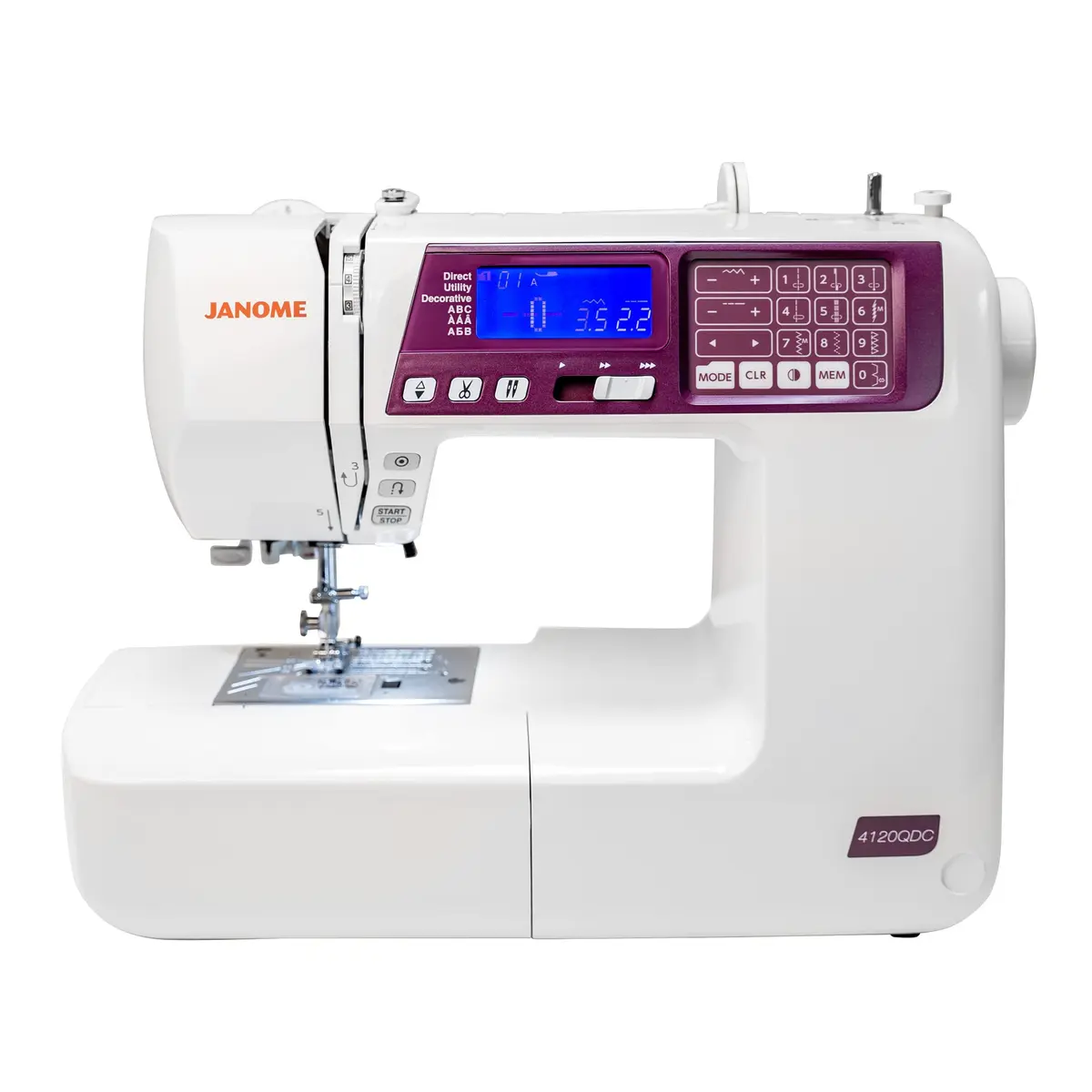 | Janome 4120QDC-G Portable intermediate sewing with strong automation | Speed slider, start/stop, needle up/down, thread cutter, 120 stitches | Check price |
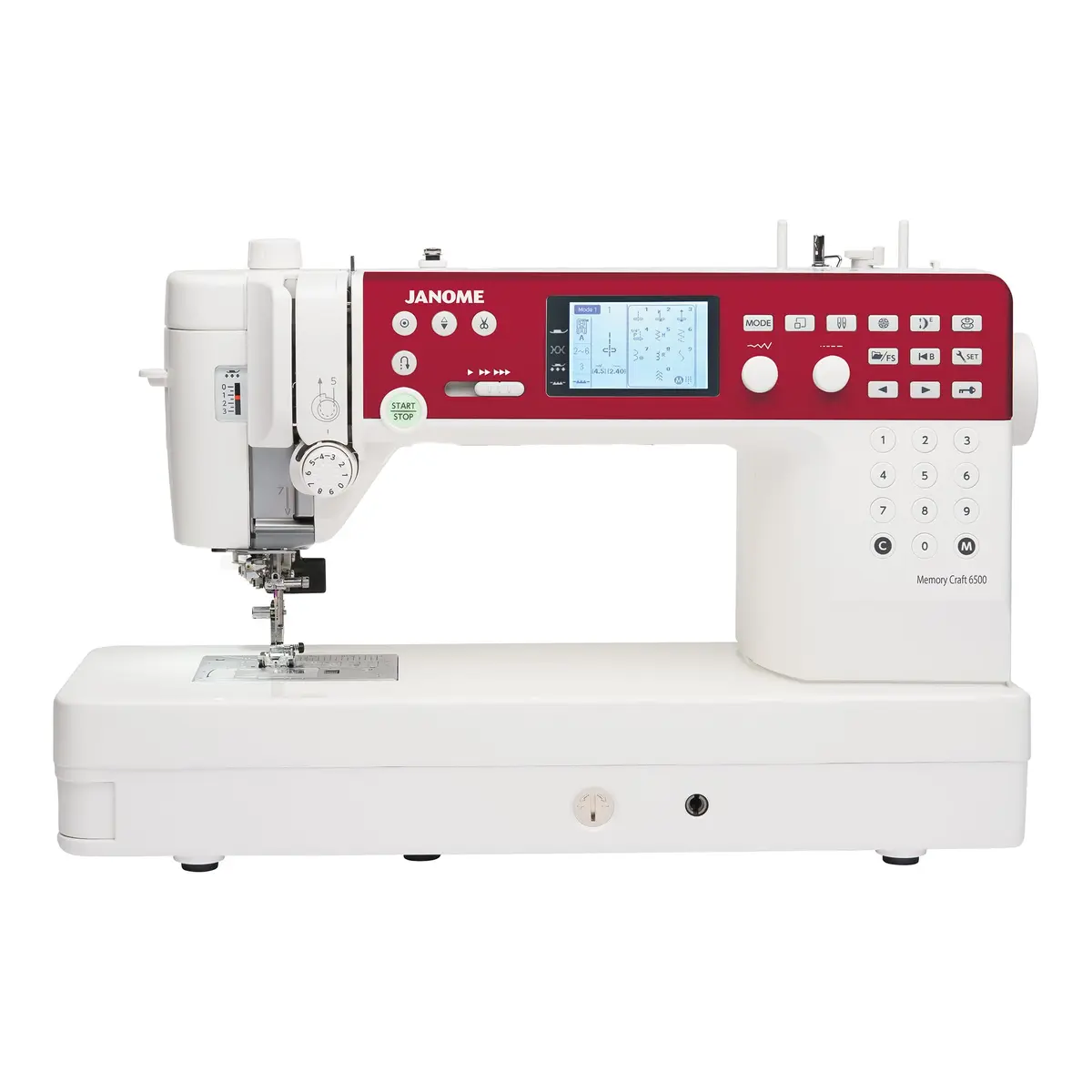 | Janome Memory Craft 6650 Advanced sewing, quilting, garments, and large projects | Speed control, needle positioning, thread cutter, memory and extensive utility options | Check price |
Detailed recommendations
Brother CS7000X
Best budget computerized machine
The Brother CS7000X is the most sensible entry point in this shortlist for buyers who want computerized assistance without paying for advanced automation. It combines 70 built-in stitches with a speed slider, start/stop control, needle up/down, seven one-step buttonhole styles, drop-feed capability, a wide table, and ten included presser feet.
The machine belongs here because its controls solve common beginner problems. Limiting speed can reduce pedal anxiety. Needle-down stopping makes corners and appliqué easier to manage. The screen shows the selected stitch and recommended foot. The included table gives small quilts and wide craft pieces more support than the free arm alone.
What the CS7000X does well
It covers everyday straight stitch, zigzag, stretch stitches, blind hem, overcasting, decorative options, buttonholes, piecing, walking-foot work, and free-motion practice within household-machine limits. The accessory package allows a new user to try several techniques before buying individual feet.
The removable free arm helps with cuffs, sleeves, and trouser hems. Drop feed supports free-motion quilting and darning. These features give the machine a useful learning path beyond basic seams.
Where the budget construction shows
The lightweight body is easy to move and store, but it provides less mass against vibration and fabric drag. A large quilt or heavy project should be supported by the table rather than allowed to pull the machine sideways.
This is not the right model for sustained denim junctions, bulky bags, upholstery, leather production, or repeated thick-layer work. The presence of a walking foot and wide table does not change the motor, internal drive, presser-foot lift, needle system, or duty cycle.
Who should buy it
Choose the CS7000X if you are a beginner, occasional garment maker, craft sewist, or new quilter who wants helpful electronic control at a relatively accessible tier.
Who should skip it
Skip it if full-size stability, advanced garment feeding, automatic cutting, large workspace, or sustained demanding materials are central requirements.
Best for: Budget computerized sewing, beginners, crafts, alterations, piecing, and learning multiple techniques.
Main limitation: Lightweight construction and modest feeding power for thick or sustained work.
Brother HC1850
Best affordable all-rounder for mixed crafts
The Brother HC1850 is the broader affordable option for users who expect to move between garment sewing, crafts, quilt piecing, free-motion practice, decorative work, and simple lettering. It offers 185 built-in stitches, including 130 sewing stitches, quilting and decorative options, 55 alphanumeric characters, and eight one-step buttonholes.
The useful controls include adjustable speed, start/stop, needle positioning, drop feed, and an extension table. These are more important than the headline stitch number because they affect how the machine handles real projects.
Basic monogramming is not embroidery
The built-in font stitches letters by feeding the fabric beneath the ordinary presser foot. It can label a project, add simple initials, or create a short decorative line. It cannot import embroidery files, use an embroidery hoop and carriage, edit a filled design, or reproduce the dense satin and fill stitching of an embroidery machine.
Buy the HC1850 for sewing versatility. Treat lettering as a modest extra rather than a reason to avoid a dedicated embroidery machine.
Where the HC1850 fits
It is suitable for a sewist who wants one portable household machine for clothing, mending, home crafts, piecing, and occasional quilting. The table supports a quilt section, while drop feed allows the user to control fabric direction during free-motion work.
Its light body remains a compromise. Large projects need external support, and the machine should not be judged against a premium full-size platform for vibration, feeding, sound, or long-session stability.
Who should buy it
Choose the HC1850 if mixed crafts and a broad stitch library will genuinely be used, and you want more creative range than the CS7000X without moving to a premium tier.
Who should skip it
Skip it if you need true embroidery, an automatic cutter, premium feeding, heavy project capacity, or a large built-in workspace.
Best for: Versatile home sewing, quilting practice, crafts, decorative stitches, and basic monogramming.
Main limitation: Lettering is not embroidery, and the lightweight platform is less stable than premium full-size machines.
JUKI HZL-F300
Best for garment feeding and buttonholes
The JUKI HZL-F300 is the strongest garment-focused choice in this group. It is a full-size computerized sewing and quilting machine with 106 stitch patterns, three lettering fonts, 16 sensor-controlled buttonholes, automatic needle threading, automatic thread trimming, speed control, needle positioning, and JUKI's box-feed approach.
It is not selected because 106 is a better number than 70 or 120. It is selected because fabric feeding, buttonhole control, direct operation, and full-size stability matter to dressmakers and garment sewists.
Why the feed system matters
JUKI describes box feed as keeping the feed dogs in contact with the material through a more level feeding motion rather than the traditional oval path. The practical purpose is consistent transport and reduced fabric shrink or shifting across varied materials.
No feed system eliminates preparation. Fine fabric still needs the correct needle, thread, foot pressure, seam support, and handling. Thick junctions still require grading, a hump jumper or suitable support, and realistic capacity. Test the exact fabric before relying on any marketing description.
Buttonholes are a real differentiator
Sixteen buttonhole types are useful only if the machine produces reliable results in the fabrics you sew. The sensor system, buttonhole foot, cutting width adjustment, balance controls, and stabilisation can matter more than the number of shapes.
Garment makers working across shirts, jackets, stretch garments, heirloom fabrics, and bound-look decorative styles have more room to choose an appropriate buttonhole than they do on a basic machine.
Package caution
The F300 sits below other machines in JUKI's Exceed line and may be sold with different accessory packages. An extension table is not always included. Confirm the exact feet, knee lift if applicable, hard case, table, spool components, and warranty rather than inferring them from another F-series model.
Who should buy it
Choose the HZL-F300 if garment construction, feeding, buttonholes, thread cutting, and full-size control justify a substantial step above entry-level models.
Who should skip it
Skip it if occasional basic sewing is the real need, portability is critical, or the higher price would be spent on features that will rarely be used.
Best for: Garment makers, dressmaking, varied fabrics, buttonholes, and users prioritising sewing performance over the lowest price.
Main limitation: Higher cost, and bundle contents such as the extension table must be verified.
Janome 4120QDC-G
Best portable intermediate machine
The Janome 4120QDC-G is designed for the user who has moved beyond a basic machine but still values portability. It combines 120 stitches, alphabet options, seven one-step buttonholes, speed control, start/stop, needle up/down, an automatic thread cutter, memorised needle position, and a seven-piece feed system in a compact household platform.
The machine offers a useful balance. It adds workflow automation that entry Brother models omit without requiring the permanent space of the Memory Craft 6650.
Controls that justify the upgrade
The thread cutter is valuable during garments, chain piecing, appliqué, and repeated construction steps. Needle up/down and speed limiting support curves, corners, topstitching, and controlled starts. The start/stop button provides a pedal-free option, while direct stitch selection keeps common operations accessible.
The machine also provides enough stitch and buttonhole choice for an intermediate user to grow without turning the interface into a cataloguing exercise.
Portability has boundaries
Compact does not mean the machine should be carried casually by its spool pin, handwheel, or accessory area. Use the correct handle and a fitted case or trolley. At classes, confirm table stability, electrical access, foot-controller space, and room for the project.
A portable body also provides less integrated workspace than the 10-inch flatbed Janome. An extension table can support wider work, but it does not create additional clearance to the right of the needle.
Dealer and price considerations
Janome machines in this tier are commonly associated with authorised-dealer service. Verify whether the Amazon seller is authorised, how warranty work is handled, which accessories are included, and where local service is available.
The price premium is justified when the thread cutter, control set, feed, build, and portability will be used. A beginner sewing only straight and zigzag seams may receive little practical value from the difference.
Who should buy it
Choose the 4120QDC-G if you are an intermediate garment maker, quilter, or multi-project sewist who wants strong automation in a machine that can still travel or be stored.
Who should skip it
Skip it if budget utility sewing covers the need or if a large permanent workspace matters more than portability.
Best for: Intermediate sewing, classes, garment work, quilting, and users wanting a cutter in a portable machine.
Main limitation: Premium price for a household platform when basic controls may be enough.
Janome Memory Craft 6650
Best advanced flatbed workspace
The Janome Memory Craft 6650 is the advanced choice for users who need space, stability, speed, and repeatable control more than portability. Janome specifies a 10-inch all-metal flatbed, a maximum speed of 1,000 stitches per minute, 170 built-in stitches, two alphabets, nine one-step buttonholes, a superior needle threader, memorised needle up/down, automatic thread cutting, and extensive needle-position adjustment.
The wide flatbed gives garment panels, quilt blocks, bags, and home-décor work more support between the needle and the machine body. The machine is intended to remain stable during long sessions rather than travel lightly to every class.
Workspace is the defining feature
Throat space affects how much material can sit to the right of the needle without bunching. It matters during quilting, large garment panels, curtains, bags, and topstitching. The flatbed surface also supports the work close to the needle.
External tables remain important. Even a wide machine cannot support the full weight of a quilt, curtain, or large bag panel if most of the project hangs over the edge. Arrange the surrounding table so the material does not pull backward or sideways.
Control for experienced users
High maximum speed can increase output during long straight seams and piecing, but control matters more than the headline number. Use the speed slider to match the operation, fabric, and operator. Extensive needle positioning supports seam allowances, topstitching, edge stitching, and specialty feet.
The thread cutter and programmable functions reduce repeated hand movements during longer sessions. These benefits are more valuable to a frequent user than to someone who sews a few repairs each month.
No free arm
The 6650's all-metal flatbed is an advantage for surface area and stability but means it does not convert to a free arm. Narrow cuffs, children's sleeves, trouser hems, and tubular pieces must be sewn using alternative handling methods or another machine.
This is a genuine workflow limitation, not a minor missing accessory. Buyers who regularly alter narrow garments should test their method before choosing the machine.
Who should buy it
Choose the Memory Craft 6650 if you are an experienced garment maker, quilter, bag maker, or home-décor sewist who has a dedicated table and will use the wide workspace, cutter, needle positions, and speed.
Who should skip it
Skip it if the machine must be stored after every session, carried to classes, used frequently for narrow tubular work, or purchased mainly for a high stitch count.
Best for: Advanced garment sewing, quilting, large projects, bags, décor, and frequent long sessions.
Main limitation: Large and heavy, with no free arm.
How to choose a computerized sewing machine
The best computerized sewing machine is not necessarily the model with the largest stitch number on its box. Decorative stitch counts are easy to advertise, but they say very little about how confidently a machine starts at low speed, feeds a garment seam, places the needle at a corner, repeats a buttonhole, handles a large project, or lets the user recover from an incorrect setting.
Useful computerization should make sewing easier to control. A speed slider can limit the machine while the foot pedal remains fully usable. Needle up/down can make pivoting and appliqué more predictable. A start/stop button can help users who cannot or prefer not to use a pedal. A thread cutter can remove a repeated manual step. Sensor-controlled buttonholes can improve consistency. Clear stitch information can prevent the wrong foot or stitch width from sending the needle into metal.
Those features matter only when the machine also feeds well, forms a balanced stitch, accepts appropriate feet and accessories, and has service support. A screen does not strengthen the motor, create more room to the right of the needle, or turn a household machine into an industrial one.
This guide compares five approved models by the kind of control they provide. The Brother CS7000X is the budget entry point for beginners who want speed control, needle positioning, quilting accessories, and enough utility stitches to learn. The Brother HC1850 offers a wider mixed-craft feature set with basic monogramming. The JUKI HZL-F300 is the garment-focused choice for buyers who care more about feeding and buttonholes than a low price. The Janome 4120QDC-G is the portable intermediate option with a thread cutter and strong everyday controls. The Janome Memory Craft 6650 is the advanced flatbed choice for experienced users who need a large workspace and high-volume control.
No model is best for every sewist. The right choice depends on which controls will be used repeatedly, what projects must fit around the needle, whether the machine will travel, and how far the user expects to grow.
What makes a computerized sewing machine genuinely useful?
Computerized machines use electronic controls to select or regulate functions that a mechanical machine handles through dials, levers, cams, and direct linkages. The value is not that electronics make the machine sew independently. The value is that selected operations can become more repeatable, visible, and adjustable.
Low-speed control
Beginners, garment makers, appliqué users, and quilters often benefit more from controlled slow sewing than from maximum speed. A speed slider limits the fastest speed available from the pedal or start/stop control. This can reduce sudden acceleration while learning, approaching a corner, sewing a curve, or placing topstitching.
A good slider should provide a meaningful range rather than turning the machine from slow directly to fast. Pedal response still matters. Test whether the first stitch can be placed without a jump and whether the machine can continue steadily at a slow pace.
Needle up/down
Programmable needle stopping is one of the most useful computerized features because it changes how the machine behaves every time the operator pauses. Needle-down stopping can anchor the work while pivoting a corner, following a curve, appliquéing, or repositioning a quilt. Needle-up stopping is useful when the work must be removed immediately.
It does not replace handwheel positioning for critical placement. Confirm where the needle will stop before placing fingers near the foot, and use the handwheel in the correct direction when exact positioning is needed.
Start/stop control
A start/stop button allows sewing without the foot controller on compatible operations. It can help a user with limited pedal control, a standing workstation, or a preference for hand-operated speed. It is also useful for certain long controlled seams when combined with the speed slider.
Some machines disable the start/stop button while the foot controller is connected. Reverse, reinforcement, and speed behaviour can also differ by selected stitch. Read the manual rather than assuming every button behaves identically across models.
Automatic thread cutting
A built-in cutter trims the upper and bobbin threads after a seam. It saves time during repeated operations and reduces the need to reach for snips. It does not bury thread tails, secure every seam, or eliminate maintenance.
Cutters can struggle with thread outside the supported range, specialty thread, incorrect threading, lint, adhesive contamination, or a poorly wound bobbin. If thread tails are important for hand tying or quilting, automatic cutting may be the wrong finish for that operation.
Buttonhole sensors
Computerized one-step buttonholes can improve repeatability by controlling the stitch sequence after the correct foot and button size are set. Sensor-controlled systems can offer multiple buttonhole styles for different garments and fabrics.
Results still depend on stabilisation, interfacing, fabric thickness, thread, needle, foot contact, and balanced feeding. Always sew a complete test buttonhole through the same fabric, interfacing, seam allowances, and layers as the garment.
Clear stitch information
A useful interface shows the selected stitch, width, length, and recommended foot in a form the user can understand quickly. A large number of buttons is not automatically better. Direct buttons for frequent utility stitches can be faster than scrolling through menus.
Check visibility, contrast, symbols, language, button pressure, and whether important settings remain on screen. A technically capable machine can still be frustrating if the interface hides routine adjustments.
Computerized versus mechanical sewing machines
A computerized machine is not automatically easier, more fragile, more powerful, or more advanced in every meaningful sense. The comparison depends on the exact models and the user's work.
Mechanical machines usually present their core settings through physical dials and levers. A user can often see the selected stitch, width, and length without navigating a screen. They may suit people who want a narrow utility-stitch set, direct controls, and fewer electronic features.
Computerized machines can provide speed limiting, automatic needle stopping, more buttonhole options, stitch mirroring, pattern memory, thread cutting, on-screen guidance, and protection against incompatible settings. These controls can reduce cognitive and physical effort when they align with the user's workflow.
Electronics also introduce circuit boards, sensors, displays, buttons, and model-specific parts. Repair availability can depend on authorised service and continued parts support. That does not mean a mechanical model is automatically more durable. Mechanical machines also contain gears, belts, bushings, tension parts, motors, and plastic components that wear.
Choose mechanical when you prefer direct controls, use a small stitch set, have a limited budget, and do not need electronic assistance. Choose computerized when specific controls will make repeated tasks easier or safer. Do not choose either category based on nostalgia or feature count.
How we selected these machines
The five products and their roles come from the site's approved Amazon master shortlist. The shortlist deliberately spans distinct control and capability tiers rather than ranking five similar beginner machines.
The Brother CS7000X represents budget computerized control. The Brother HC1850 represents an affordable mixed sewing and quilting platform with basic lettering. The JUKI HZL-F300 represents garment-focused feeding and buttonholes. The Janome 4120QDC-G represents portable intermediate automation. The Memory Craft 6650 represents an advanced wide-workspace flatbed.
Selection prioritised low-speed control, feed quality, buttonholes, needle up/down, thread cutting, workspace, interface, useful stitches, service, and upgrade headroom. Decorative stitch count and review volume were not treated as proof of performance.
This is a research-based guide and does not claim personal hands-on testing. Official product pages and manuals are treated as primary evidence. Independent testing and owner reports are useful for identifying control, feeding, noise, accessory, and service concerns, but individual experiences are not presented as universal facts.
Exact Amazon listings, bundles, included feet, tables, cases, voltage, warranties, and authorised-dealer status can change. Confirm the model number and included accessories before purchase.
Which computerized features are worth paying for?
The answer depends on frequency. A feature used on every seam can justify more budget than fifty stitches tried once.
Usually worth prioritising
Speed control is valuable for beginners, curves, appliqué, quilting, topstitching, and users with limited pedal control. It changes the operating experience across many projects.
Needle up/down is valuable for corners, curves, pivots, quilting, and precise stopping. It becomes part of routine muscle memory.
Reliable one-step buttonholes matter to garment makers. The value comes from consistent results and adjustment, not merely having many shapes.
A thread cutter is useful for frequent sewing, chain piecing, appliqué, and reducing repeated reaching. Occasional users may not recover the price premium.
Direct stitch selection and a clear screen matter because every session passes through the interface. Usability is more important than the number of menu items.
Worth paying for only when the project needs them
Alphabet stitches suit labels and simple monograms but do not replace embroidery. Pattern memory helps users who repeat decorative sequences. Mirroring and elongation matter to decorative work. A knee lift helps users who need both hands on the fabric. Large throat space matters for physically large projects.
Build the shortlist from repeated operations. Do not buy an advanced machine in anticipation of every possible hobby.
Feed quality, workspace, and thick materials
Computerization does not determine feeding power. The feed-dog design, presser-foot pressure, foot choice, needle plate, motor control, internal drive, fabric preparation, and operator support all affect handling.
For garments, test fine woven fabric, stable cotton, stretch knit, a crossed seam, and any fabric used regularly. For quilting, test a layered sample with the intended batting. For bags, test the folded junction, interfacing, zipper tape, and webbing.
A high presser-foot lift shows positioning clearance, not guaranteed sewing capacity. A machine can fit a stack beneath the foot and still fail to feed it evenly, form a balanced stitch, or accept the required thread.
Use the correct needle and thread. Stabilise difficult fabric, grade seam allowances, support large work, reduce speed at junctions, and use suitable feet. Do not pull the fabric through the machine.
Reliability, electronics, and service
Before buying, identify who can service the exact brand and model locally. Ask whether diagnostic tools, circuit boards, displays, foot controls, sensors, cutters, bobbin cases, needle plates, and common mechanical parts remain available.
Use a surge protector appropriate to local electrical conditions and the manufacturer's guidance. Keep the machine dry and away from unstable extensions, incorrect voltage, and improvised adapters. Switch it off before connecting or removing accessories unless the manual says otherwise.
Software-like symptoms do not always mean a failed board. Incorrect threading, a raised presser foot, bobbin-winder engagement, a safety lock, incompatible stitch and foot selection, a jam, or an open cover can prevent operation. Read the screen message and manual before forcing the handwheel or controls.
Clean lint and replace needles according to the manual. Do not oil a computerized machine in locations not specified by the manufacturer. Unauthorised oil can contaminate sensors, belts, wiring, or factory-lubricated components.
Before ordering from Amazon
Verify the exact model number, voltage, plug, seller, warranty route, return terms, and included accessories. A listing may combine reviews from related models or show photos of accessories not included in the current package.
Confirm whether the offer includes:
- Foot controller and power cord
- Standard, zipper, buttonhole, overcasting, blind-hem, satin, quarter-inch, walking, and free-motion feet as applicable
- Extension table
- Hard cover or soft cover
- Knee lift
- Bobbins, needles, spool caps, auxiliary spool pin, seam ripper, brush, and screwdriver
- Printed manual or downloadable manual
- Manufacturer warranty through an authorised seller
Compare the included package with the official accessories list for the exact model. Do not choose a listing because a photo displays more feet or a larger table without written confirmation.
Frequently asked questions
Is a computerized sewing machine good for a beginner?
Yes, when its interface is clear and its controls reduce difficulty. Speed limiting, needle up/down, automatic stitch settings, and foot recommendations can help a beginner. A confusing menu or unnecessary feature load can have the opposite effect. The CS7000X is the most suitable budget beginner option in this shortlist.
Do computerized sewing machines sew automatically?
They automate selected controls, not the complete construction process. The operator still prepares, guides, supports, turns, and inspects the fabric. Start/stop can run the motor without a pedal, but it does not guide a seam.
Are computerized machines less durable than mechanical machines?
Not automatically. Durability depends on design, materials, use, maintenance, storage, power quality, and parts support. Computerized models add electronic components, while mechanical models still contain wear parts and motors. Compare exact models and local service rather than assuming one category always lasts longer.
How many stitches do I actually need?
Most construction uses straight stitch, zigzag, stretch options, overcasting, blind hem, and buttonholes. Quilters may add piecing, appliqué, and free-motion needs. Decorative users may value more patterns. Buy the utility and controls your projects require, not the largest number.
Is basic monogramming the same as embroidery?
No. Alphabet stitches feed beneath the normal presser foot like other decorative stitches. Embroidery machines use a hoop, carriage, design files, and dense programmed movement. The HC1850 can create basic stitched lettering but is not an embroidery machine.
Which model is best for making clothes?
The JUKI HZL-F300 is the strongest garment-focused pick because feeding, buttonholes, direct control, and full-size stability are central to its role. The 4120QDC-G is better when portability and thread cutting are equally important. The final decision should be tested against the fabrics and construction methods used most often.
Which model is best for quilting?
The CS7000X and HC1850 are accessible for piecing and early free-motion practice. The 4120QDC-G adds intermediate controls. The Memory Craft 6650 provides the largest integrated workspace and the strongest fit for frequent large projects. Quilt size, throat space, table support, feed, and free-motion workflow matter more than a quilting label.
Can these machines sew denim or bags?
They can sew selected household denim and bag projects within their documented limits, using the correct needle, thread, seam preparation, and speed. None should be treated as an industrial heavy-duty machine. Test the hardest folded junction, not only two flat layers.
Do I need an automatic thread cutter?
Not for occasional sewing. It becomes valuable when repeated cutting interrupts garments, quilting, appliqué, or production-like sessions. The JUKI HZL-F300, Janome 4120QDC-G, and Memory Craft 6650 include cutting functions; verify operation and supported thread in the exact manual.
Why is the URL changing from the old legacy page?
The old /perfect-computerized-sewing-machine/ slug is vague and does not match the clearest search intent. This replacement uses /best-computerized-sewing-machine/, while the old URL should redirect directly to it so the legacy page is not abandoned.
Final verdict
For budget-friendly computerized control, the Brother CS7000X offers the strongest balance of speed limiting, needle positioning, accessories, and room to learn. The Brother HC1850 is the better affordable choice when mixed crafts, quilting, decorative stitches, and basic lettering will actually be used.
For garment makers, the JUKI HZL-F300 is the most convincing step up because feed quality, buttonholes, and construction controls matter more than decorative-count marketing. The Janome 4120QDC-G is the portable intermediate choice for users who want a thread cutter and strong automation without a permanent large machine.
For experienced users with dedicated space, the Janome Memory Craft 6650 offers the most useful workspace and high-volume control in this shortlist. Its lack of a free arm must be accepted before purchase.
The best computerized machine is the one whose automation removes friction from the work you repeat. Choose speed control, needle behaviour, feeding, buttonholes, cutting, workspace, and service first. Treat stitch count as supporting information, not the decision.
Research sources
- Brother official CS7000X product information and documentation
- Brother official HC1850 product information and documentation
- JUKI Home Sewing official HZL-F300 product information and manual
- Janome official 4120QDC-G product information
- Janome official Memory Craft 6650 product information and manual
- Current Amazon records for ASINs B08BH5GTNC, B008G1DJ9Y, B004C04YIS, B0BZ62XHDC, and B07RRJDQ75, checked July 22, 2026
Prices, stock, sellers, accessories, warranty coverage, and marketplace bundles can change. Verify the exact offer before purchase. This page contains affiliate links; the site may earn a commission from qualifying purchases at no additional cost to the buyer.