

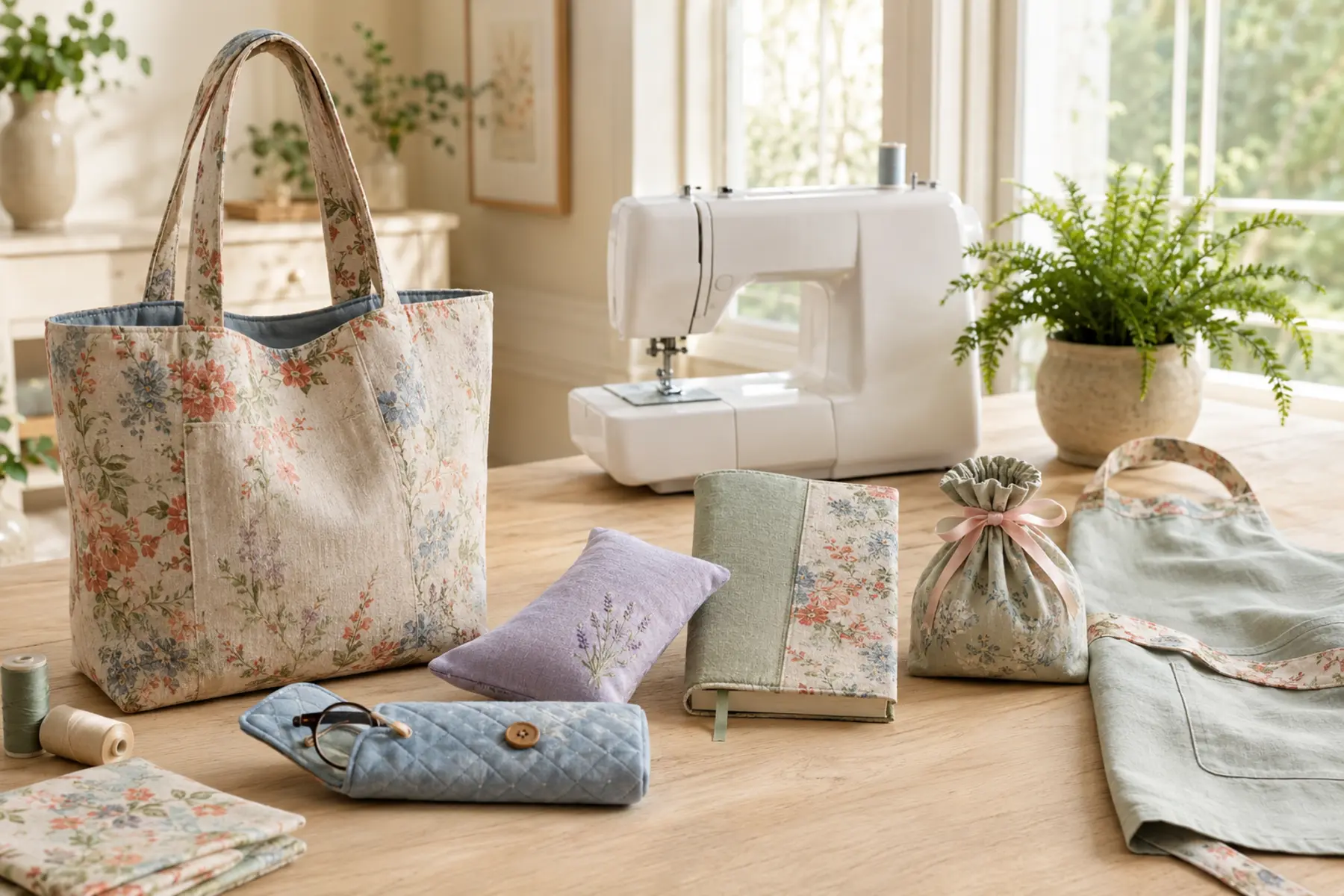
A handmade gift does not need complicated patchwork, embroidery, or tailoring to feel meaningful. A well-made bookmark used every evening, a washable tote kept by the door, or a fabric basket placed beside a favourite chair may become more useful than a technically ambitious item that does not fit the recipient’s routine.
The ideas below are organised by the work involved and the purpose of the gift. They provide selection and construction guidance rather than replacing a complete pattern. Test any unfamiliar seam, closure, or fabric on scrap before cutting the final pieces.
Choose a Mother’s Day sewing project quickly
Before choosing the project, think about the recipient
Start with a real activity. Does she read, travel, garden, cook, knit, carry medication, collect recipes, organise craft supplies, or enjoy a cup of tea in one particular chair? A project attached to an existing habit is more likely to be used.
Consider care requirements as seriously as appearance. An everyday apron, tote, or table item should normally be washable. Decorative fabrics, trims, and fusible materials should tolerate the same cleaning method as the main fabric. Avoid adding a closure, embellishment, or handle that makes the item less convenient.
Choose a project connected to an activity she already enjoys.
Check the size against the intended book, chair, table, glasses, or storage space.
Use colours she wears or keeps in her home rather than colours associated only with the occasion.
Allow time for testing, pressing, finishing, and presentation.
Avoid promising personalisation that your machine or current skills cannot produce cleanly.
Quick Mother’s Day sewing ideas
Fabric bookmark
Use two rectangles of stable cotton with lightweight interfacing, or use felt when the gift will be hand sewn. A line of topstitching creates a neat edge without adding bulk. Make the bookmark wide enough to show the chosen print but slim enough to sit comfortably inside a book.
Useful detail: Add a small fabric tab at the top rather than a thick button or charm that could mark pages.
Lavender or wardrobe sachet
Sew two small cotton squares or rectangles, leave an opening, and fill the sachet lightly. Dried lavender is traditional, but an unscented filling may be more appropriate when fragrance sensitivity is possible. Keep dried material contained in an inner muslin pouch if the outer cover uses a loose weave.
Useful detail: Make the outer cover removable if the sachet may need refreshing.
Reusable fabric gift bag
A drawstring or folded-top bag can serve as both wrapping and part of the present. Size it around the item that will go inside. A plain lining is optional, but it can hide raw seams and help lightweight fabric hold its shape.
Useful detail: Choose a print suitable beyond Mother’s Day so the bag can be reused throughout the year.
Bordered tea towel
Add one strip of prewashed cotton to the lower edge of a plain towel. Press the strip accurately and keep the decoration away from the absorbent working area. This is a useful project for practising straight topstitching without constructing an entire item.
Useful detail: Wash and dry both fabrics first to reduce uneven shrinkage.
Simple fabric coaster or mug rug
A coaster uses two cotton squares and light batting. A mug rug is slightly larger and can include simple patchwork or straight quilting lines. Keep the batting thin enough for the machine to feed evenly, and test the final stack before sewing the project.
Useful detail: Use a washable dark or mid-tone fabric when the item will hold tea or coffee regularly.
Practical sewn gifts she can use regularly
Everyday tote bag
A simple tote becomes more useful when its dimensions match a real purpose. A narrow bag can hold library books, a wide bag can carry knitting, and an internal pocket can keep keys or a phone accessible. Use a stable woven fabric and reinforce the handle attachment without making the top edge excessively bulky.
Useful detail: Measure a bag she already uses before choosing the new proportions.
Fabric storage basket
A fabric basket can organise skincare, sewing notions, chargers, mail, or bedside items. Use interfacing suited to the desired structure and make a test corner before sewing all four sides. A washable lining makes the basket more practical.
Useful detail: Choose the basket location first, then measure the shelf or drawer rather than guessing a decorative size.
Glasses or sunglasses case
A soft case uses a simple rectangle, lining, and light padding. The finished width should allow the glasses to enter without pressure while keeping them from sliding out easily. A flap is simpler than a zipper for an intermediate beginner.
Useful detail: Test the pattern with inexpensive fabric around the actual glasses before cutting the gift fabric.
Zipped essentials pouch
A lined pouch can hold cosmetics, medication, cables, sewing tools, or travel items. Use a nylon coil zipper when you want a lightweight closure and make sure the machine foot, needle position, and zipper type are compatible.
Useful detail: Add internal divisions only when you know what the pouch will store.
Simple apron
A half apron is usually easier than a full bib apron because it requires fewer fit decisions. Add a large divided pocket for gardening, baking, craft work, or everyday household use. Make waist ties long enough to fasten comfortably without becoming cumbersome.
Useful detail: Choose the pocket depth around the items she is likely to carry.
Sewn gifts for the home and meaningful keepsakes
Reading cushion with a book pocket
Add a large front pocket to a square cushion cover so it can hold a book, magazine, or reading glasses. Keep the pocket slightly wider than the intended book and reinforce the upper corners where it will be pulled open repeatedly.
Useful detail: Include a new book or a handwritten reading recommendation inside the pocket.
Patchwork cushion cover
Use a small number of larger fabric pieces rather than many tiny patches. This keeps the design calm and reduces seam bulk. An envelope back avoids a zipper and makes the cover removable for washing.
Useful detail: Repeat one fabric from the front on the back to make the project feel intentional.
Reversible table runner
A reversible runner provides two looks without requiring complicated piecing. Measure the table and decide whether the runner should stop near the ends or hang over them. Use light batting only when a padded result suits the table and laundering method.
Useful detail: Use one everyday side and one seasonal side to extend its use.
Set of reusable napkins
Napkins are simple in shape but reward accurate pressing and repeated hems. Cut them from prewashed cotton or a cotton-linen blend and create a consistent template. A set of four may be more realistic than a large formal set when time is limited.
Useful detail: Test one complete napkin before cutting the full set.
Memory-fabric heart or small cushion
A small keepsake can be made from a meaningful shirt, scarf, or other textile, but only with the owner’s permission. Stabilise delicate or worn fabric from behind and avoid cutting areas that contain damage unless the design intentionally preserves it.
Useful detail: For a surprise, use new fabric in meaningful colours and save irreplaceable textiles for a project planned together.
Choose fabric for the project, not only the print
Stable woven cotton works for most of these gifts and is the easiest starting point for a beginner. Linen blends can suit table items and home accessories, but loose weaves may need careful seam finishing. Canvas adds structure to bags and baskets, although thick folded intersections can exceed a light domestic machine’s capacity.
If you need coordinated small cuts for patchwork, pouches, mug rugs, or bookmarks, you can compare fat-quarter fabric bundles on Amazon. Check fibre content, individual piece size, washability, and the number of genuinely different prints rather than choosing by bundle count alone.
Use the guide to sewing different types of fabric when the project involves canvas, slippery lining, stretch material, batting, or a coated surface. The correct needle and handling method depend on the complete fabric stack.
Mother’s Day sewing ideas a child can help make
A child can contribute to fabric selection, simple marking, straight hand stitches, arranging appliqué shapes, stuffing a felt item, or sewing a supervised straight seam. The adult should prepare any sharp cutting, pressing, machine threading, needle changes, and difficult construction steps.
Choose a felt bookmark, coaster, gift bag, or small pouch when the child will do most of the visible work. The broader guide to sewing projects for kids explains how to match the project to readiness and build skills progressively.
Make the finished gift feel considered
Press during construction, trim loose threads, check that corners are fully turned, and inspect both sides of every seam. Test zippers, drawstrings, pockets, and handles with the object they are intended to hold. Wash the finished item first only when the fabric, interfacing, and construction method all permit it.
Wrap the project simply and include care instructions when the materials need a particular wash temperature or drying method. A short note explaining the choice of fabric or intended use adds context without requiring a machine-embroidered message.
Check dimensions and function with the intended object.
Remove temporary markings completely.
Secure and trim thread ends.
Press the project using settings suitable for every layer.
Add concise washing or care instructions when needed.
Repair weak seams before wrapping the gift.
Frequently Asked Questions
Mother’s Day sewing project questions
What can I sew for Mother’s Day as a beginner?
A fabric bookmark, lavender sachet, reusable gift bag, mug rug, or bordered tea towel is manageable for many beginners. Choose stable cotton, straight seams, and a project that can be completed without learning several new techniques at once.
What is a quick Mother’s Day sewing project?
A simple sachet, bookmark, fabric gift bag, or tea towel border can often be completed in one short session when the pieces are prepared in advance. Allow extra time for pressing, correcting mistakes, and wrapping the finished gift.
What can a child sew for Mother’s Day?
A child may make a felt bookmark, small hand-sewn pouch, simple fabric coaster, or decorated gift bag with adult preparation and supervision. Match the project to the child’s readiness rather than choosing by age alone.
Which fabric is best for a handmade Mother’s Day gift?
Stable woven cotton is the most versatile choice for bookmarks, bags, aprons, cushions, and table projects. Linen blends can create a more refined finish, while felt is useful for simple hand-sewn gifts. Wash fabric first when the finished item will be laundered.
How can I make a sewn gift feel more personal?
Use a colour, print, pocket layout, label, or small detail connected to the recipient’s routine. A handwritten note explaining why you chose the project often makes the gift feel more personal than adding complicated decoration.
Should I sew a sentimental fabric keepsake as a surprise?
Do not cut an irreplaceable garment, scarf, or other meaningful textile without permission. For a surprise, use new fabric in meaningful colours or make a removable item that does not alter the original keepsake.
Make something that fits her real life
The most thoughtful choice is not automatically the project with the most pieces or decorative details. Select an item connected to a real habit, make it in materials she can comfortably use and care for, and finish it as accurately as your current skills allow.
A bookmark, bag, apron, cushion, or keepsake becomes personal through observation. When the size, fabric, and function reflect the recipient, even a simple pattern can become a memorable Mother’s Day gift.