
All-purpose foot
Everyday straight and zigzag stitching.

Accessory field guide
A removable attachment that holds fabric against the feed dogs while leaving a controlled path for the needle and thread.
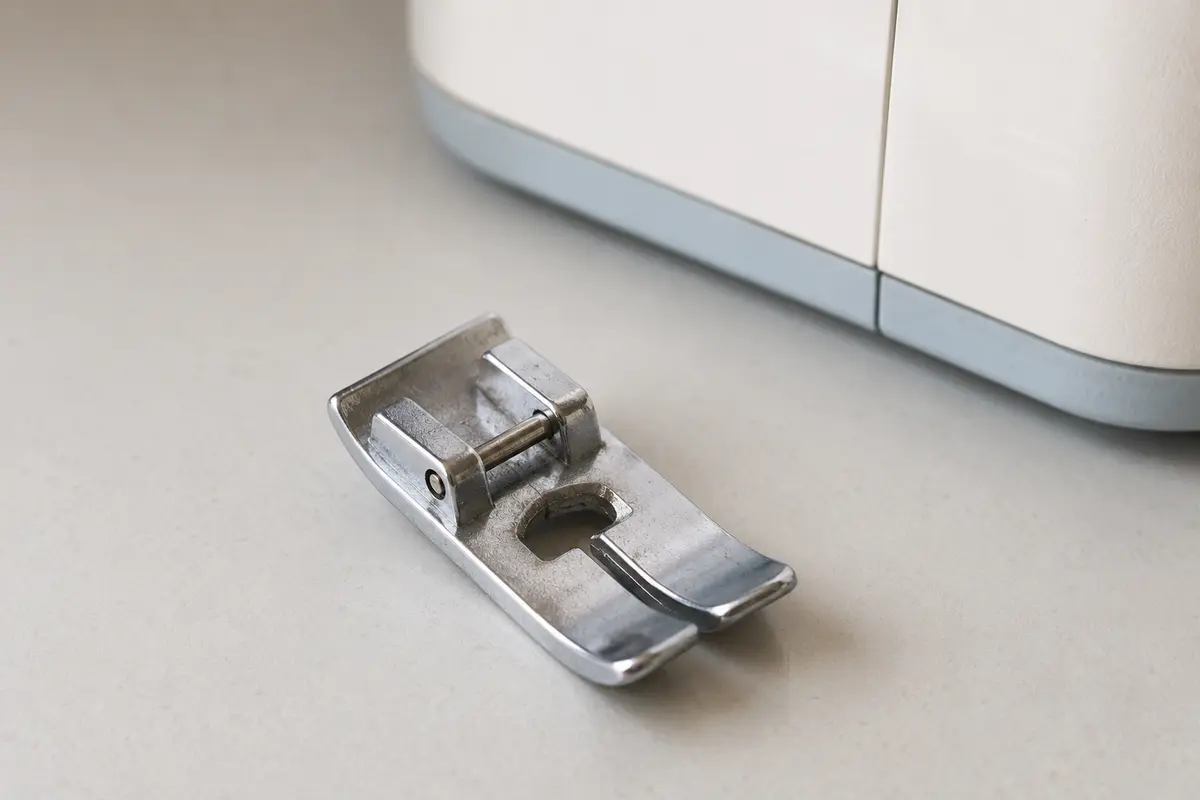
Changing the presser foot can alter visibility, seam placement, fabric control, and the amount of clearance around the needle. It is often the simplest way to make a specialized task easier.
Everyday straight and zigzag stitching.
Stitches close to zipper teeth, piping, and bulky edges.
Guides consistent buttonholes, often using a button as the size reference.
Feeds the top layer to reduce shifting in quilts and slippery stacks.
Helps maintain a precise seam allowance for patchwork.
Folds and stitches a narrow hem in one pass.
Before attaching a foot
Many domestic machines use snap-on feet, but low-shank, high-shank, slant-shank, and brand-specific systems are not universally compatible. Match the foot to the machine and confirm the needle clears every opening.
The foot is the attachment; presser foot pressure is the downward force applied to it. Heavy, delicate, or stretchy fabrics may benefit from pressure adjustment where the machine provides it.
Choose by obstacle
A guide, flange, or narrow toe helps repeat seam allowances and topstitching positions. Calibrate the result on scrap because needle position and foot geometry can change the actual distance.
A walking, roller, or non-stick foot may reduce drag or layer creep, but each solves a different source of resistance. Stabilising, basting, and correct presser pressure remain part of the setup.
Buttonhole, blind-hem, overcasting, and rolled-hem feet guide fabric or thread into a specific formation. Follow the intended fold and stitch setting rather than expecting the attachment to form the preparation by itself.
Compatibility desk
No. Snap-on feet are common, but shank height, attachment style, needle position, and brand-specific geometry can differ. Confirm compatibility with the exact machine model.
Yes. The needle may strike a narrow opening or offset edge. Always rotate the handwheel manually through a full stitch cycle before sewing at speed.
The all-purpose or zigzag foot handles most basic seams. Add a zipper foot and buttonhole foot as projects require them rather than buying a large set immediately.
The foot may be unsuitable for the material, presser pressure may need adjustment, or multiple layers may be shifting. A walking foot, roller foot, stabilizer, or seam guide may help.