
← Sewing glossary

Presser foot

Zipper Foot

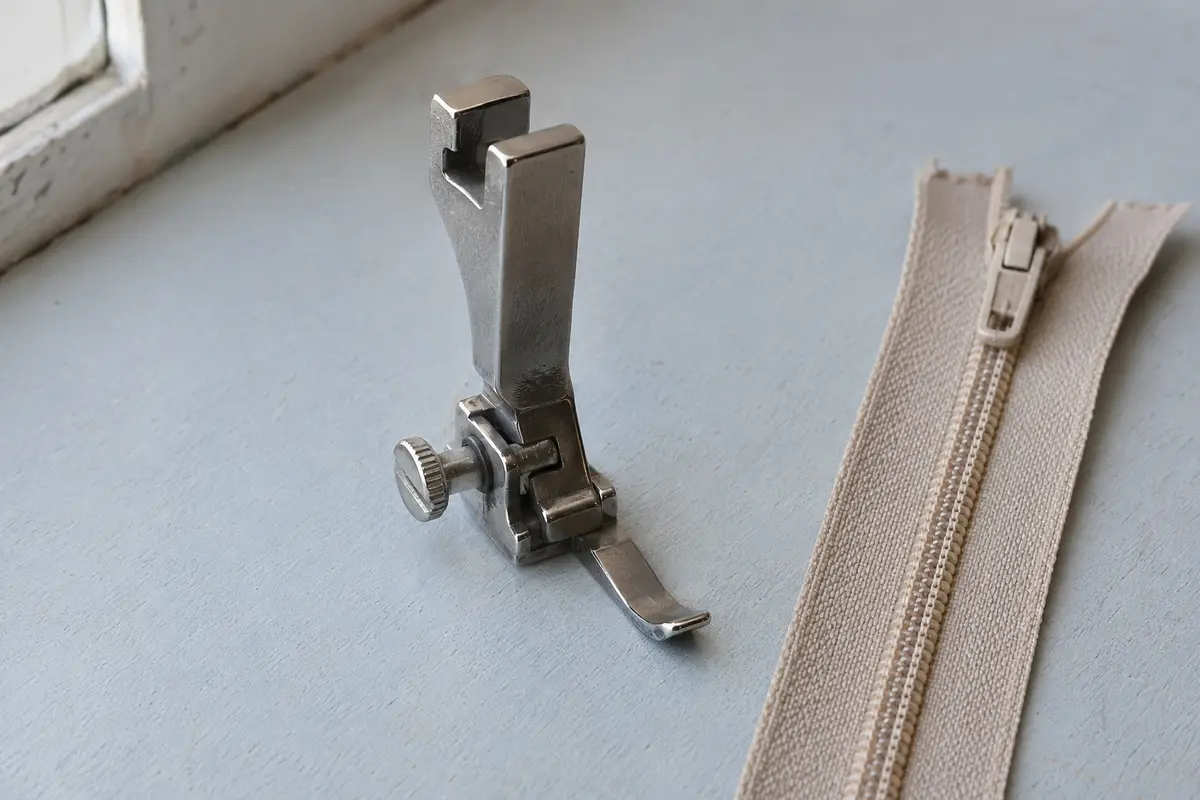
A narrow foot that lets the needle sew close to zipper teeth, piping cord, or raised edges.

A narrow one-sided adjustable metal zipper foot positioned beside the teeth of a beige closed zipper on a pale worktable
A one-sided adjustable zipper foot. Its single narrow toe leaves the opposite side open so the needle can stitch close to zipper teeth, piping, or another raised edge. Attachment systems vary, so compatibility must be checked.
01

Choose the attachment side

Mount or shift the foot so its narrow toe runs beside the zipper while the needle lands in the open side.

02

Pass the slider cleanly

Stop with the needle down, raise the foot, move the zipper pull behind it, then continue.

03

Use beyond zippers

The same close access helps with piping and bulky trims when clearance is checked.

Useful distinction

Close does not mean straight

The foot provides access; marking, basting, and a stable guide keep the zipper aligned.

Practical guide

Position the foot and needle as one system

A zipper foot creates close access beside a raised edge. Accurate placement still depends on basting, pressing, a compatible needle position, and a manual clearance check.

Centred and lapped zippers

Prepare and press the seam first, then baste the zipper so both sides remain stable. Attach the foot on the side that keeps its narrow toe beside the teeth and position the needle in the open area. Stitch each side from a consistent direction to reduce layer shift.

Passing the zipper slider

Sew until the foot approaches the slider, stop with the needle down, raise the foot, and move the slider behind it. Lower the foot and continue. Sewing around the bulky slider without repositioning pushes the stitch line away from the teeth.

Piping and raised trims

Place the foot beside the piping cord so stitches land close without entering the cord. Baste curved or slippery piping first. For multiple layers, level the foot at bulky joins and check that the needle remains clear of the narrow toe.

Invisible zipper limits

A regular zipper foot can sew near an invisible coil, but a dedicated invisible-zipper foot opens and guides the coil more consistently. Use the specialist foot when a concealed finish and close placement matter.

Avoidable mistakes

Why close-access stitching still wanders

  • The needle is shifted toward the solid toe instead of the open side.
  • The slider is left beneath the foot and forces the line outward.
  • The zipper is sewn without basting on fabric that shifts or stretches.
  • The foot provides access, but no marked line controls the final placement.

Common questions

Zipper Foot FAQs

Why are there two attachment positions?

They let the foot work on either side of the needle for both zipper tapes.

Can it install an invisible zipper?

It can approximate the job, but an invisible-zipper foot opens the coil more effectively.

Why did the needle strike the foot?

The needle position and attachment side were incompatible. Stop and reset both.

How do I avoid a bump at the slider?

Pause before it, keep the needle down, lift the foot, and move the slider behind.