
← Sewing glossary

Machine setting

Needle Position

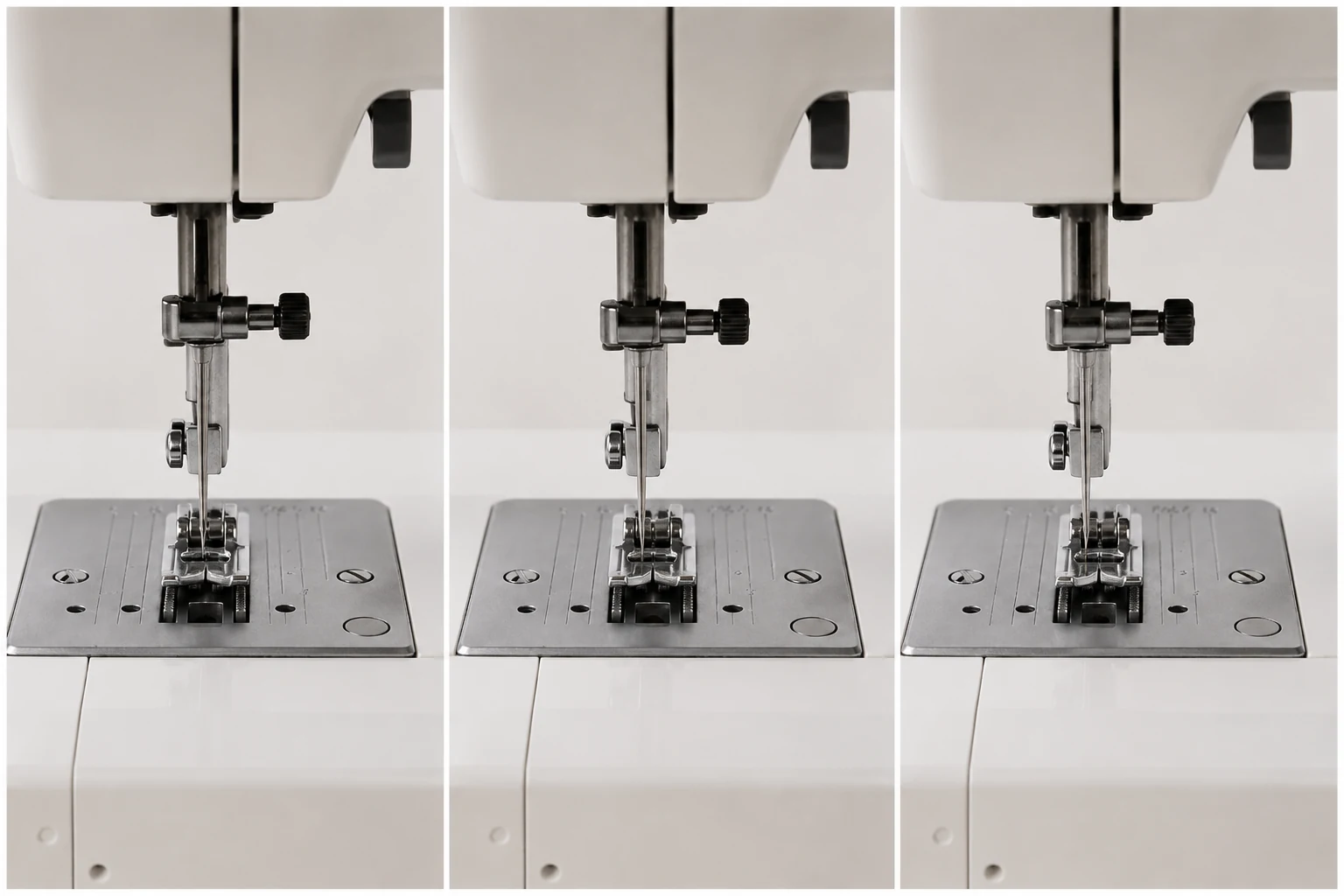
The selected left, center, or right location where the needle penetrates relative to the presser foot.

Three close-up views of a sewing machine needle aligned at left, center and right positions above the needle plate
Left, center and right sewing-machine needle positions. Changing the lateral needle position adjusts the distance between the stitch line and a presser-foot edge or seam guide. Every new position should be checked for safe clearance through the foot and needle plate.
01

Position and feet

Some feet require center needle only; zipper and edge feet intentionally use offset positions.

02

Position and seam guides

Moving the needle changes the true distance to plate markings. Measure from the active position.

03

Electronic safety limits

Computerized machines may block positions that would collide with the selected stitch or foot.

Useful distinction

A guide can become inaccurate

A quarter-inch or plate guide is only correct for the needle position from which it was measured.

Practical guide

Choose needle position by the job, not by habit

Needle position is most useful when it solves a measurable placement problem. Set the stitch and foot first, then use the needle position to refine the distance.

Edge stitching and topstitching

Move the needle toward the fabric edge while keeping the edge against a stable foot or plate guide. This gives better visibility than steering by the needle alone. Test on a scrap because a small electronic step can noticeably change a narrow topstitched margin.

Zippers, piping, and raised edges

An offset position lets the needle approach zipper teeth or piping cord without forcing the foot on top of the raised area. The foot must provide an open path on the chosen side. Stop immediately if the needle approaches the toe or support bar.

Quarter-inch seams and patchwork

A shifted needle can create a scant quarter-inch seam, but only after calibration. Sew, press, and measure a test unit because thread thickness and the fold at the seam can reduce the finished block even when the raw seam measured correctly.

What position cannot correct

Moving the needle will not straighten a bent needle, repair an inaccurate plate marking, or prevent fabric drift. If the seam width changes while the edge remains on the guide, inspect how the layers are feeding and whether project weight is pulling sideways.

Avoidable mistakes

Four ways position changes cause trouble

  • Assuming every presser foot permits the full left-to-right range.
  • Changing position after aligning to a seam guide and forgetting to measure again.
  • Selecting a wide decorative stitch after installing a narrow straight-stitch foot.
  • Turning the handwheel backward during the clearance test instead of completing the normal forward cycle.

Common questions

Needle Position FAQs

Why will the needle not move left?

The selected stitch, twin-needle mode, or safety setting may restrict movement.

Can right position help install a zipper?

Yes, if the foot and plate provide clearance and the needle stays beside the teeth.

Does shifting position change tension?

Not directly, though it can reveal an existing thread-path or foot-contact issue.

Why do plate markings seem wrong after moving the needle?

Most are referenced to center position, so the offset changes the real distance.