← Sewing glossary

Machine dimensions

Throat Space

The open area to the right of the needle where fabric gathers and passes during sewing.

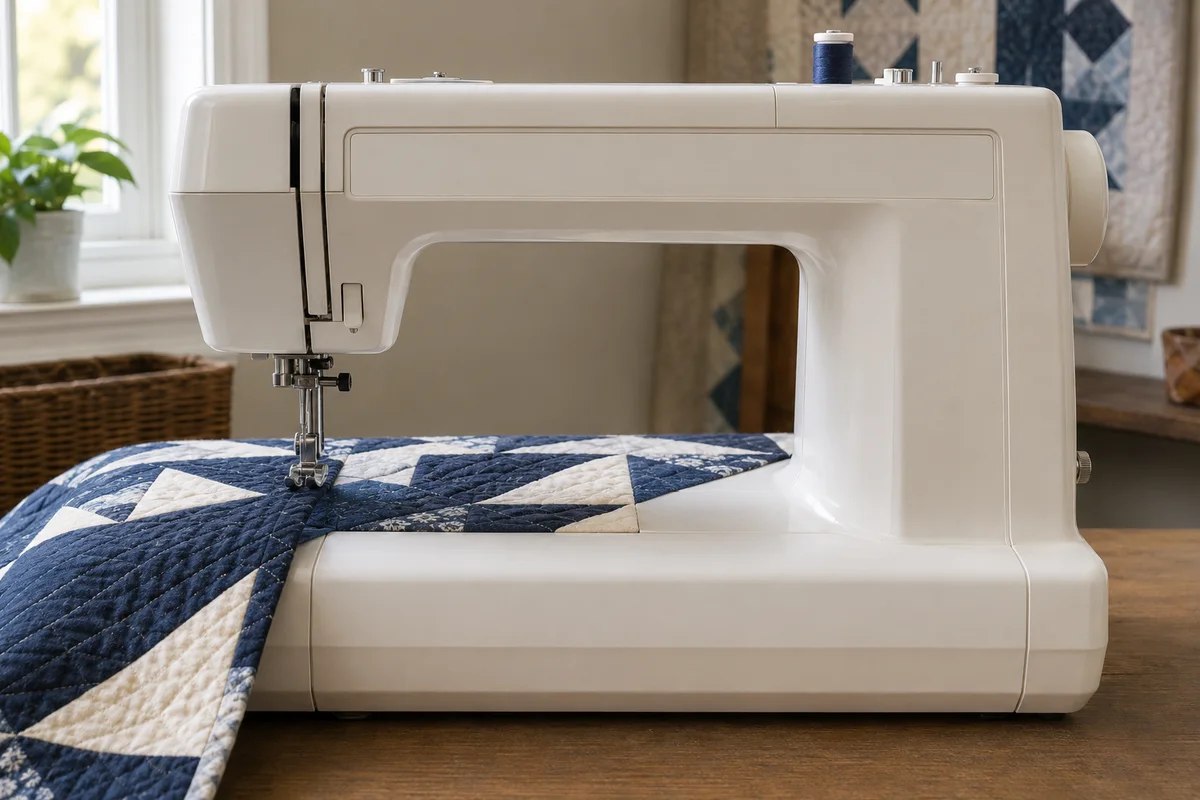
A blue and cream quilt passing through the open throat space between the needle and right column of a domestic sewing machine
The open throat space of a domestic sewing machine. Throat space is the working clearance to the right of the needle. A wider opening gives bulky quilts and large fabric sections more room to move without bunching against the machine column.
01

Why quilters notice it

A rolled quilt must pass through this opening. More width and height reduce compression and give both hands more room.

02

What measurements miss

Quoted width may ignore height, body shape, lighting, controls, and accessories that intrude into the opening.

03

When compact is enough

Garments, repairs, bags, and small projects usually fit standard machines. Portability and storage may matter more.

Useful distinction

Space versus support

A large throat helps contain project bulk; an extension table reduces drag. They solve different problems and often work best together.

Practical guide

Judge usable workspace, not one width measurement

Throat space matters when a project must pass to the right of the needle. Width is useful, but height, body shape, table support, lighting, and control placement determine how much of that space works in practice.

Quilting and bulky projects

A larger opening gives a rolled or puddled quilt more room and lets both hands work nearer the needle. It does not remove the need to support the quilt on a table. Fabric hanging from the front or side still creates drag and can pull stitching off course.

Garments, bags, and everyday sewing

Most garment seams, alterations, repairs, and small bags use little space to the right of the needle. For these users, a compact machine can be easier to store and carry. Choose for the largest project made regularly, not a rare hypothetical project.

Compare shape and height

Two machines with the same quoted width may feel different if one has a low opening, sloped body, screen, or controls intruding into the area. Measure the usable rectangle and notice whether the presser-foot lift and lighting remain accessible with fabric inside.

Extension table versus throat space

An extension table supports fabric outside the machine and reduces downward drag. Throat space contains bulk inside the machine body. One cannot replace the other, but together they make large projects easier to control.

Avoidable mistakes

Buying assumptions based on throat space alone

  • A long machine is not useful if body shape reduces the actual opening.
  • An extension table does not enlarge the space inside the machine.
  • Rolling fabric too tightly can make a large opening harder to use.
  • Choosing for one oversized project can sacrifice portability needed every week.

Common questions

Throat Space FAQs

How much throat space is needed for quilting?

There is no universal minimum. Small quilts can be managed on compact machines, while frequent bed-size work benefits from more room.

Is harp space another name for throat space?

Yes. Both describe the opening to the right of the needle.

Does a longer machine always provide more usable room?

No. Displays, body curves, and controls can consume the apparent length.

Can an extension table replace throat space?

No. It supports fabric outside the machine but does not enlarge the internal opening.