
← Sewing glossary

Troubleshooting

Thread Nesting

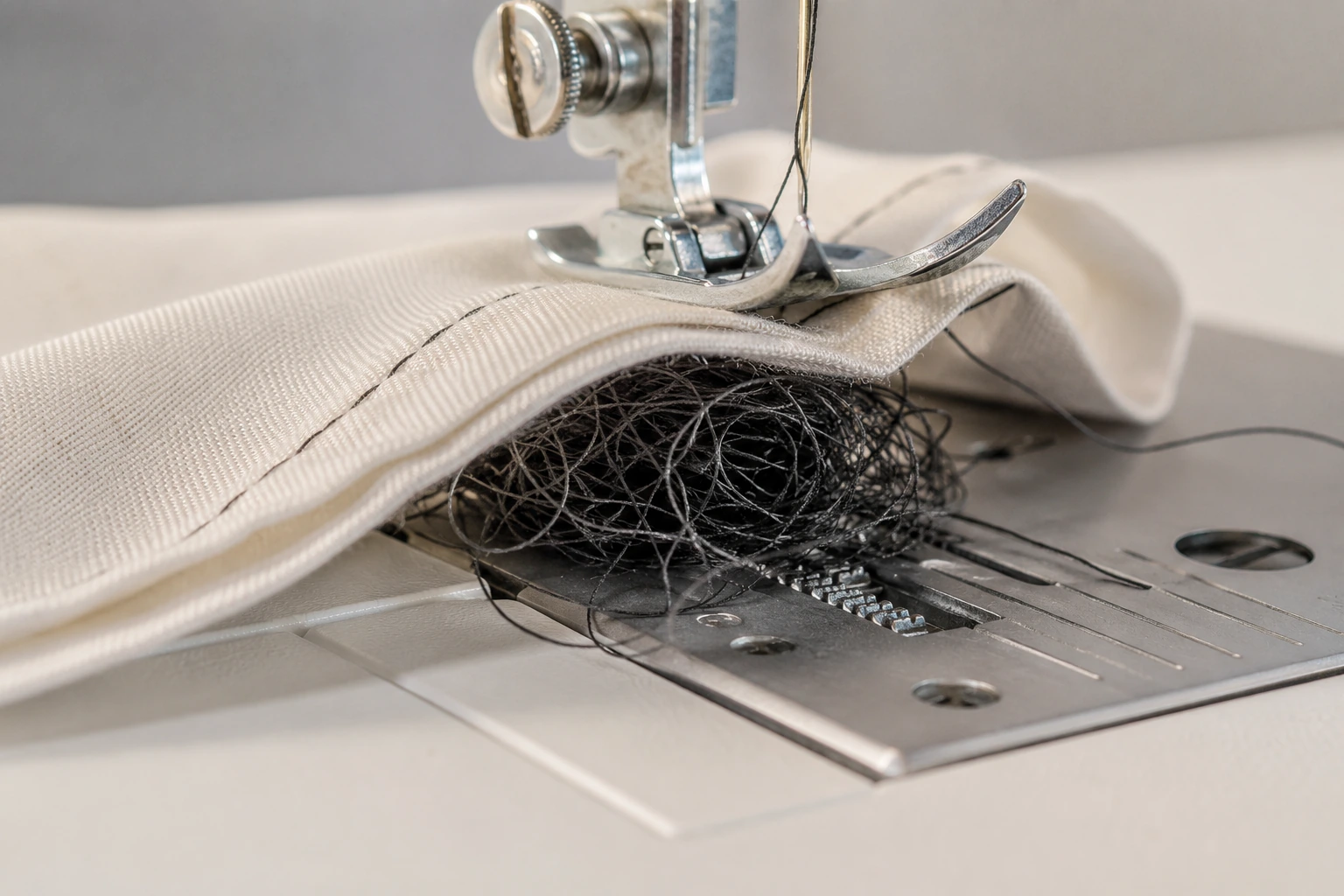
A tangled mass of thread, usually beneath the fabric, that stops feeding and may pull fabric into the plate.

Tangled black thread collecting beneath cream fabric around a sewing machine needle plate
A tangled thread nest beneath the fabric. Loose loops collect under the fabric when the upper thread is not correctly tensioned or seated in the tension path. Rethreading with the presser foot raised is usually the first troubleshooting step.

Start here

Rethread the upper path first

Loops underneath commonly begin above the fabric when upper thread misses the tension discs or take-up lever.

01

Reset the upper thread

Raise the presser foot, remove thread completely, lift the take-up lever, and rethread from the spool.

02

Control the starting tails

Hold both thread tails behind the foot for the first few stitches, especially near a raw edge.

03

Inspect after the jam

Remove the bobbin and case, cut away trapped thread, and replace a bent needle before testing.

Useful distinction

Do not pull against a locked machine

Cut the threads and open the bobbin area. Forcing fabric out can bend the needle bar or damage the hook.

Practical guide

Clear the jam, then trace the loose upper thread

A nest beneath the fabric often originates above it. Upper thread that misses the tension discs or take-up lever is carried around the bobbin without being pulled back into a formed stitch.

Release the work without forcing it

Stop the motor, raise the needle only if it moves freely, and cut accessible threads. Remove the needle plate or bobbin area parts as the manual permits. Cut the nest into short sections and lift the work away instead of pulling against a locked hook.

Rethread the entire upper path

Raise the presser foot so the tension discs open, bring the take-up lever to its highest point, remove the thread, and begin again at the spool. Verify each guide and the lever rather than correcting only the visible thread near the needle.

Reset the bobbin area

Remove lint and thread fragments, inspect the case for grooves or displacement, insert the correct bobbin in the specified direction, and follow its tension path. Replace a bent needle before testing because a hard jam may have damaged it.

Prevent nests at seam starts

Pull both thread tails beneath the foot and toward the back, then hold them lightly for the first few stitches. Begin slightly in from a raw edge or use a leader scrap when soft fabric is being pushed into a wide plate opening.

Avoidable mistakes

Why increasing tension is not the first repair

  • A missed take-up lever cannot be corrected by turning the tension dial.
  • Pulling fabric from a locked machine can damage the hook or needle bar.
  • Leaving tiny thread fragments in the case can trigger another jam.
  • Starting with short loose tails lets the hook pull them beneath the plate.

Common questions

Thread Nesting FAQs

Why is the mess underneath when the upper thread is wrong?

Loose upper thread is carried around the bobbin and cannot be pulled back into the fabric.

Can a nearly empty bobbin cause nesting?

Not by itself, though poor winding or a loose tail can contribute.

Why does nesting happen only at seam starts?

Unsecured short tails may be pulled into the hook area.

Should tension be increased immediately?

No. A missed guide or tension disc must be corrected by rethreading first.