
← Sewing glossary

Machine anatomy

Bobbin Case

The fitted holder that controls how the bobbin sits, rotates, and releases lower thread inside the hook system.

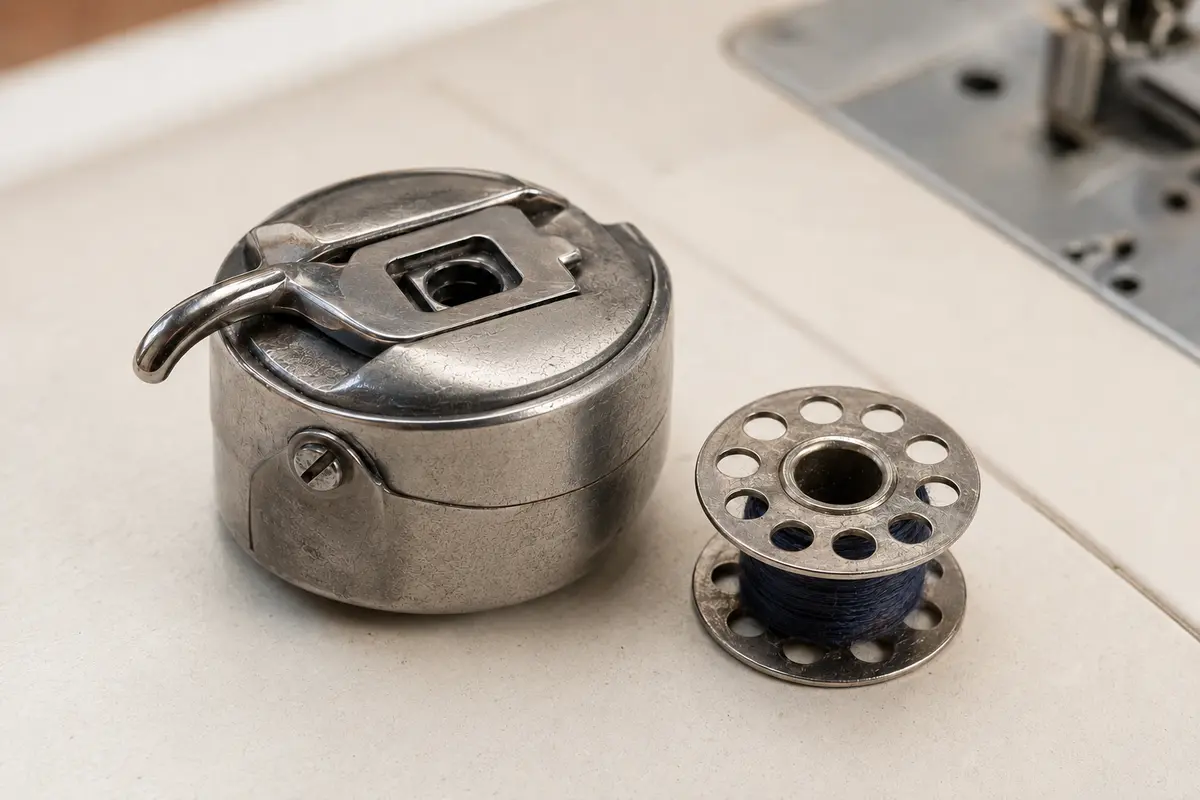
A lightly used metal front-loading sewing machine bobbin case beside an empty matching metal bobbin
A removable front-loading bobbin case. The compact metal case holds the bobbin in the hook area and guides lower thread through its slot and tension spring. Bobbin cases are model-specific even when their size and shape appear similar.
01

Removable and drop-in designs

Front-loading machines commonly use a removable metal case. Many top-loading machines use a molded drop-in case that remains inside the hook race.

02

How lower tension is created

Thread passes under a small spring on the case. That resistance helps the upper and lower threads meet inside the fabric instead of being pulled entirely to one surface.

03

When to stop sewing

Repeated needle strikes, a case that lifts, deep grooves, or sudden rattling deserve attention. Continuing can damage the hook area.

Useful distinction

Adjustment is not the first step

Do not turn the bobbin-case tension screw casually. Rethread, verify bobbin type, and test upper tension first; mark the original screw position before any controlled adjustment.

Practical guide

Seat and inspect the bobbin case before adjusting it

A bobbin case must hold the correct bobbin at a precise height and guide thread smoothly through its lower-tension path. Installation errors are more common than a tension screw that needs changing.

Removable front-loading cases

Insert the correctly wound bobbin in the direction shown by the machine diagram, draw thread through the slot and beneath the spring, then hold the case by its latch while seating it on the hook centre post. It should lock into position without force.

Top-loading case alignment

Drop-in cases sit inside locating stops beneath the clear cover. Match every tab and reference mark before replacing the plate. A case sitting above its stop can rotate, lift, or be struck by the needle when sewing begins.

Cleaning without disturbing tension

Remove lint with a small brush and inspect the thread channel, edge, and anti-backlash spring where fitted. Do not bend the tension spring or add oil unless the manual identifies an oiling point. Thread packed beneath the spring may require careful service.

When replacement is justified

Deep needle grooves, cracks, melted areas, a damaged spring, or repeated lifting after correct installation can justify a model-specific replacement. Match the exact part number; similar-looking plastic and metal cases are not automatically interchangeable.

Avoidable mistakes

Why the case is often blamed too early

  • Loops underneath usually begin with incorrect upper threading, not bobbin-case tension.
  • A bobbin that merely fits may still be the wrong height or profile.
  • Random screw turns remove the original tension reference.
  • Continuing after a needle strike can deepen grooves that later catch thread.

Common questions

Bobbin Case FAQs

Why does my bobbin case keep jumping out?

It may be outside its retaining tabs, struck by the needle, or lifted by trapped thread. Stop, clean the area, and reinstall it exactly as shown in the manual.

Are metal and plastic bobbin cases interchangeable?

Usually not. Shape, height, material, and anti-backlash features are matched to a specific hook system.

What causes grooves in a bobbin case?

A bent needle, pulling fabric, or repeated needle contact can cut grooves that later catch thread.

How can I tell whether bobbin thread is under the spring?

The thread should follow the illustrated channel and pull with smooth, light resistance rather than completely freely.