
← Sewing glossary

Stitch formation

Rotary Hook

A continuously rotating hook that catches the loop behind the needle and carries it around the bobbin.

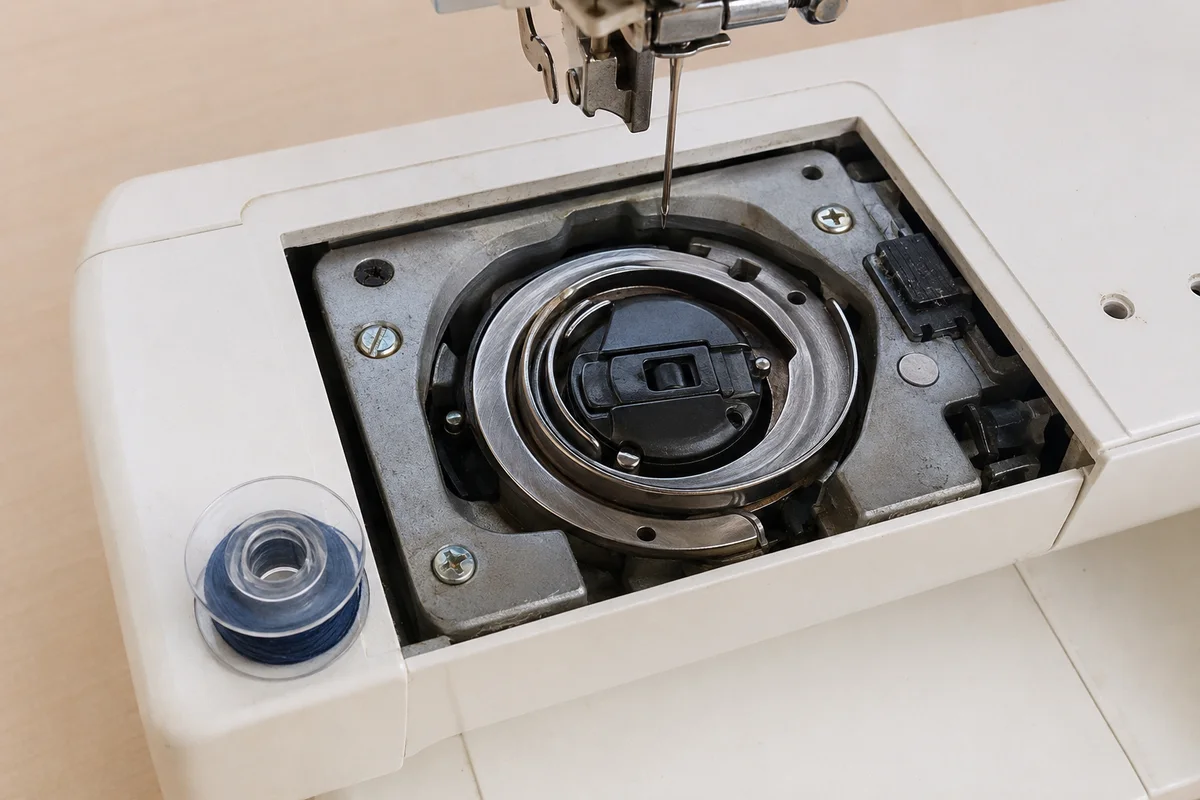
The exposed circular rotary hook race and dark drop-in bobbin case of a domestic sewing machine with the needle plate removed
A top-loading rotary hook area with the needle plate removed. The polished hook travels around the stationary bobbin case to catch the upper-thread loop and carry it around the bobbin. Hook shape, retainers and user-removable parts vary between machine models.
01

How the loop is captured

The needle descends, then rises slightly. That movement creates a loop, and the hook point passes close to the needle scarf to enter it.

02

Rotary versus oscillating

A rotary hook travels in one direction; an oscillating hook moves back and forth. Both can produce excellent stitches when correctly maintained.

03

Timing warning signs

Persistent skipped stitches after correct needle setup, hook strikes, or failure to pick up bobbin thread may indicate timing trouble.

Useful distinction

Needle deflection matters

Pulling fabric from behind can bend the needle toward the hook. Let the feed dogs move the project and level the foot at thick seams.

Practical guide

Separate normal hook maintenance from timing repairs

The rotary hook passes close behind the needle to capture its thread loop. Cleanliness and correct needle setup are user checks; hook timing and clearances are precision service work.

How the hook captures a loop

The needle reaches its lowest point and rises slightly, creating a loop behind the needle scarf. The hook point enters that loop and carries the upper thread around the bobbin case. Needle orientation, size, straightness, and full insertion all affect this meeting point.

Safe cleaning of the hook area

Unplug the machine and remove the bobbin, case, and plate only as the manual permits. Brush away lint and cut trapped thread without scratching polished surfaces. Apply oil solely at named points and in the amount specified for the model.

Checks before suspecting timing

Install a new correct needle, rethread both paths, confirm the bobbin and case, and test a basic straight stitch on stable woven fabric. Skips limited to elastic, thick crossings, or one damaged needle are not strong evidence that timing has shifted.

When professional service is sensible

Persistent failure to pick up bobbin thread, repeated hook strikes, visible hook damage, or skipping across needle positions after controlled tests may require service. Timing adjustment involves model-specific distances and access near moving mechanisms.

Avoidable mistakes

Actions that can damage the hook system

  • Pulling fabric from behind deflects the needle toward the hook.
  • Forcing a jam with the motor can displace the case or score the hook.
  • Using tools on polished hook surfaces can create thread-catching scratches.
  • Adjusting timing before replacing the needle can turn a simple fault into a mechanical one.

Common questions

Rotary Hook FAQs

Why does the hook miss the needle thread?

A bent, wrong, or incorrectly inserted needle is more common than timing failure. Replace and reinstall the needle first.

Should a rotary hook be completely silent?

No mechanical hook is silent, but grinding, scraping, or a new metallic knock is not normal.

Can I watch the rotary hook while sewing?

You may see part of it through a clear bobbin cover, but do not operate the machine with safety covers removed.

Is hook timing a suitable first DIY adjustment?

Usually no. It requires model-specific clearances and access to moving mechanisms, so professional service is safer.