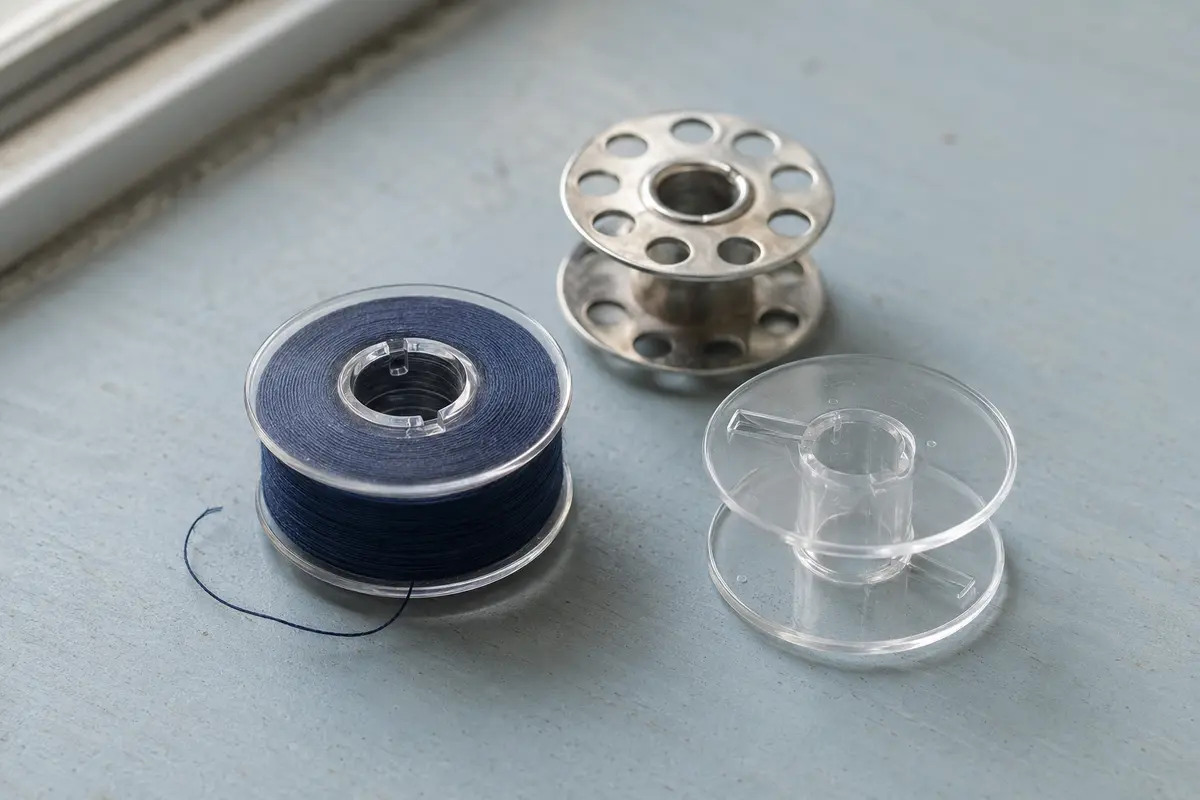
The small spool beneath the needle plate that supplies the lower thread. Tiny part, enormous talent for causing drama when inserted incorrectly.
1
Needle thread descends
The upper thread travels through the needle and below the fabric.
2
Hook catches the loop
The rotary or oscillating hook carries that loop around the bobbin case.
3
Threads lock
The upper and bobbin threads meet inside the fabric to form a balanced lockstitch.
Common sewing machine bobbin types. A wound transparent plastic bobbin, an empty plastic bobbin, and a metal bobbin demonstrate why material and shape can differ even when bobbins appear similar. Always use the exact bobbin class specified for the machine.
Why bobbin type matters
Bobbins may look interchangeable, but height, diameter, curvature, and material affect how they sit and rotate. Use the class specified in your machine manual rather than choosing by appearance.
Drop-in vs front-loading
A top drop-in bobbin sits horizontally under a clear cover. A front-loading bobbin sits vertically inside a removable case. Neither system is inherently better; familiarity and maintenance matter more.
When the underside looks messy
Large loops under the fabric usually point to incorrect upper threading, not a bad bobbin. Rethread the machine with the presser foot raised before adjusting tension.
Use and maintenance
A reliable bobbin routine
Wind one continuous layer
Start with an empty, undamaged bobbin and follow the machine's separate winding path. Thread wound over old thread creates an uneven core. Let the winder stop at its designed fill level and trim the starting tail so it cannot catch inside the case.
Keep bobbins identifiable
Store filled bobbins away from dust and label specialty thread when colour alone is not enough. Avoid loose piles where plastic flanges can warp or thread tails can unwind. Compare a dropped bobbin with a known good one before use.
Clean without altering tension
Unplug the machine, remove the bobbin and case as the manual permits, then brush lint from accessible areas. Do not blow lint deeper into the hook or turn the small case-tension screw as routine maintenance.
Common questions
Bobbin FAQs
Can I use any bobbin that fits in the machine?
No. Two bobbins can appear similar while differing in height, curve, or diameter. Use the exact bobbin class listed in the machine manual.
Why does my bobbin thread keep bunching underneath?
The upper thread is often not seated in the tension discs. Raise the presser foot, remove the upper thread, rethread completely, and test again before changing tension.
Should the bobbin turn clockwise or counterclockwise?
That depends on the machine. Follow the threading diagram beside the bobbin area or the manual because the correct direction affects how thread enters the bobbin tension path.
Can I wind a bobbin too tightly?
An overfilled, uneven, or excessively tight bobbin may feed poorly. Stop at the machine's recommended fill level and discard bobbins that become distorted.