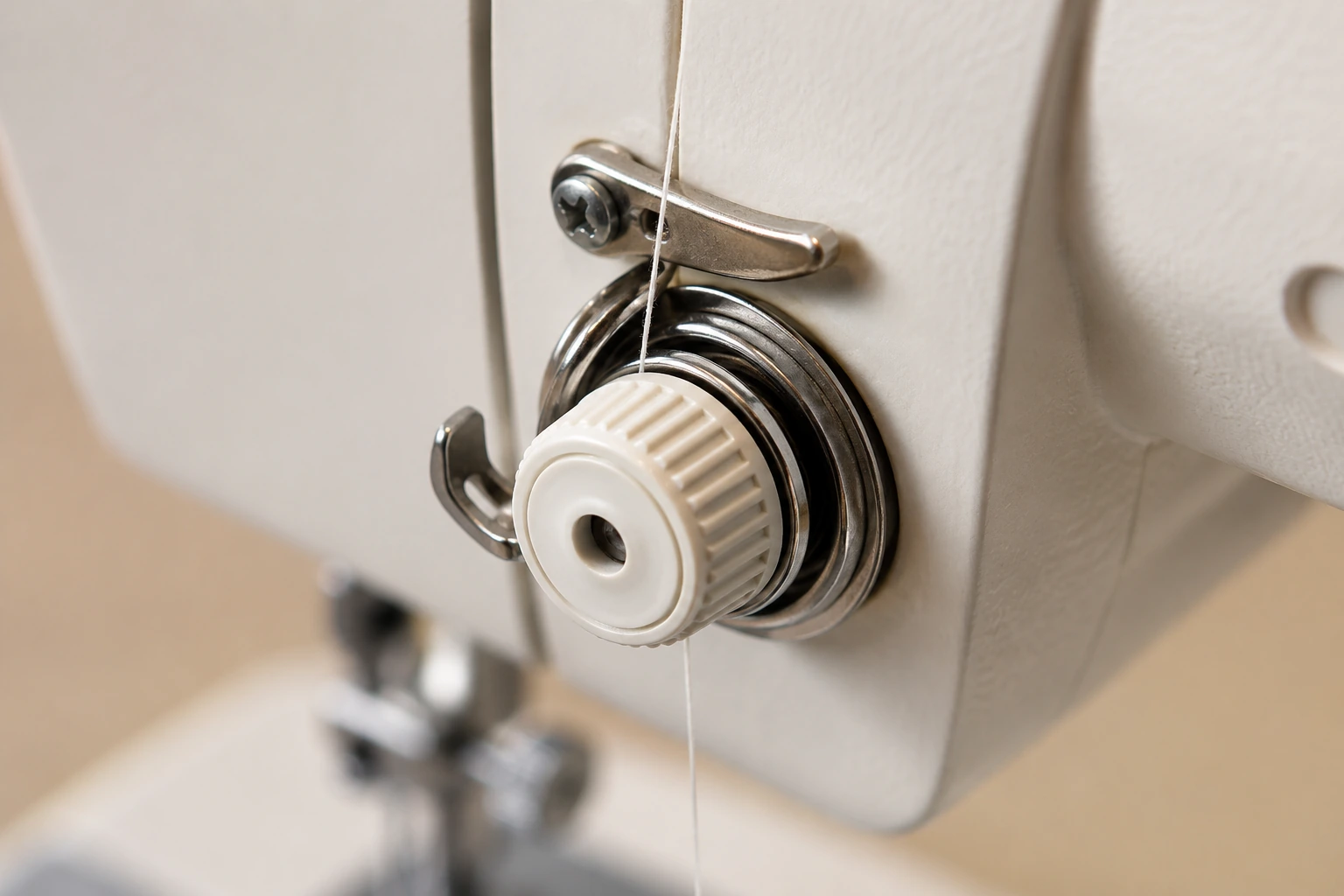
Tension is the controlled resistance placed on upper and bobbin thread so the two threads lock neatly inside the fabric.
Upper thread
Balanced stitch
Bobbin thread
Sewing machine upper-thread tension control. The numbered dial adjusts resistance on the upper thread so it can meet the bobbin thread neatly inside the fabric layers.
What “balanced” really means
On a lockstitch machine, the knot between the upper and bobbin threads should sit within the fabric layers. A tiny hint of the opposite thread may be normal, especially with contrasting colors, but obvious loops or straight lines usually mean the stitch is not balanced.
Start with threading, not the dial
Most apparent tension problems begin with threading. Raise the presser foot so the tension discs open, remove the thread completely, then rethread through every guide. Insert a correctly wound bobbin and test on a folded scrap of the project fabric.
Read the stitch symptoms
Loops underneath fabric
Upper thread is commonly mis-threaded or not seated in the tension discs.
Bobbin thread showing on top
Upper tension may be too tight, or bobbin thread may not be seated correctly.
Puckered seam
Tension may be too high, stitch length too short, or fabric too lightweight for the setup.
Loose, flat stitches
Thread may not be under enough tension, or the machine may be threaded with the presser foot down.
A controlled adjustment method
Use a fresh, suitable needle.
Rethread upper thread and bobbin.
Set the machine near its normal tension range.
Sew a test line with contrasting thread.
Change one setting by a small amount.
Retest and label the sample.
Leave the bobbin-case screw alone unless the manual calls for adjustment or a technician recommends it. It is sensitive, and random quarter-turns have ended many peaceful afternoons.
What changes the required tension?
Thread and needle
A thicker thread occupies more space in the needle eye and stitch hole. Match the needle eye to the thread before compensating with the dial. Old, fuzzy, or uneven thread can create changing resistance that no single number will balance consistently.
Fabric and seam construction
One layer of cotton, a folded hem, elastic knit, and a bulky crossing do not present the same resistance. Test the complete seam stack, including interfacing and topstitching thread, then judge both sides after the fabric relaxes.
Thread delivery and cleanliness
A spool notch, incorrect cap, missed guide, lint beneath a bobbin-case spring, or damaged needle plate can interrupt thread flow. If the result changes from stitch to stitch, inspect the path before treating the dial as the cause.
Quick diagnosis
Thread tension FAQs
What number should sewing machine tension be set to?
There is no universal perfect number. The middle of the machine's normal range is a sensible starting point, then test using the actual needle, thread, and fabric for the project.
Why are there loops on the underside of my fabric?
Large underside loops usually indicate an upper-threading problem. Rethread with the presser foot raised so the thread can enter the open tension discs.
Should I adjust bobbin tension?
Usually not for routine sewing. First check threading, bobbin insertion, needle condition, thread quality, and upper tension. Adjust the bobbin case only when the manual or a qualified technician calls for it.
Why does tension change between fabrics?
Fabric thickness, density, stretch, thread weight, needle size, and stitch type all affect how the threads meet. A setting that balances cotton may not suit chiffon or denim.
Can poor-quality thread look like a tension problem?
Yes. Uneven diameter, lint, damage, or old brittle thread can cause inconsistent stitches. Test with a fresh spool of reliable thread before making major adjustments.