← Sewing glossary

Essential stitch

Straight Stitch

A single line of evenly spaced lockstitches used for construction, topstitching, basting, quilting, and repairs.

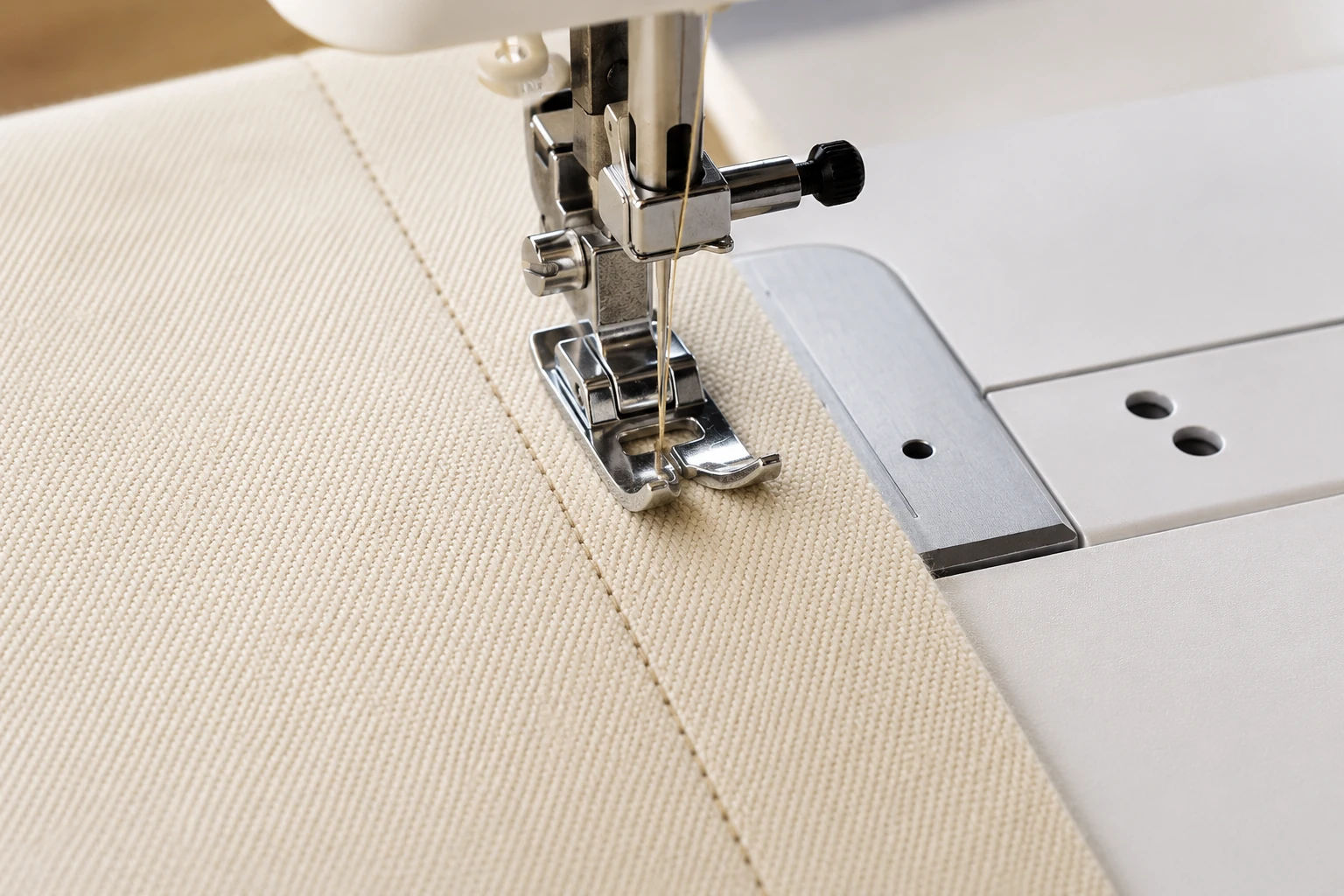
Domestic sewing machine forming a neat straight stitch line behind an all-purpose presser foot on cream woven fabric
A straight stitch forming behind an all-purpose presser foot. The completed stitch line extends behind the presser foot as the feed dogs move the fabric through the machine. A suitable needle, balanced thread and consistent edge guidance produce an even construction seam.
01

Construction setup

Use a general-purpose foot, center needle position, and a medium length for most woven seams. Match needle size to fabric.

02

Limits on stretch

A normal straight stitch has little give. Use a stretch-capable alternative in high-stress knit seams.

03

Cleaner topstitching

Lengthen the stitch, use a fixed edge guide, and ensure decorative thread passes freely through the needle.

Useful distinction

Straight is not automatic

Most wandering seams come from watching the needle instead of keeping the fabric edge aligned with a stable guide.

Practical guide

Set up a straight stitch for the job it must perform

The same forward stitch can construct a seam, baste a fitting, topstitch an edge, or quilt layers. Needle, thread, length, foot, and securing method should change with that purpose.

Everyday woven seams

Begin with a suitable universal needle, ordinary thread, an all-purpose foot, and a medium stitch length. Test on two project layers. The thread intersection should sit within the fabric, and the seam should lie flat without loops, puckers, or visible pulling.

Fine and delicate fabric

A straight-stitch foot and plate can support fabric close to the needle and reduce the chance of an edge being pushed into a wide opening. Use proportionally fine thread and needle, hold the starting tails, and avoid an excessively short stitch that perforates the fabric.

Topstitching and visible seams

Lengthen the stitch modestly and guide the fabric edge against a fixed reference. Heavier thread needs a needle eye large enough to pass without abrasion. Support the project so its weight does not pull the visible line away from the guide.

Knits and areas under stretch

An ordinary straight stitch has limited extension and may pop across a high-stretch direction. Use it only where the fabric will not be pulled significantly, or choose a narrow zigzag or stretch pattern and test the seam under realistic movement.

Avoidable mistakes

Why a basic stitch produces an uneven seam

  • Watching the moving needle instead of a stable edge guide.
  • Pulling fabric from behind changes feeding and can deflect the needle.
  • Using the same short length on fine, thick, and topstitched seams.
  • Selecting a straight-stitch plate and forgetting to reset it before a wide stitch.

Common questions

Straight Stitch FAQs

Why can a straight stitch look slightly slanted?

The threads interlock inside the fabric and can create a small visual angle. Excessive slant may signal mismatched thread, needle, or tension.

Which foot is best for basic straight sewing?

An all-purpose foot works for most seams; a straight-stitch foot gives fine fabric more support.

Can stretch fabric be sewn with an ordinary straight stitch?

Only in low-stress areas. Otherwise the seam may pop when stretched.

Why does fabric veer even though the needle is centered?

Layer shift, off-grain fabric, drag, or inconsistent guiding can move the seam.