
← Sewing glossary

Construction term

Seam Allowance

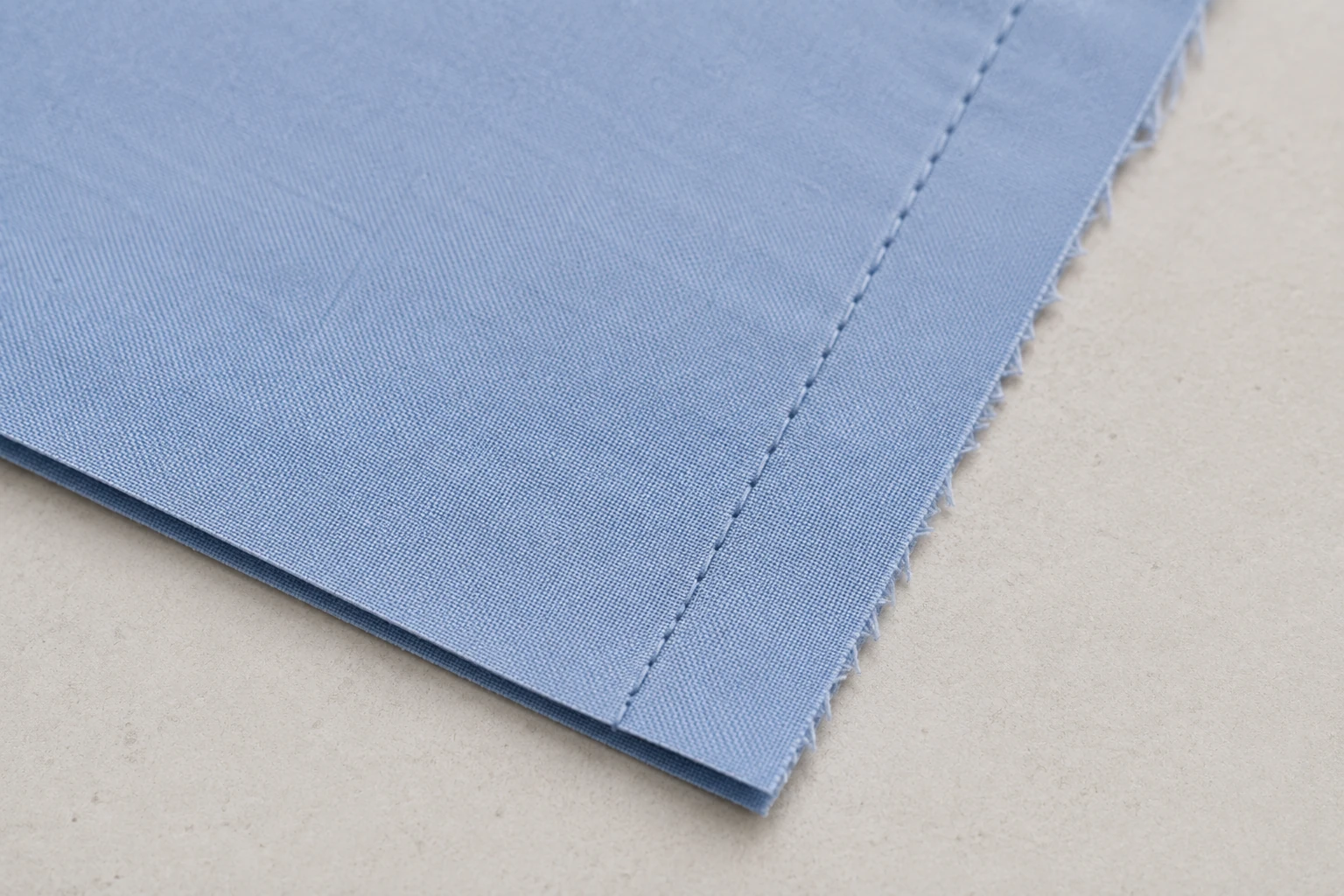
The distance between the line of stitching and the cut edge of the fabric.

Straight stitched seam on blue fabric showing the measured space between the stitch line and raw edge
The seam allowance between a stitch line and the fabric edge. The visible strip of fabric beyond the stitching line is the seam allowance. Keeping this distance consistent helps sewn pieces match the intended size and leaves room for finishing, clipping, grading or fitting adjustments.
01

Common widths

Garment patterns often use 5/8 inch or 1.5 cm; quilting commonly uses 1/4 inch. Always read the instructions.

02

Why consistency matters

A small error repeated across several seams changes the final dimensions of a garment or quilt block.

03

What happens afterward

Allowances may be clipped on curves, graded in bulky seams, trimmed inside enclosed finishes, or left wide for fitting.

Useful distinction

Cutting line versus stitching line

They are not the same line. Confusing them is an impressively efficient way to resize a project unintentionally.

Practical guide

Make the seam allowance serve construction and fit

The correct width depends on what happens after the seam is sewn. Accuracy matters, but so do the room needed for fitting, clipping, grading, pressing, and the selected edge finish.

Garments, quilting, and home sewing

Garment patterns commonly use a wider allowance that supports fitting and conventional finishes. Patchwork uses a narrow quarter inch so units press flat without excess bulk. Bags, upholstery, and home projects may specify other widths based on material thickness and seam construction. The pattern instruction always outranks habit.

Curves and corners

The stitching line controls the shape, not the raw edge. On an inward curve, clip the allowance toward the seam without cutting the stitches. On an outward curve, notch or grade excess bulk. At a corner, trim diagonally only after confirming the seam is secure.

Matching a guide accurately

Choose one reference point and keep the cut edge against it without forcing the fabric sideways. For a custom width, use removable tape or an adjustable seam guide. When the needle position changes, measure again from the active needle rather than relying on a familiar plate number.

Allowances inside enclosed finishes

French seams, flat-felled seams, bound seams, and facings consume or reorganize the allowance differently. A French seam needs enough width for two stitching passes; a flat-felled seam needs one layer wide enough to wrap the trimmed layer. Plan the finish before cutting.

Avoidable mistakes

Allowance errors that accumulate

  • Sewing on the cutting line because the pattern allowance convention was not checked.
  • Trimming before a fitting test removes the fabric needed for adjustment.
  • Following the needle visually instead of guiding the cut edge at a fixed distance.
  • Using a quarter-inch foot without testing the sewn and pressed measurement.

Common questions

Seam Allowance FAQs

Is allowance included in commercial patterns?

Usually, but not always. Check the pattern notes for the exact convention.

How can I keep it accurate around a curve?

Watch the fabric edge at the guide and pivot in tiny increments with the needle down.

Why use different widths in one project?

Narrow widths reduce bulk; wider ones support fitting, strength, or special finishes.

Is it measured before or after pressing?

It is defined before pressing, from stitch line to raw edge.