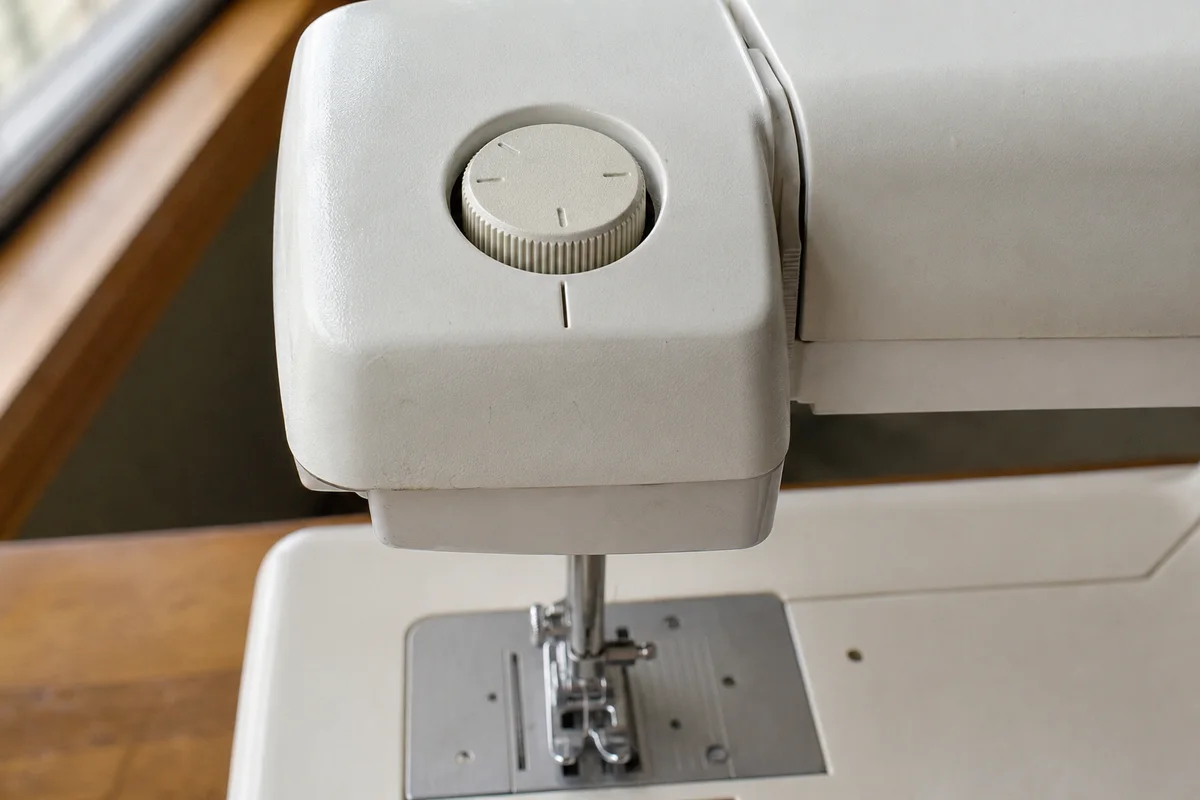
The downward force the presser foot applies while feed dogs move fabric through the machine.
A top-mounted presser-foot pressure adjustment dial. This control changes the spring force applied through the presser bar. Reducing or increasing the pressure can help the feed dogs move delicate, stretchy or bulky fabrics more consistently.
Start here
Read the fabric, not the dial
Too much pressure can stretch, mark, or stall fabric; too little can allow lifting, slipping, and uneven feeding.
01
When to reduce pressure
Wavy knits, crushed velvet, or thick seam transitions may improve with a modest reduction.
02
When to increase pressure
Light fabric failing to contact the feed dogs or slippery layers drifting may need slightly more pressure.
03
When no control exists
A walking foot, roller foot, stabilizer, altered handling, or a different seam strategy can solve the same feeding problem.
Useful distinction
Pressure cannot fix everything
It will not compensate for lowered feed dogs, a damaged foot, incorrect threading, or a needle that is unsuitable for the fabric.
Practical guide
Adjust pressure only when feeding gives evidence
Presser-foot pressure should keep fabric engaged with the feed dogs without stretching, crushing, or preventing layers from moving together. Begin from the normal setting and respond to a visible symptom.
Wavy knit seams
Too much downward force can stretch a knit as the feed dogs move it. Reduce pressure one step, support the fabric without pulling, and test across the same grain direction as the project. A narrow stretch-friendly stitch and suitable needle still matter.
Layer shift and slippery fabric
The lower layer may advance faster while the upper layer is restrained by the foot. A modest reduction can reduce drag, while a walking foot or careful basting may control long seams more effectively. Change only one factor between samples.
Thick crossings and uneven height
A foot that tilts at a bulky seam loses even contact with the feed dogs. Level it with a height-compensation tool or folded scrap rather than reducing pressure for the entire seam. Slow down and let the needle penetrate without pushing the project.
Too little pressure and fabric lift
Very low pressure can allow fabric to rise with the needle, feed inconsistently, or contribute to skipped stitches. Return toward the default, confirm the foot is fully lowered, and check that lint or a near-zero stitch length is not the real feeding problem.
Avoidable mistakes
Pressure changes that confuse diagnosis
Adjusting pressure before confirming feed dogs are raised and clean.
Pulling the sample while testing makes the selected pressure impossible to judge.
Leaving a special low setting in place for the next ordinary project.
Expecting pressure to correct threading, tension, or an unsuitable needle.
Common questions
Presser-Foot Pressure FAQs
Where is the pressure control usually found?
It may be a top dial, a knob above the presser bar, an electronic setting, or absent entirely.
Why does knit fabric wave under the foot?
The foot may be stretching it as the feed dogs advance. Reduce pressure if possible and avoid pulling.
Can low pressure contribute to skipped stitches?
Yes. Fabric can lift with the needle and disturb loop formation.
Should pressure change for every new fabric?
No. Keep the normal setting unless a clear feeding symptom appears.