
← Sewing glossary

Machine anatomy

Needle Plate

The removable metal plate beneath the presser foot. It supports fabric, exposes the feed dogs, and guides the needle into the hook area.

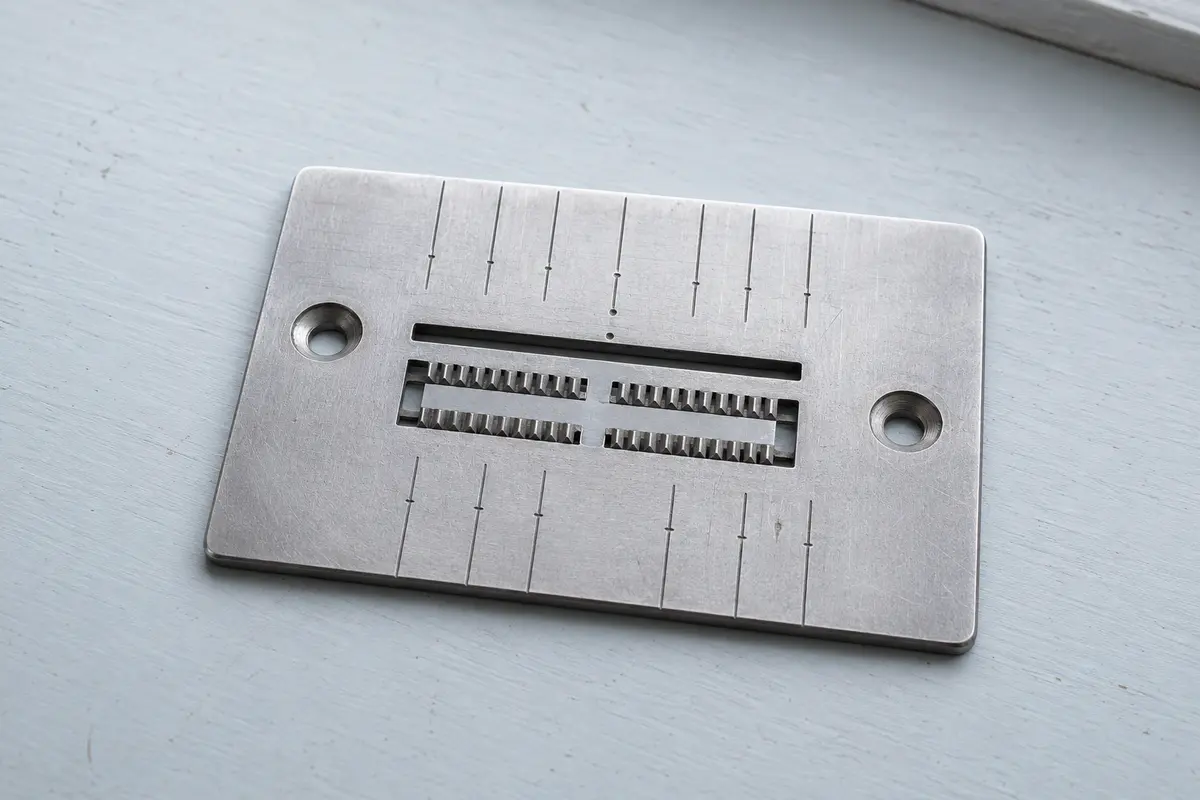
A lightly used silver sewing machine needle plate with a wide needle slot, feed-dog openings, screw holes, and engraved seam guides
A domestic sewing machine needle plate. The needle slot permits side-to-side needle movement, while the larger openings allow the feed dogs to rise and advance the fabric. Screw holes and engraved seam guides vary by machine model.
01

What its openings control

A narrow hole supports fine fabric during straight stitching, while a wide slot allows the needle to swing for zigzag and decorative stitches. The lower openings let feed dogs rise and advance fabric.

02

Damage that changes stitch quality

A needle strike can leave a burr around the hole. That tiny rough edge may snag delicate fabric, shred upper thread, or disturb loop formation even when the machine is threaded correctly.

03

Safe removal and cleaning

Unplug the machine, raise the needle, remove the presser foot, and use the correct screwdriver. Brush lint away and seat every locating tab before tightening the screws evenly.

Useful distinction

Straight-stitch plate versus zigzag plate

A straight-stitch plate gives fine fabric more support, but its narrow hole cannot accommodate a wide stitch. Always hand-turn one full stitch after changing the plate.

Practical guide

Match the needle plate to the stitch and fabric

The plate supports fabric at the exact point where the needle enters. Its opening, surface condition, and installation can affect feeding, thread movement, and the risk of a needle strike.

Straight-stitch and zigzag openings

A straight-stitch plate has a small round hole that supports fine fabric close to the needle. A zigzag plate has a wider slot for lateral movement. Never select a wide stitch while a narrow plate is fitted; turn the handwheel through a complete cycle after every plate change.

Inspecting for burrs and damage

A broken or deflected needle can leave a sharp burr around the opening. Pass a cotton swab gently around the edge; fibres catching on one spot can reveal damage that shreds thread or snags delicate fabric. Replace a deeply marked plate rather than polishing away its shape.

Cleaning and reinstalling safely

Unplug the machine, raise and remove the needle and presser foot, then use the correct screwdriver. Brush lint from the feed-dog openings and hook area without blowing it deeper inside. Seat all tabs correctly and tighten the screws evenly without overtightening.

Using seam guides accurately

Printed lines are normally measured from a reference needle position, often centre. If the needle is shifted, measure the true distance again. Keep the fabric edge against the chosen line rather than watching the moving needle, and confirm whether the guide is marked in inches or millimetres.

Avoidable mistakes

Plate problems that resemble other faults

  • A burr can shred thread even when threading and tension are correct.
  • Packed lint can prevent feed dogs from rising fully through the openings.
  • A loose or incorrectly seated plate can create noise and inconsistent feeding.
  • A wide stitch selected with a straight-stitch plate can break the needle immediately.

Common questions

Needle Plate FAQs

Why does fabric get pushed into the needle-plate hole?

Soft fabric can be pulled into a wide opening, especially at a raw edge. Start slightly in from the edge, hold thread tails, add stabilizer, or use a compatible straight-stitch plate.

Can a scratched needle plate damage thread?

Yes. A burr can scrape or cut thread. Gently pass a cotton swab around the opening; caught fibers often reveal the rough spot.

Should I oil beneath the needle plate?

Only where the manual specifically instructs. Many modern machines require limited or technician-only lubrication.

Why are measurement lines printed on the plate?

They are seam guides measured from a reference needle position, usually center. Recheck the distance whenever the needle is shifted.