
← Sewing glossary

Machine control

Handwheel

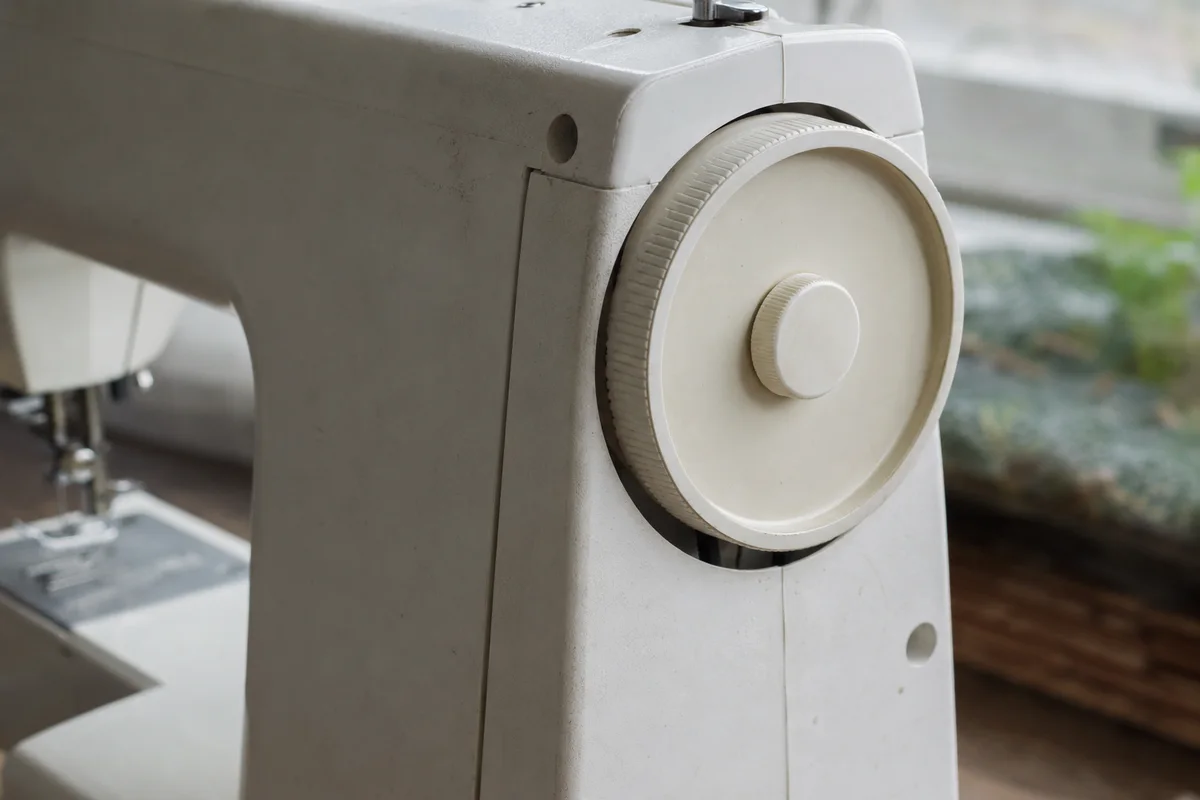
The wheel on the right side of the machine that manually raises and lowers the needle and moves the stitch mechanism.

A large off-white handwheel with a textured rim and central clutch knob on the right side of a domestic sewing machine
A domestic sewing machine handwheel. Turning the outer wheel by hand raises or lowers the needle with precise control. On many mechanical machines, the smaller centre knob also releases or engages the drive for bobbin winding.
01

Correct direction

Most domestic machines are designed for the top of the handwheel to turn toward you. Reversing it can introduce slack or disturb the hook path.

02

When manual control helps

Use it to raise the take-up lever, place the needle at a corner, check a wide stitch, or ease through one difficult penetration.

03

When it will not turn

Do not force it. Trapped thread, a displaced bobbin case, a bent needle, or bobbin-winder engagement may be blocking the mechanism.

Useful distinction

A stiff wheel is a warning

Extra muscle is not a repair strategy. Clear the hook area first and stop if the wheel still meets a hard mechanical stop.

Practical guide

Use the handwheel for control and diagnosis

The handwheel moves the same linked parts that operate during powered sewing. Turning it slowly lets you position the needle, verify clearance, and feel resistance before speed turns a small setup error into damage.

Positioning at corners and curves

Turn toward you until the needle is fully down in the fabric, raise the presser foot, pivot the work, lower the foot, and continue. The needle anchors the exact point. For a corner, confirm the next stitch begins in the intended direction rather than dragging the fabric around a partially raised needle.

Checking a new foot or wide stitch

With the machine off, select the intended stitch and turn through one complete cycle. Watch every left and right needle position. This simple clearance test is essential after changing the foot, plate, needle position, twin needle setting, or decorative width.

Feeling for a mechanical obstruction

Normal resistance rises slightly as the needle penetrates fabric and the stitch mechanism cycles. A sudden hard stop, scrape, or locked section is different. Remove the work, needle, bobbin, and trapped thread in a controlled order instead of forcing the wheel past the obstruction.

Returning from bobbin winding

Some machines disengage the needle through a clutch in the wheel; others switch modes when the bobbin-winder spindle moves. If the wheel turns but the needle does not, return the spindle and clutch to the sewing position before treating the machine as faulty.

Avoidable mistakes

Handwheel habits that create new problems

  • Repeatedly turning in the wrong direction can introduce slack into the thread path.
  • Forcing a locked wheel can bend a needle or worsen a displaced bobbin case.
  • Testing needle clearance with the motor instead of one slow manual cycle removes the chance to stop early.
  • Turning while pulling fabric sideways can deflect the needle into the foot or plate.

Common questions

Handwheel FAQs

Why does the wheel turn but the needle stay still?

The bobbin-winding clutch may be disengaged or an older wheel knob may be loosened. Return the machine to sewing mode.

Is one accidental backward turn harmful?

Usually not, but repeated reverse turning can create slack. Use the specified direction from then on.

Why did the wheel become hard after a jam?

Thread may remain wrapped around the hook or the case may be displaced. Remove the plate and bobbin area debris before testing.

Can I sew a whole seam with the handwheel?

You can make a few controlled stitches, but it is too slow for normal seams and can create uneven rhythm.