← Sewing glossary

Machine control

Foot Controller

The floor pedal that starts the sewing motor and varies speed according to how far it is pressed.

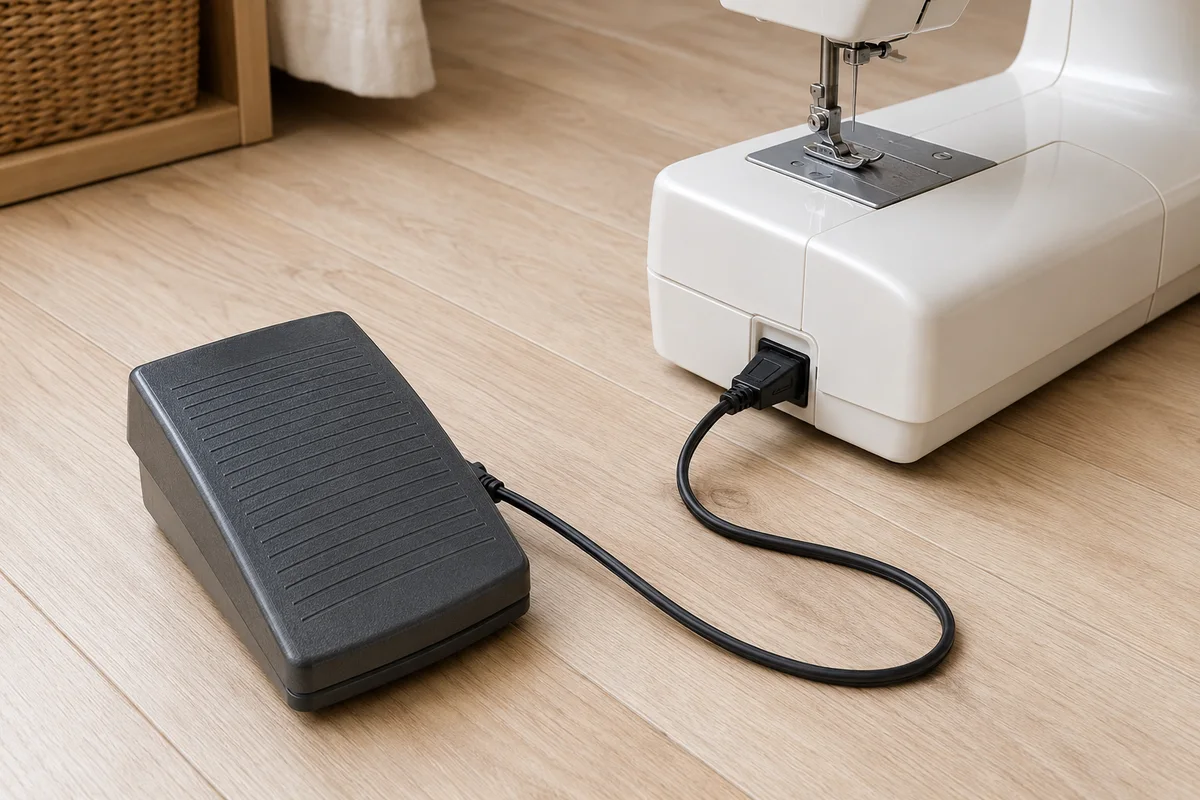
A lightly used charcoal sewing machine foot controller with its cable and connector beside an off-white domestic machine
A domestic sewing machine foot controller. Pressure on the sloped treadle regulates the machine motor, allowing the operator to start, stop and vary sewing speed while keeping both hands on the fabric.
01

Build speed gradually

Rest the ball of the foot on the broad part of the pedal and keep the heel supported. Increase pressure smoothly instead of tapping, which makes accurate starts and corners harder.

02

Understand maximum-speed controls

On machines with a speed slider, the pedal varies speed only up to the selected limit. A low limit is useful for learning, dense work, and precise curves.

03

Use only a compatible controller

Connector shape alone does not prove electrical compatibility. Use the controller model specified for the machine and stop using any pedal with heat, a damaged cable, intermittent running, or uncontrolled speed.

Useful distinction

Pressure controls pace, not power at the needle

Pressing harder mainly requests more motor speed. If the needle cannot penetrate the project at a controlled pace, check needle choice, thickness, and machine capability instead of flooring the pedal.

Practical guide

Treat speed control as both a sewing skill and an electrical system

A controller should respond progressively, remain stable on the floor, and match the machine electrically. Technique can improve smoothness, but heat, damaged cables, or unpredictable running require a safety response rather than practice.

Build a stable foot position

Place the controller on a non-slip surface with the heel supported and the ball of the foot over the active area. Apply pressure from the ankle instead of lifting the whole leg. Practise on scrap without guiding a seam, moving from single stitches to a steady medium pace.

Use the machine speed limiter when available

Set the electronic maximum-speed slider low while learning, sewing curves, or working near bulky intersections. The controller then uses its full physical travel across a smaller speed range, making gradual changes easier without altering stitch length.

Confirm exact compatibility

Controllers with similar plugs are not necessarily interchangeable. Match the model or approved part number, voltage, connector, and control type. An incorrect unit can behave unpredictably or damage electronics even when it physically connects.

Recognise when to disconnect power

Stop using a controller that runs without pressure, cuts in and out, smells hot, sparks, buzzes unusually, or has a crushed cable or loose plug. Unplug the machine and have the correct assembly inspected or replaced; do not open a mains-voltage controller without suitable expertise.

Avoidable mistakes

Why inconsistent speed is not always poor pedal control

  • A sliding pedal changes leg angle and makes pressure uneven.
  • An incompatible controller can fit the socket but have the wrong electrical characteristics.
  • A damaged lead may respond when it is moved and then fail again.
  • Resting the full foot weight on the pedal can start the machine unexpectedly.

Common questions

Foot Controller FAQs

Why does the machine run without pressing the pedal?

Disconnect power immediately. A stuck or electrically failed controller needs replacement or professional service.

Why is full pedal pressure still slow?

The speed slider may be set low, thread may be jammed, the bobbin winder may be engaged, or the controller may be incompatible or faulty.

Can any replacement pedal with the same plug be used?

No. Voltage, resistance, electronics, and connector wiring must match the specific machine or approved model list.

Is a foot controller required on computerized machines?

Some can sew with a start-stop button, while others require a pedal for normal sewing. The manual explains which controls are available.