
← Sewing glossary

Hemming stitch

Blind Hem Stitch

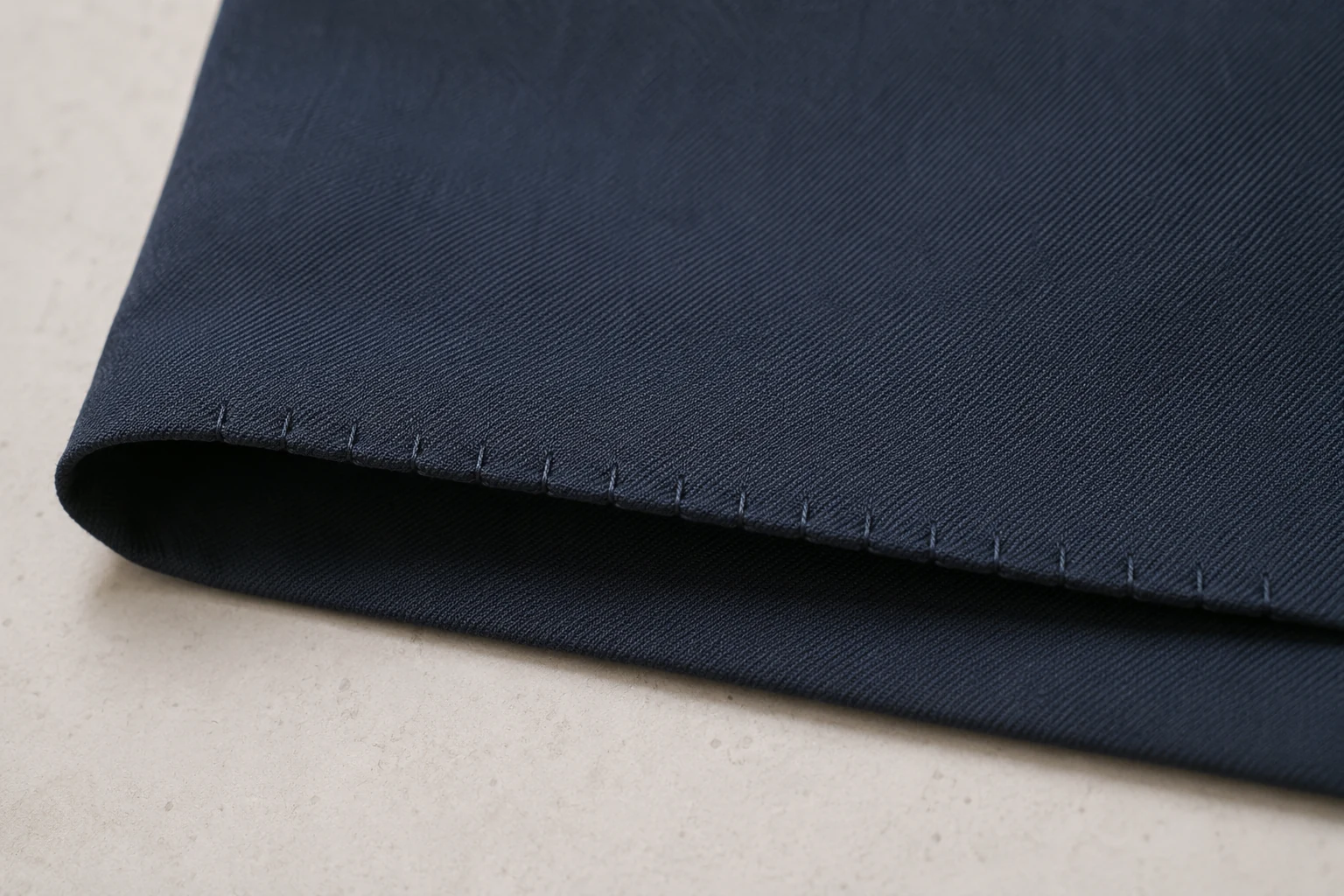
A mostly straight stitch with occasional sideways bites that catch only a few fibers of the garment face.

A folded navy fabric hem showing small widely spaced blind-hem catches along the edge
A folded hem secured with discreet blind-hem stitches. Most of the stitching remains within the folded allowance, while occasional small catches secure the garment face. Careful folding and a shallow sideways bite keep the finished hem minimally visible.
01

Prepare the fold

Finish the raw edge, press the hem up, then fold the garment back so a narrow ridge remains exposed.

02

Guide the ridge

Run the fold against the blind-hem foot guide so straight stitches land on the allowance and wide bites catch the garment.

03

Tune visibility

Reduce width or shift the guide when the bites show too much on the right side.

Useful distinction

Discreet, not supernatural

A well-made blind hem may still show tiny, evenly spaced bites. The goal is restraint and consistency.

Practical guide

Build the fold before adjusting the stitch

A blind hem depends more on accurate folding and guide placement than on hiding a poorly prepared edge with a special stitch.

Prepare the allowance

Mark the finished hem depth, finish the raw edge with a method suitable for the fabric, and press the hem upward. Fold the garment back over itself so only a narrow ridge of the garment remains beside the finished allowance.

Place the fold at the guide

Position the ridge against the blind-hem foot guide. Most stitches should land on the allowance while the occasional wide swing catches only a few fibers of the garment fold. Sew slowly enough to keep the ridge in continuous contact with the guide.

Adjust how much shows

Inspect the right side after a short test. If the bites are too visible, reduce width or move the guide so the needle catches less fabric. If the hem is unsecured, increase the bite slightly. Matching fine thread makes consistent small bites less noticeable.

Handle curves, knits, and bulky seams

Ease curved hems before folding so excess does not form tucks. Use a stretch-compatible blind-hem pattern for knits. Grade bulky seam allowances and level the foot at crossings, because a sudden ridge can push the fold away from the guide.

Avoidable mistakes

Why a blind hem becomes visible or unstable

  • Skipping careful pressing lets the fold wander away from the guide.
  • A wide bite catches too much garment fabric and shows on the right side.
  • A narrow bite that misses the fold leaves sections of the hem loose.
  • Heavy thread or bulky seam intersections make even small catches conspicuous.

Common questions

Blind Hem Stitch FAQs

Why are large stitches visible outside?

The sideways bite reaches too far into the garment. Narrow the width or move the guide.

Can this stitch hem knit fabric?

Yes, preferably with a stretch blind-hem pattern and a flexible edge finish.

Is a special foot mandatory?

No, but its guide makes fold tracking much more consistent.

Why does the hem unfold after sewing?

The wide bite may be missing the garment fold entirely. Increase width slightly or reposition the fold.