← Sewing glossary

Temporary stitch

Basting Stitch

A long, easily removed stitch used to hold layers, mark construction, test fit, or prepare gathers.

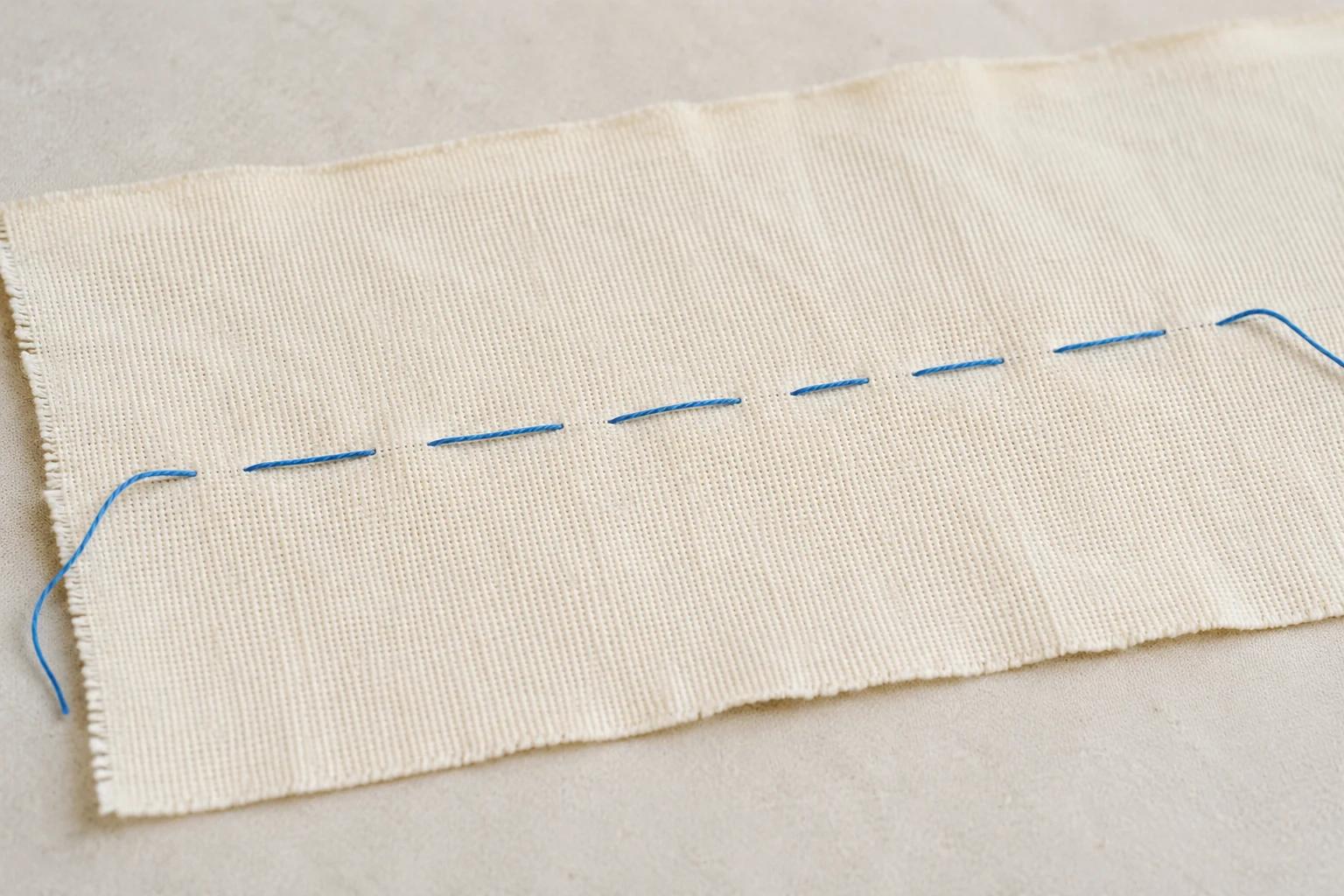
Long temporary basting stitches sewn in contrasting thread across pale woven fabric
Long temporary stitches used for basting. The widely spaced stitches hold fabric layers in position while remaining easy to remove. Basting is commonly used for fitting, gathering, zipper placement and controlling layers before permanent sewing.
01

Machine setup

Select a long straight stitch and avoid backstitching so the thread remains easy to remove.

02

Where it helps most

Use it for fitting seams, zipper placement, matching plaids, pleats, sleeves, and quilt layers.

03

Removal without damage

Clip thread at intervals and pull short sections instead of dragging one long strand through delicate fabric.

Useful distinction

Temporary can still be precise

Accurate basting reduces shifting and often makes the permanent seam far easier to sew.

Practical guide

Choose the basting method by what must stay controlled

Basting can test fit, prevent layer shift, establish a fold, or create gathers. The placement and stitch type should reflect which of those jobs it needs to do.

Machine basting for fitting

Use a long straight stitch on the intended seam line, leave long tails, and do not reverse. This creates a realistic fitting seam that can be opened without damaging the fabric. Mark any corrections before removing it, because the temporary seam is the reference for the next fitting.

Hand basting for precision

Hand basting is slower but gives better control around set-in sleeves, matched plaids, curved collars, slippery fabric, and areas that pins distort. Even running stitches suit ordinary holding. Uneven basting, with longer stitches on one side, is quicker to remove when only light control is needed.

Basting zippers, pleats, and layers

For a centered zipper, baste the garment seam closed first so both sides remain aligned during placement. Baste pleats along the seam allowance to prevent folds opening. On quilt layers or slippery stacks, work from the center outward so excess is not pushed into one area.

Basting for gathers

Sew two parallel rows of long stitches inside the seam allowance, leaving unknotted thread tails. Pull the bobbin threads together and distribute fullness between marked sections. Two rows control the fabric more evenly than one and help keep gathers upright when the permanent seam is sewn.

Avoidable mistakes

Temporary stitches that become permanent problems

  • Backstitching makes a temporary seam unnecessarily difficult to remove.
  • Pressing hard over contrasting basting thread can leave marks or trap it in the fabric.
  • Sewing directly beneath the final seam can imprison basting thread.
  • Using a very long machine stitch on a tight curve can produce an inaccurate shape.

Common questions

Basting Stitch FAQs

Which stitch length works for machine basting?

Use one of the longest straight-stitch settings, commonly 4 to 5 mm.

Should basting sit inside the seam allowance?

For holding, place it slightly inside the final allowance; for fitting, follow the actual seam line.

Why is basting difficult to remove?

It may be backstitched, trapped beneath permanent stitches, or sewn too short.

Can water-soluble thread be used?

Yes on suitable washable projects, after testing humidity, storage, and complete removal.